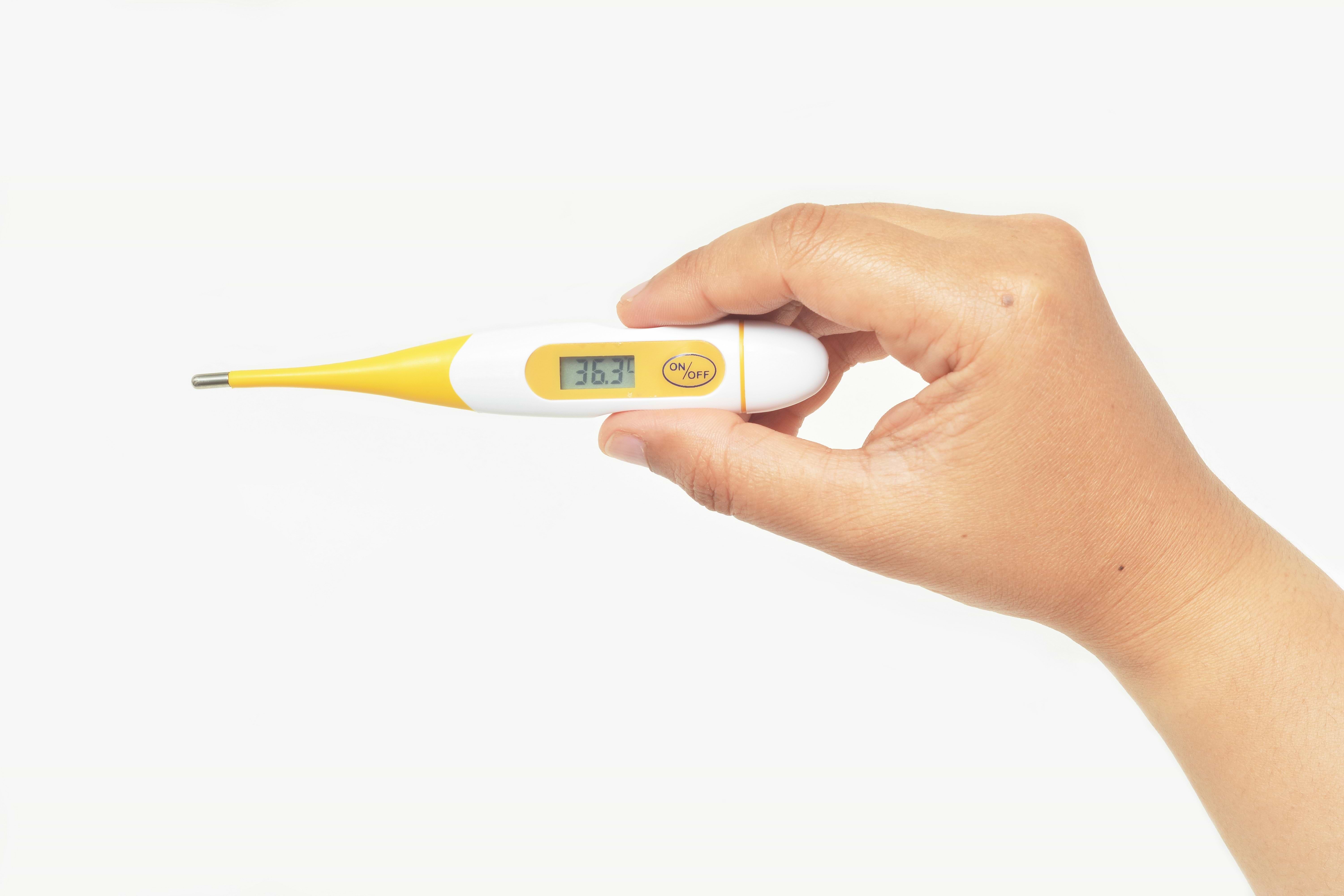
Basal body temperature is your body’s temperature at complete rest, unaffected by movement or outside factors.
It matters for cycle and ovulation tracking because progesterone, which rises after ovulation, lifts your resting temperature slightly.
Measuring and understanding that rise is the key to understanding if and when ovulation occurred. But the difficulty has always been reliably tracking basal temperature consistently. It means taking and recording every day, in the few seconds before you move, on a temperature curve that is already shifting hour by hour.
In this guide, we explain what BBT is, how it moves across the cycle, how to understand it properly, and what it means when the rise does not appear.
Key takeaways
- BBT is your resting temperature, traditionally taken orally the moment you wake, before moving.
- Progesterone lifts resting temperature after ovulation.
- Charting confirms that ovulation happened. It does not predict it in advance.
- A cycle with no temperature rise is more common than most people expect, and it is the strongest single marker of an irregular cycle in Ultrahuman member data.
How temperature changes across your cycle
| Cycle phase | What temperature does |
|---|---|
| Before ovulation, as estrogen climbs | Low and steady |
| Ovulation, when the egg is released | Rises |
| After ovulation, as progesterone rises | Held higher until your period, then returns to baseline |
The step up after ovulation is what charting looks for, and it is small. Measured with a continuous wrist sensor across 193 cycles in 57 women , the post-ovulation increase averaged 0.50 °C. The same rise, measured by oral BBT in the same study, came out at 0.20 °C.
How basal temperature is traditionally tracked
The traditional method has been in use for decades and still works:
- Measure before you move: Keep the thermometer within reach and take the reading the moment you wake, before sitting up, drinking or talking.
- Measure at the same time each day. Temperature follows a daily rhythm, so a reading an hour later is not comparable to yesterday’s.
- Use the same site and thermometer. Absolute readings differ between sites and instruments.
- Chart daily and look for a sustained shift. You want a step up held across several days, not one high morning.
- Expect interference. A short night, alcohol, illness, or a lie-in affect readings.
Why wearables help overcome the limitations
Measuring and recording manually every day is difficult, and soon after waking, circadian temperature changes can start to impact basal readings.
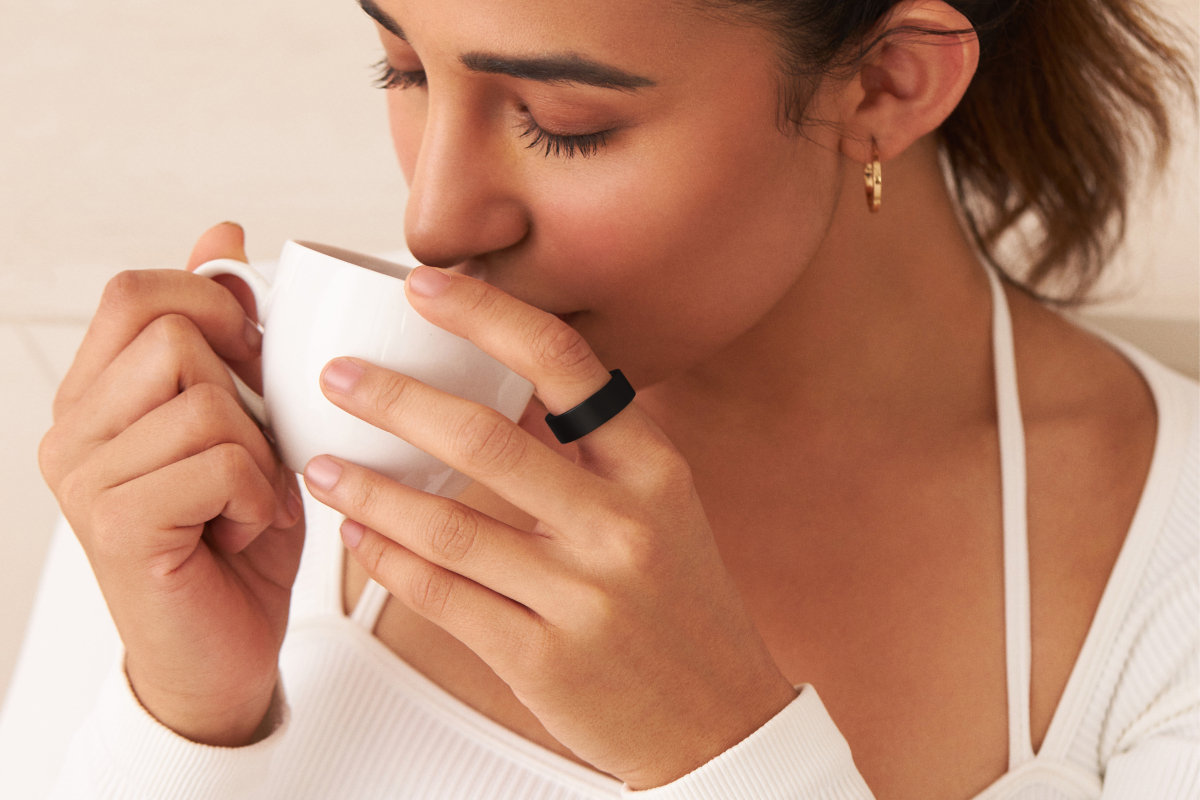
Using a wearable device, such as the Ultrahuman Ring, to measure across the whole night addresses this problem.
It samples hours instead of seconds and captures the shape of the night rather than one point on it, which is why the same underlying rise appeared more than twice as large in the continuous measurement.
What BBT can and cannot tell you
Tracking the cycle via temperature shifts enables you to confirm ovulation has happened, but on its own, it can’t predict your next date. The temperature rise follows the egg’s release, so by the time the shift is visible on a chart, ovulation has already happened.
Predicting a fertile window relies on your own cycle history, not on the temperature reading itself.
When there is no temperature rise
A cycle with no confirmed ovulation is more common than most people realize. In an Ultrahuman dataset of 1,297 cycles from 1,163 women aged 20 to 50, a missing temperature rise was the strongest single marker of an irregular cycle in every age group, running roughly three to four times more often in irregular cycles than regular ones. That dataset included women with PCOS.
If the rise does not appear in a given month, it can mean no egg was released, or that the step was too subtle to detect. Illness, travel and disrupted sleep all affect ovulation and the pattern around it. A run of cycles without a rise is worth raising with a doctor.
Frequently asked questions
What is a normal basal body temperature?
Resting temperature sits a little lower in the first half of the cycle and a little higher after ovulation, but absolute values differ between people, measurement sites and instruments. The useful information is the shift within your own chart, not the number itself.
How much does BBT rise after ovulation?
Enough to see on a chart, but not by much. In the comparison above, the post-ovulation rise measured 0.20 °C by oral BBT and 0.50 °C by continuous overnight skin temperature.
Does BBT tell you when you are fertile?
It confirms ovulation after it has happened, because the rise follows the egg’s release. Prediction depends on your cycle history instead.
Why is my BBT high when I have not ovulated?
Resting temperature also rises with illness, a short night, alcohol and a warm room. That is the main argument for reading a run of days rather than one.
Do I have to take it orally?
Consistency matters more than the site. Absolute readings differ between oral, vaginal and skin measurement, so the chart only works if you keep the same method throughout.
References
- Zhu TY, Rothenbühler M, Hamvas G, et al. The accuracy of wrist skin temperature in detecting ovulation compared to basal body temperature: prospective comparative diagnostic accuracy study. Journal of Medical Internet Research 2021;23(6):e20710. PMID 34100763 . 193 cycles in 57 women, comparing continuous wrist skin temperature against oral BBT, with a home LH test as reference.
THE AUTHOR