Updated Nov 2026
The best smart ring depends on your need: our Ring PRO for battery, Galaxy Ring for Samsung, RingConn Gen 3 for alerts, Gen 2 for breathing, Gen 2 Air for budget, Circular for ECG, or Ring AIR for all-day wear.
TL;DR
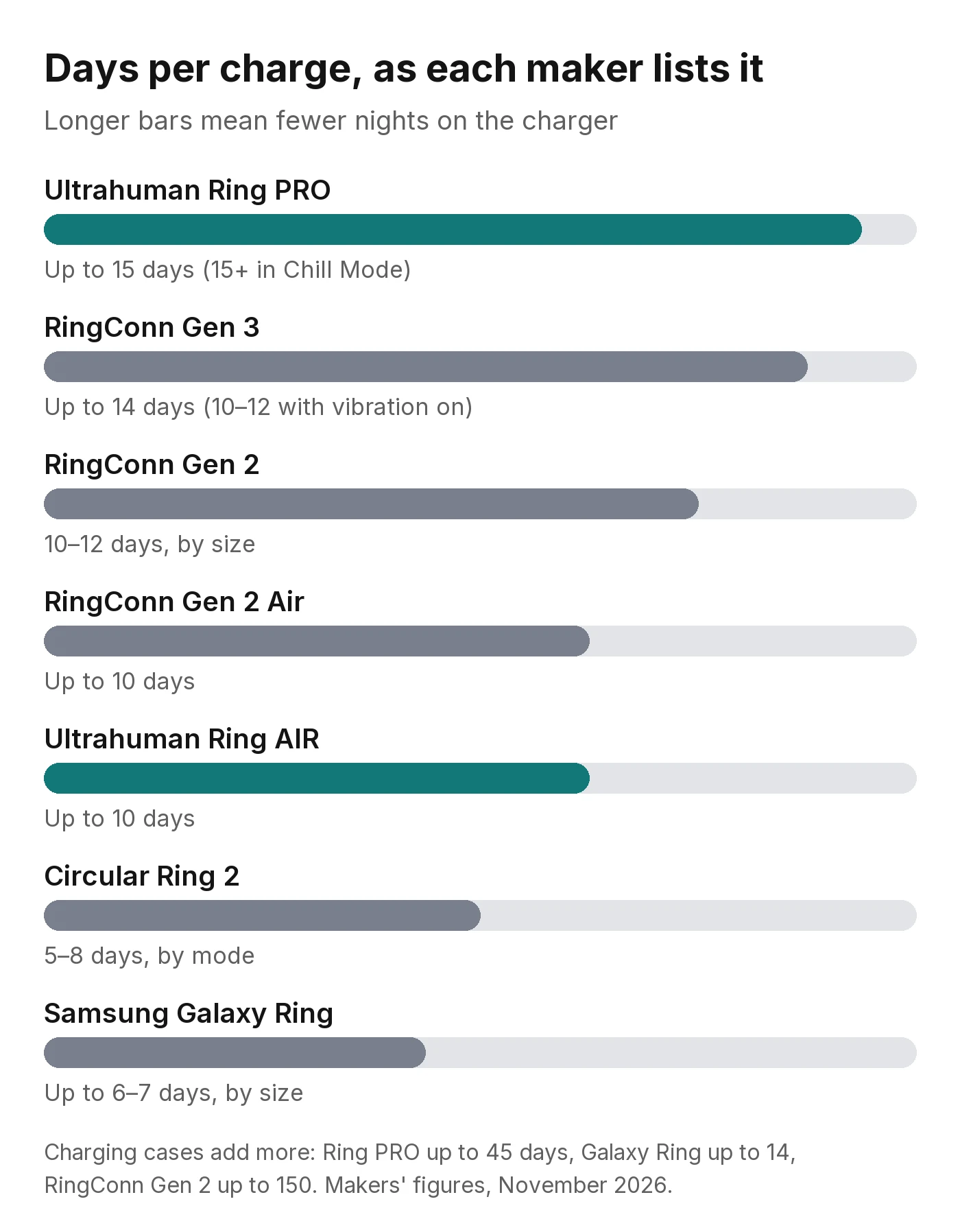
- Long battery: Ultrahuman Ring PRO , our ring with up to 15 days per charge and 15+ days in Chill Mode.
- Samsung Galaxy phone owners: Samsung Galaxy Ring , with an FDA-cleared sleep apnea feature in the US.
- Vibration health alerts: RingConn Gen 3 , with vascular trend insights.
- Sleep breathing insights: RingConn Gen 2 , with up to 150 days of battery from its charging case.
- A tight budget: RingConn Gen 2 Air , at $199.
- On-demand ECG: Circular Ring 2 , which also gives blood-pressure estimates.
- Comfortable all-day wear: Ultrahuman Ring AIR , our lighter ring at 2.4–3.6 g.
- No fees for the basics: none of these seven rings lists a subscription for core tracking.
Smart ring comparison table
Compare all seven rings by buyer need, US list price, battery per charge, weight, subscription, phone support and stand-out feature.
| Ring | Best for | US list price | Battery per charge | Weight | Subscription | Phones | Stand-out feature |
|---|---|---|---|---|---|---|---|
| Ultrahuman Ring PRO | Long battery life | $479 | Up to 15 days; 15+ days in Chill Mode | 3.3–4.8 g | None for core insights | iPhone, Android | Up to 45 days with the PRO Charging Case |
| Samsung Galaxy Ring | Samsung Galaxy phone owners | $399.99 | Up to 6–7 days, by size | From 2.3 g | None listed | Android; some features need a Samsung Galaxy phone | FDA-cleared sleep apnea feature (US) |
| RingConn Gen 3 | Vibration health alerts | $349 | Up to 14 days | 2.5–3.5 g | None | iPhone, Android | Vibration alerts, vascular trend insights |
| RingConn Gen 2 | Sleep breathing insights | $299 | 10–12 days | 2–3 g | None | iPhone, Android | Up to 150 days with the charging case |
| RingConn Gen 2 Air | A tight budget | $199 | Up to 10 days | 2.5–4 g | None | iPhone, Android | $199 with no subscription |
| Circular Ring 2 | On-demand ECG | From $349 | 5–8 days, by mode | 4 g | None for core features | iPhone, Android | 40-second ECG, blood-pressure estimates |
| Ultrahuman Ring AIR | Comfortable all-day wear | See your price | Up to 10 days | 2.4–3.6 g | None for core insights | iPhone, Android | Same app and Sleep Index as Ring PRO |
Prices are each maker’s US list prices as of November 2026, and Circular’s price varies by finish. Sale prices may differ. Ring AIR pricing varies by country.
What we compared
Two of these seven rings are ours: Ring PRO and Ring AIR.
We compared every ring on the same six points: price, battery per charge, weight, subscription, phone support and stand-out feature.
The rings are grouped by buyer need, not ranked overall, because your phone, tracking goal and budget change the right choice. Start with the label that fits you, then compare battery and ongoing costs.
Best smart ring for your need: 7 rings compared
Ultrahuman Ring PRO: best for long battery life

We built Ring PRO for people who want up to 15 days between charges and no subscription for core insights. That’s about 12 days in Turbo Mode and 15+ days in Chill Mode , which tracks heart rate and temperature mainly during sleep and rest.
Pair Ring PRO with the PRO Charging Case and you get up to 45 days before you need a wall socket.
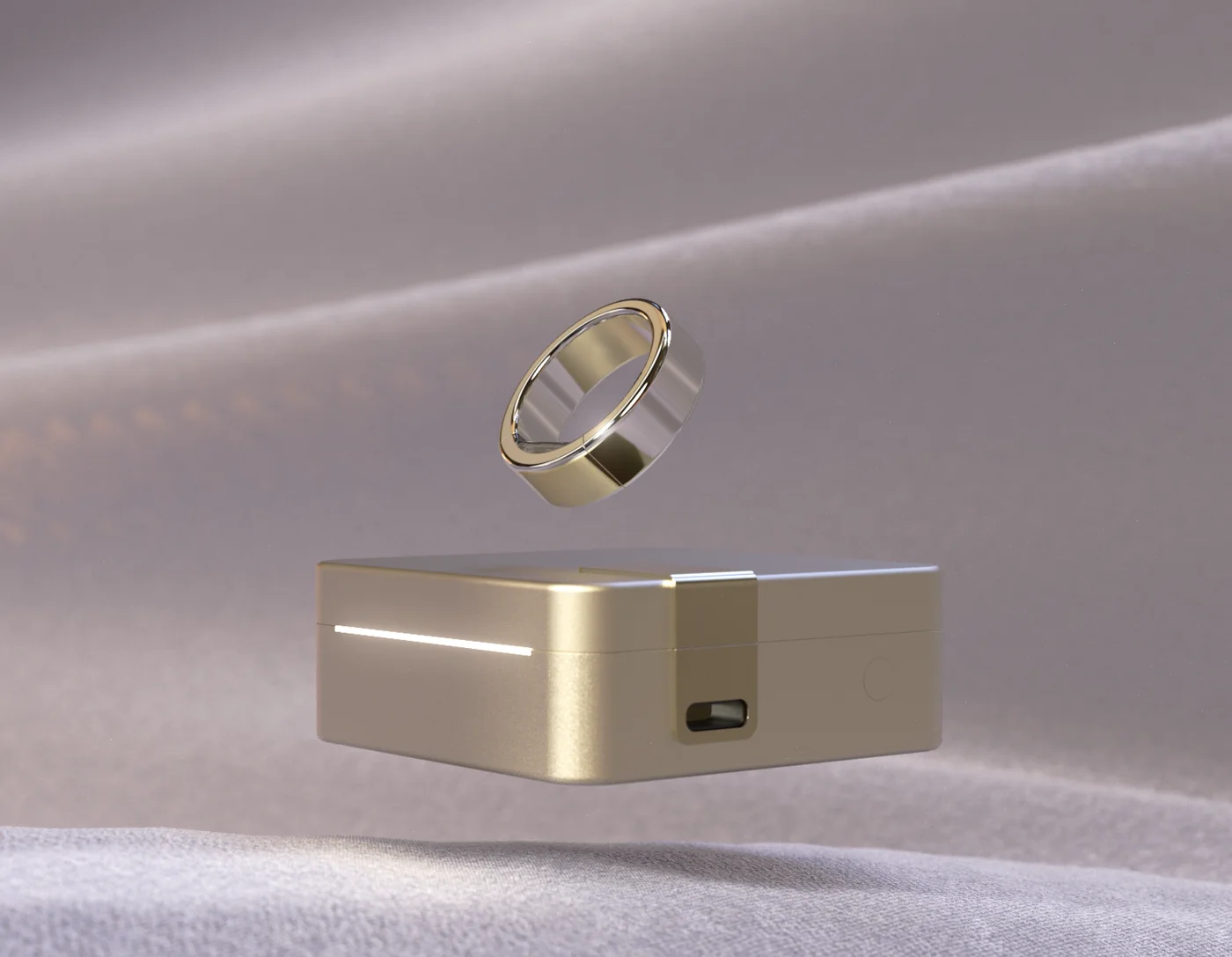
You get sleep, recovery and heart insights from day one, and one purchase gives you lifelong access to your ring and your data. Free PowerPlugs such as Smart Alarm, Caffeine Window, Shift Work and Cycle & Ovulation add more to the app when you want them.
Ring PRO uses our redesigned optical heart-rate (PPG) sensor for better signal quality during sleep and recovery. The unibody titanium ring weighs 3.3–4.8 g, and you can pay with HSA/FSA by selecting Flex at checkout.
Ring PRO comes with a free sizing kit, so you can confirm your fit before your ring ships.
In the US, Ring PRO is available for purchase here .
If you’d prefer a lighter ring, go for Ring AIR , at 2.4–3.6 g.
Samsung Galaxy Ring: best for Samsung Galaxy phone owners
Who it’s for: you already use a compatible Samsung Galaxy phone and want a ring that fits that system.
Stand-out: Galaxy Ring gives you an Energy Score through Galaxy AI. In the US, its updated Sleep Apnea feature was FDA-cleared in July 2026 and runs in the Samsung Health Monitor app for adults 18 and over.
The feature needs two nights of data within 10 days. Samsung says it isn’t for people already diagnosed and doesn’t replace traditional diagnosis.
The titanium ring lists at $399.99, weighs from 2.3 g and has no subscription fee listed. With the charging case, you get up to 14 days in total before you need a socket.
Trade-off: it sets up with an Android phone, the Samsung Health app and a Samsung account, some features need a Samsung Galaxy phone, and it won’t work with iPhone. Battery runs up to 7 days for sizes 12–15 and up to 6 days for sizes 5–11.
RingConn Gen 3: best for vibration health alerts
Who it’s for: you want your ring to nudge you when something changes, on iPhone or Android.
Stand-out: RingConn Gen 3 vibrates for health changes, sedentary reminders and low battery. It also shows vascular health insights, which RingConn describes as trends rather than single readings, plus Sleep Breathing Insights and women’s full-cycle predictions.
It costs $349 with no subscription and weighs 2.5–3.5 g. Battery runs 10–12 days with vibration on and 11–14 days with it off, and it charges in a universal wireless charging case.
Trade-off: it can’t vibrate for messages or alarms, and it doesn’t give blood-pressure readings. RingConn states it isn’t a medical device.
RingConn Gen 2: best for sleep breathing insights
Who it’s for: you’re curious about your breathing at night and you want long gaps between charges.
Stand-out: RingConn Gen 2 offers Sleep Breathing Insights. Using its own dataset, RingConn reports 90.7% accuracy for identifying patterns linked to obstructive sleep apnea when compared with a lab sleep study.
Battery runs 10–12 days, or up to 150 days with the charging case, and it costs $299 with no subscription.
Trade-off: RingConn states it isn’t a medical device, so treat the breathing read as a reason to talk to a doctor, not as an answer.
RingConn Gen 2 Air: best for a budget smart ring
Who it’s for: you want core sleep and health tracking for $199.
Stand-out: RingConn Gen 2 Air costs $199 with no subscription and recharges in about 90 minutes. You also get cycle insights and an AI health companion.
Trade-off: it skips the vibration alerts and vascular insights on Gen 3. It charges on a wired dock rather than a portable charging case.
Circular Ring 2: best for on-demand ECG and blood-pressure estimates
Who it’s for: you want to check your heart rhythm or follow blood-pressure estimates from your finger.
Stand-out: Circular Ring 2 records a 40-second ECG on demand and can flag signs of an irregular rhythm, including possible AFib. Its cuffless blood-pressure estimates start with 3 readings from an ordinary cuff, then one recalibration every 30 days, and each result lands in one of six bands.
You also get a smart wake-up that vibrates at your lightest moment inside a wake window, plus the Kira AI coach. There’s no subscription for its 14+ core features.
Trade-off: battery is shorter than most here, at 8 days in Power Mode and 5 in Performance. The Obsidian Black ring costs $349, while other finishes run $449–$549. Long-term blood-pressure trends and PDF reports are paid extras, and Circular states it isn’t a medical device.
Ultrahuman Ring AIR: best for comfortable all-day wear
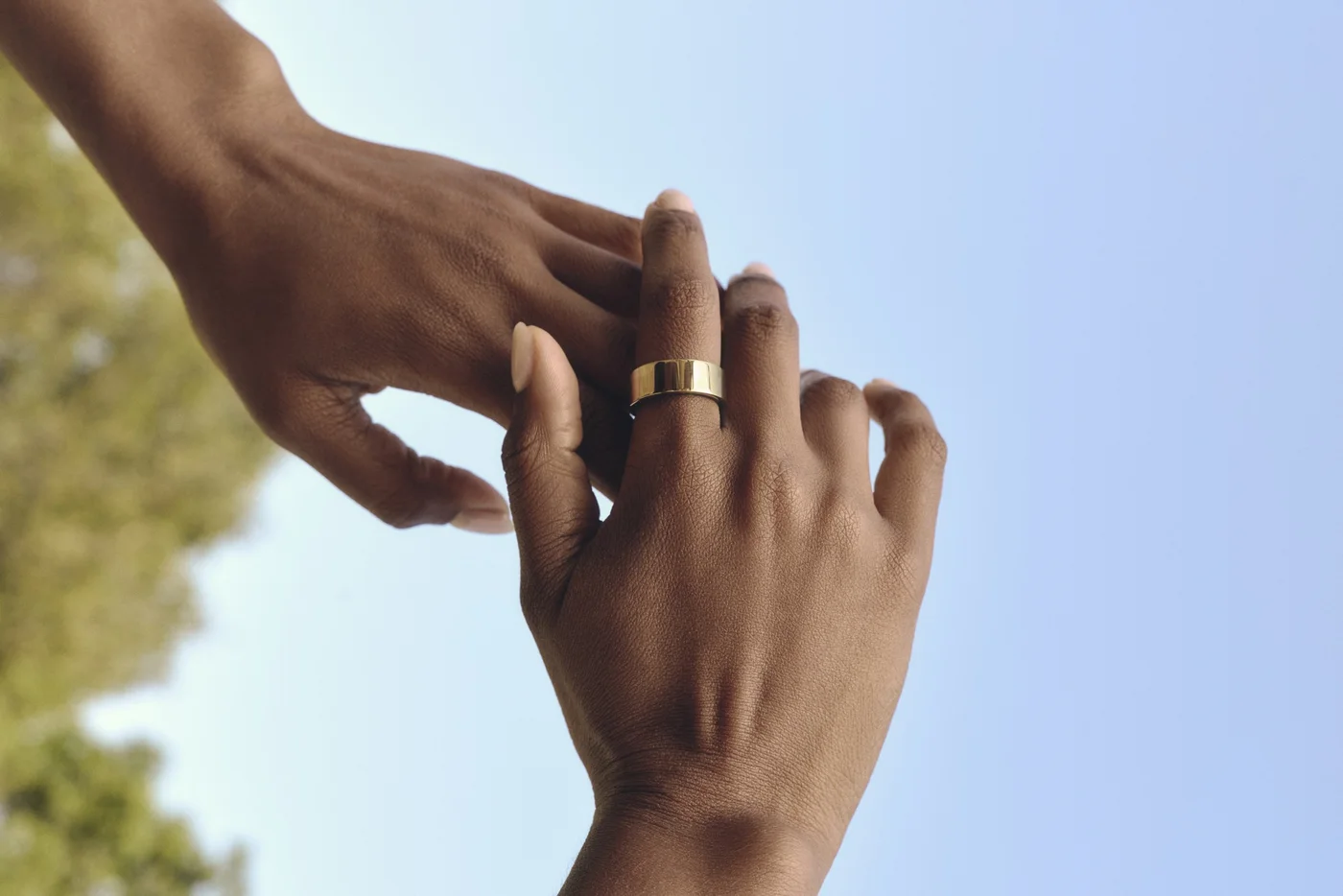
Ring AIR is our lighter ring, at 2.4–3.6 g depending on size. It’s comfortable and lightweight to wear day and night, and fits easily into everyday life, from work and workouts to sleep.
It runs the same Ultrahuman app and Sleep Index as Ring PRO, with no subscription for core insights. You get up to 10 days per charge, and you can see your Ring AIR price here .
If you want more time between charges, go for Ring PRO , with up to 15 days. Our Ring PRO vs Ring AIR comparison walks through every difference.
Which smart ring is best for iPhone or Android?
Ring PRO, Ring AIR, all three RingConn rings and Circular Ring 2 work with iPhone and Android. RingConn requires iOS 17 or later, or Android 10 or later.
Galaxy Ring sets up with an Android phone, and some features need a Samsung Galaxy phone. It doesn’t work with iPhone.
Which smart ring is best for fitness, workouts and recovery?
For workouts and recovery, choose by the feedback you want: our Ring PRO or Ring AIR for movement, workout heart rate and recovery, RingConn Gen 3 for sedentary reminders, or Circular Ring 2 for activity intensity zones. Rings have no screen, so you’ll read most of it in the app.
On our rings, the app shows your Movement Index, steps and active hours, workout heart rate and zones, and a Dynamic Recovery Score. The Movement Index scores how much you move, how evenly you spread it across the day and how often you train.
Which smart rings track your menstrual cycle?
Ring PRO, Ring AIR, RingConn Gen 3, Gen 2 Air and Circular Ring 2 all offer cycle features. On our rings, Cycle & Ovulation is a free PowerPlug in the Ultrahuman app.
RingConn Gen 3 adds women’s full-cycle predictions, and Gen 2 Air gives cycle insights with forecasts based on your temperature trends and cycle history. Circular Ring 2 includes women’s health and cycle tracking among its core features.
How to choose a smart ring for fitness, sleep or health
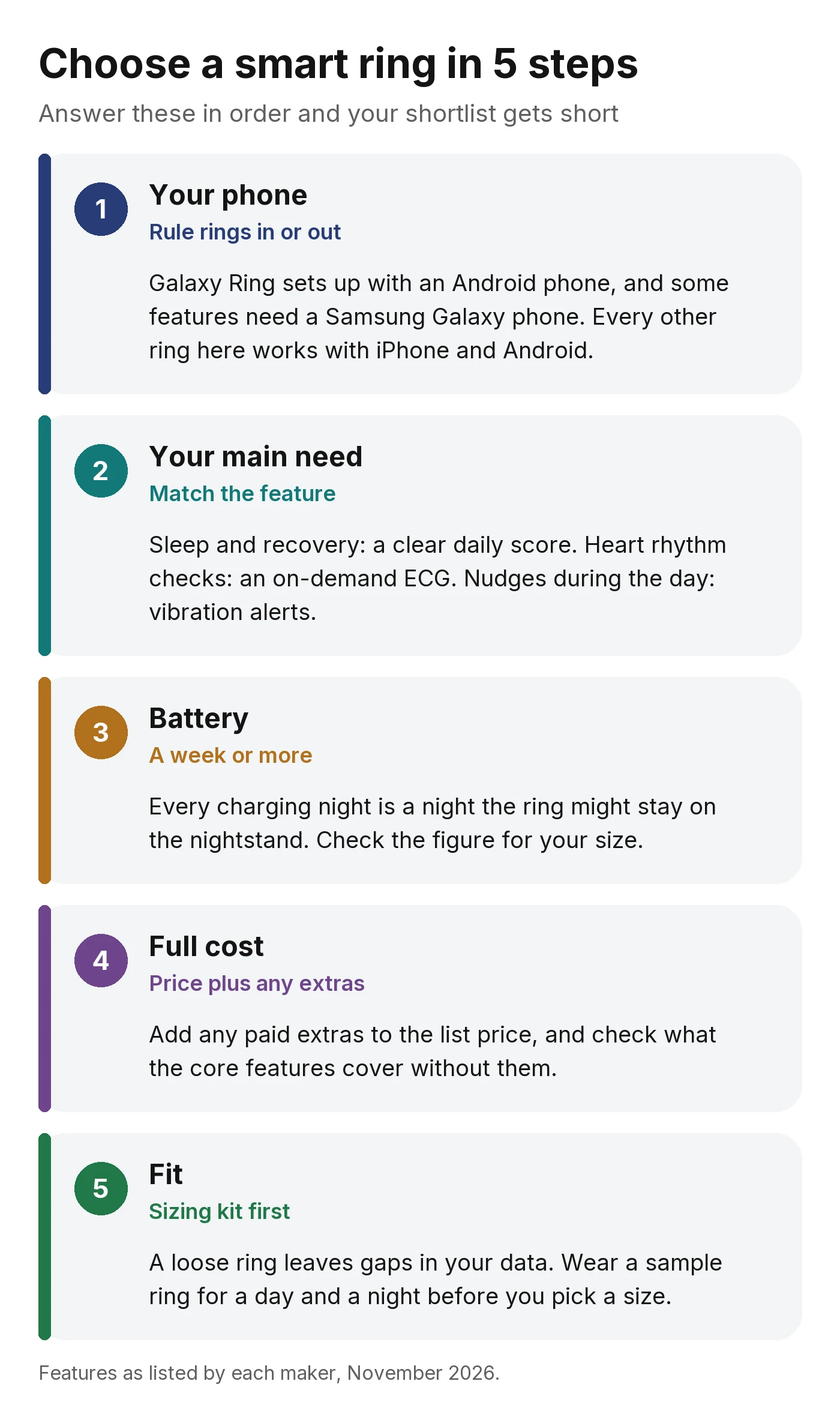
- Start with your phone. Galaxy Ring sets up with an Android phone, and some features need a Samsung Galaxy phone. Every other ring here works with iPhone and Android.
- Name your main need: fitness, sleep or heart. For sleep, fitness and recovery, look for a clear daily score you’ll actually check. For heart rhythm, look for an on-demand ECG. For nudges during the day, look for vibration alerts.
- Check battery for your size. A week or more per charge makes daily wear easier.
- Add the full cost. Add any paid extras to the list price, and check what the core features cover without them.
- Get the fit right. A loose fit can cause light leakage, leading to gaps in your data. Use a sizing kit before you buy.
With our sizing kit , you wear a sample ring for 24 hours or more, including sleep. Try your index, middle and ring fingers, and pick the size that sits snug at the base. It’s too loose if it spins or slides.
New to rings? What does a smart ring do? covers the basics.
How accurate are smart rings for sleep and HRV?
Smart rings, like other wearables, are better at telling sleep from wake than at splitting light, deep and REM sleep. Use sleep timing and long-term trends as your main signals, and treat stage splits as estimates.
A 2024 review in npj Digital Medicine found wearables averaged 87.2% accuracy for sleep versus wake across 53 devices. For four stages (light, deep, REM and awake), the average fell to 65.2% across 9 devices.
On timing, here’s what we measured on the Ultrahuman Ring. In a 20-night test with 4 people against an FDA-cleared home sleep test, sleep onset and wake time typically landed within about 8 minutes, and total sleep within about 15 minutes.
Heart rate variability (HRV) is the variation in time between your heartbeats. Against a chest-strap ECG in 9 adults, one night each, our ring’s sleep HRV read 1.3 ms higher on average.
Its agreement with the ECG, called concordance, was 0.97, where 1 is perfect agreement. That’s a small study, so treat it as an early estimate.
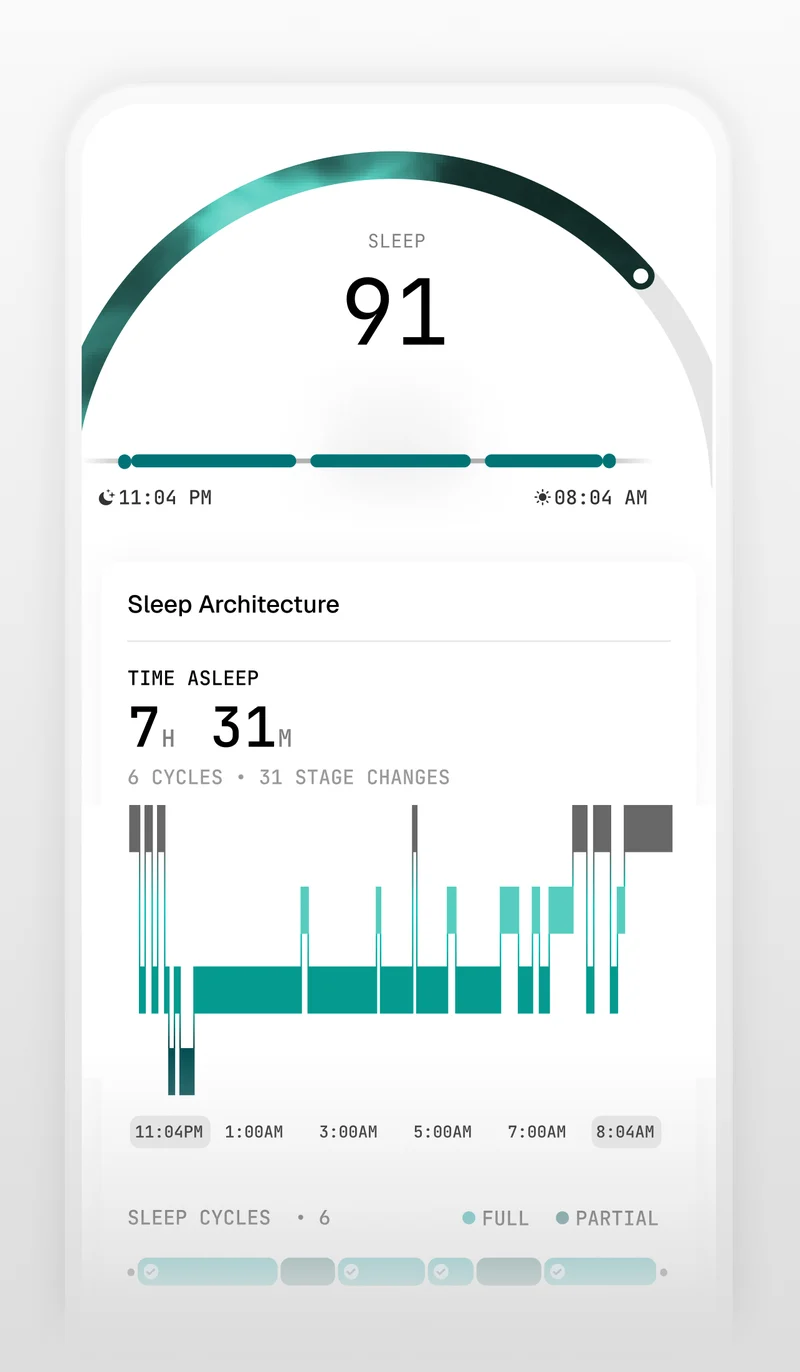
Your Sleep Index rates each night from 0 to 100. Across 353,737 members from January to May 2026, the median was 80, so compare your score with your own weekly trend.
Which smart ring is best without a subscription?
All seven rings compared here provide core tracking without a listed subscription: Ring PRO, Ring AIR, the three RingConn models, Circular Ring 2 and Galaxy Ring.
The right subscription-free ring depends on your priority: choose Ring PRO for long battery, Galaxy Ring for Android (with extra features on a Samsung Galaxy phone), RingConn Gen 2 Air for a tight budget, Circular Ring 2 for on-demand ECG or Ring AIR for comfortable all-day wear.
On our rings, extras are optional. Ultrahuman Max costs $99.99 for a year and includes all premium PowerPlugs, upcoming PowerPlugs and Jade Pro AI. You can also buy a few PowerPlugs on their own, like Cardio Adaptability at $2.90 a month.
Those add-ons expand what your app does without limiting any core features. On Circular Ring 2, the optional premium features include long-term blood-pressure trends and PDF reports.
FAQ
Is a smart ring or a smartwatch better for tracking?
Neither is better for everyone: the better tracker is the one you’ll wear every night, since gaps in wear mean gaps in data. In our comparison of 106 nights from 56 people , our ring’s sleep onset was within half an hour of a consumer smartwatch on 96% of nights.
What happens if I’m away from my phone for days?
Your ring stores data and syncs when you’re back, but storage varies. Ring PRO holds up to 250 days of data, RingConn Gen 3 holds 10 days and Gen 2 Air holds 5–7 days.
What sizes do smart rings come in?
Ring PRO and Ring AIR come in sizes 5–14, and Galaxy Ring in 5–15. RingConn Gen 3 runs 6–15, while RingConn Gen 2, Gen 2 Air and Circular Ring 2 run 6–14. A sizing kit is the safest way to find yours.
Can I wear a smart ring swimming or in the shower?
Yes, all seven are water resistant. Ring PRO and Ring AIR list 100 m. RingConn lists IP68 and 100 m for Gen 2 and Gen 2 Air, and IP68 and 10 ATM for Gen 3. Galaxy Ring lists 10 ATM (up to 100 m for up to 10 minutes), and Circular says its ring is waterproof for the shower and the pool.
What if my finger swells while I’m wearing a ring?
Take it off if it starts to feel tight. Ring PRO’s ProRelease design lets the ring be cut apart more easily if your finger swells or you’re injured.
Get Ring PRO with a free sizing kit , or compare Ring PRO and Ring AIR .
Sources
- Ultrahuman. Ring PRO product page.
- Ultrahuman. Ring AIR product page.
- Ultrahuman. PowerPlugs .
- Ultrahuman. Introducing Chill Mode .
- Ultrahuman. Sleep Index explainer .
- Ultrahuman. Accuracy pages: sleep onset , wake time and sleep duration .
- Ultrahuman. Sleep HRV accuracy study .
- Ultrahuman. Ring PRO vs Ring AIR , How it works , How to use the Ultrahuman Ring sizing kit and What does a smart ring do?
- Samsung. Galaxy Ring and Sleep Apnea feature on Galaxy Ring news release .
- RingConn. Gen 3 , Gen 2 and Gen 2 Air .
- Circular. Circular Ring 2 and product page .
- Birrer V, et al. Evaluating reliability in wearable devices for sleep staging . npj Digital Medicine, 2024.
THE AUTHOR