The impact of blue light from our phones, screens, and devices on our sleep is well-studied.
Blue light waves disrupt our natural circadian rhythm , which has been linked to poor sleep , metabolic health issues , and reduced cognitive performance.
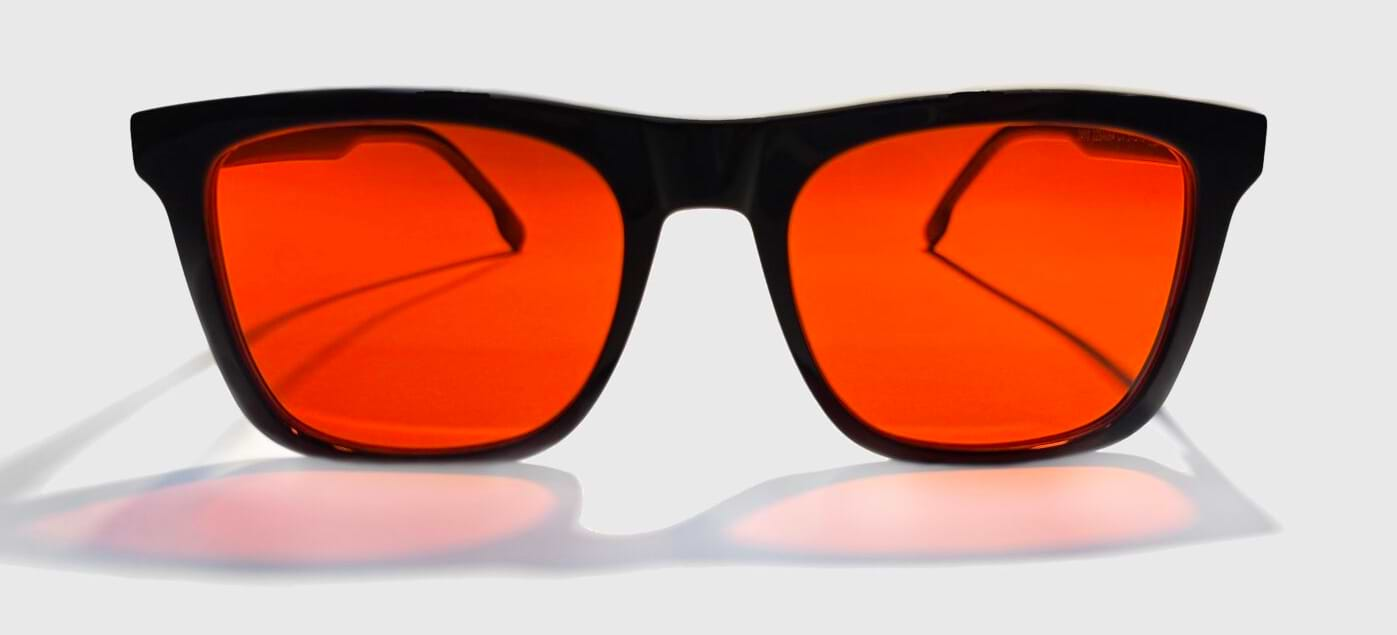
Wearing dark-tinted blue-light blocking glasses, which filter 80–100% of blue light can help mitigate these effects.
In this guide, we explain the evidence behind their effectiveness from an Ultrahuman study.
Shop: Check out Ultrahuman Blue Light-Blocking Glasses here
Highlights
- Studies have shown that blue light wavelengths from the screens of smartphones and televisions can disrupt sleep patterns.
- Blue light exposure in the evening is linked to poor sleep, metabolic health issues, and impaired cognitive performance.
- Wearing red-tinted blue light-blocking glasses at night can mitigate the effects of blue light and aid in improved sleep.
What is blue light?
Blue light is a fixture of our modern lives and refers to certain wavelengths of light emitted by our favorite tech. Phones, TVs, laptops, and tablets — even LED light bulbs — bathe us in blue light after dark.
But blue light has been proven to affect the way our bodies naturally wind down for bed . Evening exposure can disrupt our circadian rhythm, our internal “body clock” that sets when we sleep and wake.
What are the effects of blue light on sleep?
As darkness falls, our bodies produce melatonin, which prepares us to wind down and sleep. Melatonin production is linked to our natural circadian rhythm. However, exposure to blue light from smartphones or TVs in the evening can suppress melatonin production, which delays the onset of sleep.
The effects of blue light on our circadian rhythm are well-studied and documented . This disruption is linked to negative health outcomes. These effects include:
- Nighttime exposure to blue light suppresses melatonin, delaying sleep onset and affecting sleep quality.
- Poor sleep and circadian misalignment are linked to reduced cognitive performance, increased obesity risk, and metabolic diseases.
- Blue light penetrates deep into the eye and may contribute to retinal damage.
How blue light-blocking glasses work

Blue light-blocking glasses (BLBG) filter out high-energy blue wavelengths (430–530 nm). This can negate the effects of blue light and allow melatonin to accumulate naturally.
And a new pilot study by Ultrahuman revealed the benefits could extend longer than expected .
The study of Ultrahuman Ring AIR users found that BLBG users experienced improved sleep scores and improved resting heart rate metrics — up to four weeks after ceasing use.
Red vs yellow: Which blue light-blocking glasses are best?

There are many BLBG options on the market now, but there are key differences to consider before purchasing.
The biggest difference is how much blue light each type of glasses blocks. You can opt for more subtle lenses that block 50–80% of blue light or darker lenses that block 80–100%.
Research by Ultrahuman has shown that its blue light-blocking glasses are adept at filtering out these wavelengths — but the lens color is key. The study found that yellow-tinted BLBG blocked 80% of light on the 430–450 nm wavelength, while red-tinted BLBG blocked nearly 100% of blue and green light.
How to use blue light-blocking glasses (BLBG)
The timing of when you wear your blue light-filtering glasses is important:
- For optimal sleep benefits, switch to red-lensed BLBGs 2–3 hours before bed to negate the melatonin-suppressing effects of blue light.
- In the daytime use amber-tinted glasses to reduce eyestrain.
- After dark use warm or red-hued lighting and turn off overhead LED lights to complement BLBGs and reduce blue light exposure.
- Dim the screen on your devices and enable “night mode” or “warm tone” in your smartphone settings. You can usually set these to activate via a timer.
- Keep overhead LED lighting to a minimum when wearing BLBGs.
- Ensure you practice good sleep hygiene: limit caffeine intake late in the day, maintain a consistent sleep schedule, and wind down before bed.
Shop: Check out Ultrahuman Blue Light-Blocking Glasses here
Conclusion: Are blue light-blocking glasses worth it?
The human body follows a slightly longer than 24-hour circadian rhythm, which is anchored to natural light exposure during the daytime. Light acts as a timing cue by enhancing alertness and suppressing sleep. Likewise, evening darkness promotes melatonin production, which prepares our bodies for sleep.
Modern civilization interferes with this cycle, usually by providing light ‘on-demand’ in the evenings from our screens and home lighting. Exposure in the evening or at night has been shown to delay sleep onset, which can increase restlessness and is linked to a host of negative health outcomes. And blue light (peaking at 460 nm on the spectrum) is the most potent suppressor of melatonin secretion.
Blue light-blocking glasses can be effective in boosting sleep quality and recovery — and there’s evidence that they may have longer-lasting benefits, too.
To maximize sleep benefits, choose red-tinted BLBGs for evening use, which are shown to block the most blue light. Wear them 2–3 hours before bedtime and turn off bright overhead lighting.
THE AUTHOR