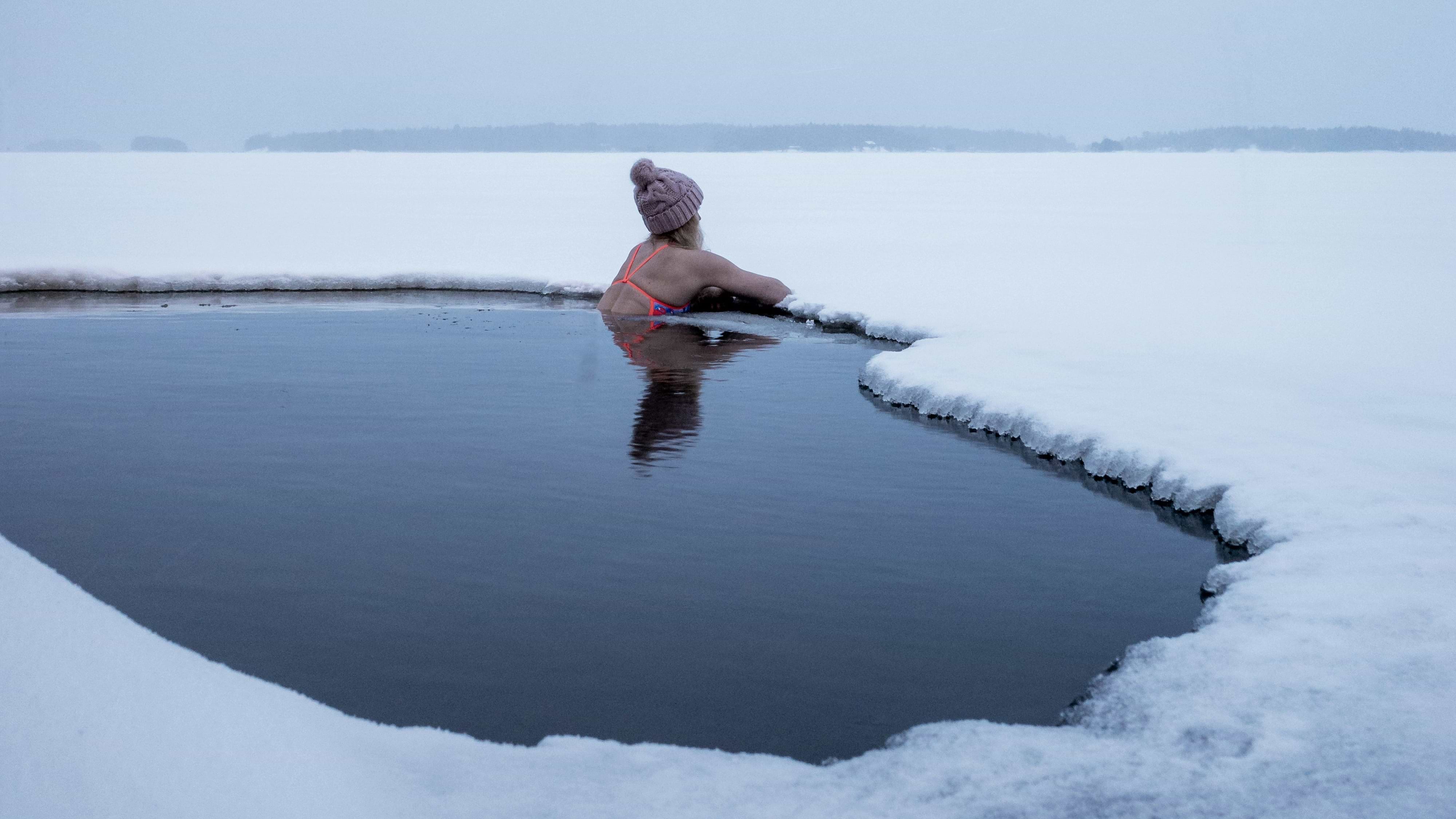
A cold plunge after a hard session will help with muscle soreness and support your recovery, so you can cram another session in quicker.
Elite athletes use ice baths to prepare for their next match, and many do it at the Ultrahuman Performance Lab . But this recovery shortcut comes at a cost.
Evidence points to reduced muscle gains and less strength over time by preventing muscular adaptations post-workout.
In this guide, we explain when cold therapy can help and hinder your training.
Key takeaways
- Cold water immersion beats other recovery methods for muscle soreness.
- But straight after resistance training, it was shown to reduce strength and muscle gains over 12 weeks compared with active recovery.
- Cold reduces the inflammation that causes soreness
- But that inflammation is what drives muscle adaptation
- Leave several hours between lifting and the ice bath, and you get the soreness relief without the cost.
How cold therapy reduced soreness
A meta-analysis of 28 studies found cold water immersion relieved muscle soreness after hard exercise better than other common methods, including active recovery, contrast water therapy and warm-water immersion.
For recovering muscular power and flexibility, it came out about level with the alternatives, and air cryotherapy beat it for recovering strength.
The same review found water temperature and time in the water rarely changed the outcome, which is worth knowing before optimizing either.
It costs strength and muscle
In a 12-week trial , 21 physically active men strength trained twice a week and took either 10 minutes of cold water immersion or active recovery after every session. Strength and muscle mass increased more in the active recovery group.
Three separate measures rose in the active recovery group and did not rise in the cold water group: isokinetic work by 19%, type II muscle fiber size by 17%, and the number of myonuclei per fiber by 26%.
A second arm of the study took muscle biopsies. The satellite cell response in the 24 to 48 hours after training, part of how muscle repairs and grows, was blunted by the cold water.
When and how to use cold immersion
- Quick turnaround: If returning to training or performance is essential, e.g. playing football Saturday and Tuesday, then cold immersion can promote faster recovery.
- Leave a few hours: A gap can promote adaptation before blunting gains. The Ultrahuman Performance Lab leaves four to six hours between training and an ice bath, at 8 to 11°C for two to four minutes
- After a sauna: Try one to two minutes at 8 - 10°C following the heat.
Frequently asked questions
Does cold water immersion help muscle soreness?
Yes. Across 28 studies it relieved soreness better than other common recovery methods, including active recovery and warm-water immersion.
Does a cold plunge after the gym stop muscle growth?
It reduces it. In a 12-week trial, men who took 10 minutes of cold water immersion after each strength session gained less strength and muscle than men who did active recovery, and three separate muscle measures that rose in the active recovery group did not rise in the cold group.
How cold, and how long?
One meta-analysis found temperature and duration rarely changed the result, so the evidence here is weaker than most protocols imply. Our Performance Lab uses 8 to 11°C for two to four minutes.
Is cold water immersion safe?
Cold water raises heart rate and blood pressure sharply, so it is not a neutral intervention. If you have a heart condition, high blood pressure, or you are pregnant, take medical advice first. Never plunge alone in open water.
References
- Moore E, Fuller JT, Buckley JD, et al. Effects of cold-water immersion compared with other recovery modalities on athletic performance following acute strenuous exercise in physically active participants: a systematic review, meta-analysis, and meta-regression. Sports Medicine 2023;53(3):687–705. PMID 36527593 . 28 studies.
- Roberts LA, Raastad T, Markworth JF, et al. Post-exercise cold water immersion attenuates acute anabolic signalling and long-term adaptations in muscle to strength training. Journal of Physiology 2015;593(18):4285–4301. PMID 26174323 . 21 men, 12 weeks.
- Šrámek P, Šimečková M, Janský L, Šavlíková J, Vybíral S. Human physiological responses to immersion into water of different temperatures. European Journal of Applied Physiology 2000;81(5):436–442. PMID 10751106
This article is for general information and is not medical advice. Cold water immersion raises heart rate and blood pressure. If you have a cardiovascular condition or are pregnant, speak to a doctor before trying it.
THE AUTHOR