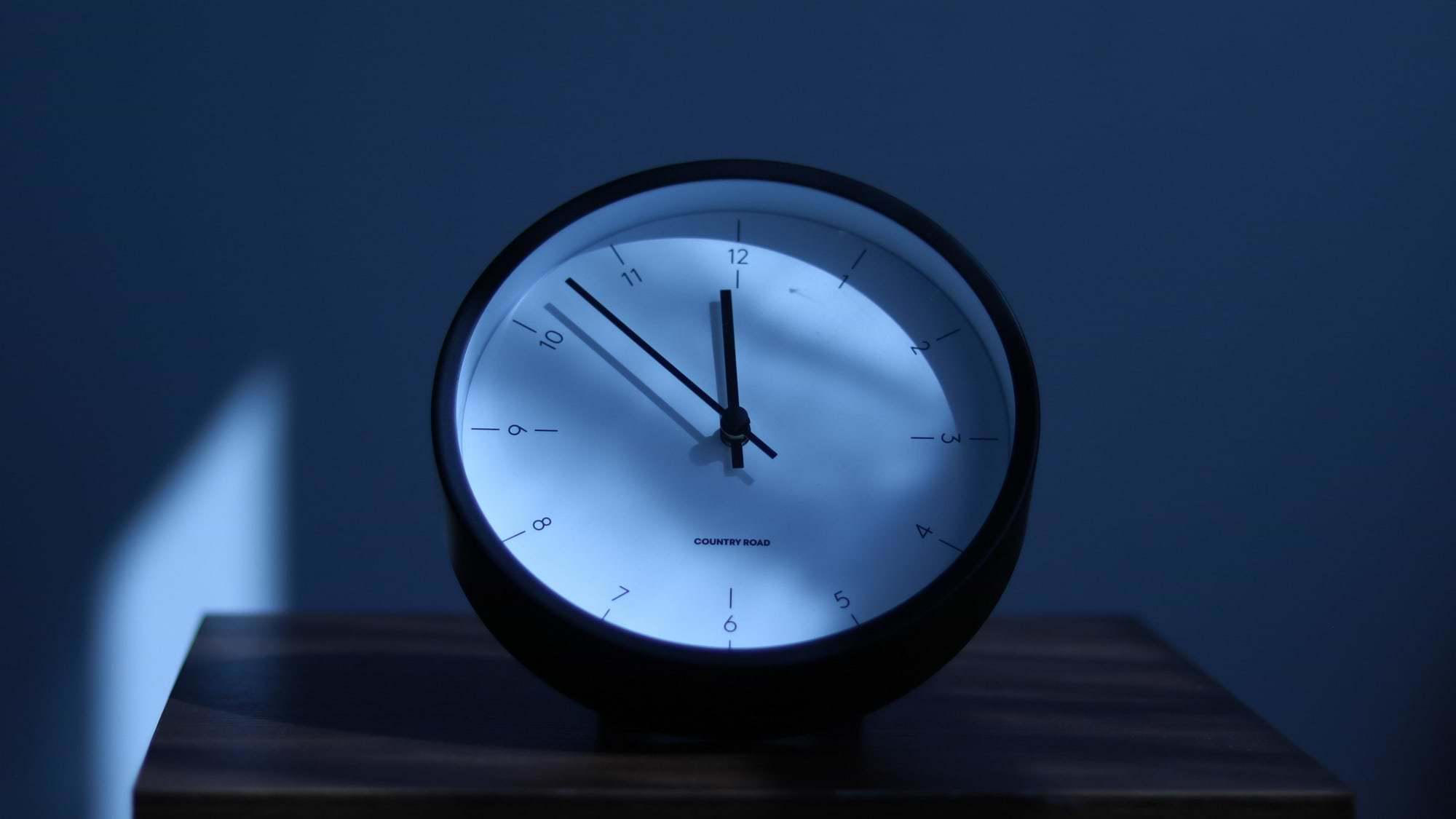
The clocks go back on 25 October in the UK and Europe, and on 1 November in the US – but how does the extra hour affect your sleep?
When our science team looked at what happened to members across the switch, the people who came off worst were the ones already sleeping well. Members whose sleep was irregular beforehand gained about half an hour.
In this guide, we explain what the clock change does to your sleep, and how to settle into it faster.
Key takeaways
- Across 5,145 Ring AIR members, the effect of the autumn change was small for most people.
- Members already scoring well on sleep dipped by around 5%. Members with irregular sleep before the switch improved by around 7%, helped by an average of 30 minutes more sleep.
- The autumn change is the easier of the two. Research finds sleep and activity timing adjust to it, and do not adjust to the spring change.
- Keep your wake time steady and your bedtime tends to follow.
Our science team compared the week before, during, and after the switch for 5,145 Ultrahuman Ring AIR users across four US time zones.
For most people, the effects were minimal. Two groups stood out.
Members already sleeping well dipped by around 5%. Their sleep scores fell, with more restlessness and more fragmentation across the night.
Members with irregular sleep before the switch improved by around 7%, helped by an average of 30 minutes more sleep. They simply slept longer.
One limitation worth stating. This cohort sits in four US time zones, and the UK and Europe change a week earlier. The pattern should carry across, but the figures come from US members.
Spring vs fall clock change
Your body clock runs on light, temperature and daily routine, so it does not reset the way your phone does.
In a study of 55,000 people , plus 50 individually chronotyped subjects tracked for eight weeks around each transition, sleep and activity timing adjusted readily when the clocks went back in autumn. Neither adjusted properly when the clocks went forward in spring, and late chronotypes had the worst of it.
Most coverage treats the two switches as equivalent. Spring is the harder one, in the research and in our member data.
Why a good sleeper might feel it more
We measured the split. What caused it is another question, so treat what follows as a reading.
A well-anchored sleep schedule is anchored to something: a consistent bedtime, a consistent wake time, light at roughly the same hour each morning. Move the clock and all of those shift at once relative to your internal timing. Someone whose nights already vary has less of a pattern to disturb, and picks up the spare hour.
If that reading is right, the people who should be most careful this week are the ones who normally have no trouble. See how an inconsistent sleep schedule takes its toll for what variable nights look like the rest of the year.
How to sleep better around the clock change
Get outside early: Natural light within about thirty minutes of waking is the strongest cue your clock has. Morning light is what sets your timing for the day.
Defend your wake time: A steady wake time settles your circadian phase, and your bedtime tends to follow it.
Train earlier in the day: Morning or midday activity reinforces daytime physiology and steadier recovery.
Dim the evening: Cut overhead and screen light for two to three hours before bed.
Repeat your wind-down: A familiar sequence, whether that is reading, stretching or breath work, re-establishes predictability after any time change.
How the Ultrahuman Ring handles it
The Circadian Alignment PowerPlug recalibrates to the new clock time on its own. It adjusts your biological phases, shifts the light-exposure and activity windows it recommends, and updates its sleep and wake guidance to match.
You do not need to change anything in the app. The Ring is tracking your circadian rhythm . The clock on the wall is one input to that.
Frequently asked questions
How long does it take to adjust to the clocks going back?
For most people, a few days. Research on individually chronotyped subjects found sleep and activity timing adjusted readily to the autumn change, unlike the spring one. In our own members, most of the effect had settled within the week.
Why do I feel worse after the clocks change if I usually sleep well?
You may be seeing what we saw in members: those already scoring well on sleep dipped by around 5%, while those sleeping irregularly improved.
Is the autumn clock change worse than the spring one?
No. The spring change is the harder of the two. Going back gives you an hour, and it is the switch your body clock adjusts to.
Should I go to bed an hour later to adjust?
Defending your wake time matters more. Keep it steady, get outside early, and let your bedtime follow.
Disclaimer: The contents of this article are for general information and educational purposes only. It neither provides any medical advice nor intends to substitute professional medical opinion on the treatment, diagnosis, prevention or alleviation of any disease, disorder or disability. Always consult with your doctor or qualified healthcare professional about your health condition and/or concerns and before undertaking a new healthcare regimen including making any dietary or lifestyle changes.
References
- Kantermann T, Juda M, Merrow M, Roenneberg T. The human circadian clock’s seasonal adjustment is disrupted by daylight saving time. Current Biology 2007;17(22):1996–2000. PMID 17964164 . Survey of 55,000 people, plus 50 chronotyped subjects across eight weeks per transition.
Read next: How an inconsistent sleep schedule takes its toll on your body · What is circadian rhythm · Morning light and your circadian rhythm
THE AUTHOR