Smart rings and wearables have become excellent tools for cycle tracking, helping millions of women understand their cycle health. Wearables like the Ultrahuman Ring continuously monitor your body, taking the daily effort out of cycle tracking and enabling consistent tracking over time.
Manual methods depend on doing the same thing at the same moment each morning, and they lose accuracy whenever that slips. And calendar-based tracking can’t tell whether you’ve actually ovulated. Wearables can use biosensors to confirm ovulation and hone predictions.
In this guide, we explain how wearable tracking compares with the alternatives, what a ring measures, and how the most advanced wearables can make accurate tracking effortless.
Key takeaways
- Continuous monitoring using skin temperature and other markers enables accurate cycle tracking.
- Unlike calendar-based tracking, a wearable reads the phase of your cycle using temperature and heart rate markers to look for the signs of ovulation.
- While core temperature is more accurate, taking consistent readings is difficult. Wearable-based tracking beats basal temperature testing for ease of use.
How a smart ring tracks your cycle
A ring tracks skin temperature, resting heart rate, and heart rate variability. All three shift across the cycle.
| Where you are in the cycle | Skin temperature | Resting heart rate | Heart rate variability |
|---|---|---|---|
| First half, before ovulation | Low and steady | Lower | Higher |
| Around ovulation | Starts to rise | Ticks up | Dips |
| After ovulation, before your period | Elevated | Elevated | Lower |
It reads them during sleep because daytime movement, meals, and stress move temperature and heart rate far more than the cycle does, which buries the cycle’s smaller signal. How the Ring measures overnight temperature covers the measurement itself.
From those three signals, the app predicts your period, confirms ovulation after it happens, and reports your cycle length, period length, and regularity.
How wearable tracking compares with other methods
A calendar predicts from your history alone. It measures nothing about the cycle you are currently in, so when cycle length varies, the prediction drifts with it, and it can never confirm that ovulation actually happened.
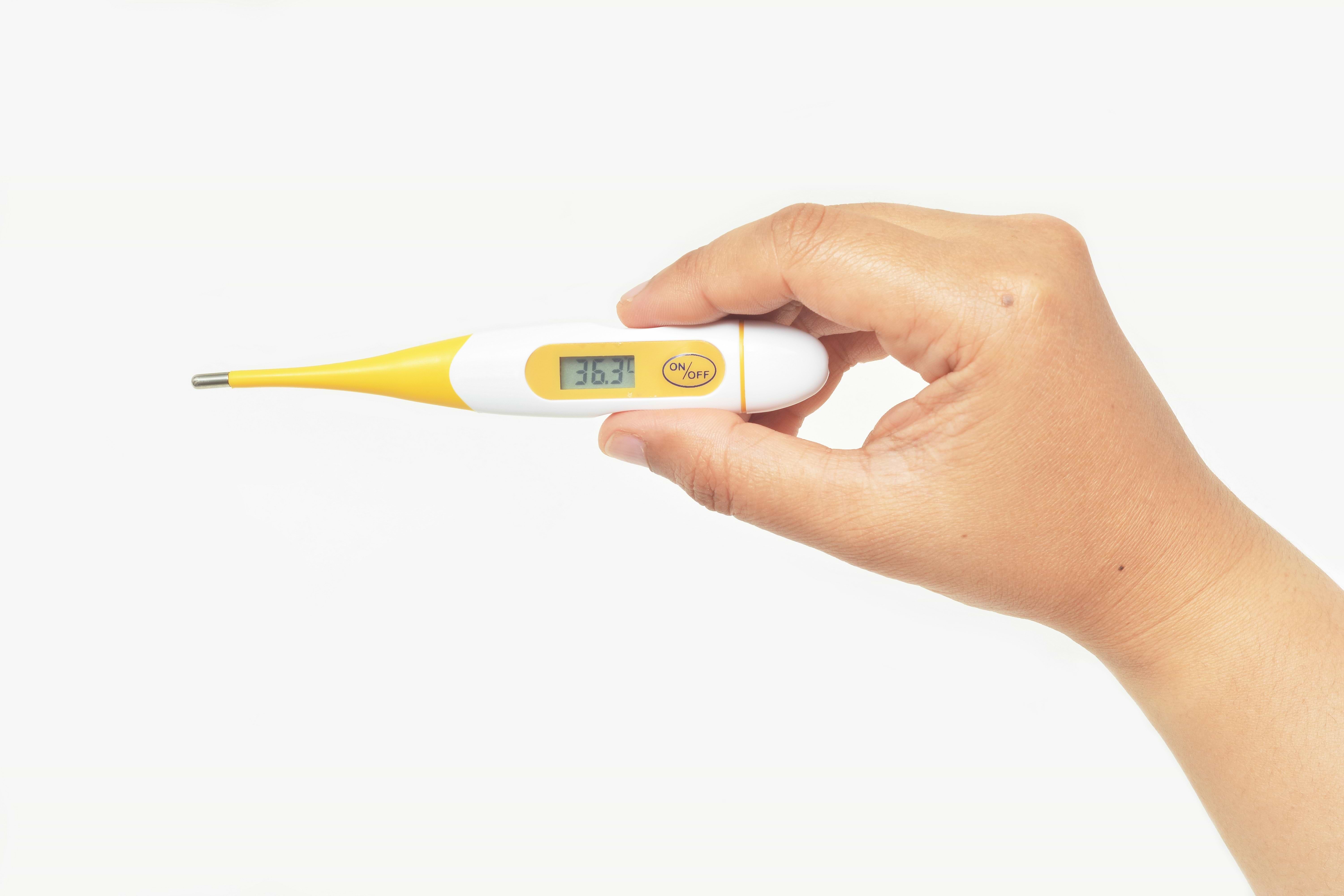
Basal body temperature charting does measure a real signal, and a sustained step up confirms ovulation. The constraint is the sampling: one reading, taken in the seconds before you move, on a temperature curve that is still shifting. Wake an hour late and that day’s point is not comparable to yesterday’s. The basal body temperature guide covers how to chart it and where it falls short.
In a pilot of 22 women across 48 complete cycles, Cycle and Ovulation PRO ovulation tracking was found to be a median of one day from the peak hormone surge measured by a home urine test. The calendar method, run on the same cycles, was off by two days, and for women with irregular cycles and for older women the calendar’s gap widened to around five days.
Against a urine test tracking four hormone metabolites, Cycle and Ovulation PRO for Ultrahuman Ring agreed 92.9% of the time , with 100% sensitivity and a positive predictive value of 91.7%. When it flagged an ovulation, it was right about nine times in ten, and it did not miss one.
Frequently asked questions
Can a smart ring really track your cycle?
It tracks the physiological signals your cycle produces overnight, and compares each night to your own baseline. It confirms ovulation after it happens and predicts your period from the pattern it learns.
How long before it works?
It learns your temperature pattern over a 30-day baseline, so expect the first month to be establishing your normal before predictions and confirmations become meaningful.
Does it work if my cycles are irregular?
Yes, and it is more useful than calendar prediction when cycles vary, because it reads the current cycle rather than extrapolating from past ones. Precision still drops when the underlying shift is subtle.
Can I use it as contraception?
No. Cycle tracking on the Ring, including PRO, is a wellness feature for understanding your cycle. It is not a contraceptive method and does not provide a diagnosis.
References
- Goodale BM, Shilaih M, Falco L, et al. Wearable sensors reveal menses-driven changes in physiology and enable prediction of the fertile window: observational study. Journal of Medical Internet Research 2019;21(4):e13404. PMID 30998226 . Wrist-worn device, 200+ women and 1,000+ cycles. Fertile window detected with 90% accuracy (95% CI 0.89-0.92).
- Ultrahuman Cycle and Ovulation accuracy validation. Ultrahuman Science
THE AUTHOR