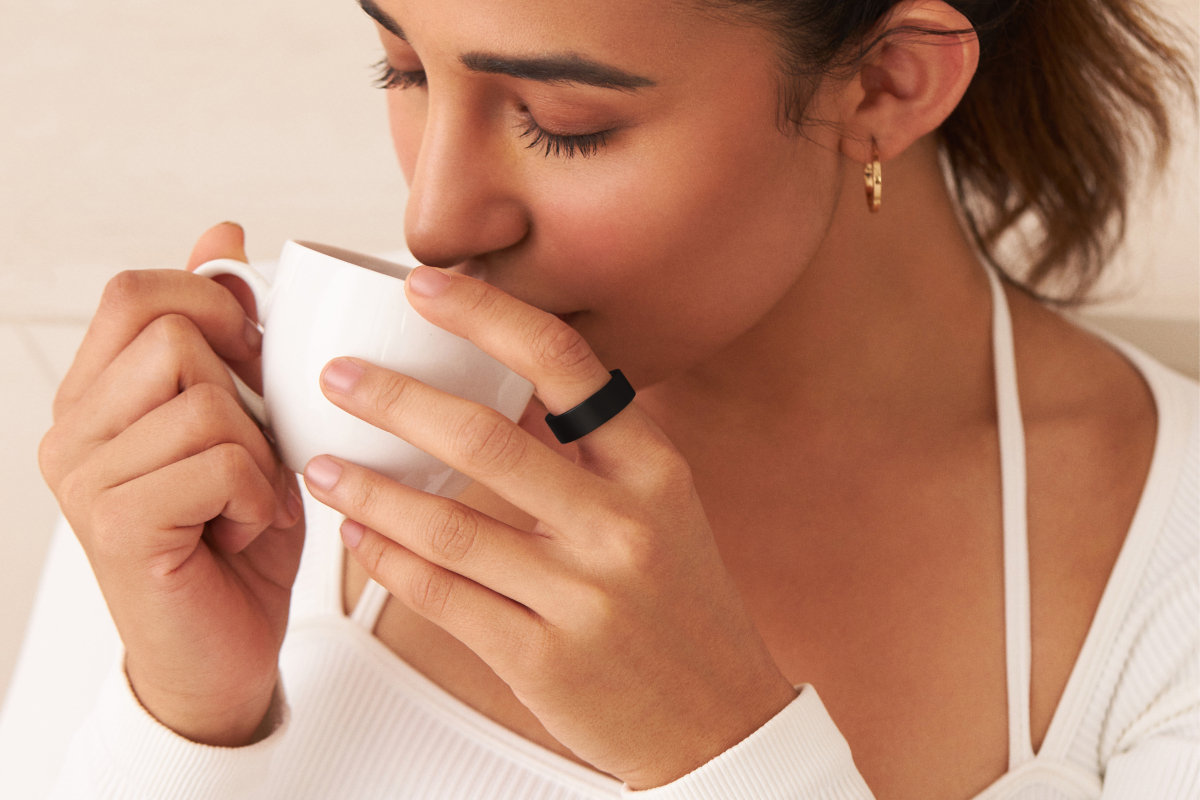
The Ultrahuman Ring measures temperature every night, and it uses that signal to confirm ovulation has occurred.
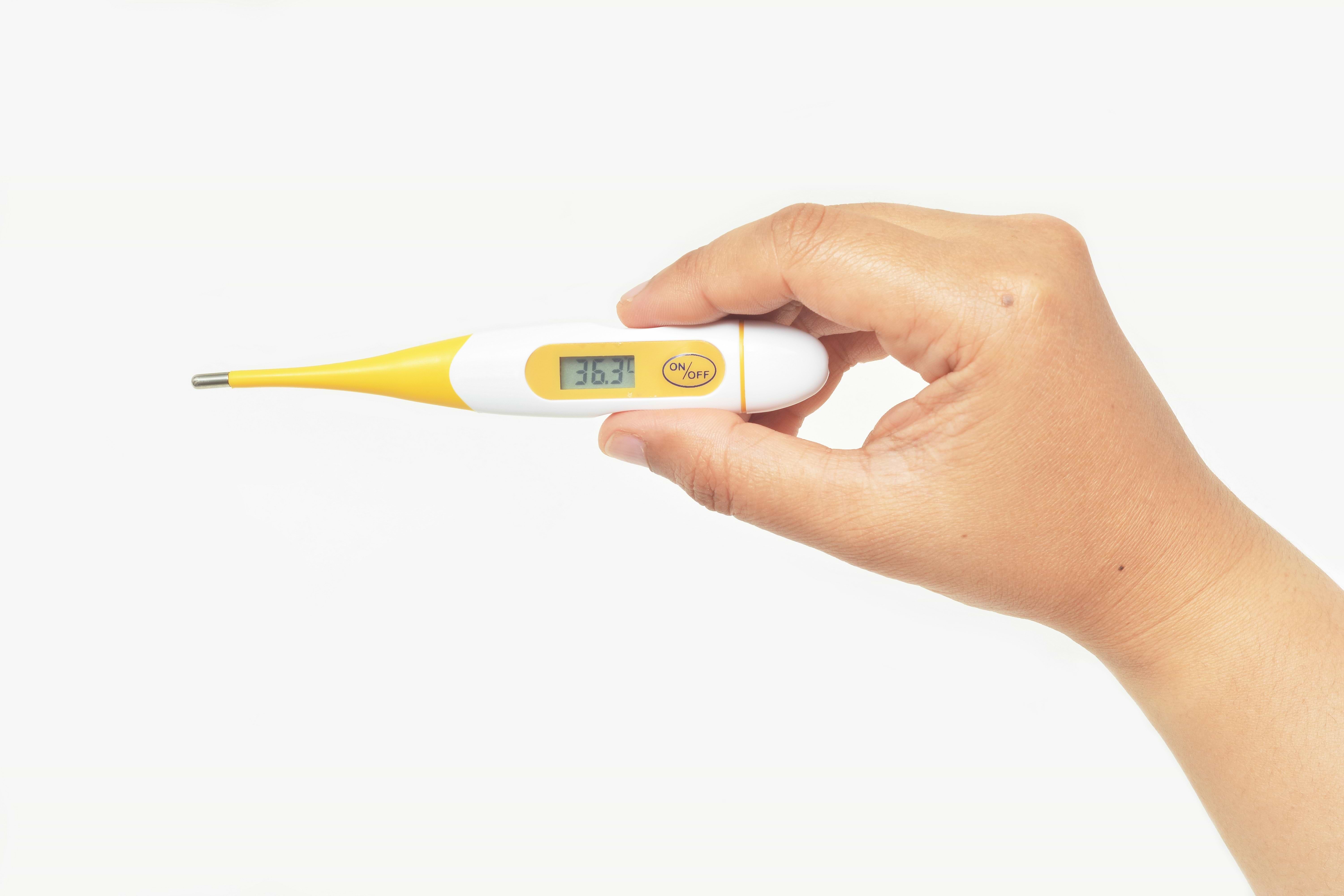
Basal Body Temperature is core temperature at complete rest, taken at one moment before you move. The Ring continuously measures skin temperature at the finger and records each night against a user’s own rolling baseline.
In this guide, we explain how the measurement works, how accurate it turns out to be, and where it stops.
Key takeaways
- The Ring measures finger skin temperature during sleep.
- It tracks deviations from a rolling baseline.
- Against a four-metabolite urine test, the Ultrahuman Ring tracked ovulation correctly 92.9% of the time.
Skin temperature and core temperature across your cycle
During the menstrual cycle, skin and core temperature move together.
A 28-day ambulatory study tracking distal and proximal skin temperature in 19 women found the two move in opposite ways during the circadian rhythm but together for the menstrual cycle.
That distinction is what makes finger-based cycle tracking possible.
The progesterone-driven shift after ovulation lifts resting temperature for core and skin temperature until the next period
How the measurement works

A contact NTC thermistor sits on the inner surface of the ring, against the skin. It samples through the sleep window, capturing the overnight temperature arc rather than a single spot reading.
Each night is processed into a per-night summary, then compared against a rolling multi-night baseline held in your profile to produce the Temperature Deviation value.
The Ultrahuman Ring features two PowerPlugs to enable women to crack their cycle. Cycle and Ovulation is free and enables users to understand their cycle and fertile window.
Cycle and Ovulation PRO is designed for those who need extra insights and accuracy, and uses OvuSense technology to offer 90%+ ovulation confirmation accuracy, as well as Cycle Flags.
For cycle tracking, the Cycle and Ovulation PowerPlug learns your temperature pattern over a 30-day baseline. It then looks for a run of nights settling above that baseline, and marks the ovulation day once it has seen enough consecutive nights to be confident.
How accurate is it?
Ultrahuman has validated this directly. In a pilot of 22 women across 48 complete cycles, Cycle and Ovulation PRO landed a median of one day from the peak hormone surge measured by a home urine test.
A larger study against a urine test tracking four hormone metabolites found the Ring agreed 92.9% of the time , with 100% sensitivity and a positive predictive value of 91.7%.
Frequently asked questions
Does the Ultrahuman Ring measure basal body temperature?
Not in the classical sense. It measures finger skin temperature continuously overnight and reports deviation from your own baseline, instead of core temperature taken at a single moment at rest. Both carry the cycle’s hormonal signal, because skin and core temperature shift in the same direction across a cycle.
Is skin temperature as good as BBT for tracking ovulation?
For confirming that ovulation happened, continuous overnight measurement samples the signal far more thoroughly than one waking reading. For placing the exact day, an internal core sensor remains the more precise instrument.
Why does the app show a deviation instead of a temperature?
Because absolute finger temperature swings with your room, your bedding and your ring fit. Comparing each night to your own baseline removes most of that, and removes the sensor’s standing offset too.
How long before the Ring can confirm ovulation?
It needs a 30-day baseline to learn your pattern, then a run of consecutive nights settled above that baseline before it marks the day.
Can I use it to avoid pregnancy?
No. It is a wellness feature for understanding your cycle, not a contraceptive method.
References
- Ultrahuman Cycle and Ovulation accuracy validation. Ultrahuman Science
- Kräuchi K, Konieczka K, Roescheisen-Weich C, et al. Diurnal and menstrual cycles in body temperature are regulated differently: a 28-day ambulatory study in healthy women with thermal discomfort of cold extremities and controls. Chronobiology International 2014;31(1):102–113. PMID 24131147 . 19 eumenorrheic women, continuous distal and proximal skin temperature over 28 days.
THE AUTHOR