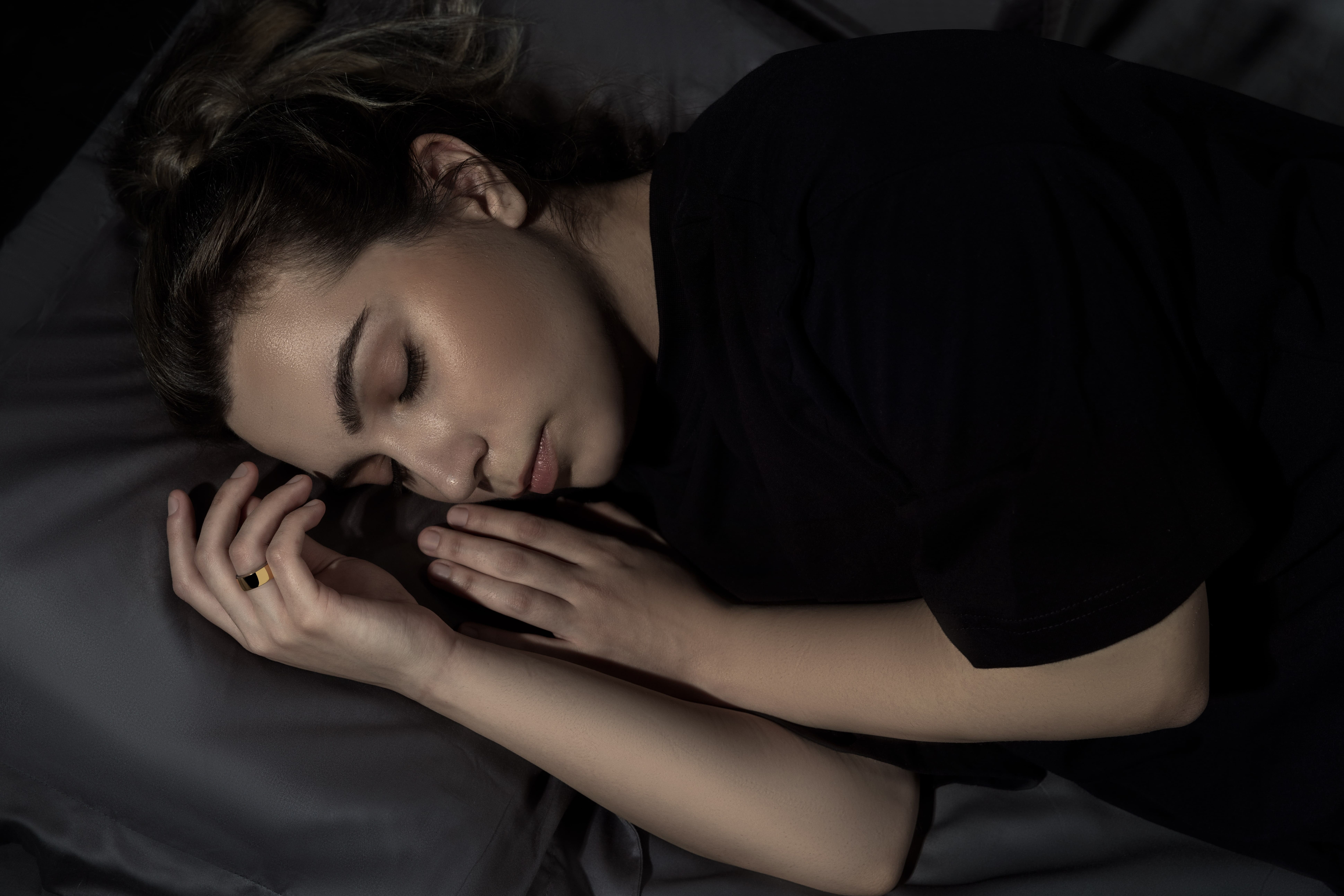
REM (rapid eye movement) sleep is the stage where most dreaming happens, and it’s when the brain moves newly formed memories into long-term storage and works through emotional material.
Brain activity runs close to waking levels while the body stays still.
Across Ultrahuman Ring members, REM accounts for roughly 20 to 23 percent of the night.
It’s also the stage you lose first. REM windows lengthen with each sleep cycle, so the longest ones arrive in the final hours before you wake, while deep sleep is front-loaded into the first half.
An hour lost off the end of a night leaves most of your deep sleep intact and removes a disproportionate share of your REM. And the things that shorten the end of a night are ordinary ones: an early alarm, a drink at 11pm, a weekend that shifts your wake time by a couple of hours.
You get more REM by protecting the second half of your night. A consistent wake time, a full night in bed, and no alcohol near bedtime do more for it than any supplement.
In this guide, we discuss science-backed ways to increase REM and the habits that hurt this crucial sleep stage.
Key takeaways
- Most REM happens in the last third of the night, so cutting sleep short costs you REM first.
- A typical night runs about 20 to 23 percent REM, and that share declines with age.
- Alcohol’s effect on REM is dose-dependent: a large amount close to bed cuts REM sharply, while a single drink shows no clear effect in the research.
- Judge your REM against your own multi-week trend rather than against a single night.
How to increase your REM sleep
These are the levers with evidence behind them, in the order most people should try them.
- Keep the same wake time every day: REM timing runs on your body clock . When your wake time moves around, the REM-rich morning cycles get clipped on early days and mistimed on late ones.
- Sleep the full night: Cutting sleep short disproportionately affects REM because those cycles fall later in sleep.
- Move alcohol away from bedtime: Finish drinking at least 3 to 4 hours before bed, or skip it (more below).
- Keep caffeine to the morning: In a controlled trial, 400 mg of caffeine – roughly four cups of coffee – measurably disrupted sleep even when consumed 6 hours before bed. Broken sleep interrupts REM episodes before they finish.
How much REM sleep do you need?
Across 279,432 Ultrahuman Ring members, REM averaged about 23 percent of the night in members aged 18 to 29, falling to about 20 percent in those aged 60 and over. On a 7.5-hour night, that’s roughly 90 to 105 minutes.
What is a normal REM sleep percentage?
REM declines gently across adulthood, so compare yourself with your own age band rather than a single figure.
Across Ultrahuman Ring members it runs about 23 percent of the night in the 18 to 29 band and about 20 percent from age 60, and the same gradient shows up in a meta-analysis of 65 studies covering 3,577 healthy people aged 5 to 102 .
One night at 15 percent means little on its own. Three weeks averaging 15 percent is a pattern worth acting on — start with the levers above.
Does alcohol reduce REM sleep?
It depends on how much. A review of the research on alcohol and normal sleep found the effect is dose-dependent: at high doses, REM in the first half of the night drops significantly, and across the whole night REM falls at moderate-to-high doses. At low doses, the research shows no clear trend either way.
Ultrahuman member data points in the same direction. On nights where members logged a drink, REM ran about 11 minutes lower than on their own alcohol-free nights, across 7,716 members.
Frequently asked questions
How much REM sleep is normal by age?
About 23 percent of the night in your 20s, easing to about 20 percent from age 60 the full breakdown across Ring members is in the REM sleep explainer.
Why is my REM sleep so low?
The usual suspects are short nights, alcohol close to bed, an irregular wake time, or broken sleep. Check those four before anything else – they explain most low readings.
Does melatonin increase REM sleep?
Melatonin shifts when you fall asleep rather than building more REM. A consistent schedule does the job melatonin is usually bought for.
What time of night do you get most REM?
The final third of the night. REM episodes lengthen with each sleep cycle, so the longest ones come in the early morning hours just before you wake.
References
- Ebrahim IO, Shapiro CM, Williams AJ, Fenwick PB. Alcohol and sleep I: effects on normal sleep. Alcoholism: Clinical and Experimental Research 2013;37(4):539–549. DOI 10.1111/acer.12006
- Ohayon MM, Carskadon MA, Guilleminault C, Vitiello MV. Meta-analysis of quantitative sleep parameters from childhood to old age in healthy individuals. Sleep 2004;27(7):1255–1273. PMID 15586779
- Drake C, Roehrs T, Shambroom J, Roth T. Caffeine effects on sleep taken 0, 3, or 6 hours before going to bed. Journal of Clinical Sleep Medicine 2013;9(11):1195–1200. PMID 24235903
- Diekelmann S, Born J. The memory function of sleep. Nature Reviews Neuroscience 2010;11(2):114–126. PMID 20046194
THE AUTHOR