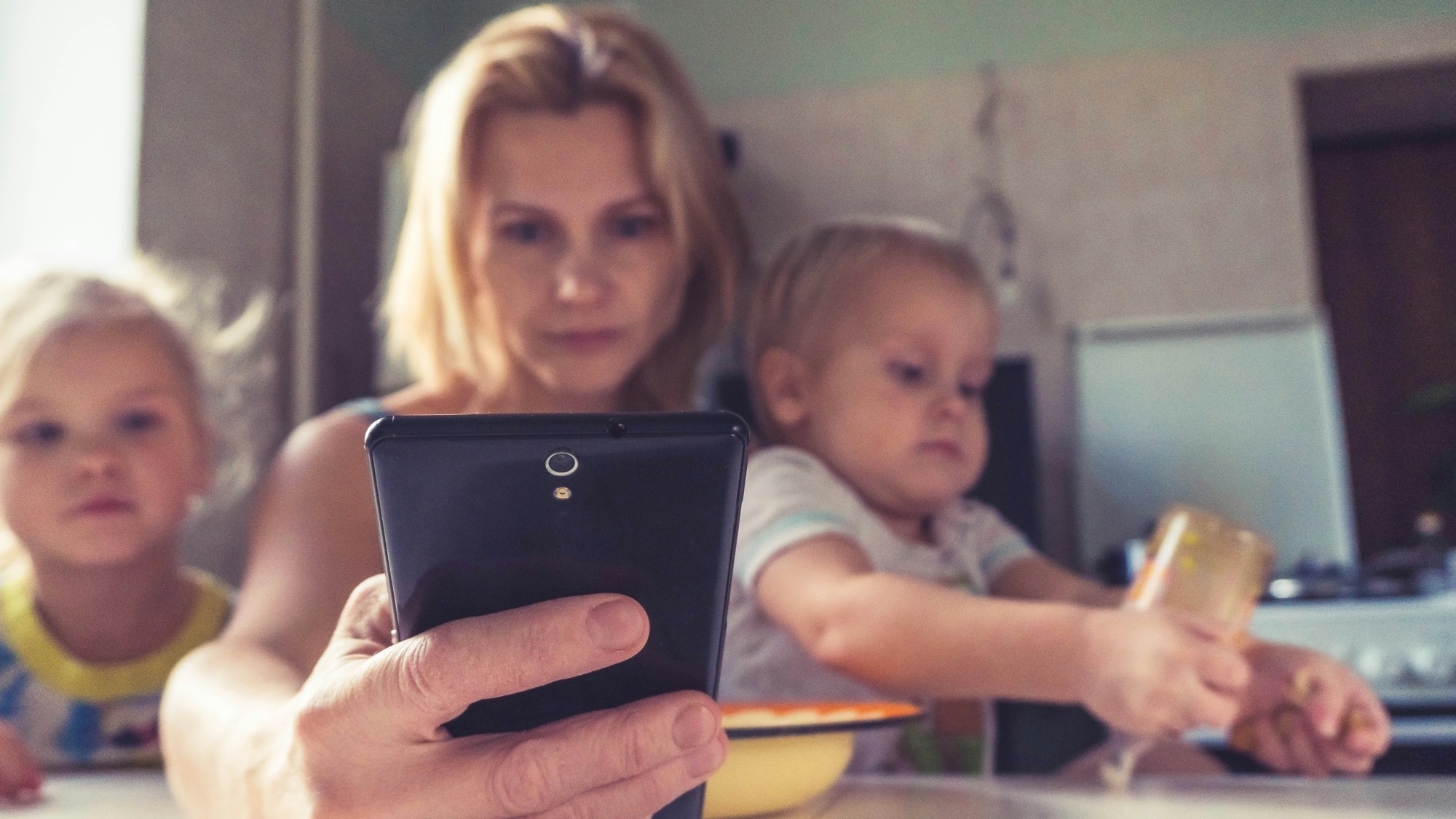
‘Phubbing’ is the act of engaging with your phone instead of the person in front of you. We’ve all seen it, and probably done it, but poor etiquette aside, research links parental phone use time to behavioural issues in children.
We explore the research around phubbing and phone use, and how it affects both adult relationships and that between parents and children.
Read next: Science-backed ways to reduce screen time
Key takeaways
- Across 42 studies of 56,275 children, parental phone use in front of children was tracked and associated with emotional and behavioral problems.
- The link was stronger when both parents pubbed rather than one.
- Phubbing is tied more strongly to fear of missing out.
How phubbing affects adult relationships
A 2026 review pulled together 22 studies that asked people how often the person they were with reached for a phone, then compared those answers against how they rated the relationship.
The more it happened, the worse people rated it. They felt less close to the other person, trusted them less, argued more, and felt more jealous. It made little difference whether the pair were a couple, two friends, colleagues, or a teacher and a class.
Whether someone felt pushed aside tracked their relationship ratings more closely than the amount of phone use they were actually exposed to. Two people can sit through the same number of interruptions, and only one of them comes away feeling snubbed.
Parental phubbing and children
The largest body of work looks at parents, and it asks two different questions.
The first is how children feel and behave. A 2023 meta-analysis combined 42 studies covering 56,275 children. The more a parent used a phone during time with their child, the more that child showed anxiety, withdrawal, and low mood, and the more they showed aggression and acting out. Those children also thought less well of themselves and handled friendships less easily.
The second question is whether the habit passes down. A 2025 analysis covered 53 studies and 60,555 young people, average age 14, and looked at the child’s own screen use rather than their mood.
The more a parent’s device interrupted time together, the more the child’s own phone and media use looked compulsive.
The authors put that down to children copying their parents, and how they react to feeling pushed aside.
The behavioural drivers behind phubbing
The best-studied explanation is fear of missing out: the worry that something is happening somewhere else that you ought to know about.
A 2024 review of 27 studies covering 20,415 people across 15 countries found it tied closely to phubbing, and more closely than anything else researchers have measured.
How big that link is remains unclear. Teams used different questionnaires for both phubbing and fear of missing out, and the results swung widely depending on which ones they chose. The reviewers also found signs that studies finding no link had been less likely to reach publication. They corrected for that, and the link was still there afterwards.
Frequently asked questions
What does phubbing mean? It is a blend of phone and snubbing. In research, it means using your phone while you are with someone else, whether that is a partner, a friend, a colleague or your child.
Is phubbing actually harmful, or just rude? People who said it happened to them more often rated their relationships worse, and children whose parents did it more showed more anxiety and more acting out. Every study measured people as they already were, so the research describes a pattern rather than proving phones caused it.
Does it matter if both parents do it? Two separate meta-analyses found stronger associations when both parents used phones in front of their children than when only one did.
How much of the parental research applies outside China? Nobody knows yet. All 42 studies in the 2023 meta-analysis were done in China. The 2025 analysis drew on international databases as well and found a similar pattern.
References
- Taylor-Jackson J, et al. Digital disconnection: a systematic review of phubbing behavior. 2026. PMID 42537320
- Zhang J, Dong C, Jiang Y, et al. Parental phubbing and child social-emotional adjustment: a meta-analysis of studies conducted in China. Psychol Res Behav Manag. 2023;16:4267-4285. PMID 37877136
- Zhang J, Zhang Q, Xiao B, et al. Parental technoference and child problematic media use: meta-analysis. J Med Internet Res. 2025;27:e57636. PMID 39841982
- Ansari S, Azeem A, Khan I, Iqbal N. Association of phubbing behavior and fear of missing out: a systematic review and meta-analysis. Cyberpsychol Behav Soc Netw. 2024;27(7):467-481. PMID 38757677
THE AUTHOR