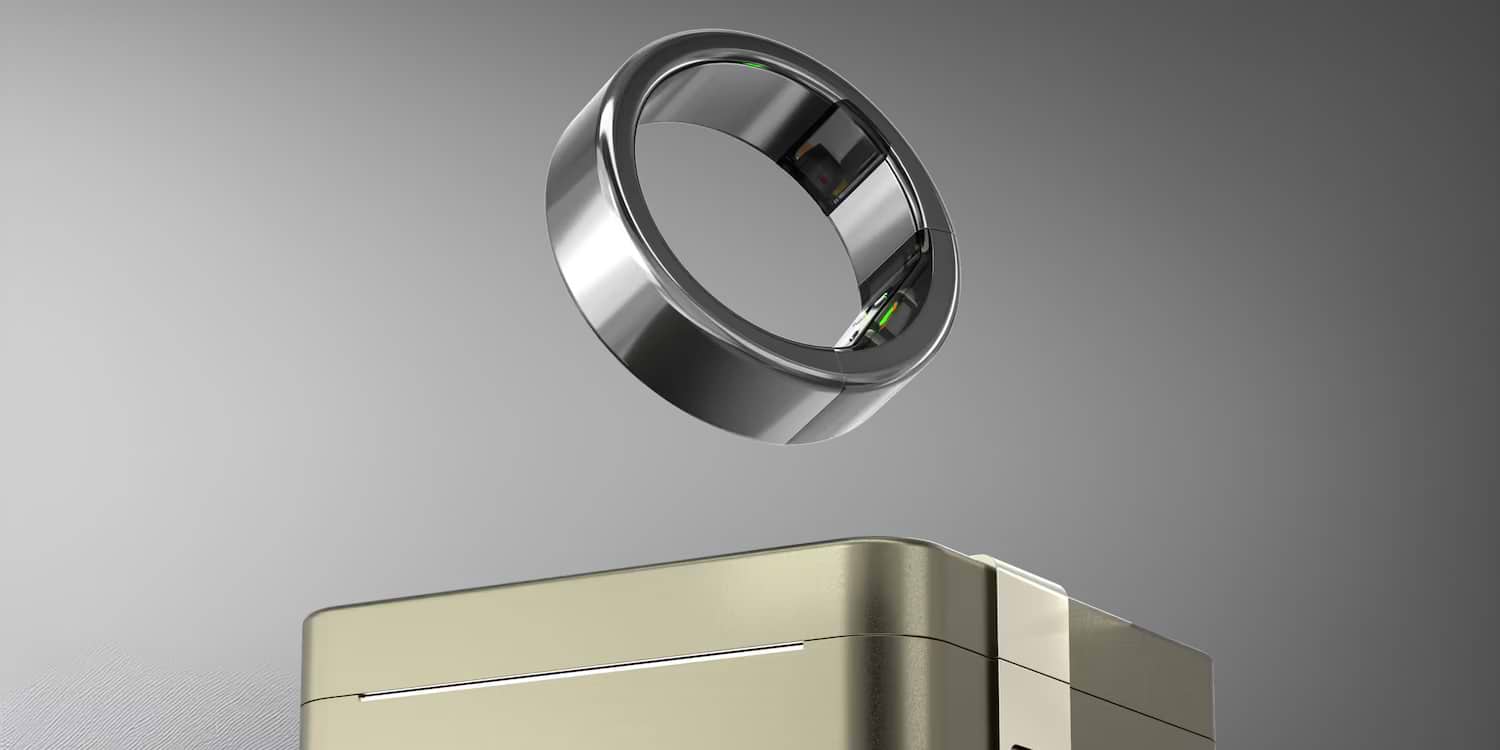
A smart ring cannot diagnose PMOS, but tracking cycle length, overnight temperature, heart rate variability and sleep can add awareness around your cycle.
That information can be useful when you talk to your doctor. PMOS is common and often missed: it affects an estimated 10 to 13% of women of reproductive age, and up to 70% of them are undiagnosed. It is also the most common cause of cycles in which ovulation doesn’t occur.
This guide explains how PMOS affects each of these signals, what your ring data can and cannot show, and how to bring it to your doctor.
In May 2026, polycystic ovary syndrome (PCOS) was renamed polyendocrine metabolic ovarian syndrome (PMOS) . The condition is the same, but the new name better reflects that it affects hormones and metabolism, not just the ovaries. This guide uses PMOS. Research published before the change uses PCOS.
Highlights
- A doctor diagnoses PMOS using two of three criteria: irregular or absent ovulation, higher androgen levels, and polycystic ovaries on ultrasound or a high AMH blood test.
- In adults, cycles shorter than 21 days or longer than 35 days count as irregular.
- Body temperature rises after ovulation. Cycle & Ovulation Pro looks for that rise. A calendar app can only estimate from past dates.
- Cycle Flags™ label patterns in each cycle, such as Possible Anovulation™ or Late Ovulation. Some are more common with irregular cycles, but a flag is not a diagnosis.
- On some measures, women with PMOS have lower heart rate variability. They also have much higher rates of sleep apnea and disturbed sleep.
- Your ring data cannot tell you whether you have PMOS. What it gives your doctor is months of cycle and sleep history.
How PMOS is diagnosed
PMOS is a hormonal and metabolic condition. Under the 2023 international guideline, a diagnosis needs two of these three:
- Irregular cycles, or ovulation that is absent or infrequent
- Higher androgens, shown in a blood test or by signs such as acne or excess hair growth
- Polycystic ovaries on ultrasound, or a high anti-Müllerian hormone (AMH) level in a blood test
The guideline defines irregular cycles in adults as shorter than 21 days, longer than 35 days, or fewer than eight a year. It also notes that ovulation can fail even when cycles look regular.
Diagnosis is made by a doctor, using your cycle history, blood tests and sometimes a scan. A ring does not test for any of these criteria, though your logged cycle history can help with the first.
Cycle length
Cycle length is the simplest signal, and usually the first thing a doctor asks about. If you log your periods in the Ultrahuman app, you build up a record of how long each cycle lasted. That is easier to bring to an appointment than a guess.
A calendar cannot tell you when you ovulated. In a study of 949 women, period-tracking apps that predicted ovulation from cycle length alone were right no more than 21% of the time. Those women came from the general population. When cycles are irregular, a date predicted from past cycles has even less to go on.
Temperature after ovulation
After ovulation, the corpus luteum releases progesterone, which raises body temperature for the rest of the cycle. The rise only happens if ovulation happened. That is why temperature gives more information than a calendar estimate.
The Ultrahuman Ring reads your finger skin temperature through the night and compares each night with your own baseline. Cycle & Ovulation Pro, the paid tier of Cycle & Ovulation, uses the OvuSense algorithm to look for the sustained rise that usually follows ovulation. When a cycle ends with no rise, the app shows “No ovulation detected this cycle”.
If no rise is detected, ovulation may not have happened. The rise can also be hidden by illness, alcohol, stress or broken sleep, all of which move temperature, or by nights you did not wear the ring. One cycle on its own tells you little. If you see it for several cycles in a row, mention it to your doctor.
Cycle & Ovulation Pro is designed to work with irregular cycles. Irregular cycles are still harder for any temperature-based method to read, so treat each cycle’s result as one part of your history, not a verdict on its own.
Cycle Flags™
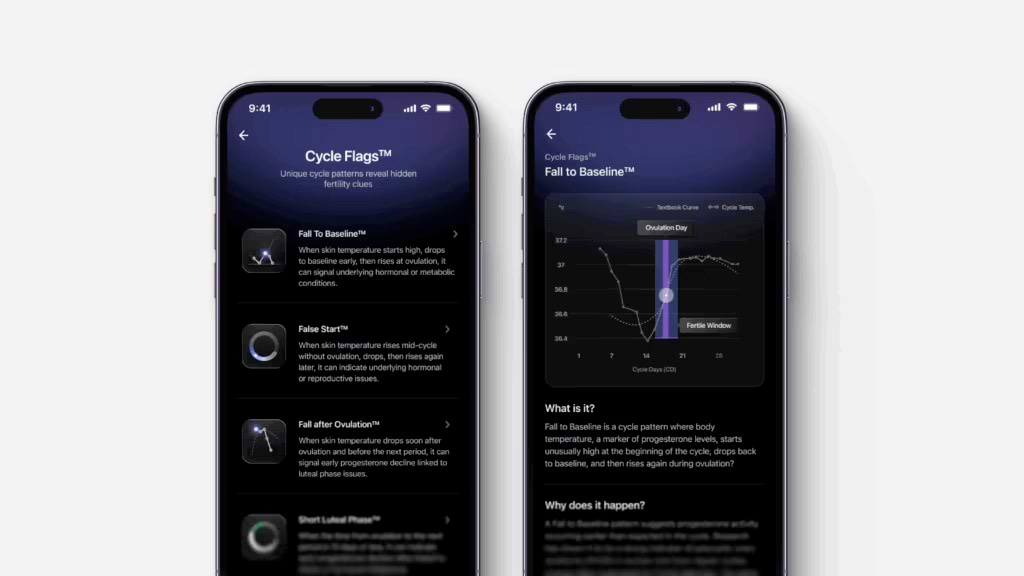
After each cycle ends, Cycle & Ovulation Pro adds Cycle Flags™: labels that describe the shape and timing of your temperature pattern. They include:
- Possible Anovulation™: no sustained temperature rise across the whole cycle
- Early Ovulation: ovulation in roughly the first third of the cycle
- Late Ovulation: ovulation in roughly the last third of the cycle
- Long Cycle: a cycle much longer than usual
- Short Luteal Phase™: nine days or fewer from ovulation to your next period
- Slow Rise™: a temperature rise that builds over several days, not two or three
- False Start™: an early rise that falls back before ovulation
- Fall to Baseline™: temperature starts the cycle high, then drops before ovulation
- Fall After Ovulation™: temperature drops soon after ovulation, before your period
Some flags, such as Possible Anovulation™ and Long Cycle, are more common in people with irregular cycles. In Ultrahuman’s analysis of 1,297 cycles from 1,163 women, Possible Anovulation™ was 2.8 to 4.1 times more likely in women who reported irregular cycles than in those who did not, more than any other flag.
One flag on its own is common. Healthy women can have one to three cycles a year without ovulation. If the same flags appear cycle after cycle, that is worth discussing with your doctor. Cycle Flags describe patterns in your temperature data. They are not a diagnosis.
Heart rate variability
Heart rate variability (HRV) reflects how your nervous system is balancing rest against stress. A meta-analysis of 17 studies found that women with PMOS had lower HRV on several measures, and signs of a more active stress response.
RMSSD, the HRV measure most rings report, including the Ultrahuman Ring, was not significantly different between women with and without PMOS in that analysis.
HRV also changes through every cycle. Across 37 studies of women without PMOS, it was lower after ovulation than before. A lower week may simply reflect where you are in your cycle, so compare HRV with your own cycle phase rather than with someone else’s number. HRV does not measure hormones and cannot show whether you have PMOS.
Sleep
Across eight studies, women with PMOS had about nine times the odds of obstructive sleep apnea (37% affected, against 6% of women without PMOS). Across 18 studies of more than 16,000 people, they had about six times the odds of disturbed sleep and slept about 16 minutes less a night.
Your ring shows how long you sleep, how often you wake, and your overnight resting heart rate and HRV. It cannot diagnose sleep apnea. If you snore, wake unrefreshed or feel sleepy during the day, ask your doctor about a sleep study.
Exercise, food and sleep habits
The guideline recommends lifestyle changes for all women with PMOS: physical activity, diet and behavior change. It also says a healthy lifestyle has benefits even without weight loss.
Your ring data can support this day to day. Over the following weeks, you can see whether more activity, a regular bedtime or less alcohol changes your sleep, resting heart rate and HRV.
What your ring data can and cannot tell you
| Your ring can show | Your ring cannot show |
|---|---|
| How long each cycle lasted, from your logged periods | Whether you have PMOS |
| Whether your temperature showed the rise that usually follows ovulation | Your androgen, AMH or progesterone levels |
| Cycles where no temperature rise was detected | Whether a missing rise means no ovulation, or a noisy month |
| Cycle Flags describing your temperature pattern | What is causing a flag |
| Your HRV and resting heart rate, night by night | Whether a low HRV has any medical cause |
| How long and how well you sleep | Whether you have sleep apnea |
How to use your ring data with your doctor
- Wear the ring every night for at least three cycles, so each cycle has a full temperature record.
- Log every period, including spotting, so your cycle lengths are accurate.
- Note anything that affects your data, such as illness, travel or heavy drinking, so a missing temperature rise is not misread.
- Download your Cycle Report. Cycle & Ovulation Pro creates a PDF of your last six cycles, including cycle lengths, ovulation timing and Cycle Flags, which you can share with your doctor. Your first report is available 30 days after you activate it.
- Tell your doctor about symptoms the ring cannot see, such as acne, hair growth, hair thinning or weight changes. They need these to make a diagnosis.
Frequently asked questions
Can a smart ring detect PMOS (PCOS)?
No. A doctor diagnoses PMOS from your cycle history, blood tests and sometimes an ultrasound. A ring can record your cycle lengths, temperature and sleep to share with your doctor.
Can a smart ring track ovulation if I have irregular cycles?
It can detect the sustained temperature rise that usually follows ovulation. Irregular cycles are harder for any temperature-based method, and a missing rise does not always mean ovulation did not happen.
Why does my ring say “No ovulation detected this cycle”?
Ovulation may not have happened, which can occur occasionally. The temperature rise can also be hidden by illness, alcohol, stress, poor sleep or nights without the ring. If you see this for several cycles in a row, speak to your doctor.
Does PMOS lower HRV?
On some measures, yes. A meta-analysis of 17 studies found lower HRV in women with PMOS. RMSSD, the measure most rings report, was not significantly different.
Do Cycle Flags mean I have PMOS?
No. Some flags, such as Possible Anovulation™ and Late Ovulation, are more common with irregular cycles, but they also appear in healthy cycles. Only a doctor can diagnose PMOS. If the same flags keep appearing, share your Cycle Report with your doctor.
Can I use my ring as contraception?
No. Cycle & Ovulation Pro is not a contraceptive and is not intended for diagnosis or treatment.
References
- World Health Organization. Polycystic ovary syndrome. Fact sheet, last modified 22 January 2026. who.int
- [ADD: The Lancet consensus paper on renaming PCOS to PMOS, May 2026, led by Monash University]
- Teede HJ, Tay CT, Laven JJE, et al. Recommendations from the 2023 International Evidence-based Guideline for the Assessment and Management of Polycystic Ovary Syndrome. Journal of Clinical Endocrinology and Metabolism 2023;108(10):2447-2469. PMID 37580314
- Johnson S, Marriott L, Zinaman M. Can apps and calendar methods predict ovulation with accuracy? Current Medical Research and Opinion 2018;34(9):1587-1594. PMID 29749274. 949 women.
- Su HW, Yi YC, Wei TY, et al. Detection of ovulation, a review of currently available methods. Bioengineering and Translational Medicine 2017;2(3):238-246. PMID 29313033
- Ultrahuman. Temperature-derived Cycle Flags™: characterizing menstrual cycle dynamics using Ultrahuman C&O Pro. Ultrahuman Science. 1,297 cycles, 1,163 women.
- Ultrahuman. The Ultrahuman Ring’s updated sleep HRV agrees closely with a chest-strap ECG. Ultrahuman Science.
- Mirzohreh ST, Panahi P, Heidari F. Exploring heart rate variability in polycystic ovary syndrome: implications for cardiovascular health: a systematic review and meta-analysis. Systematic Reviews 2024;13(1):194. PMID 39049099. 17 studies.
- Schmalenberger KM, Eisenlohr-Moul TA, Würth L, et al. A systematic review and meta-analysis of within-person changes in cardiac vagal activity across the menstrual cycle: implications for female health and future studies. Journal of Clinical Medicine 2019;8(11). PMID 31726666. 37 studies.
- Abdul Jafar NK, Al Balushi A, Subramanian A, et al. Obstructive sleep apnea syndrome in polycystic ovary syndrome: a systematic review and meta-analysis. Frontiers in Endocrinology 2025;16:1532519. PMID 40255502. 8 studies.
- Zhang J, Ye J, Tao X, et al. Sleep disturbances, sleep quality, and cardiovascular risk factors in women with polycystic ovary syndrome: systematic review and meta-analysis. Frontiers in Endocrinology 2022;13:971604. PMID 36176474. 18 studies, 16,152 participants.
- Hamilton-Fairley D, Taylor A. Anovulation. BMJ 2003;327(7414):546-549. PMC192851
This article is for general information and is not medical advice. Cycle & Ovulation Pro is intended for wellness and self-tracking only. It supports cycle awareness and pattern identification, and it does not guarantee conception or pregnancy outcomes. The Ultrahuman Ring and Cycle & Ovulation Pro are not intended to diagnose, treat, detect or monitor PMOS (PCOS) or any other disease, are not a contraceptive, and should not be relied on to avoid pregnancy. If you have irregular periods or are worried about PMOS, speak to a doctor.
THE AUTHOR