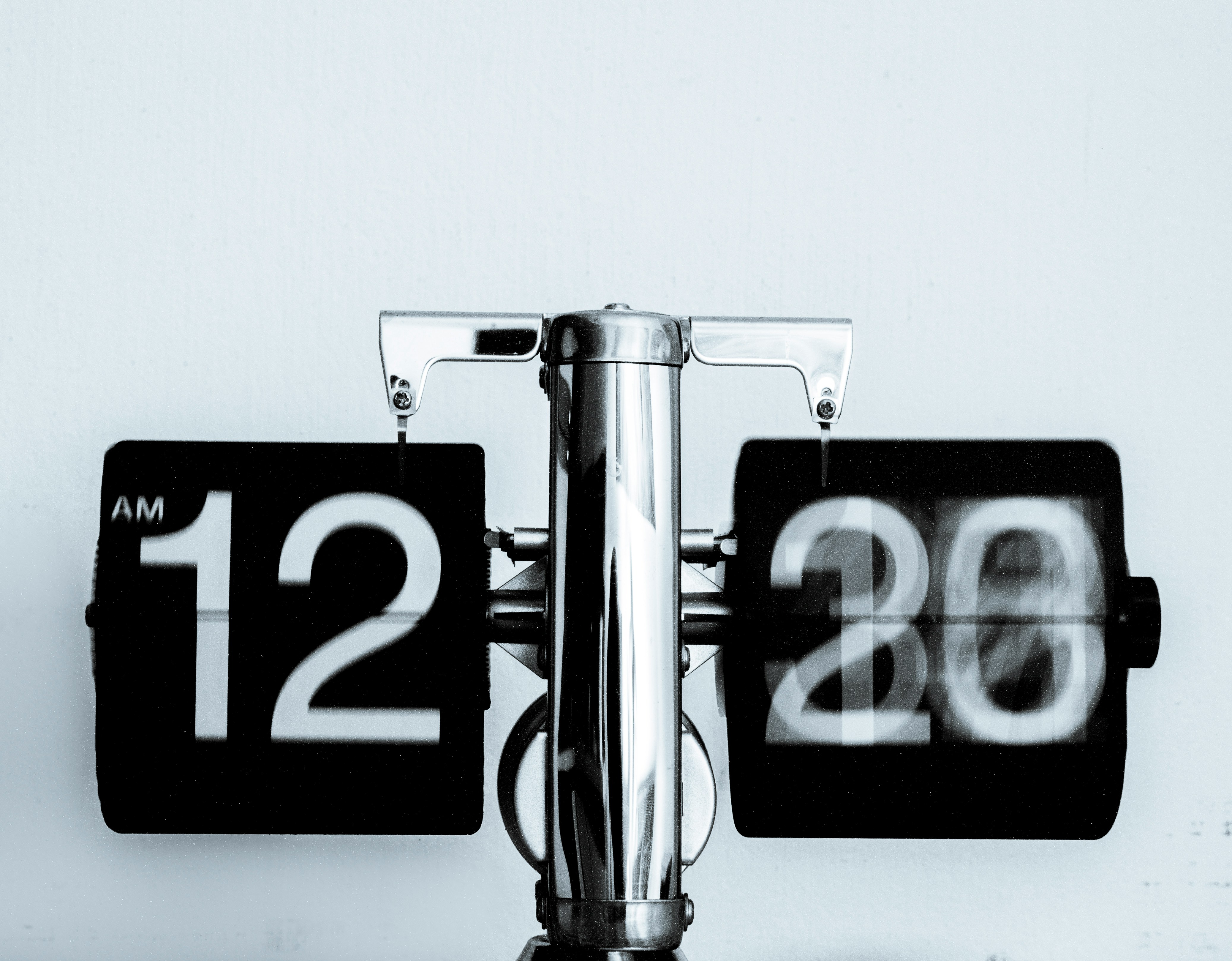
Going to bed after midnight can leave you under-rested even on a full seven or eight hours of sleep.
The reason is your circadian rhythm, more commonly called your internal body clock.
In this guide, we explain why a late bedtime carries a cost, and what to do about it.
Why timing matters
Your core body temperature follows a daily cycle and hits its lowest point about two hours before you’d naturally wake – around 4–5am for most people. Alertness is at its lowest around that point.
A couple of hours before your usual bedtime, melatonin starts to rise and your body begins preparing for sleep.
Light in the evening pushes that cycle later. Bright light before the temperature low delays the body clock, and light after it moves the clock earlier . Exercise late in the evening can delay it too, and the shift builds over consecutive late nights.
If your clock has moved later, a 7:30 am alarm after a 12:30 am bedtime goes off closer to your temperature low, when your body is least ready to be awake. You’ve slept seven hours, but you’ve woken during your biological night – and that’s why you still feel tired.
What the data shows
If your body’s normal rhythm is to sleep at 12:30 am and wake at 7:30 am, then the negative effects of sleeping past midnight will be reduced.
But for most people, a late bedtime usually comes with more night-to-night variability too, and that variability has its own measurable cost – as we can see from Ultrahuman Ring user data.
Ultrahuman’s own data points the same way. Across 103,490 Ring wearers, the least regular sleep-timing group ran 1.9 to 3.6 bpm higher in overnight resting heart rate than the most regular group in the same age band, with heart rate variability running lower by 1.4 to 1.8 ms.
A separate Ultrahuman study of 227,860 nights of ring and continuous glucose data found the same pattern in glucose control between the most and least sleep-consistent members.
What to actually do about it
The body bounces back from a late or disrupted bedtime quickly. But fixing your bedtime earlier can have a measurable impact on your health. You can do that by:
- Dim the lights and cut stimulation in the few hours before you’d naturally wind down, rather than staying lit and active until you’re tired enough to crash.
- Get outside soon after waking: Morning light is what pulls the clock earlier and keeps it anchored.
- Fix your wake time: Fixate on getting up at the same time every day, even weekends. If you fix this, your bedtimes will naturally start to align too.
THE AUTHOR