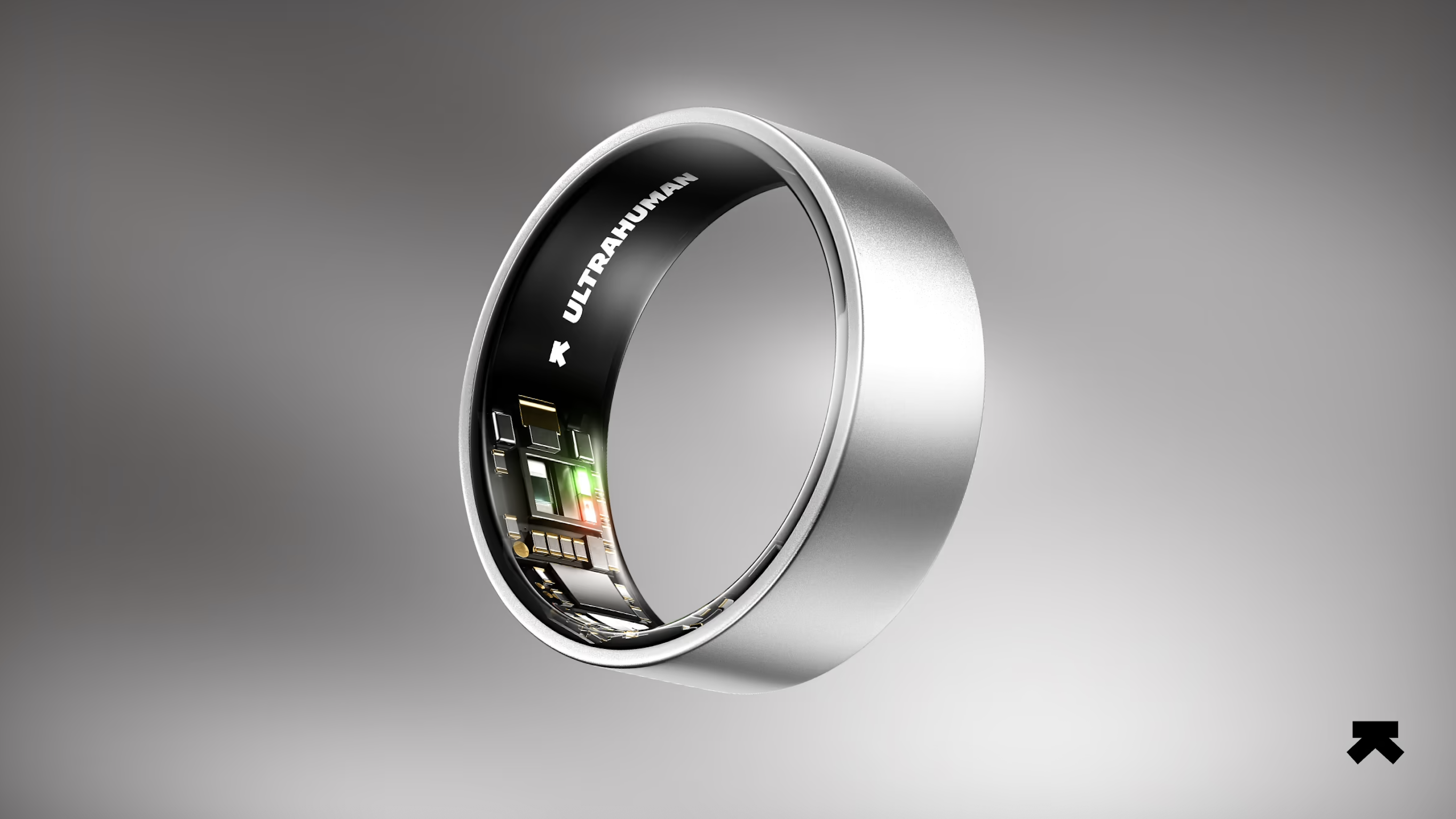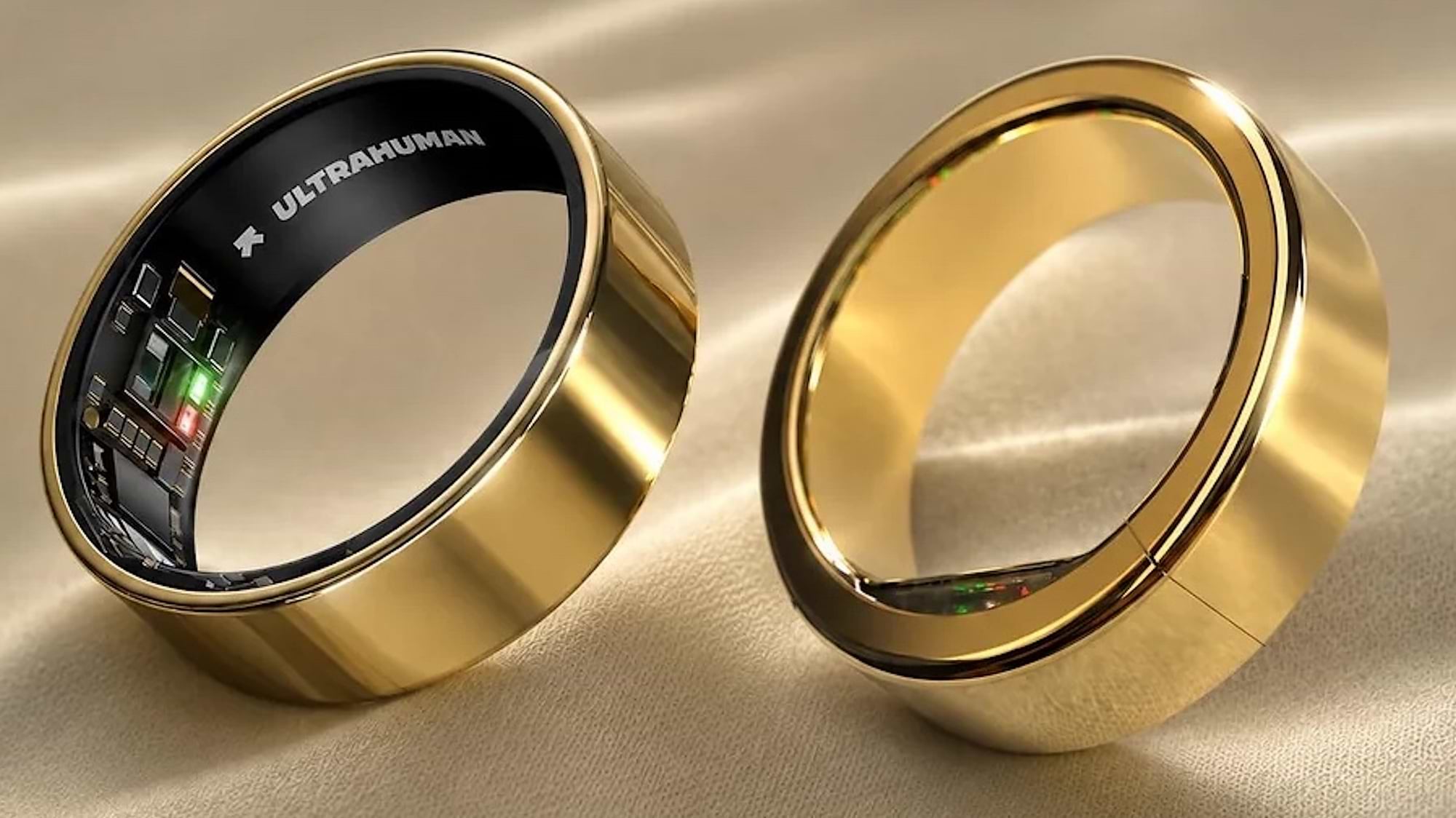
If you’re choosing between the new Ultrahuman Ring PRO and the Ring AIR, there are some key factors to consider.
The Ring PRO is built for up to 15 days of battery life between charges, and its PRO Charging Case is designed to keep health insights running without a break. Ring AIR is lighter and comes in at a lower price.
In this guide, we explain what the two rings share and where they differ.
Compare specs: Ultrahuman Ring AIR vs Ring PRO
Key takeaways
- Battery is the largest practical difference. Ring PRO runs up to 15 days against 4 to 6 days for Ring AIR.
- The PRO Charging Case takes that to up to 45 days, and offers a convenient way to top up when you are away from a plug.
- Both rings use the same sensor set, skin temperature, PPG, and a 6-axis motion sensor, and track the same metrics through the same app.
- Ring AIR is the lighter and thinner of the two, at 2.4 g and 2.4 mm against 3.3 to 4.8 g and 2.65 mm.
Same health markers and insights
Whichever Ultrahuman Ring you choose, you get the same health metrics.
Both rings carry skin temperature sensing, an optical PPG heart rate sensor and a 6-axis motion sensor. Both track sleep stages, resting heart rate, HRV, skin temperature, steps, workouts across more than 100 profiles, recovery and cycle insights. Both feed the same Ultrahuman app, and both work without a subscription.
They are also matched on several specs people assume will differ. Water resistance is 100m on both. Sizes run 5 to 14 on both. Both need up to 14 days to calibrate to you. Both are titanium with a PVD coating and a hypoallergenic inner surface.
The Ultrahuman Ring PRO uses a dual-core processor, which lets it run machine learning computation on the ring itself. In future that may mean some PowerPlugs, Ultrahuman’s name for the apps that add extra health tracking capabilities, arrive on PRO only.
For the foreseeable future, though, both rings track the same health markers.
Key differences between Ring PRO and AIR
Battery life
Both rings offer power modes that trade tracking depth for battery life, and the headline numbers for each ring sit in different modes, so they are worth reading side by side.
Ring AIR runs 4 to 6 days in Turbo Mode, which keeps every sensor at full intensity. Chill Mode, now the default, gives up to 35% longer by scaling back all-day tracking. On Ring AIR that means Stress Rhythm is not tracked in Chill Mode, which in turn affects the real-time adjustments to your Dynamic Recovery score. A third setting, Critical Battery Mode, strips tracking back to step count alone until you reach a charger.
Ring PRO runs up to 15 days. Official specs estimate around 12 days in Turbo Mode and more than 15 in Chill Mode.
The PRO Charging Case carries a further charge, taking the pair to up to 45 days away from a plug.
Battery figures are measured under specific conditions and vary with usage patterns, settings and environment.
Longer battery life means fewer missing nights. We have all been there, getting into bed and realizing the ring is on 1% and needs to charge, or walking out of the house having left it on the charging pad. With up to 15 days, a week away without your charger stops being something you have to plan around.
On-device storage
Ring AIR stores four days of data on internal flash. Ring PRO stores up to 250 days, using internal and external flash, and the PRO Charging Case backs up a year of ring data when the ring is in Chill Mode.
For most people this is invisible, because the ring syncs to your phone regularly. It becomes real if you travel without your phone, go off-grid, or simply go a long stretch without opening the app.
Processor
Ring AIR runs a single-core processor. Ring PRO runs a dual-core processor with on-chip machine learning, which means more of the analysis happens on the ring rather than after the data reaches your phone.
Weight and thickness
Ring AIR is 2.4 g and 2.4 mm thick. Ring PRO is 3.3 to 4.8 g depending on size, and 2.65 mm. Both are light, and the gap is small in absolute terms, but it is the difference you would notice first if you wore them on consecutive nights.
The charger
The Ultrahuman Ring AIR uses an open wireless charging pad and takes around 180 minutes to reach full.
The Ring PRO uses an enclosed case with UltraSnap magnetic charging, which charges through DC magnetic pins and generates less heat than wireless charging. That reduces the stress put on the battery by repeated charging, which affects how a battery performs over time.
Firmware updates also arrive faster on PRO, through the case connection rather than over Bluetooth.
ProRelease
Ring PRO builds in ProRelease Technology, which allows the ring to be cut apart more easily in the event of swelling or injury to your finger.
Full comparison
| Ring PRO | Ring AIR | |
|---|---|---|
| Price | $479 / £429 | $349 / £329 |
| Weight | 3.3–4.8 g | 2.4 g |
| Thickness | 2.65 mm (varies by size) | 2.4 mm |
| Battery life | Up to 15 days (Turbo ~12 days, Chill 15+ days) | 4–6 days in Turbo, up to 35% longer in Chill |
| Charging case battery | Up to 45 days | Not applicable |
| On-device storage | Up to 250 days | 4 days |
| Processor | Dual-core with on-chip machine learning | Single-core |
| Heart rate sensor | Redesigned PPG | PPG |
| Sensors | Temperature, redesigned PPG, 6-axis IMU | Temperature, PPG, 6-axis IMU |
| Water resistance | 100m / 328 ft | 100m / 328 ft |
| Sizes | 5–14 | 5–14 |
| Calibration period | Up to 14 days | Up to 14 days |
| Materials | Titanium, PVD coating, epoxy, polycarbonate | Titanium, PVD coating |
| Connectivity | Bluetooth Low Energy, EMF-safe | Bluetooth Low Energy |
| Safety | ProRelease Technology | Not applicable |
| Charger | PRO Charging Case, UltraSnap magnetic | Wireless charging pad (~180 min to full) |
| Colors | Bionic Gold, Space Silver, Aster Black, Raw Titanium | Raw Titanium, Aster Black, Matte Grey, Bionic Gold, Space Silver |
Which one should you buy?
Ring AIR makes sense if you want the lightest option, you are comfortable charging every few days, and you keep your phone nearby so on-ring storage never comes into play. You get the same metrics, measured by the same sensors, for less money.
Ring PRO makes sense if charging is the thing most likely to interrupt your tracking, you travel or spend time away from your phone, or you want the case, the faster firmware updates and ProRelease. The two-week battery is the reason most people move up.
Frequently asked questions
Do both rings track the same things?
Yes. Both carry skin temperature, PPG and 6-axis motion sensors, and both track sleep stages, heart rate, HRV, temperature trends, steps, workouts, recovery and cycle insights through the same app. Neither requires a subscription.
Is Ring PRO more accurate than Ring AIR?
Ring PRO uses a redesigned PPG sensor, which our specifications describe as improved signal quality during sleep and recovery. We publish our validation studies, with the reference standard and sample for each, on the Ultrahuman Science accuracy pages .
How long does each ring last between charges?
Ring AIR runs 4 to 6 days in Turbo Mode, and up to 35% longer in Chill Mode. Ring PRO runs up to 15 days, around 12 in Turbo Mode and more than 15 in Chill Mode, and up to 45 days when paired with the PRO Charging Case.
Can I wear either ring in the shower or the pool?
Yes. Both are water resistant to 100m.
THE AUTHOR