Smart rings are some of the hottest tech gadgets around and can be seen on the fingers of celebrities, sports stars, and royals alike. But what does a smart ring actually do? And why would you want one?
Most smart rings track health, just like a smartwatch or fitness band. But smart rings are more discreet, comfortable to sleep with, and enable you to wear your existing wristwatch without looking like a nerd.
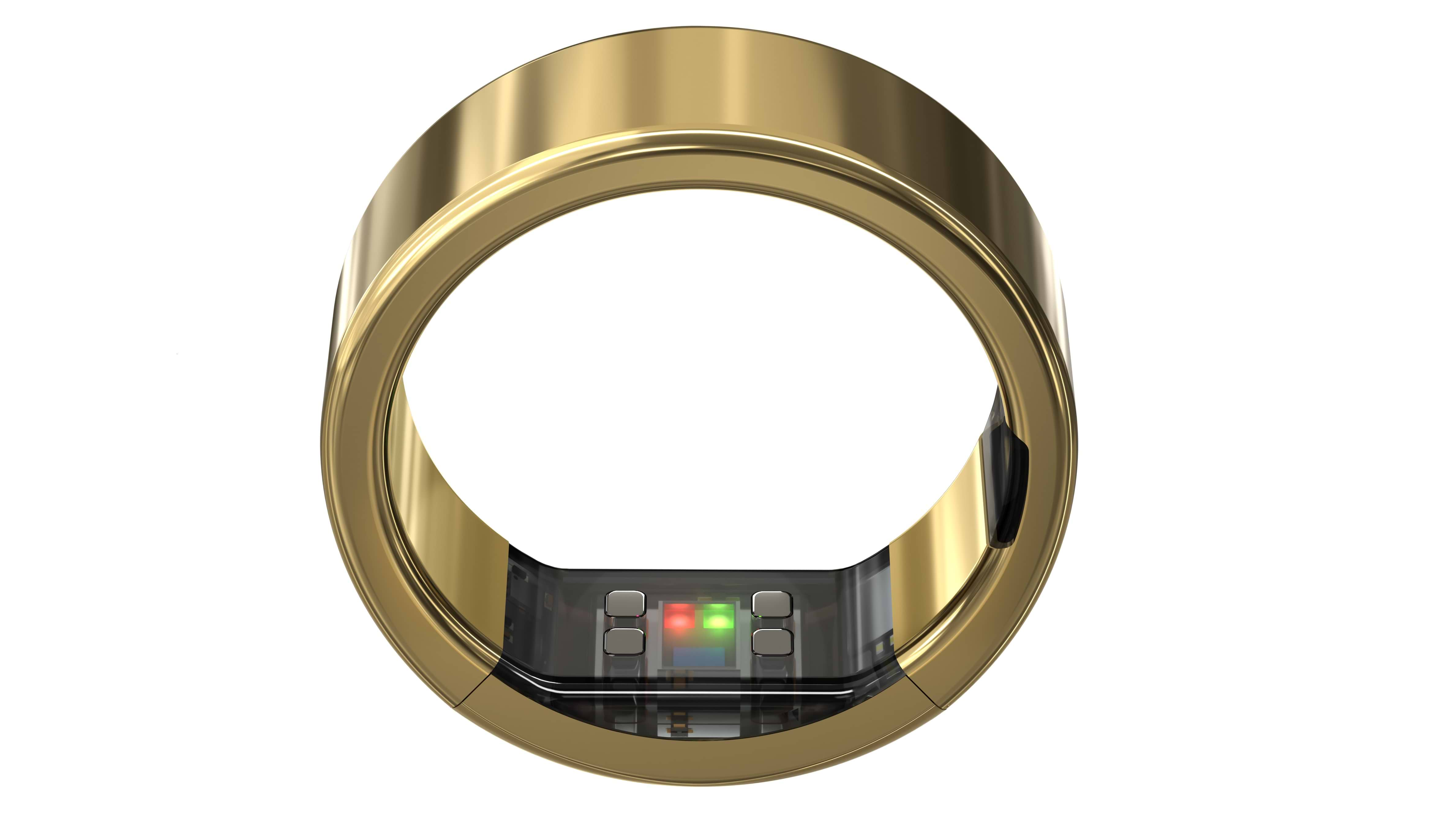
Most smart rings, like the Ultrahuman Ring AIR and Ring PRO, measure your pulse, movement, and skin temperature from the finger. The finger is a great place to read a pulse from. The arteries sit close to the surface, so an optical sensor can pick up the small changes in blood flow with each heartbeat while you lie still.
Smart rings such as Ultrahuman Ring enable people to access Health Intelligence by understanding their sleep, movement, and lifestyle and what impacts how they recover and feel.
In this guide we look at common smart ring features, why they are useful to building health intelligence, and how the Ultrahuman Ring works.
Sleep tracking
Smart rings are great sleep trackers, and that’s important because most of what a ring knows about you, it learns overnight.
That means tracking when you fell asleep and when you woke, offering data on sleep duration, as well as how consistent your sleep is from night to night, which our own studies link to metabolic health. It also estimates light, deep and REM.
At night, the ring will also measure heart rate, resting heart rate, and heart rate variability. Using bedtime as a consistent and quiet time to build a baseline, this is essential for offering data on your recovery and wellness. Spikes in RHR, or falls in HRV, over weeks can signal illness, fatigue, or overtraining.
Skin temperature can also show recovery and illness, but it’s also the foundation for biomarker-driven cycle and ovulation tracking.
Movement and fitness monitoring

Movement is foundational to health, so most smart rings track steps throughout the day, and most will also detect bouts of activity.
The Ultrahuman Ring takes this further by focusing on the timing of movement. It prioritizes movement in the morning, when light and exercise have the greatest impact on your circadian rhythm and can promote better sleep later. Exercise in your wind-down window can also impair sleep, so that is taken into account too.
Smart rings also track heart rate through workouts, active and inactive hours, and estimate calorie burn.
Health intelligence
Beyond the core measurements, the Ultrahuman Ring runs PowerPlugs: add-on apps that take the same signals and do something specific with them. Several are built around a health question.
AFib Detection screens your heart rhythm overnight for atrial fibrillation and atrial flutter, using FibriCheck’s CE-marked and FDA-cleared algorithm, and has a report ready each morning. It is a screening tool and not a diagnosis, and it is only available in some countries, so check whether yours is one of them.
Cardio Adaptability reads smaller changes in that same overnight rhythm to score how well your cardiovascular system is coping, and tracks it over months.
Respiratory Health listens as well as measures. It combines sound analysis with your HRV, heart rate and movement to show when snoring, coughing or disrupted breathing happened, and how your body responded.
Migraine Insights shows the ring data from the 72 hours around each headache you log, so you can look for patterns across HRV, sleep, recovery and cycle.
The GLP-1 PowerPlug follows resting heart rate, HRV, sleep, glucose and blood results for people on a GLP-1 medication, and explains which of the changes are expected.
Women’s health
Skin temperature, resting heart rate and HRV all shift across a menstrual cycle, which is what makes a smart ring useful. Most rings read the cycle from your own body instead of from dates on a calendar, and it does it while you sleep, without a thermometer or a test strip.
Ultrahuman Ring has two levels of tracking. Cycle & Ovulation is the free version. It uses those signals to predict a seven-day fertile window, and updates as your cycle changes.
Cycle & Ovulation Pro answers a harder question. Prediction tells you when ovulation is likely. Pro confirms whether it actually happened, using OvuSense technology alongside your own biometrics, with over 90% accuracy.
It also detects anovulatory cycles, surfaces patterns through Cycle Flags, and compiles everything into reports you can take to a doctor. It is built for irregular, long, short, and changing cycles, which is exactly where calendar-based prediction tends to fail.
Beware of smart ring subscriptions
Many smart rings come with subscriptions, so in addition to the up-front price you also need to pay monthly for the app. If you stop paying, you lose access to your health data and can only access minimal features.
Ultrahuman doesn’t have a mandatory subscription, so all core features are freely available. Some PowerPlugs have small subscriptions for those that use third-party algorithms or advanced tracking for specific health monitoring purposes. An example is AF.ib Detection, which uses Fibricheck algorithms. These are totally optional, and users can stop paying at any time and still use the health tracking of their smart ring.
Turning numbers into scores
Raw readings on their own are hard to use, so a ring turns them into scores. The Ultrahuman Ring produces three:
- Sleep Index , built from how long you slept, how broken it was and when it happened. The scoring is personalized to your own history.
- Dynamic Recovery , from five contributors: Sleep Index, resting heart rate, HRV, skin temperature and stress rhythm. Our recovery score guide walks through each one.
- Movement Index , from steps, active hours and workouts.
Every one of them is graded against your own baseline. The score compares you with yourself, which is why it means nothing in your first week of wear.
Frequently asked questions
Is a ring more accurate than a watch? It depends on the measurement, and the honest answer is to read the figures for each one. Ours are published per metric with the reference standard and sample size attached in the accuracy studies . No wearable of either kind measures sleep stages directly.
Do I have to wear it every night? For the scores to mean anything, mostly yes. They are built on your own rolling baseline, and gaps weaken it.
Can it detect illness? Only partly, and less often than people expect. Across 211 members, on the nights they reported being unwell, skin temperature moved away from their own 28-day baseline on 44% of the time. So it can be a useful tool for illness awareness.
How long does the battery last? The Ultrahuman Ring AIR lasts four to six days depending on use, and takes about three hours to fill on its wireless pad. Chill Mode, the default, adds up to roughly a third more. The Ring PRO has up to 15 days battery life.
Disclaimer. The contents of this article are for general information and educational purposes only. A smart ring is not a medical device and does not diagnose, treat or prevent any condition. Always consult your doctor or a qualified healthcare professional about your health.
THE AUTHOR