You may have heard of invert sugar – a type of sugar found usually in pre-packaged cakes, biscuits, sweet drinks and ultra-processed food.
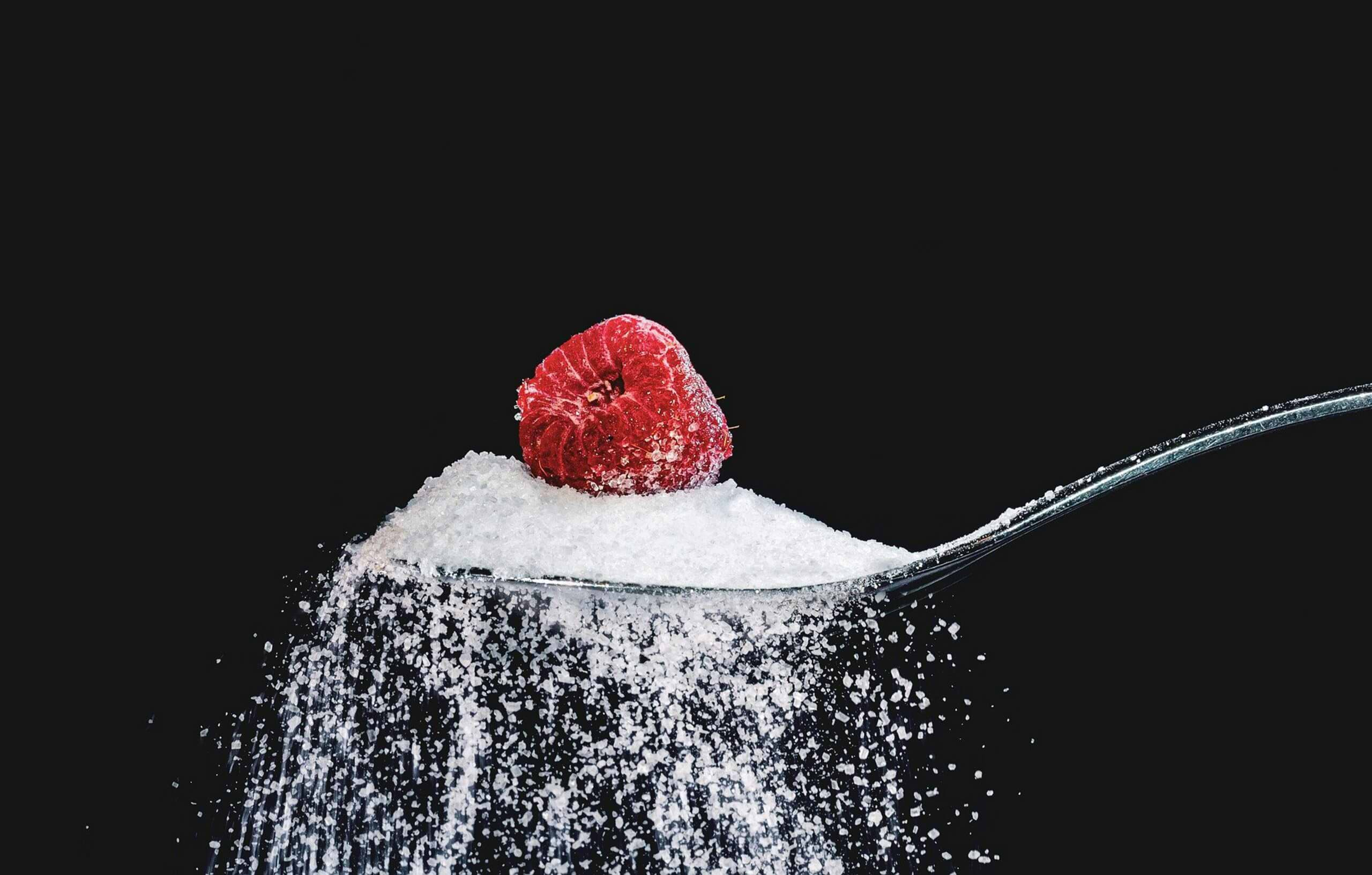
Table sugar, or sucrose, is two simple sugars joined together: one molecule of glucose and one of fructose. Your body can’t absorb sucrose as it is. An enzyme in your small intestine called sucrase has to split it into its two halves first, and only then can glucose and fructose pass into your bloodstream.
Invert sugar has the same two halves, but they’ve already been separated. Manufacturers heat sucrose with water and a little acid, or treat it with an enzyme, to break the bond before the product reaches you. What’s left is a syrup of free glucose and fructose in roughly equal amounts. It stays smoother and moister than regular sugar and doesn’t crystallise as easily, which is why it shows up in baked goods, sweets, ice cream and drinks.
But are there any differences in health between invert sugar and standard sugar? In this guide, we explain what invert sugar is, where you’ll find it, and how it affects your blood glucose compared with table sugar.
Key takeaways
- Invert sugar is roughly 50% glucose and 50% fructose, the same split sucrose produces once digested.
- The glucose half raises blood sugar slightly faster than table sugar, because it skips a digestion step.
- It is sweeter than table sugar per gram of dry sugar, which is one reason manufacturers use it. The other reasons are moisture and texture.
What invert sugar actually is
The name has nothing to do with sweetness or quality. It comes from optical chemistry. Splitting sucrose flips the direction in which the resulting mixture rotates polarized light, so the syrup is described as inverted.
Invert sugar tastes sweeter than table sugar, because a loose 50-50 blend of glucose and fructose is sweeter than the same sugars bonded together. It has a syrup form, so some of its weight is water.
It holds moisture, so baked goods stay soft for longer. It stops candies and frostings from crystallizing and lowers the freezing point of ice cream, giving a smoother texture.
How invert sugar is made
The process is hydrolysis. A sucrose syrup is heated with either an acid, often citric acid, or the enzyme invertase. Either one breaks the bond between the glucose and fructose halves of each sucrose molecule, leaving them loose in solution.
How far that goes is up to the manufacturer. Partially inverted syrups still contain intact sucrose. Fully inverted syrups are essentially a 50-50 glucose and fructose mix.
Honey is made the same way, by bees rather than a factory. They add invertase to nectar, which is why honey is also largely a glucose and fructose syrup.
What makes it different from table sugar
Table sugar is a disaccharide: one glucose molecule bonded to one fructose molecule. Your small intestine makes an enzyme called sucrase that breaks the bond, and the two sugars are absorbed separately.
Invert sugar arrives already split, so it skips that step.
That is the whole difference. The glucose half reaches your bloodstream a little sooner than it would from table sugar. The amount of glucose is the same, and the fructose half takes the same route either way, through the liver rather than straight into the bloodstream.
For a fuller picture of how the different sugars relate to each other, see our guide to the types of sugar , which also covers high-fructose corn syrup and the sugar alcohols.
Is invert sugar worse than regular sugar?
No. They behave the same way.
Both deliver a 50-50 glucose and fructose mix once digested, both carry the same glucose load gram for gram, and both carry the same fructose-driven risks at high daily intakes.
The one theoretical edge is sweetness. Invert sugar is sweeter per gram of dry sugar, so a manufacturer could use less of it for the same taste and cut the total sugar dose. In practice, that rarely happens, because it tends to be used at similar volumes for its moisture and anti-crystallization properties rather than for sweetness alone.
How invert sugar affects blood glucose
Table sugar has a glycemic index of about 65, against pure glucose at 100 and pure fructose at about 19. Invert sugar lands in a similar range, so there’s little difference in terms of blood sugar impact.
On a CGM you would expect a similar peak. A food sweetened with invert sugar should peak at a similar height to the table-sugar version, although that spike may arrive marginally sooner because the sugars skip the step of being broken down by the gut.
If you are tracking glucose
The same approach applies as for any sugar.
Pair sweet foods with protein, fat, or fiber to slow absorption and flatten the peak. Watch portions, since invert sugar’s extra sweetness does not change its calories per gram of dry sugar. And read labels for the cumulative total across a day rather than any single product.
Heavy daily intake of fructose-rich sweeteners has been linked to insulin resistance, visceral fat and dyslipidemia in controlled trials, and one widely cited paper proposed that high-fructose corn syrup in beverages may play a role in rising obesity. That argument extends by inference to any high-fructose sweetener, invert sugar included, though direct evidence on invert sugar specifically is thin. A cocktail or a slice of cake is a different proposition from a daily soft drink.
For how a specific product behaves, see our analyses of Coke Zero and of sucrose .
Frequently asked questions
Is invert sugar worse than regular sugar?
No. Its glucose impact is similar to sucrose, with a marginally faster rise because the sugars are already separated. The fructose half carries the same downstream effects whether it comes from invert sugar, sucrose or high-fructose corn syrup.
Does invert sugar spike blood sugar?
Yes, much like regular sugar. The glucose half raises blood sugar quickly. The fructose half does not show as a spike on most CGMs, but contributes to downstream effects at consistent high intake.
Is invert sugar the same as high-fructose corn syrup?
No, though they are related. Invert sugar is about 50% fructose. HFCS-55, the type in most soft drinks, is 55% fructose, and HFCS-42, common in baked goods, is 42%. The practical differences between those blends are small.
Why is invert sugar used in baked goods?
It holds moisture, so baked goods stay softer for longer. It also prevents crystallization, browns evenly, and is sweeter per gram of dry sugar, so less is needed.
How does invert sugar compare to honey?
Closely. Honey is largely a glucose and fructose syrup produced when bees add invertase to nectar, the same enzyme used commercially. Honey carries trace minerals and antioxidants, but for sweetening purposes the two are metabolically similar.
Disclaimer: This article is for information and is not medical advice. People with diabetes, prediabetes or insulin resistance should discuss specific sweetener choices with a clinician or registered dietitian.
References
- Foster-Powell K, Holt SHA, Brand-Miller JC. International table of glycemic index and glycemic load values: 2002. American Journal of Clinical Nutrition 2002;76(1):5–56. PMID 12081815
- Stanhope KL, Schwarz JM, Keim NL, et al. Consuming fructose-sweetened, not glucose-sweetened, beverages increases visceral adiposity and lipids and decreases insulin sensitivity in overweight/obese humans. Journal of Clinical Investigation 2009;119(5):1322–1334. PMID 19381015 . Beverages supplied 25% of energy requirements for 10 weeks.
- Bray GA, Nielsen SJ, Popkin BM. Consumption of high-fructose corn syrup in beverages may play a role in the epidemic of obesity. American Journal of Clinical Nutrition 2004;79(4):537–543. PMID 15051594
Read next: Types of sugar explained · Sucrose and how it affects the body · What Coke Zero does to your blood sugar
THE AUTHOR