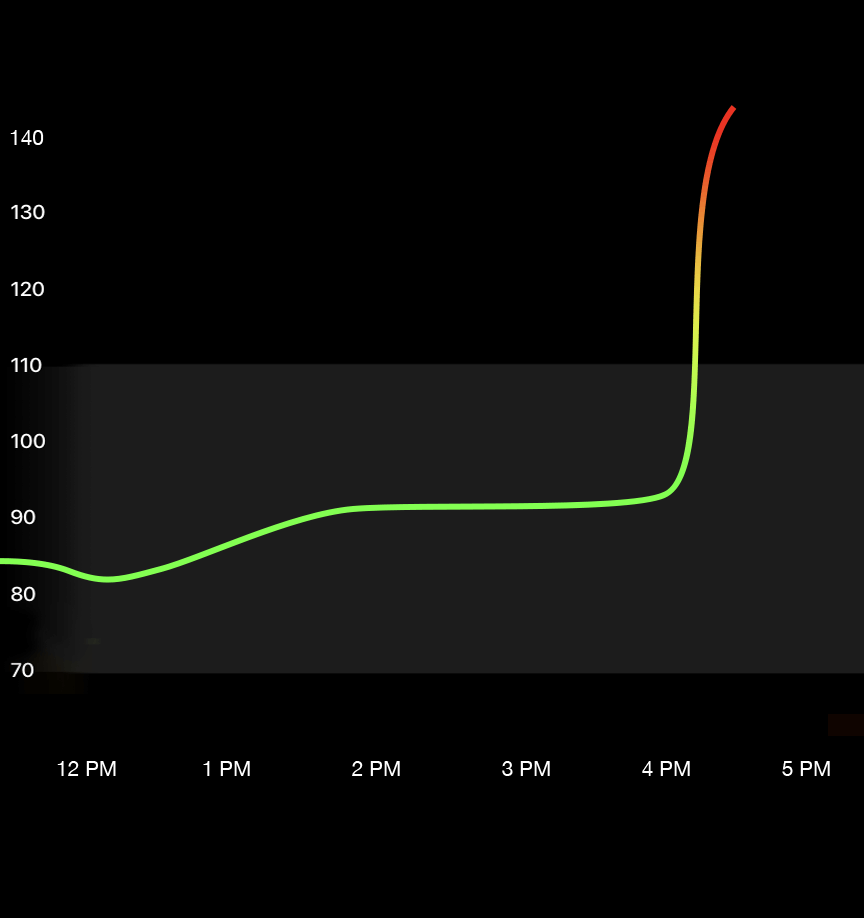
Blood sugar naturally rises after every meal, and for most people, it settles after an hour or so. Reactive hyperglycemia is when that rise goes higher than it should, or takes too long to come back, in someone who does not have diabetes.
It is more common than most people realize, and it usually goes unnoticed. A standard annual blood test measures fasting glucose, which can still sit in the normal range, so only those using a CGM (such as the Ultrahuman M1/M2 Live) can be aware that they have reactive hyperglycemia.
The issue is that repeated high peaks are associated with inflammation, arterial damage, and progression toward insulin resistance.
In this guide, we explain what reactive hyperglycemia is and what brings post-meal glucose down.
Key takeaways
- Reactive hyperglycemia is a blood glucose rise after eating that goes higher or lasts longer than normal, in someone without diabetes.
- The standard thresholds are above 125 mg/dL fasting and above 180 mg/dL one to two hours after a meal.
- Fasting glucose can look normal while post-meal peaks run high, which is why a yearly blood test often misses it.
- What you eat matters less than most people expect. When you eat, how you sequence a meal, and what you do in the half hour afterwards all move the peak.
What reactive hyperglycemia is
Hyperglycemia means high blood glucose. When it happens to someone without diabetes, it is called non-diabetic hyperglycemia, and it comes in two forms.
Fasting hyperglycemia is a blood glucose level above 125 mg/dL after eight hours or more without food.
Postprandial, or reactive, hyperglycemia is a level above 180 mg/dL one to two hours after eating. This is the one most people have without knowing it, because it only shows up if you happen to measure at the right moment.
Ultrahuman’s own guidance for users of M1/M2 Live is tighter than the clinical thresholds. For metabolic health rather than diagnosis, a range of 70 to 110 mg/dL is the target worth holding, which is the basis of time in range as a measure.
How glucose is normally controlled
Eating raises blood glucose. The pancreas responds by releasing insulin, which lets cells take glucose out of the bloodstream to use or store. As glucose falls, insulin production drops and the pancreas releases glucagon instead, which tells the liver to put stored glucose back into circulation. The two hormones hold the level inside a narrow band.
Between meals and overnight, circulating glucose comes from the liver, first by breaking down stored glycogen and later, during longer fasts, by making new glucose from lactate and amino acids.
Insulin resistance is what happens when cells stop responding properly to insulin. The pancreas compensates by producing more of it, and for a while that works. Glucose stays normal on a standard test while insulin runs high. Reactive hyperglycemia often appears in that window, before fasting glucose has moved at all.
Reactive hyperglycemia is not reactive hypoglycemia
These two get confused constantly, and they are opposites.
Reactive hypoglycemia is blood sugar falling too low a few hours after eating, often after a large or carbohydrate-heavy meal. It tends to produce shakiness, sweating, irritability and hunger, and it is the better known of the two.
Reactive hyperglycemia is blood sugar going too high after eating. It is usually silent.
Confusingly, the two can occur in the same person. A steep glucose peak is often followed by an overshoot downward as insulin catches up, so someone can have both a high excursion and the crash that follows it. If a doctor has used one of these terms with you, it is worth checking which they meant.
How reactive hyperglycemia feels
Most reactive hyperglycemia produces no symptoms at all. When glucose is high enough for long enough, the recognizable effects are:
- Increased thirst
- Needing to urinate more often
- Fatigue, particularly in the hour or two after a meal
- Headache
- Blurred vision
What causes it
- Diet and meal composition: Refined carbohydrates and added sugars are digested fast, so glucose arrives in the bloodstream faster than insulin can clear it. The same carbohydrate eaten alongside fat, protein or fiber produces a lower peak.
- Meal timing: The body is more insulin resistant at night. An identical meal eaten late produces a larger glucose rise than it would in the morning.
- Low physical activity: Skeletal muscle is the largest store of glucose in the body. Inactive muscle takes up less of it, so the same meal clears more slowly.
- Poor or short sleep: Sleep loss reduces insulin sensitivity measurably, and the effect appears within a few nights.
- Chronic stress: Stress raises cortisol, which opposes insulin, pushes the liver to release glucose and blunts insulin sensitivity. Sustained, it contributes directly to insulin resistance.
- Excess body fat, particularly around the abdomen: Fat cells release inflammatory signals that increase insulin resistance and interfere with insulin signaling in muscle.
- Alcohol: It interferes with the liver’s regulation of glucose release and with the body’s response to insulin.
- Polycystic ovary syndrome: PMOS (formerly known as PCOS) commonly involves insulin resistance, with a substantial proportion of women affected.
- Cushing’s syndrome: Excess cortisol production raises glucose and increases insulin resistance directly.
- Pancreatic disease: Pancreatitis or pancreatic cancer can impair the pancreas’s ability to produce insulin.
- Acute illness, injury or surgery: Physical stress raises cortisol and inflammatory signaling, which drives glucose up. Stress hyperglycemia after surgery is common and can persist after discharge.
- Medications: Corticosteroids, immunosuppressants and some blood-pressure drugs raise glucose or interfere with insulin. Intravenous nutrition in hospital contains glucose and can do the same.
- Family history: Impaired insulin sensitivity runs in families, which makes reactive hyperglycemia more likely even where diabetes never develops.
Why it matters if it continues
Sustained high glucose is not neutral, and the damage accumulates before any diagnosis would be made.
- Blood vessels and heart. Elevated glucose drives inflammation, damages artery linings and contributes to plaque formation. Glucose is a recognized cardiovascular risk marker in people without diabetes.
- Nerves. Prolonged exposure damages peripheral nerves.
- Wound healing and infection. High glucose slows healing and impairs immune response.
- Liver. Persistently high glucose is converted to fat by the liver, contributing to non-alcoholic fatty liver disease, which in turn worsens insulin resistance.
If your glucose is persistently high, the answer is a conversation with a doctor about why, not self-medication. Glucose-lowering drugs including insulin are prescribed for specific diagnoses and are dangerous without one.
Ten things that lower post-meal glucose
1. Walk for ten to fifteen minutes after eating: The most reliable single change on this list. Contracting muscle takes up glucose directly, without needing more insulin, so a short walk blunts the peak while it is happening.
2. Eat earlier in the day: Insulin sensitivity falls as the evening goes on. Moving the same food earlier lowers the rise it produces, and compressing eating into a shorter daily window lowers fasting glucose and insulin over time.
3. Sequence the meal: Eating protein, fat or vegetables before the carbohydrate portion slows gastric emptying and flattens the peak that follows.
4. Eat more fiber: Fiber slows digestion and reduces the speed glucose enters the bloodstream. Beans, lentils, nuts, seeds, vegetables and intact whole grains all qualify. Juice does not, even though the fruit it came from does.
5. Cut refined carbohydrate and added sugar: Whole foods in something close to their original form produce smaller, slower rises than anything refined into flour, syrup or juice.
6. Exercise regularly: Thirty minutes of moderate activity most days improves insulin sensitivity for hours afterwards. Strength training adds to this by increasing the muscle available to store glucose.
7. Protect your sleep: Short sleep reduces insulin sensitivity within a few nights, and restoring it recovers the loss almost as quickly.
8. Manage stress deliberately: Slow breathing and other parasympathetic practices lower cortisol, and cortisol is the hormone most directly working against insulin.
9. Limit alcohol: It disrupts the liver’s regulation of glucose release and worsens the body’s insulin response.
10. Try vinegar with a carbohydrate meal: In a study of 12 healthy volunteers , vinegar taken with white bread lowered both the glucose and the insulin response, with a clear dose-response effect, and increased how full people felt. A small study, but a cheap thing to test on yourself.
Measuring it
The problem with reactive hyperglycemia is that a single fasting blood test is the wrong instrument for it. Fasting glucose can be entirely normal while your post-meal peaks run high, and by the time fasting glucose moves, insulin resistance is usually well established.
Continuous glucose monitoring shows the shape of the response instead of one point on it, which is what the condition is defined by. It also makes the changes above testable: eat the same meal twice, once alone and once after a walk, and the difference is visible rather than theoretical.
When to see a doctor
Speak to a doctor if you have:
- Persistent thirst, frequent urination or unexplained fatigue
- Unexplained weight loss, recurrent infections or slow-healing wounds
- Repeated high readings on any glucose measurement
- A family history of type 2 diabetes alongside any of the above
- New symptoms after starting a medication such as a corticosteroid
Reactive hyperglycemia is a signal worth acting on early, and early is when lifestyle change works best.
Frequently asked questions
Can you have high blood sugar without being diabetic?
Yes. Blood glucose above 125 mg/dL fasting, or above 180 mg/dL one to two hours after eating, is hyperglycemia regardless of whether you have a diabetes diagnosis. In people without diabetes, it usually reflects reduced insulin sensitivity, illness, stress, or medication.
Is reactive hyperglycemia the same as prediabetes?
Not the same, though they overlap. Prediabetes is defined by specific fasting glucose or HbA1c thresholds. Reactive hyperglycemia describes the post-meal pattern, and it often appears earlier, while fasting numbers still look normal.
What is the difference between reactive hyperglycemia and reactive hypoglycemia?
They are opposites. Hyperglycemia is glucose going too high after eating and is usually silent. Hypoglycemia is glucose falling too low a few hours afterwards, which causes shakiness, sweating, and hunger. They can occur in the same person because a steep rise is often followed by an overshoot downward.
How quickly does blood sugar return to normal after eating?
In someone with normal insulin sensitivity, glucose peaks within about an hour of eating and returns to baseline within two to three hours. A peak that is very high, or a return that takes much longer, is a pattern worth looking at.
References
- Östman E, Granfeldt Y, Persson L, Björck I. Vinegar supplementation lowers glucose and insulin responses and increases satiety after a bread meal in healthy subjects. European Journal of Clinical Nutrition 2005;59(9):983–988. PMID 16015276 . 12 healthy volunteers.
This article is for general information and is not medical advice. It does not diagnose, treat or prevent any condition. Always speak to a doctor or qualified healthcare professional about your own health before changing your diet, activity or medication.
THE AUTHOR