
Bytes
Open research, published as we run it.
Short-form findings, plain-language summaries, and visualisations from Ultrahuman's population datasets.
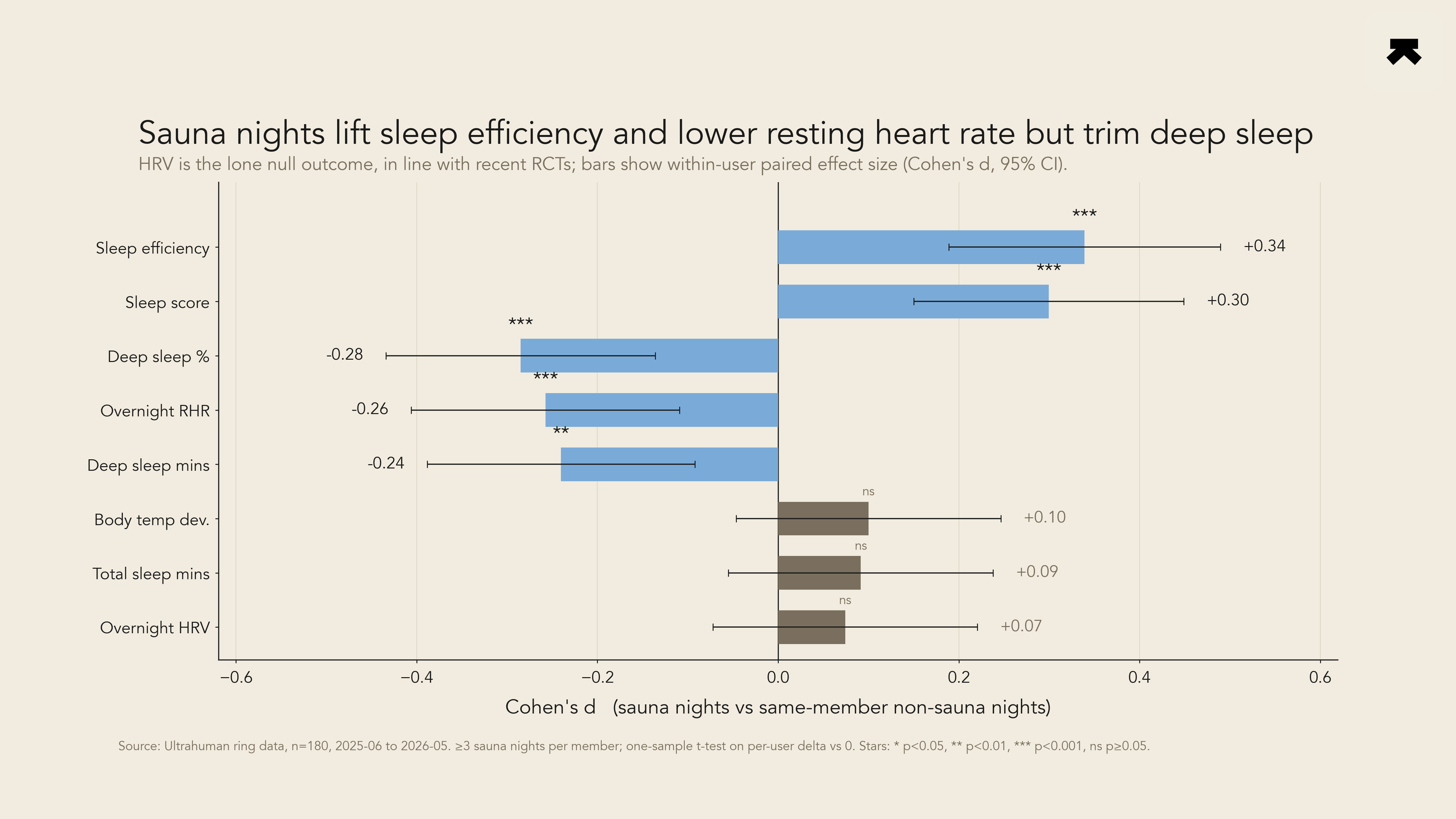
Sauna nights lift sleep score and lower overnight heart rate but trim deep sleep, across 180 Ring members
Across 180 members and a year of paired Ring nights between June 2025 and May 2026, sauna nights raised sleep efficiency 0.88 percentage points and sleep score 1.48 points and lowered resting heart rate 0.66 bpm against each member’s own baseline, while deep sleep fell 3.58 minutes.
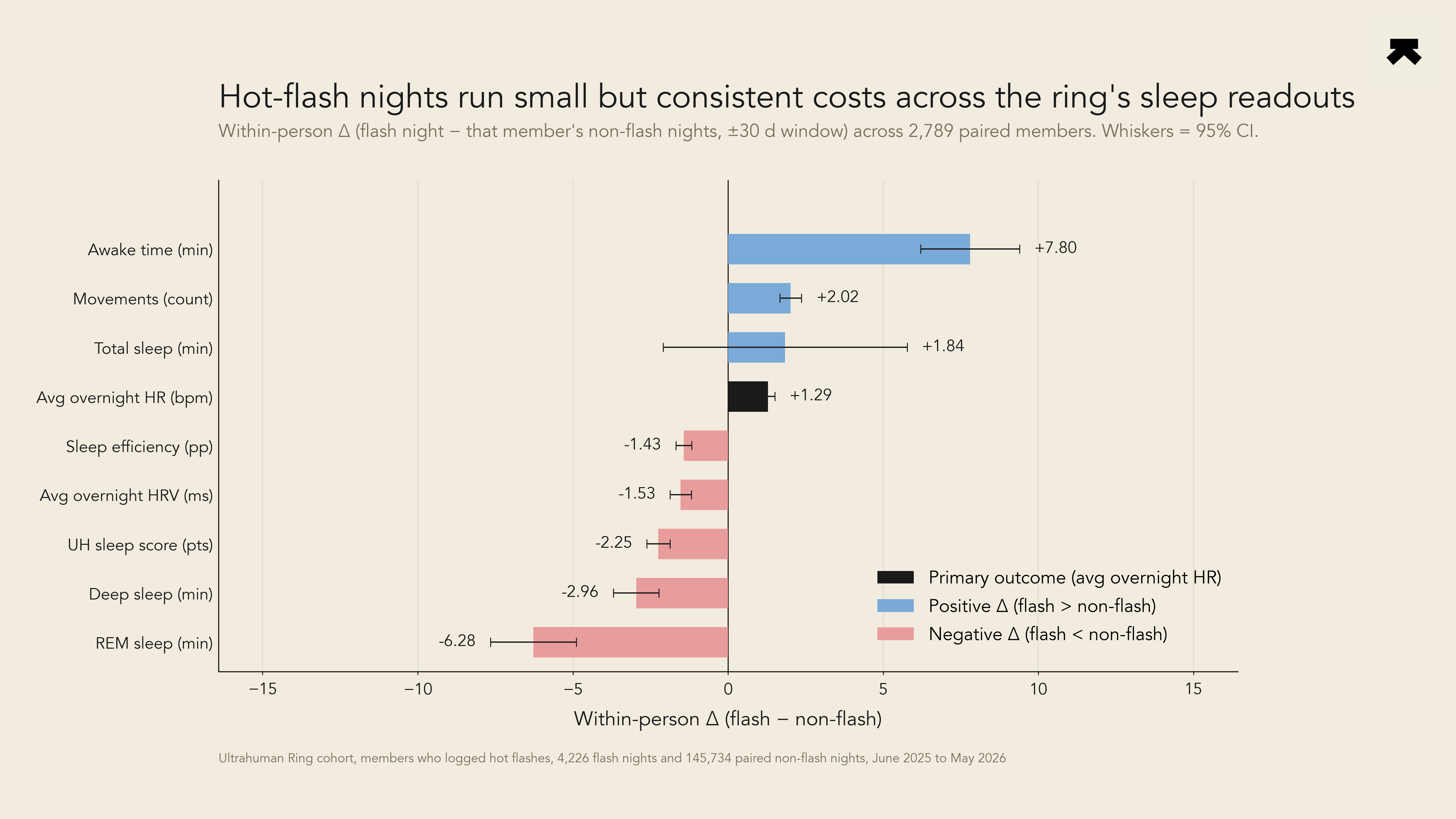
Hot flashes shift sleep toward lighter stages and raise overnight heart rate, across 2,789 Ring members
Across 145,734 paired nights between June 2025 and May 2026, deep sleep falls 3 minutes, REM falls 6 minutes, overnight heart-rate variability drops 1.5 ms, and overnight heart rate runs 1.3 bpm higher.
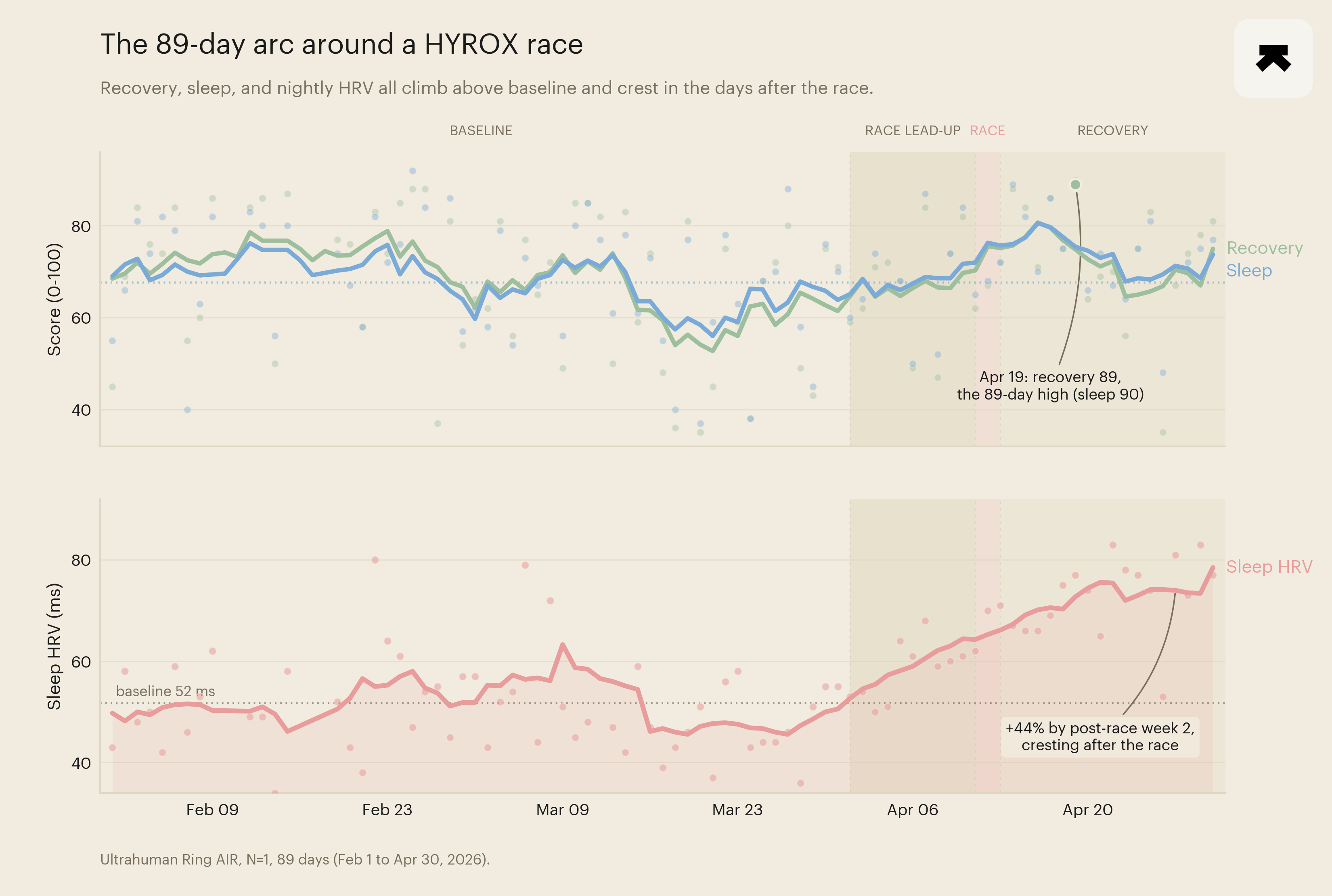
Across 89 days around a HYROX race, one athlete's recovery overshot baseline by 19% and sleep HRV by 44%
The race's biggest signals came after the finish line, not during it. Sleep held 97% efficient on both race nights, and recovery peaked at its 89-day high a full week later, with no recovery plan at all.
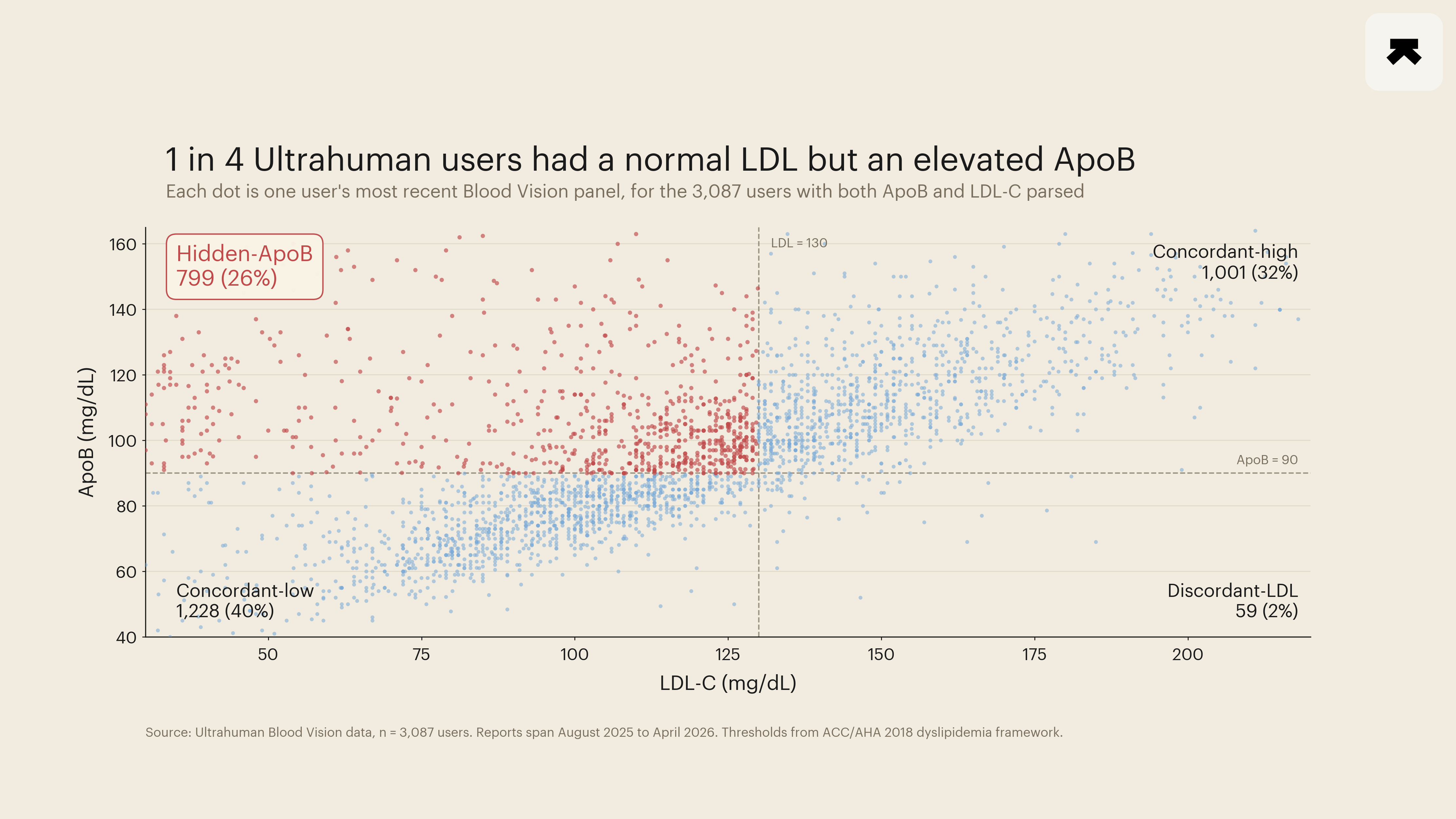
Normal LDL-C, elevated ApoB: how often Ultrahuman's cohort carries the discordance the new guidelines target
We analysed data from more than 3,000 users and found that some people with normal LDL still had elevated ApoB levels.
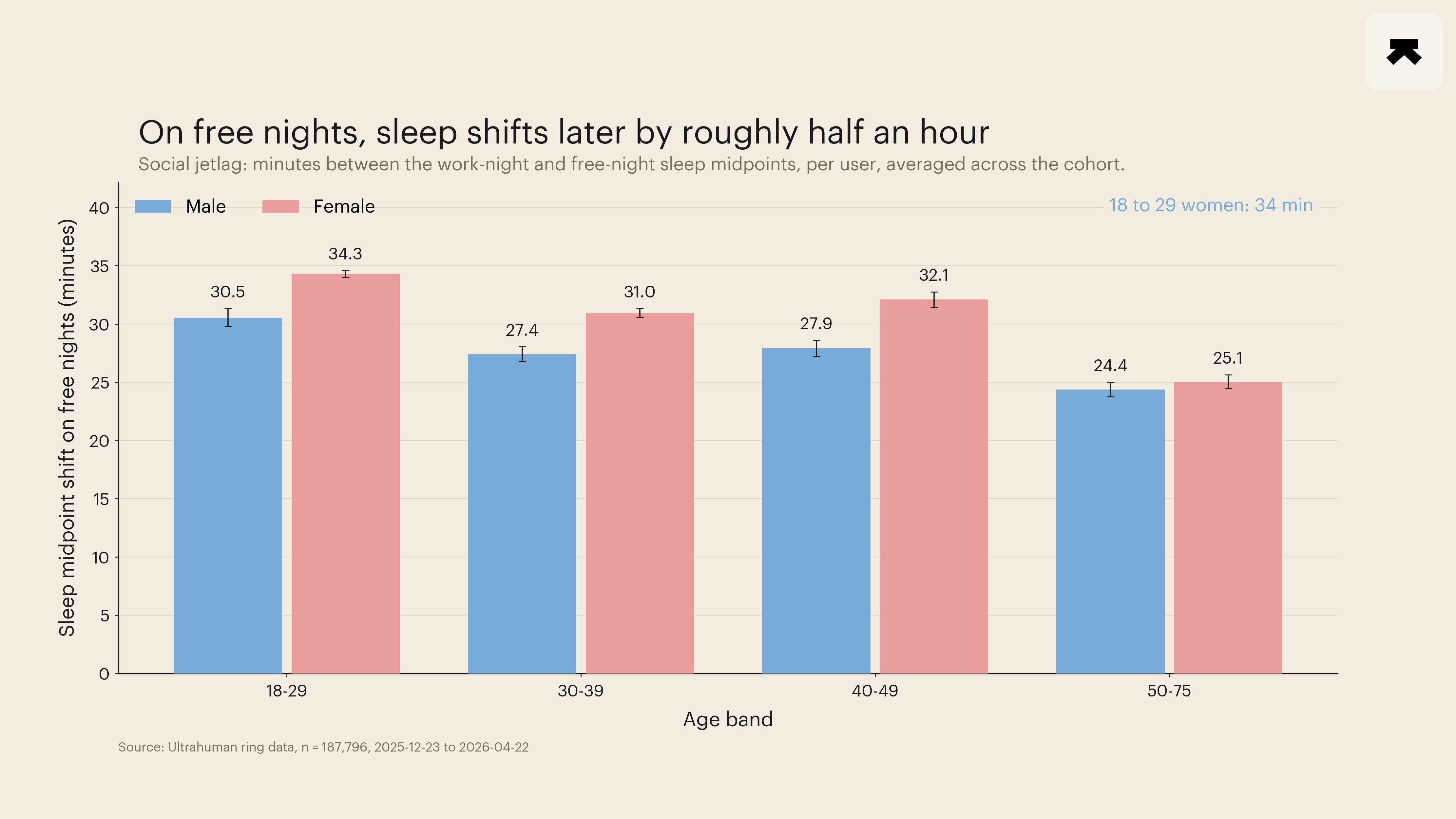
Social jetlag carries a measurable overnight autonomic cost across 187,796 ring wearers
Sleep midpoints land 24 to 34 minutes later on free nights, and overnight resting heart rate rises in every one of eight age-by-sex cells. The cost is largest in women aged 18 to 29 and roughly halves by 50.
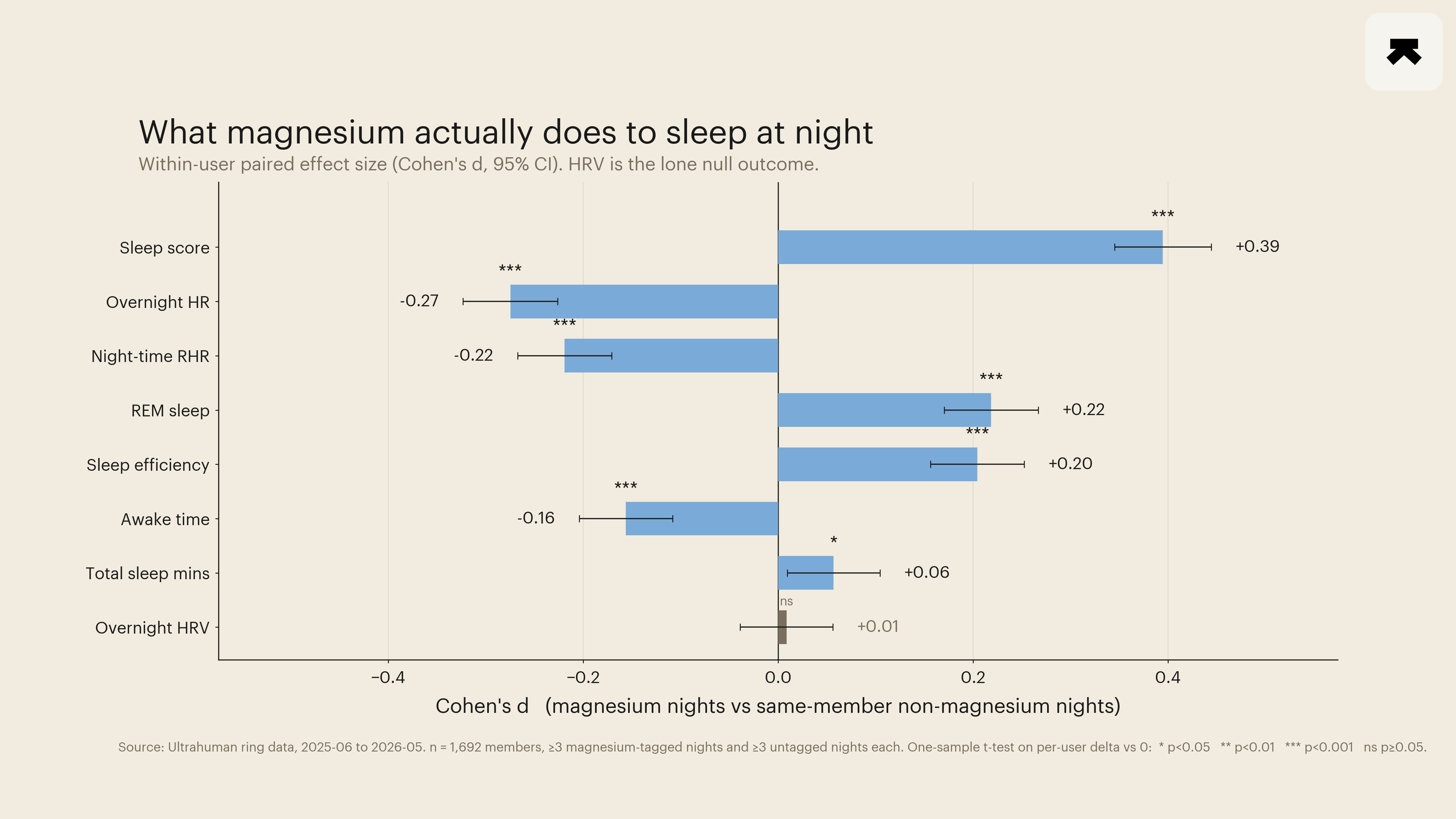
Magnesium-tagged nights lift sleep score and lower overnight heart rate across 337,471 user-nights
On a user's magnesium nights versus their own other nights, sleep score sits 1.88 points higher and overnight heart rate 0.81 bpm lower.
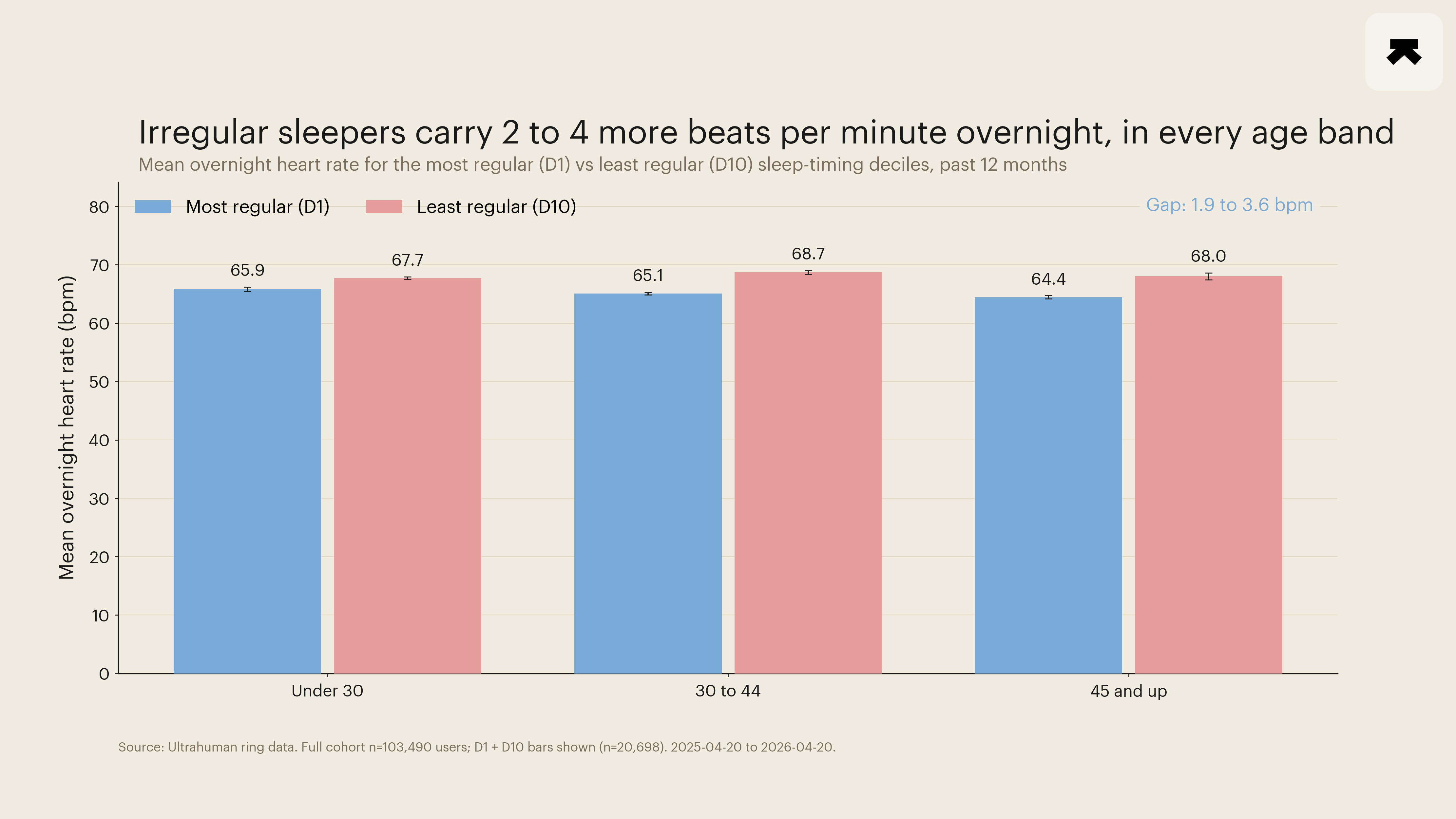
Bedtime regularity tracks overnight resting heart rate in 103,490 ring wearers, independent of total sleep time
The most irregular sleepers carry 1.9 to 3.6 bpm more overnight resting heart rate than the most regular in their age group, with HRV falling in step.