



Your heart rate through a working day
OPTICAL
Accuracy
96.1%
Desk Work Heart Rate Agreement
checked against an ECG chest strap over the same working hours (27 recordings, 22 subjects)
Reference standard
ECG chest strap
Sample size
22 participants
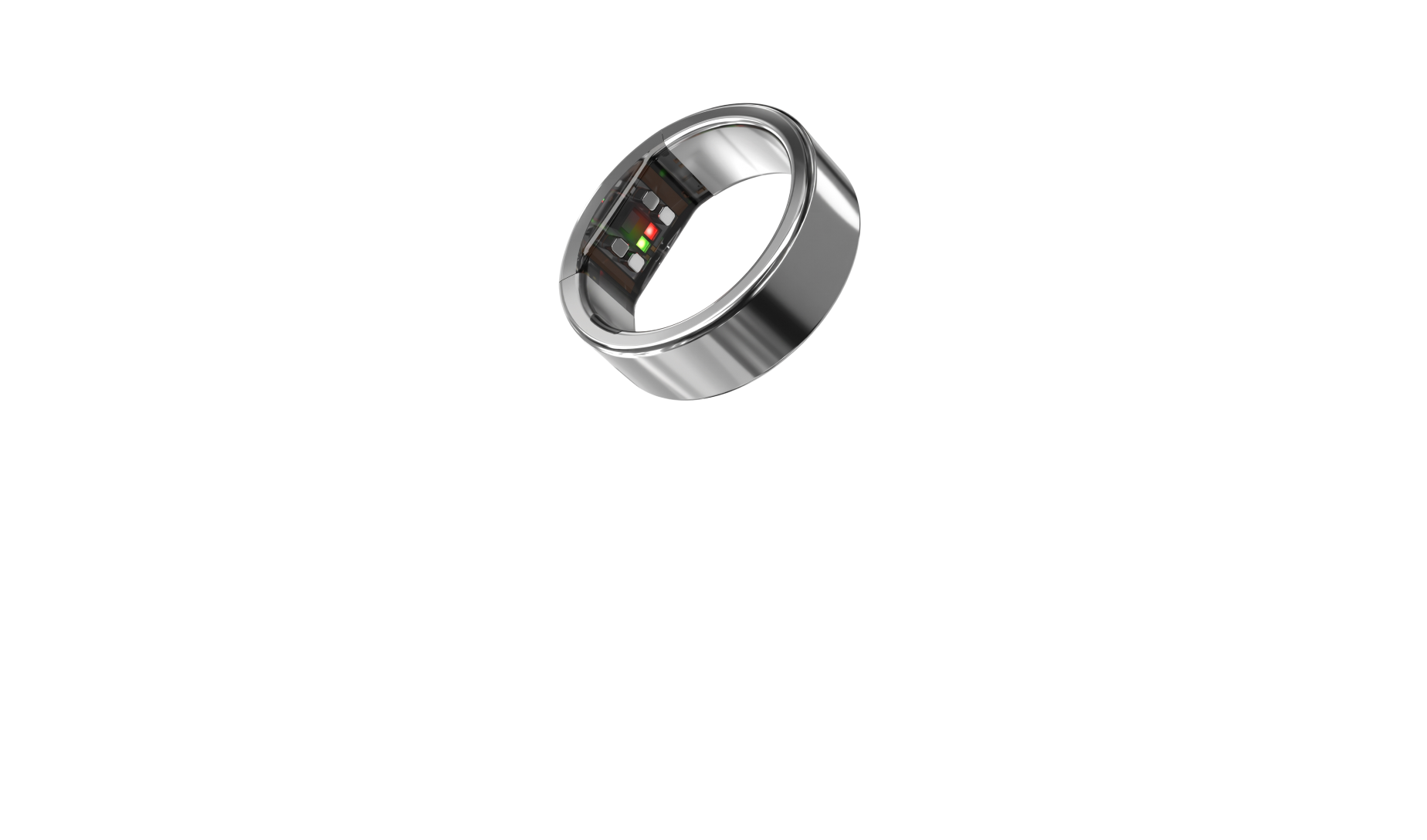
Through a stretch of desk work the Ultrahuman Ring stays within four beats a minute of an ECG chest strap, on average.
Ultrahuman RingECG chest strapbeats per minute
96.1%agreement with the chest strap
3.2 bpmaverage difference
+2.8 bpmthe ring reads high, on average
54–123beats per minute the reference covered in study
Desk work is where most of the waking day actually goes, and it is deceptively busy for a sensor. Your heart rate sits low, where a few beats is a large share of the whole number, while your hands type, reach, scroll and gesture almost without pause. Small, fast hand movement over a low, slow pulse is one of the harder combinations to read cleanly, and it is best measured in ordinary offices rather than in a laboratory.
Two clear lifts run through the trace below, the kind a phone call or a walk to the printer produces. The Ultrahuman Ring picks up both, and comes back down with the reference on the other side of each.
Typing, reaching and gesturing never show up as jumps in the reading.
Your cart is empty
Looks like you haven't added anything yet. Explore our products to get started.