



A blood age that moves with your body
Accuracy
10.2 bpm
Resting Heart-Rate Gap Across the Blood Age Scale
between the fastest- and slowest-ageing, at matched age and sex, in 20,858 adults
Sample size
20,858 adults
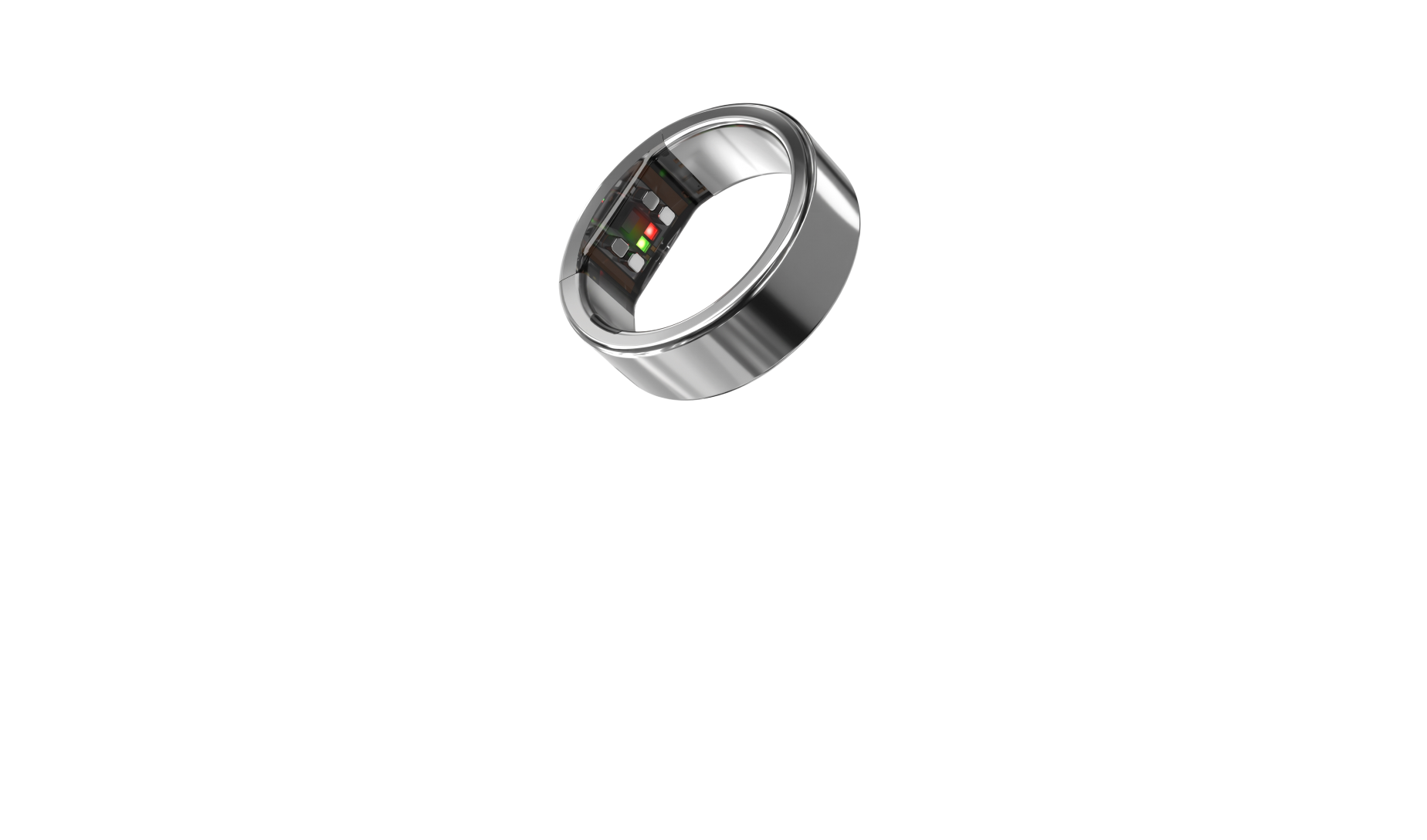
At the two ends of the Blood Age scale, the Ultrahuman Ring finds a resting heart rate 10.2 beats a minute apart — a gap in a measurement the score never sees.
10.2 bpmresting heart-rate gap across the scale
4 of 5ring measures Blood Age tracked more closely than both established clocks
20,858adults with blood work and ring data
0.78×mortality hazard in the slowest-ageing third
Ageing does not run at one speed inside the body. Low-grade inflammation creeps up, the kidneys filter a little more slowly, red blood cells drift apart in size, and sugar and fat are handled less cleanly than they once were. Every one of those leaves a trace in an ordinary blood panel. The difficulty is that each marker also swings for everyday reasons, a late meal, a hard week, a cold coming on, so no single one of them says how fast a person is ageing.
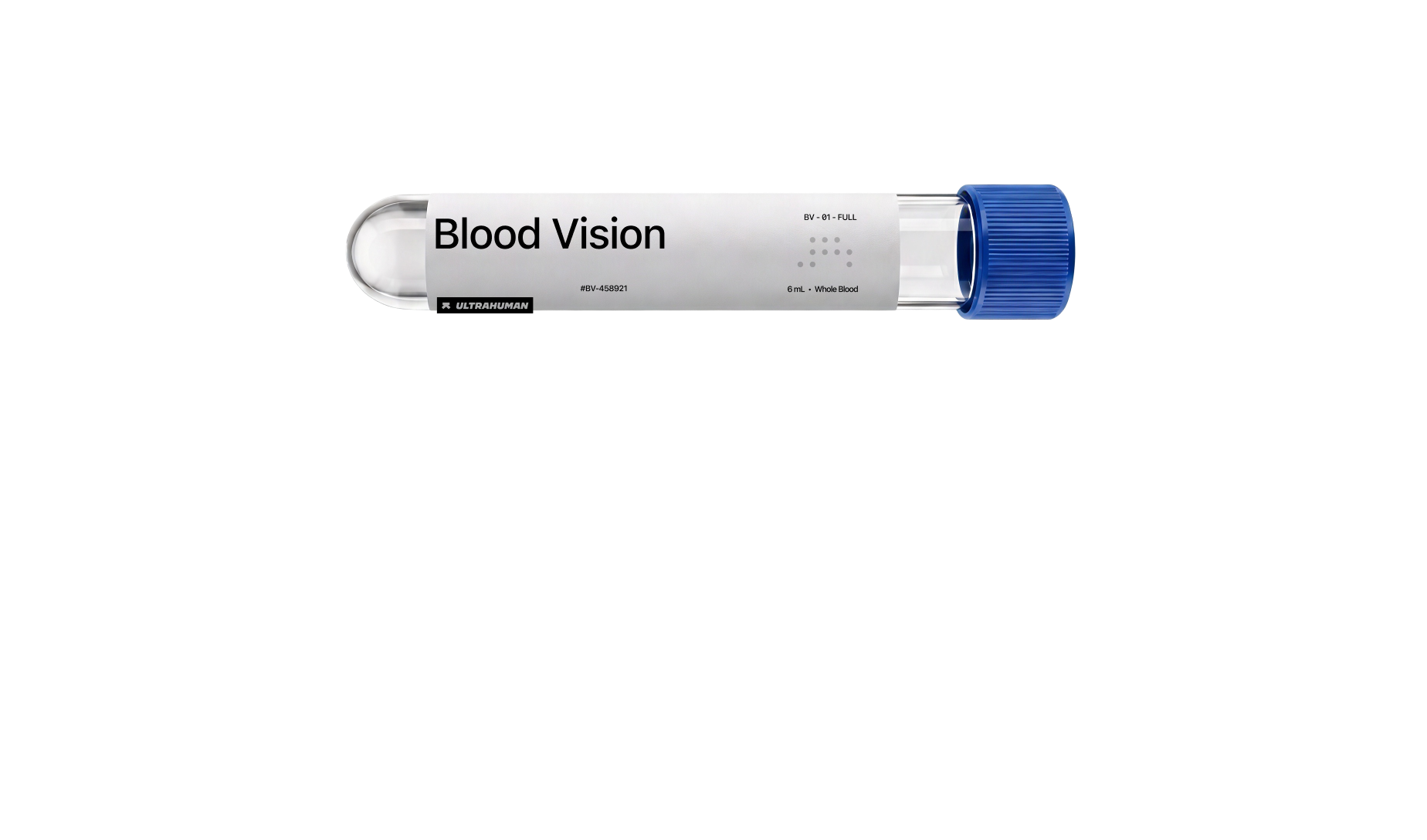
Blood Age reads twelve routine markers together, and weights each one by an effect estimate published in the literature rather than fitted to Ultrahuman’s own data. That matters for what the number can be tested against: because nothing in the score was tuned on the people it is scored on, an independent measurement is a real check rather than an echo.
The check is the Ultrahuman Ring. Across 20,858 adults with both a blood panel and continuous ring data, the two ends of the Blood Age scale differ in measurements the score never sees: at matched age and sex, the fastest-ageing carry a resting heart rate 10.2 beats a minute higher, sleep 45 minutes less and spend 3.1 fewer percentage points of the night in estimated REM sleep. On the 3,989 people also scored on PhenoAge and the Klemera–Doubal method, two of the most-cited clocks built from routine blood work, Blood Age tracked the ring more closely than both on four of the five measures compared — and equal weights and random weights reproduced that lead, so it comes from which markers the panel carries rather than from how they are weighted.
It also holds up against the endpoint these clocks are usually judged on. Scored on a public United States health survey with a decade of linked death records, the third of adults whose Blood Age ran ahead of their years lived 0.42 fewer years inside a ten-year window than the middle third, and the third running behind carried a mortality hazard of 0.78 against it.