


A three-month blood marker, estimated from continuous glucose
Accuracy
94%
Estimated HbA1c Correctly Ranked Against a Blood Test
an elevated result placed above a typical one (74 paired windows, 53 members)
Reference standard
Laboratory blood work
Sample size
53 members
Put an elevated HbA1c next to a typical one, and an estimate built from the glucose the Ultrahuman M1 CGM records picks the right one 94 times out of 100.
94%correctly ranked against the blood test
0.75how closely the two move together
74paired comparisons against a venous draw
−0.36 ptsaverage offset from the laboratory value
HbA1c is the blood marker that sees past a single good morning. Glucose in the bloodstream sticks slowly and permanently to the haemoglobin inside red blood cells, and because those cells live about three months, one draw carries a record of a whole season of eating, sleeping and moving. That slowness is also what hides it: the marker drifts far too gradually to feel, and no fingerprick or single fasting reading can reconstruct where it has got to.
Continuous glucose data can estimate the same marker without a blood draw. Averaging the glucose the Ultrahuman M1 CGM records and converting that average with a published equation produces an estimate, and the test that matters is whether that estimate sorts people the way the blood draw does: put a result of 6.5% or above next to one in the typical range, and the estimate picks the right one 94 times out of 100. Across the same comparisons the estimate and the laboratory value move together at a correlation of 0.75. Ranking is not calibration: the estimate sits on average 0.36 of an HbA1c point below the laboratory value. An offset that shifts the whole scale rather than reordering it leaves the ranking untouched.
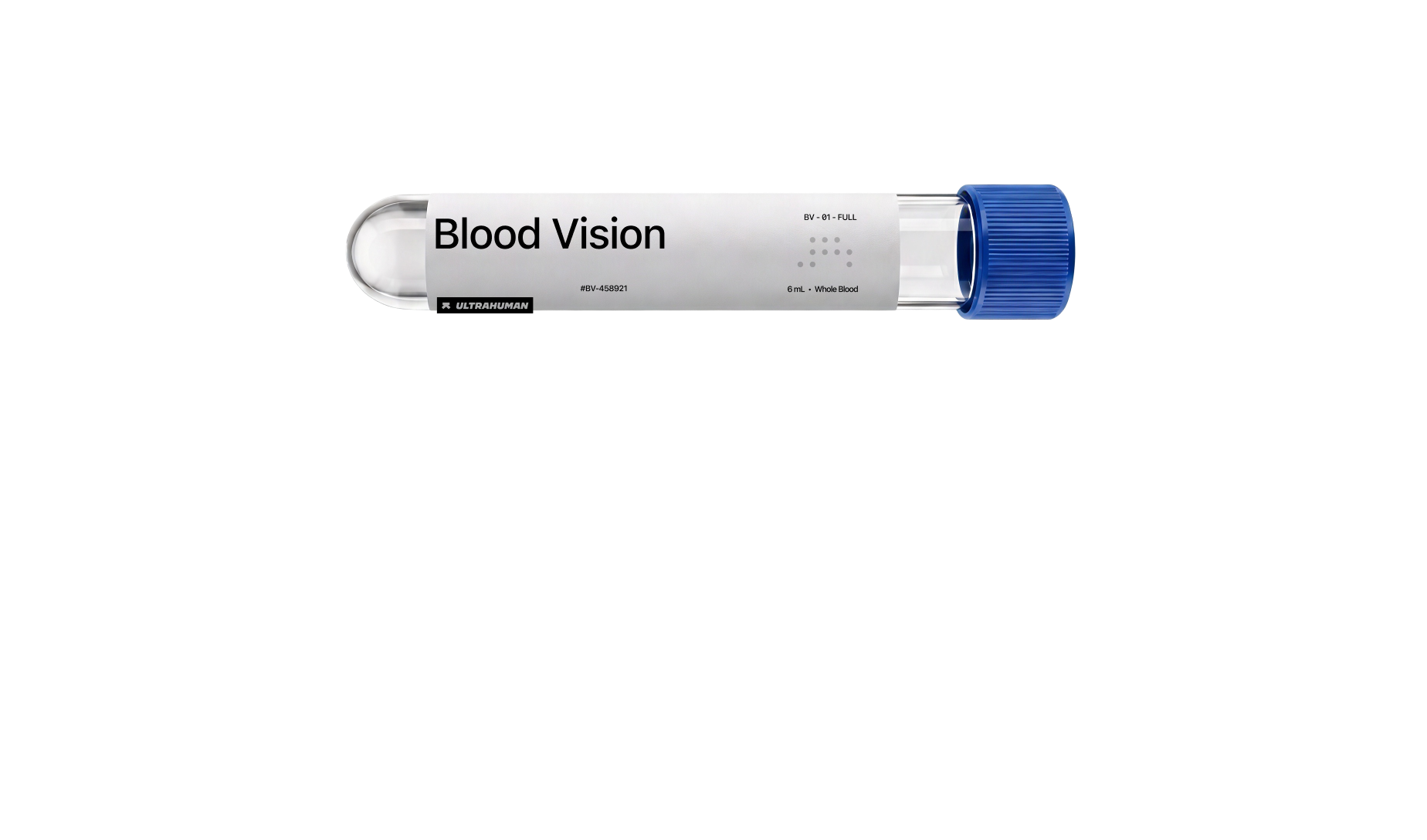
Those figures are Ultrahuman’s own, not a manufacturer claim. Members who wore the M1 CGM and also had venous HbA1c measured on an Ultrahuman Blood Vision panel were matched sample by sample, with each estimate built only from the glucose recorded before that blood draw, across a span wide enough to cover everything the marker remembers. That produced 74 paired comparisons across 53 members. The conversion itself is the published Nathan equation, the standard translation between average glucose and HbA1c.