


How long you actually slept
OPTICALMOTION
Agreement
97%
Total Sleep Agreement
of the night’s length, against an FDA-cleared home sleep test (20 nights, 4 subjects)
Reference standard
FDA-cleared home sleep test (EEG)
Sample size
4 adults in the published study
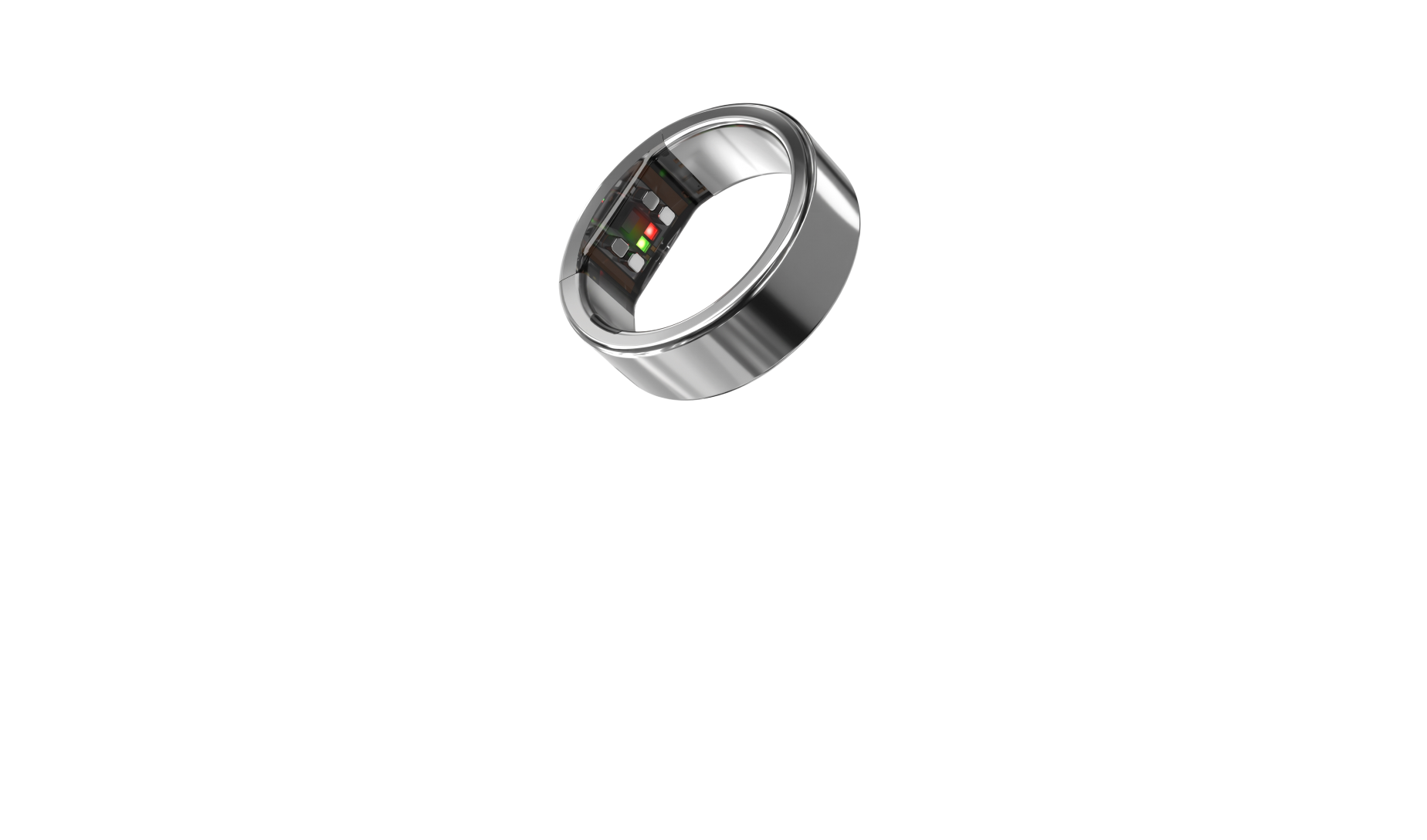
The Ultrahuman Ring lands within fifteen minutes of an FDA-cleared home sleep test reading brain activity on a typical night — the number you check first in the morning.
14.9 mintypical night, against the home sleep test
97%of the night, in agreement
464 minthe study’s average night, measured by the reference
0.889how closely the two move together
Total sleep time is the amount of time you actually spend asleep across the night. Unlike the interval from falling asleep to waking up, it leaves out periods when you were awake in between, so a night from 11 p.m. to 7 a.m. can still contain less than eight hours of sleep.
On a typical night the Ultrahuman Ring lands 14.9 minutes from an FDA-cleared home sleep test reading brain activity, on nights the reference measured at 7 hours 44 minutes of sleep on average.
Reported as a share of the night’s length rather than as a share of nights, this is the loosest of the three timing measures in minutes. Errors at the start of the night, at the end, and in the waking stretches in between all feed into the same figure, so they accumulate instead of cancelling. Fifteen minutes against the reference’s average night of 7 hours 44 minutes is about 3% of it.