


When you fell asleep
OPTICALMOTION
Accuracy
96%
Sleep Onset Agreement
of nights within half an hour, against a consumer smartwatch worn on the same nights (106 nights, 56 subjects)
Reference standard
Consumer smartwatch
Sample size
56 participants
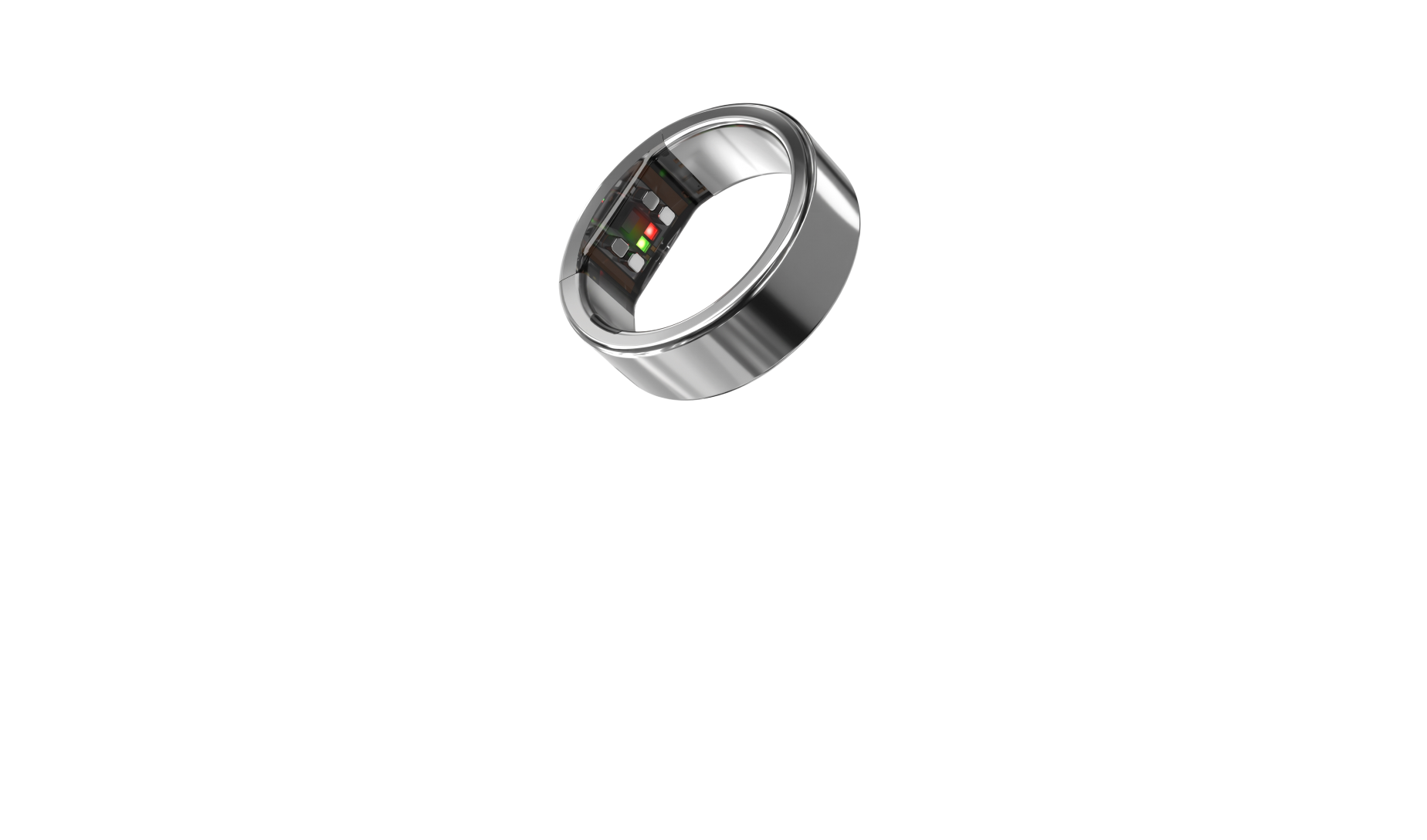
The Ultrahuman Ring places the moment you fell asleep a typical 8.3 minutes from an FDA-cleared home sleep test reading brain activity, and a consumer smartwatch agrees.
8.3 mintypical night-to-night error, against the home sleep test
9.0 minaverage per-night difference, against a consumer smartwatch
96%of nights within half an hour, against the smartwatch
−1.4 minthe ring calls sleep early, on average
An FDA-cleared home sleep test, reading brain activity at the forehead, can see the minute the brain stops surfacing. The Ultrahuman Ring has to find that same minute from the outside, from your heart rate, your movement and your temperature, across a boundary the brain crosses, comes back over, and crosses again.
Against that home sleep test — a home sleep study rather than a laboratory polysomnogram — the typical night-to-night error is 8.3 minutes, across 20 paired nights from 4 people. A separate comparison against a consumer smartwatch, on 106 nights from 56 people, puts 96% of nights inside half an hour, with an average per-night difference of 9.0 minutes.
These are per-night figures, what a single night actually looks like, rather than an average across nights. Averages come out far smaller, because nights that run early and nights that run late cancel each other out.
The small difference that remains points the same way each night: the Ultrahuman Ring calls sleep about a minute and a half early against the home sleep test, and a consumer smartwatch shows the same direction. A steady offset leaves your night-to-night patterns intact, where random error would scramble them.