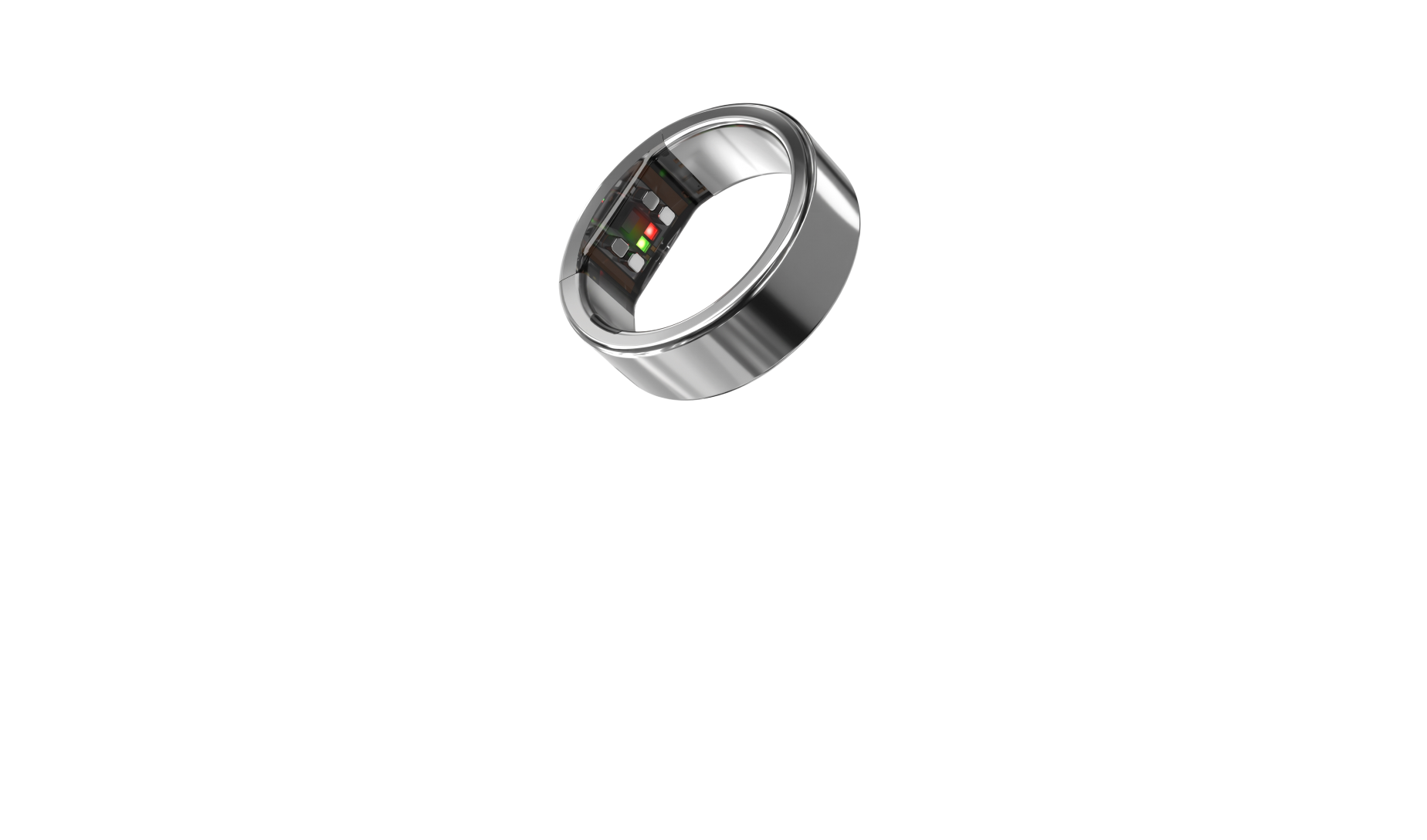

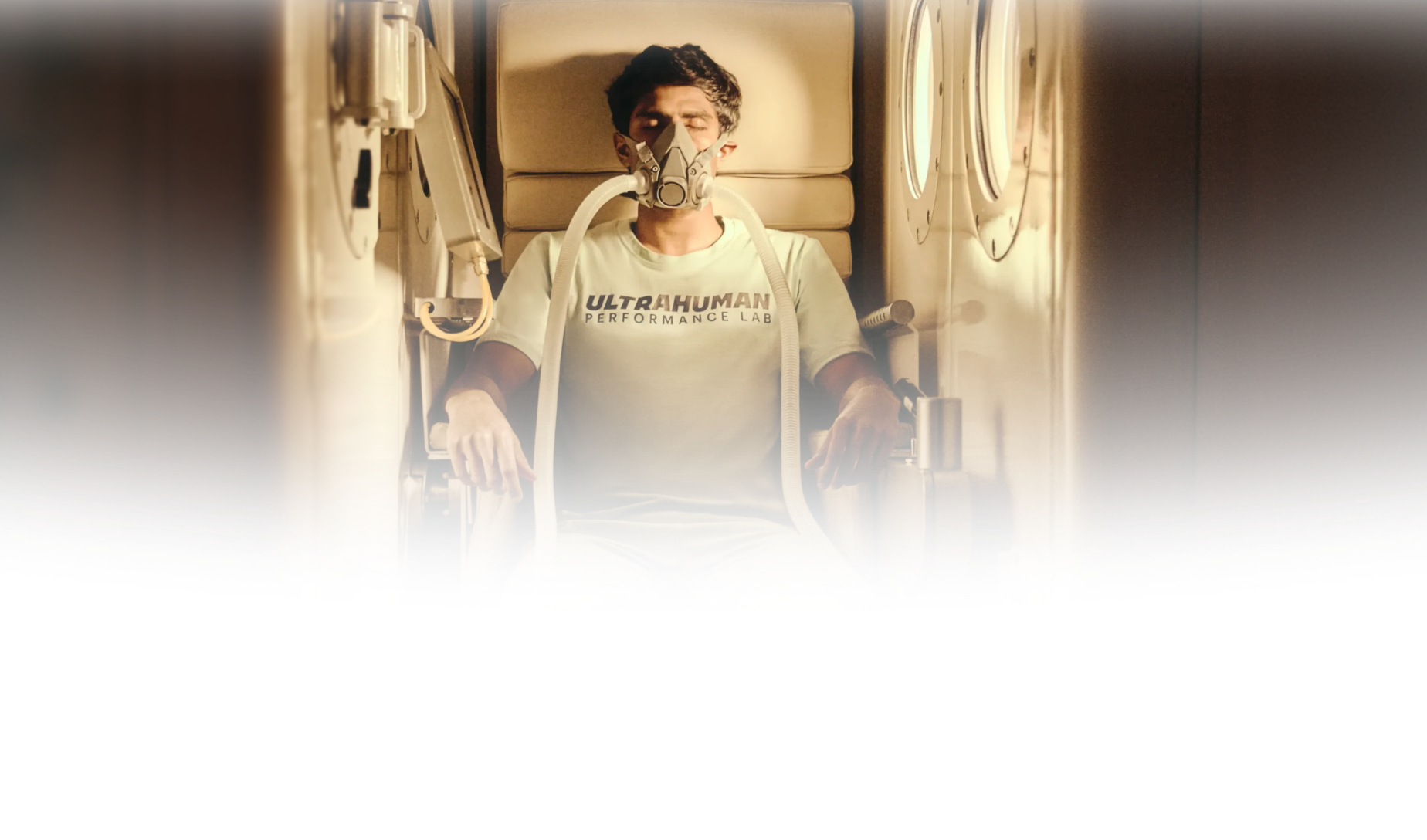

Your blood oxygen, checked under medical supervision
OPTICAL
Accuracy
97.4%
Blood Oxygen Agreement
against a clinical pulse oximeter, from 74 to 100% (1,650 readings, 10 subjects)
Reference standard
Clinical pulse oximeter
Sample size
10 participants
As oxygen falls, the Ultrahuman Ring agrees with a clinical pulse oximeter to 97.4% — a root-mean-square difference of 2.6 percentage points — on readings taken from room air down to 74% saturation.
2.6 ptsroot-mean-square difference from the clinical oximeter
74–100%the saturation range covered
1,650paired readings
Blood carrying oxygen is a different colour from blood that has given it up, and the difference shows in how the two soak up red and infrared light. That is the whole basis of a pulse oximeter: shine both wavelengths through tissue, watch the ratio between them, and read the oxygen from it. Doing that at the finger of someone who is asleep, cold, or simply not holding still is a good deal harder than doing it in a clinic on a fingertip clip.
Every dot on the first chart is one reading taken while a wearer’s oxygen was being lowered under medical supervision. Across the whole range, from normal room air down to 74% saturation and well below anything you would meet outside a laboratory, the Ultrahuman Ring sat 2.6 percentage points from the clinical oximeter, root mean square, and the relationship holds close to a straight line throughout. The second chart plots the same readings as differences from the oximeter, with the band inside which 95% of them fall; the difference is at its tightest across the saturations a wearer meets in ordinary life.
A sensor that reads oxygen through light behaves differently depending on what the light passes through, so tissue variation is a constraint the calibration is built around rather than a correction applied afterwards.