



How well the ring reads temperature
TEMPERATURE
Accuracy
98.7%
Temperature Sensor Agreement
of a laboratory thermometer’s movement, reproduced (bench test, 3,836 readings)
Reference standard
Laboratory thermometer
Sample size
Based on 3,836 paired readings
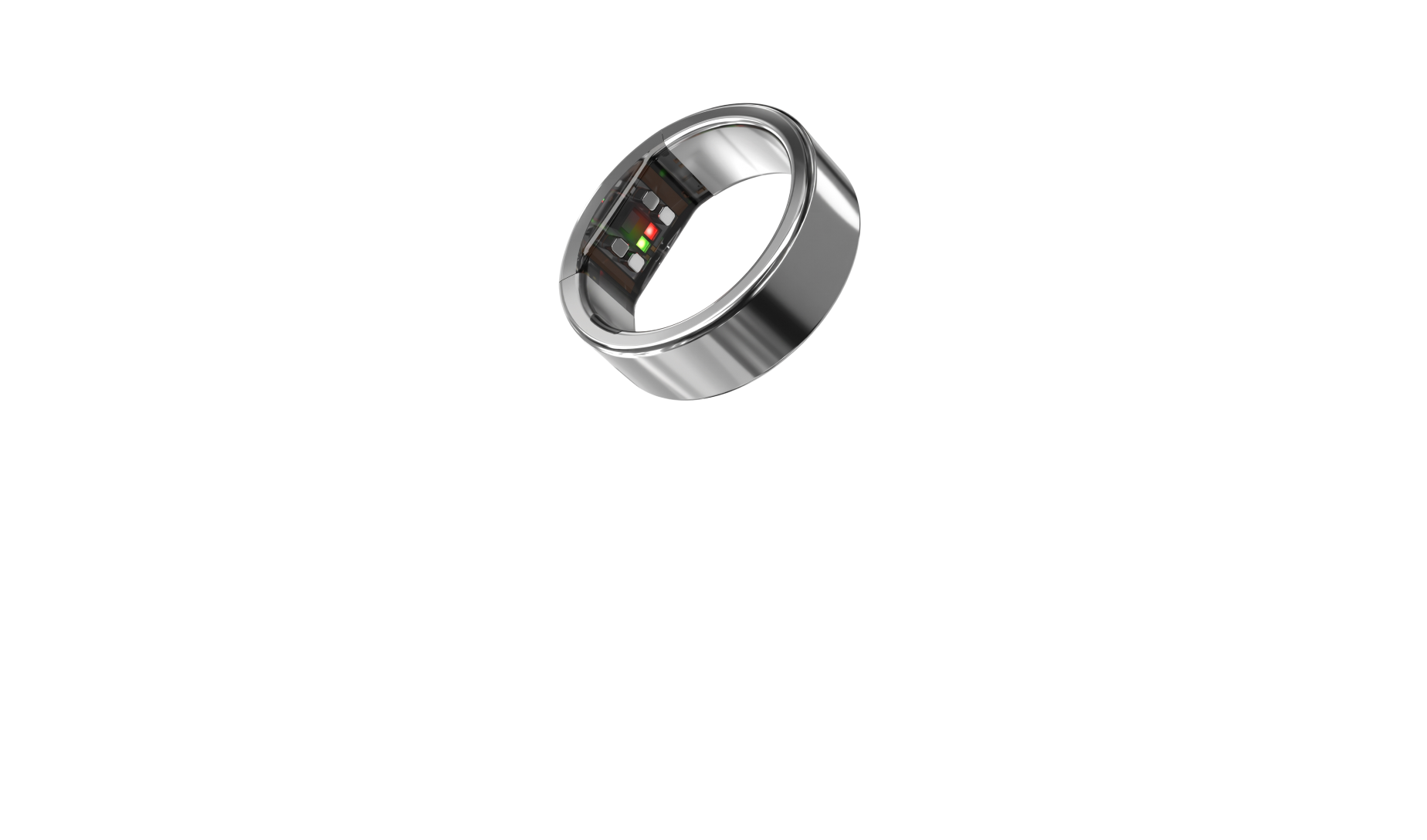
Put beside a laboratory thermometer, the Ultrahuman Ring reproduces 98.7% of the reference’s movement, and 97.5% of it worn on the finger all night.
98.7%on the bench, against a laboratory thermometer
97.5%overnight, worn on the finger
25–40 °Cwhere agreement is tightest
32–37 °Cwhere most of the night sits
Body temperature is a gradient, warmest at your core and coolest at your fingertips, and the cycle and illness signals read the change rather than the absolute — how far tonight sits from the same person’s ordinary nights, a shift of a few tenths of a degree. A sensor that cannot follow a movement that small is not measuring anything useful, so the first thing to establish is how much of the reference’s movement the ring reproduces.
On the bench, beside a calibrated laboratory logger in a water bath and in open air, the Ultrahuman Ring reproduces 98.7% of the reference’s movement. Agreement is tightest between 25 and 40 °C, which covers the range skin temperature sits in through a night.
Worn on a finger the job gets harder, because the ring is warmed by you and cooled by the room at once and has to hold its reading through both. Across full nights it still reproduces 97.5% of the reference, and most of the night sits between 32 and 37 °C, which is exactly the band the cycle and illness features read.