



Heart health2,788 members
Does inflammation show up in your sleeping pulse?
Members with the highest inflammation ran 4.3 bpm faster in their sleep.
Medically reviewed by Mukul Mittal, MD
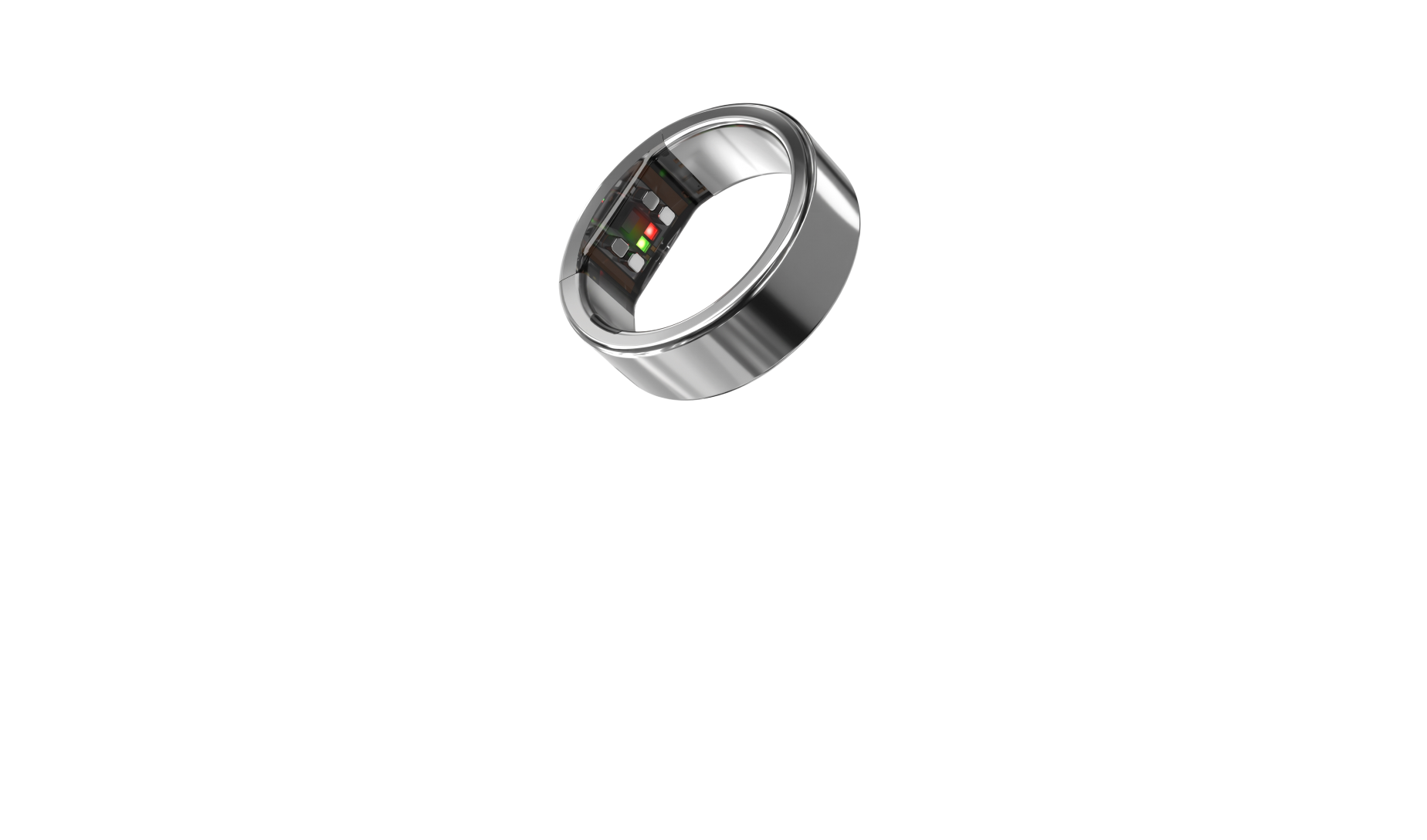
Ultrahuman paired a blood inflammation marker with 30 nights of Ring data for 2,788 members who logged a blood panel between August 2025 and April 2026, sorting each member into a low, intermediate or high inflammation band. The members carrying the most inflammation ran a faster heart rate through the night — a gap of about 4.3 bpm over the lowest band — and the gradient held whether they were younger or middle-aged.
The figure in this piece answers to a number of your own — type yours where the plate says Ask our data.
Members in the highest of the three inflammation bands ran their nights about 4.3 beats per minute faster than members in the lowest, 59.2 against 55.0 beats per minute. The intermediate band sat between them at 56.9. The gap held in members 35 and under and in members aged 36 to 50, across 2,788 people on an Ultrahuman Ring.
The numbers
Resting heart rate rose in step with inflammation, band by band, and the top-to-bottom gap held whether members were young or middle-aged.
- Overnight resting heart rate averaged 55.0 bpm in the low inflammation band.
- The intermediate band sat a step higher, at 56.9 bpm, midway between the other two.
- The high inflammation band ran fastest, at 59.2 bpm.
- The high band ran about 4.3 bpm faster than the low band, on a range from 3.6 to 5.0 bpm.
Does blood inflammation really show up in your sleeping heart rate?
Yes — and the more inflammation a member carried, the faster the heart ran at night. Each member's most recent blood result placed them in one of three published bands. The marker is high-sensitivity C-reactive protein, or hs-CRP, a reading of chronic, low-grade inflammation whose cut-points were set two decades ago by the American Heart Association and the Centers for Disease Control and Prevention [1]. Overnight resting heart rate climbed from 55.0 bpm in the low band to 56.9 in the intermediate and 59.2 in the high, a top-to-bottom gap of about 4.3 bpm. The middle band sat midway — a steady climb rather than a jump at one cut-point. Splitting members by age separates inflammation from simply getting older, and the gap survived the split: about 5.2 bpm in members 35 and under and 3.7 from 36 to 50. Figure 1 shows the climb, broken out by age.
Figure 1 · Interactive
The inflammation signal in the sleeping pulse holds across age bands
Mean overnight resting heart rate by hs-CRP band — about 5.2 bpm faster in the high band at 35 and under, 3.7 bpm at 36 to 50.
Ask Our Data
Answered on this page — nothing you type leaves it2,788 members · a laboratory blood panel and the Ultrahuman Ring
Grouped bar chart of mean overnight resting heart rate across the low, intermediate and high inflammation bands, split into members 35 and under and aged 36 to 50. In each group the bars rise from the low band to the high, and the high-band lead is about 5.2 beats per minute in members 35 and under and 3.7 in those 36 to 50.
Why would inflammation go with a faster resting heart?
A heart under inflammation never fully stands down. This kind brings no fever or symptoms; it is the low-grade sort that builds up with age. Franceschi and colleagues named it inflammaging in 2000, describing a steady, low-level load on the immune system that keeps inflammation gently switched on all the time instead of flaring up to deal with a problem and then settling back down [2], and it is now counted among the hallmarks of ageing [3]. The vagus nerve that slows a resting heart is the same brake that calms inflammation. As it weakens, the heart runs faster while inflammation runs higher: in 836 US adults, stronger vagal control went with lower C-reactive protein [4]. Inflammation also keeps the body's stress signals faintly on, and the resting heart is where that shows. Resting heart rate itself sits alongside C-reactive protein among the handful of readings that best track the body's wear and predict who lives longer [5].
What makes a night-time heart rate worth measuring?
An overnight resting heart rate is among the steadiest numbers a wearable offers — it is read when nothing else is pulling on the heart. In the Project Baseline Health Study, a research wearable's resting heart rate matched a simultaneous electrocardiogram (ECG) almost exactly, and the participants whose device heart rates ran higher also carried higher C-reactive protein [6]. That is the pairing this analysis reads at scale: thousands of blood results, each against weeks of the same person's nights, where a clinic holds one blood draw and one desk-side pulse. Following 27,939 initially healthy women for three decades, Ridker and colleagues found a single baseline hs-CRP predicted cardiovascular events decades later, running about 1.7 times as high in the top fifth against the bottom [7]. A night-time baseline that stays raised over weeks is a reason to look further.
What this analysis can't tell you
The pattern here is an association caught at one moment, not a cause. A blood result captures inflammation on one day, while the Ring averages the month before it, so the two move together without one being shown to drive the other. Two other explanations could sit underneath the gap, and we adjusted for neither: more body fat goes with both higher inflammation and a higher resting heart rate, and a single blood draw can be lifted by a passing illness. Age is the one alternative the data let us rule out, and members over 50 are not broken out separately. Ultrahuman members choose to wear a Ring and test their blood, so this group is likely more health-attentive than a random sample.
What this means for you
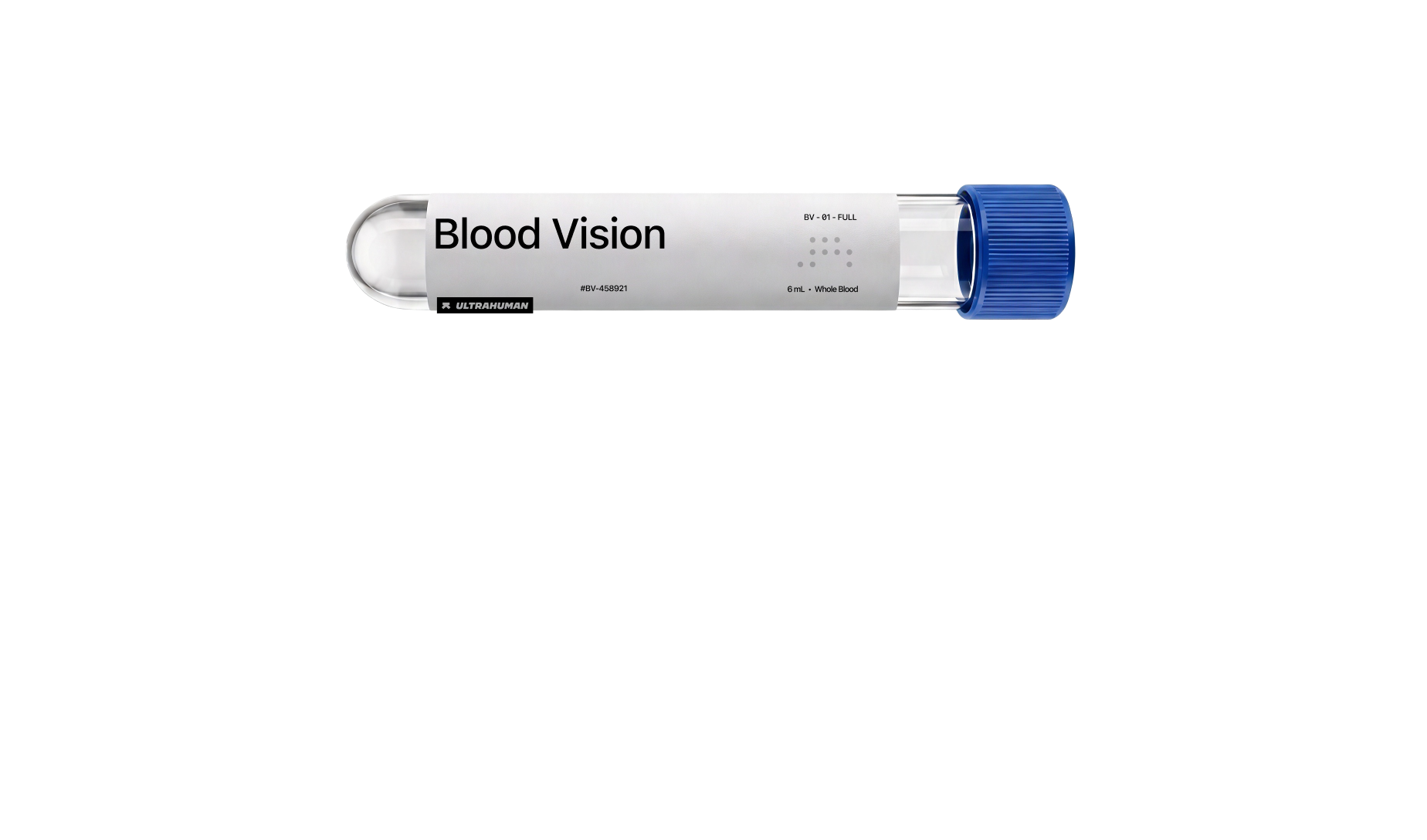
If your overnight resting heart rate has been drifting up, inflammation is one explanation worth checking. Ask about a blood inflammation marker the next time you have blood drawn, and read it beside a month of your own nights rather than a single clinic pulse. A steady baseline you can watch over weeks tells you more than any one reading, and a faster resting heart is worth a closer look rather than alarm. Ultrahuman Blood Vision includes hs-CRP, the marker this analysis used, so the blood number can sit beside your own nights of Ring data.
Frequently asked questions
My resting heart rate has gone up lately. Should I worry about inflammation?
A rising resting heart rate has many ordinary causes, from poor sleep to heat, alcohol, stress or a hard training block, and most upward drift is one of those rather than inflammation. The link here is across a large group, not a rule for any night. If your baseline has climbed and stayed up for weeks with no obvious reason, an inflammation marker is worth raising with a doctor at your next blood test.
Why would inflammation touch my heart rate when I am asleep?
Sleep is when the heart has the fewest other demands on it, so a background influence like inflammation shows most clearly then. The body's calming branch, the vagus nerve, both slows the resting heart and helps hold inflammation down, and the two weaken together. Low-grade inflammation also keeps stress signals slightly raised. Overnight, with nothing else competing, that steady pressure is what a resting heart rate mostly reflects.
Who does this pattern not apply to?
Anyone reading a single night rather than a trend: one restless or feverish night can move a resting heart far more than 4.3 bpm, and that movement is ordinary night-to-night noise, outside what this analysis measures. It also says nothing about members over 50, who are not broken out separately. And it is not a screen for anyone feeling unwell, where a raised heart rate usually needs a doctor's look.
References
- Pearson TA et al. Circulation 2003. PMID: 12551878.
- Franceschi C et al. Annals of the New York Academy of Sciences 2000. PMID: 10911963.
- Baechle JJ et al. Molecular Metabolism 2023. PMID: 37329949.
- Alen NV et al. Brain, Behavior and Immunity Health 2021. PMID: 34268499.
- McCrory C et al. Psychoneuroendocrinology 2023. PMID: 37100008.
- Feng KY et al. Journal of Medical Internet Research 2024. PMID: 39705694.
- Ridker PM et al. New England Journal of Medicine 2024. PMID: 39216091.
This is an observational analysis of Ultrahuman member data. It describes associations, not causation, and it is not a diagnosis or a substitute for medical advice.