

The Ultrahuman Ring's Updated Sleep HRV Agrees Closely with a Chest-Strap ECG
Ultrahuman Healthcare Pvt. Ltd.
Summary
Nine adults each wore the Ultrahuman Ring, running an updated sleep heart rate variability (HRV) algorithm, and an electrocardiogram (ECG) chest strap for one night.
Nightly sleep HRV read 1.3 ms higher than the ECG on average (95% confidence interval (CI) −1.8 to +4.9). Its concordance with the ECG was 0.97, where 1 is perfect agreement.
Each 24-second ring reading tracked the ECG (r = 0.82, 477 readings), and sleep HRV reports the standard short-term measure, the root mean square of successive differences (RMSSD).
After the update, members will see sleep HRV 33.8% lower at the median in 1,026 members (95% CI 32.4 to 34.8% lower), with resting heart rate unchanged. Deep sleep fell by 5.0 min (5.6%), awake time rose by 3.0 min (11.1%) and recovery score fell by 2.0 points (2.6%); sleep score held within 1%.
The study covered nine nights, and larger full-night studies will narrow these estimates.
Background and Rationale
Heart rate variability (HRV) is the variation in time between consecutive heartbeats. It reflects autonomic nervous system activity [1, 2], and it is often used to monitor how individuals adapt to training [3]. Measuring it during sleep is increasingly common, because sleep can provide stable conditions for the measurement [4]. The root mean square of successive differences (RMSSD) is the square root of the mean squared difference between neighbouring beat intervals. It captures fast, beat-to-beat changes and is the standard short-term HRV measure [1, 2]. The standard deviation of normal-to-normal beat intervals (SDNN) also captures slower swings in heart rate, so it grows with the length of the recording [1].
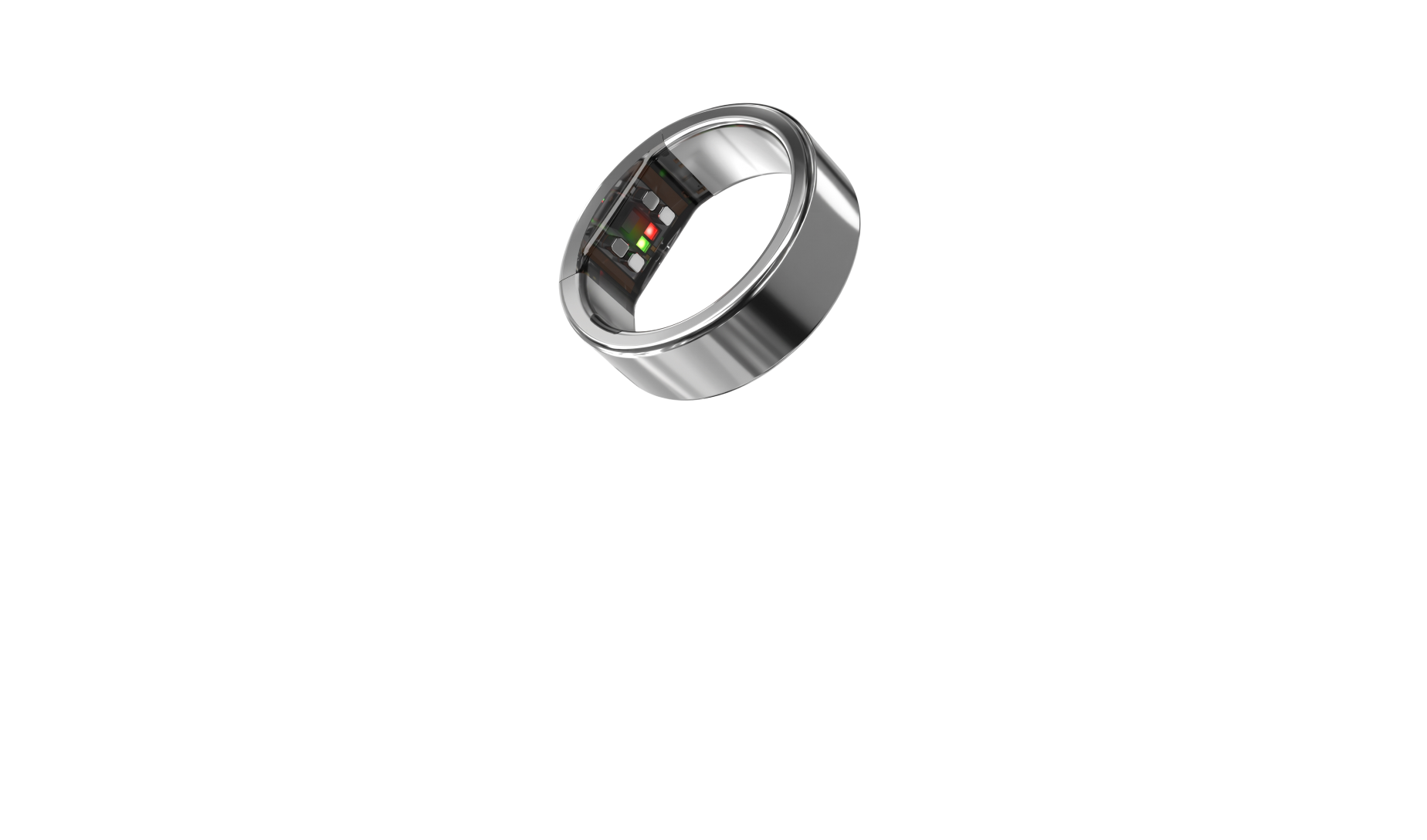
The Ultrahuman Ring measures beat intervals from an optical pulse signal at the finger. At rest, HRV from pulse intervals is sufficiently accurate against the electrocardiogram (ECG) [5]. Pulse measurements tend to read short-term variability slightly high, and agreement varies by device and condition [5, 6]. Each device's HRV therefore needs its own comparison against an ECG. The ring measures HRV in short windows of about 24 s. In 3,387 adults, RMSSD from a single 10 s ECG was valid against a 4 to 5 minute recording, and averaging several short windows improved agreement further [7].
Ultrahuman has updated the algorithm that turns the ring's beat intervals into HRV. This paper tests the updated algorithm against a chest-strap ECG overnight. It compares each 24-second reading and the nightly sleep HRV shown in the app. The paper also reports how members' values change after the update.
Methods
Participants and devices
Ten adult volunteers aged 20 to 40, men and women with a range of skin tones, slept wearing an Ultrahuman Ring running the updated algorithm and an ECG chest strap between 8 and 17 September 2026 (Figure 1). One volunteer recorded two nights (11 in total). Two were excluded: one on which the ring's HRV algorithm could not be confirmed, and one with 34% artefact beats on the strap. Nine nights from nine participants were analysed. Participants gave verbal consent.

Figure 1. Study design. Each participant slept in the ring and the chest strap on the same night. The strap's beats were cleaned and its clock was aligned to the ring's before either comparison. Each 24-second ring reading was compared with the strap over the same time window, and each night's sleep HRV with the strap over the hours the ring recorded.
How the ring measures HRV
The ring records beat intervals from its optical pulse signal in readings of about 24 s, every 5 to 6 minutes. The updated algorithm removes stale values and intervals outside the physiological range. It replaces outlying intervals with a local median and corrects timing jitter, then computes RMSSD and SDNN. A quality check withholds readings with too few intervals or too many corrected ones. Sleep HRV, the nightly value shown in the app, is the mean RMSSD of readings retained during sleep.
Chest-strap reference
The chest strap records a single-lead ECG. Beat intervals from its model agree closely with clinical ECG at rest [8, 9]. A local-median filter removed ectopic and missed beats, which distort HRV [1]: 0.6% to 2.8% of beats per night. For each night, the strap clock was aligned to the ring's by matching their beat-to-beat differences.
Outcomes
The main outcome was agreement between sleep HRV and strap RMSSD, over every clean beat pair in the span the ring recorded. The secondary outcome was agreement between each ring reading and strap RMSSD and SDNN over the same window. A reading was compared when the updated algorithm produced it and the quality check retained it. Its strap window needed at least 10 clean beat pairs and at most 20% rejected beats. Of 983 readings, 477 met these conditions.
Statistical analysis
Bias was the mean difference, ring minus strap. The 95% limits of agreement were the bias plus or minus 1.96 standard deviations of the differences [10]. Night-level limits carry exact 95% confidence intervals (CIs) [11]. The mean absolute percentage error is the mean absolute difference as a percentage of the strap value. Lin's concordance correlation coefficient, reported as concordance, measures agreement with the line of equality, where 1 is perfect [12]. Pearson's r measures association and ignores a constant offset. Other 95% CIs are percentile intervals from 2,000 bootstrap resamples of whole nights [13].
Values before and after the update
The member comparison used de-identified ring data. The updated group was 1,026 members whose rings moved to the updated algorithm in September 2026. The comparison group was 4,972 members whose rings were updated in the same weeks but kept the previous HRV algorithm.
Each member's reference was the median of their nights in the 14 days before the update. The comparison was the median of their first 14 nights after it, and each needed at least two nights. The change was their ratio minus 1, and its 95% CI came from 4,000 bootstrap resamples of members. Resting heart rate was compared the same way.
Results
Nightly sleep HRV agreed closely with the ECG
Over nine nights, sleep HRV read on average 1.3 ms higher than the chest strap (95% CI −1.8 to +4.9) (Figure 2). The limits of agreement, the range expected to hold 95% of nightly differences, ran from −9.4 ms (95% CI −20.5 to −4.8) to +12.0 ms (95% CI +7.5 to +23.1). On average, sleep HRV differed from the chest strap by 9.9% of the chest strap's value, and eight of nine nights were within 20%. Their concordance was 0.97. On a typical night the two read the same: sleep HRV divided by the chest strap's value had a median of 1.00 (95% CI 0.96 to 1.15; range 0.90 to 1.37).
The chest strap covered a median 48% of the hours the ring recorded (range 13% to 95%). Repeating the comparison on only the hours both devices recorded left the median ratio at 1.00.

Figure 2. Sleep HRV and chest-strap RMSSD for each night (A), and sleep HRV minus the chest strap against their average (B). In A, open circles are the chest strap over the hours the ring recorded and orange dots are sleep HRV, read from the app as whole milliseconds. In B, the orange line is the bias and the dashed lines are the 95% limits of agreement; each limit's exact 95% CI is given in the text. The CI on the bias resamples whole nights.
The nights that read high were the nights the ring flagged
Three nights read more than 10% high: participants E (1.15), G (1.14) and J (1.37). On these nights the ring's quality check withheld about half of all readings (48% to 51%), against 0% to 25% on the other six nights. Sleep HRV on those nights therefore rested on fewer readings.
Each 24-second reading tracked the ECG
Across 477 readings, ring RMSSD moved closely with the chest strap's, with r = 0.82 (95% CI 0.63 to 0.87) and a concordance of 0.81 (Figure 3). Within single nights, r had a median of 0.75 (range 0.29 to 0.85). Readings were on average 3.8 ms higher than the chest strap (95% CI +1.0 to +7.3), and 95% of differences fell between −29.9 and +37.5 ms. A reading differed from the chest strap by 30.0% on average, and 57% of readings were within 20%. The ring's SDNN agreed more closely, reading 1.2 ms higher (95% CI −0.4 to +2.6) with r = 0.89 (95% CI 0.85 to 0.91).

Figure 3. Ring RMSSD against chest-strap RMSSD over the same time window for each reading. A shows participant B's night, whose within-night correlation was the median of the nine (0.75). B shows all 477 readings; the dashed line marks equality, and the CI for r resamples whole nights. C shows ring minus chest strap, with the bias (solid) and the 95% limits of agreement (dashed); readings beyond ±60 ms are counted in the end bins. The limits pool all readings and treat readings from one night as independent, so they may be slightly narrow [14, 15].
Sleep HRV reports RMSSD
Sleep HRV matched chest-strap RMSSD (median ratio 1.00). Over the whole night it was about half of chest-strap SDNN (0.52 times; range 0.25 to 0.68). Sleep HRV is therefore consistent with RMSSD, the standard short-term measure.
What members will see
Members' sleep HRV read about a third lower from the first night after the update, and it stayed at that level (Figure 4). In 1,026 members who received the updated HRV algorithm, the median change was −33.8% (95% CI −34.8 to −32.4), from a median of 69 ms before the update to 46 ms after it. In the comparison group of 4,972 members, the change was +0.0% (95% CI +0.0 to +0.5). Resting heart rate in the updated group did not change: the median change was +0.0%, with a median of 57 beats per minute before and after.

Figure 4. Sleep HRV (A) and resting heart rate (B) by night since the update, as the median member's change from their own median over the 14 nights before it. Orange: members whose rings moved to the updated algorithm. Grey: members whose rings were updated in the same weeks but kept the previous HRV algorithm. The values in the header are medians of each member's change over nights 0 to 13, with 95% CIs from 4,000 bootstrap resamples of members.
Seven other nightly measures, chosen before analysis, moved far less than sleep HRV in the updated group (Figure 5). Deep sleep fell by 5.0 min (−5.6%, 95% CI −6.2 to −3.6). Awake time rose by 3.0 min (+11.1%, 95% CI +9.1 to +14.3). Recovery score fell by 2.0 points (−2.6%, 95% CI −3.0 to −2.5). Sleep score, stress rhythm score, time in bed and rapid eye movement sleep each changed by less than 1% (95% CIs within ±1%).

Figure 5. Median change in each nightly measure in the 1,026 members whose rings moved to the updated algorithm, over the 14 nights after the update against each member's own median over the 14 nights before it. Lines are 95% CIs from 4,000 bootstrap resamples of members. The column on the right gives the same medians in each measure's own units. Nights the app did not score were excluded. Time in bed runs from going to bed to getting up, so it includes time awake. Stress rhythm score was available for 1,005 members.
Discussion, Limitations and Future Directions
The updated algorithm's sleep HRV agreed closely with a chest-strap ECG over nine nights. It read 1.3 ms higher on average, with limits of agreement of −9.4 to +12.0 ms, and it reports RMSSD, the standard short-term measure.
Single 24-second readings scattered more than nightly values: they differed from the ECG by 30.0% on average, against 9.9% for the nightly value. A 24-second window holds few beats, so its RMSSD varies from one window to the next on any device [7]. Sleep HRV averages every retained reading of the night, which reduces this scatter. Pulse-based measurement is known to read short-term variability slightly high [5], so the 3.8 ms offset per reading is expected.
The three nights that read more than 10% high were the nights on which the ring withheld about half its readings. The ring's quality check therefore already identified the nights that were hardest to measure. Surfacing that signal could flag less certain nights for members, which future work can test.
Members moving to the updated algorithm will see sleep HRV about a third lower from the first night. Their resting heart rate did not change, and HRV did not change for members who kept the previous algorithm. The lower values therefore come from the updated computation. The chest-strap study did not measure sleep stages, so the shifts in deep sleep and awake time were not checked against a reference. Nights after the update are best compared with other nights after it. Devices that report SDNN give a different quantity, which grows with the length of the recording. On the chest strap's own beats, whole-night SDNN was 1.86 times RMSSD.
Limitations and future directions
The study covered nine nights from nine adults aged 20 to 40, so its estimates are imprecise and may not apply to older adults. The chest strap covered under half the ring's span on five nights, so part of a nightly difference may reflect which hours each device covered. Sleep HRV values were read from phones as whole milliseconds, which adds at most 0.5 ms, about 1% of the mean strap value. Larger studies that follow published recommendations for wearable validation [16], with full-night chest-strap recordings, will narrow these estimates.
Conclusion
The updated algorithm's sleep HRV closely matched a chest-strap ECG and reports the standard short-term measure. Members will see sleep HRV about a third lower after the update, on a scale that agrees with the ECG.
- Task Force of the European Society of Cardiology and the North American Society of Pacing and Electrophysiology. Heart rate variability: standards of measurement, physiological interpretation and clinical use. Circulation 1996;93(5):1043–1065. https://doi.org/10.1161/01.CIR.93.5.1043
- Shaffer F, Ginsberg JP. An overview of heart rate variability metrics and norms. Front Public Health 2017;5:258. https://doi.org/10.3389/fpubh.2017.00258
- Plews DJ, Laursen PB, Stanley J, Kilding AE, Buchheit M. Training adaptation and heart rate variability in elite endurance athletes: opening the door to effective monitoring. Sports Med 2013;43(9):773–781. https://doi.org/10.1007/s40279-013-0071-8
- Herzig D, Eser P, Omlin X, Riener R, Wilhelm M, Achermann P. Reproducibility of heart rate variability is parameter and sleep stage dependent. Front Physiol 2017;8:1100. https://doi.org/10.3389/fphys.2017.01100
- Schäfer A, Vagedes J. How accurate is pulse rate variability as an estimate of heart rate variability? Int J Cardiol 2013;166(1):15–29. https://doi.org/10.1016/j.ijcard.2012.03.119
- Mejía-Mejía E, May JM, Torres R, Kyriacou PA. Pulse rate variability in cardiovascular health: a review on its applications and relationship with heart rate variability. Physiol Meas 2020;41(7):07TR01. https://doi.org/10.1088/1361-6579/ab998c
- Munoz ML, van Roon A, Riese H, et al. Validity of (ultra-)short recordings for heart rate variability measurements. PLoS One 2015;10(9):e0138921. https://doi.org/10.1371/journal.pone.0138921
- Gilgen-Ammann R, Schweizer T, Wyss T. RR interval signal quality of a heart rate monitor and an ECG Holter at rest and during exercise. Eur J Appl Physiol 2019;119(7):1525–1532. https://doi.org/10.1007/s00421-019-04142-5
- Schaffarczyk M, Rogers B, Reer R, Gronwald T. Validity of the Polar H10 sensor for heart rate variability analysis during resting state and incremental exercise in recreational men and women. Sensors 2022;22(17):6536. https://doi.org/10.3390/s22176536
- Bland JM, Altman DG. Statistical methods for assessing agreement between two methods of clinical measurement. Lancet 1986;1(8476):307–310. https://doi.org/10.1016/S0140-6736(86)90837-8
- Carkeet A. Exact parametric confidence intervals for Bland–Altman limits of agreement. Optom Vis Sci 2015;92(3):e71–e80. https://doi.org/10.1097/OPX.0000000000000513
- Lin LI. A concordance correlation coefficient to evaluate reproducibility. Biometrics 1989;45(1):255–268. https://doi.org/10.2307/2532051
- Cameron AC, Gelbach JB, Miller DL. Bootstrap-based improvements for inference with clustered errors. Rev Econ Stat 2008;90(3):414–427. https://doi.org/10.1162/rest.90.3.414
- Bland JM, Altman DG. Agreement between methods of measurement with multiple observations per individual. J Biopharm Stat 2007;17(4):571–582. https://doi.org/10.1080/10543400701329422
- Zou GY. Confidence interval estimation for the Bland–Altman limits of agreement with multiple observations per individual. Stat Methods Med Res 2013;22(6):630–642. https://doi.org/10.1177/0962280211402548
- Mühlen JM, Stang J, Lykke Skovgaard E, Judice PB, Molina-Garcia P, Johnston W, et al. Recommendations for determining the validity of consumer wearable heart rate devices: expert statement and checklist of the INTERLIVE Network. Br J Sports Med 2021;55(14):767–779. https://doi.org/10.1136/bjsports-2020-103148