






Environment1,242 members
Is your bedroom air changing how you sleep?
On the stuffiest and most humid nights, estimated deep sleep's share ran about a third of a point lower — and ordinary noise hardly mattered.
Medically reviewed by Mukul Mittal, MD
Ultrahuman paired an Ultrahuman Home device with 1,242 members' Ultrahuman Rings across 121,598 nights, from January 2024 to April 2026, setting each member's stuffiest, most humid, most temperature-unsteady and loudest nights against their own other nights. Three of the four things the room tracks moved with sleep — estimated deep sleep ran about 0.3 percentage points lower on the stuffiest and most humid nights, and sleep score dipped 0.36 points when temperature drifted — while the one most people worry about, ordinary noise, barely moved.
The figure in this piece answers to a number of your own — type yours where the plate says Ask our data.
Chamber experiments settled long ago that a sealed room's air and temperature move sleep, but they run on a handful of people in conditions no real bedroom reaches. The question here is whether those directions survive in ordinary homes: real windows, real radiators, real weather. Across the paired Ultrahuman Home and Ring cohort, each member's own bedroom set the comparison — every member against their own other nights — so steady differences like age, fitness and baseline physiology drop out automatically. The air matters more than the quiet.
The numbers
Worse air and a drifting temperature tracked with lighter, lower-scoring sleep, while ordinary noise did not; each reading sets a member's own highest-exposure nights against their own lowest.
On members' highest carbon-dioxide nights, estimated deep sleep made up 0.37 percentage points less of the night, on a range from 0.20 to 0.55 percentage points lower.
On their most humid nights, deep sleep made up 0.32 percentage points less, on a range from 0.15 to 0.49 percentage points lower.
On a different measure — the overall sleep score rather than deep sleep's share — a bedroom that drifted farthest from its own usual temperature, about 2.5 °C (4.5 °F), sat 0.36 points lower, on a range from 0.07 to 0.66 points lower.
Between the quietest and loudest nights, deep sleep barely moved — about 0.13 percentage points, on a range from 0.30 percentage points lower to 0.03 higher.
Does a stuffy, humid bedroom cost you deep sleep?
A stale, damp room goes with a little less of it. On members' highest carbon-dioxide nights, estimated deep sleep made up 0.37 percentage points less of the night than on their clearest, as the reading climbed from about 509 to 897 parts per million. Fresh outdoor air usually sits at 400 to 450 parts per million, so 897 is the reading of a closed-up room. Their most humid nights ran 0.32 percentage points lower the same way, as humidity rose from 40% to 54%. A sealed dormitory with far staler air showed the same direction on measured sleep [1], and a field study that turned bedroom ventilation up and down found deep sleep shorter on the stuffier nights [2]. Okamoto-Mizuno and Mizuno, reviewing the thermal environment in the Journal of Physiological Anthropology, write that humid heat “further increases thermal load during sleep and affects sleep stages and thermoregulation” [3]. Figure 1 sets the two air readings side by side.
Figure 1 · Interactive
On the highest carbon-dioxide and most humid nights, estimated deep sleep dips
Mean estimated deep-sleep share of the night across each member's own exposure quarters, lowest to highest.
Ask Our Data
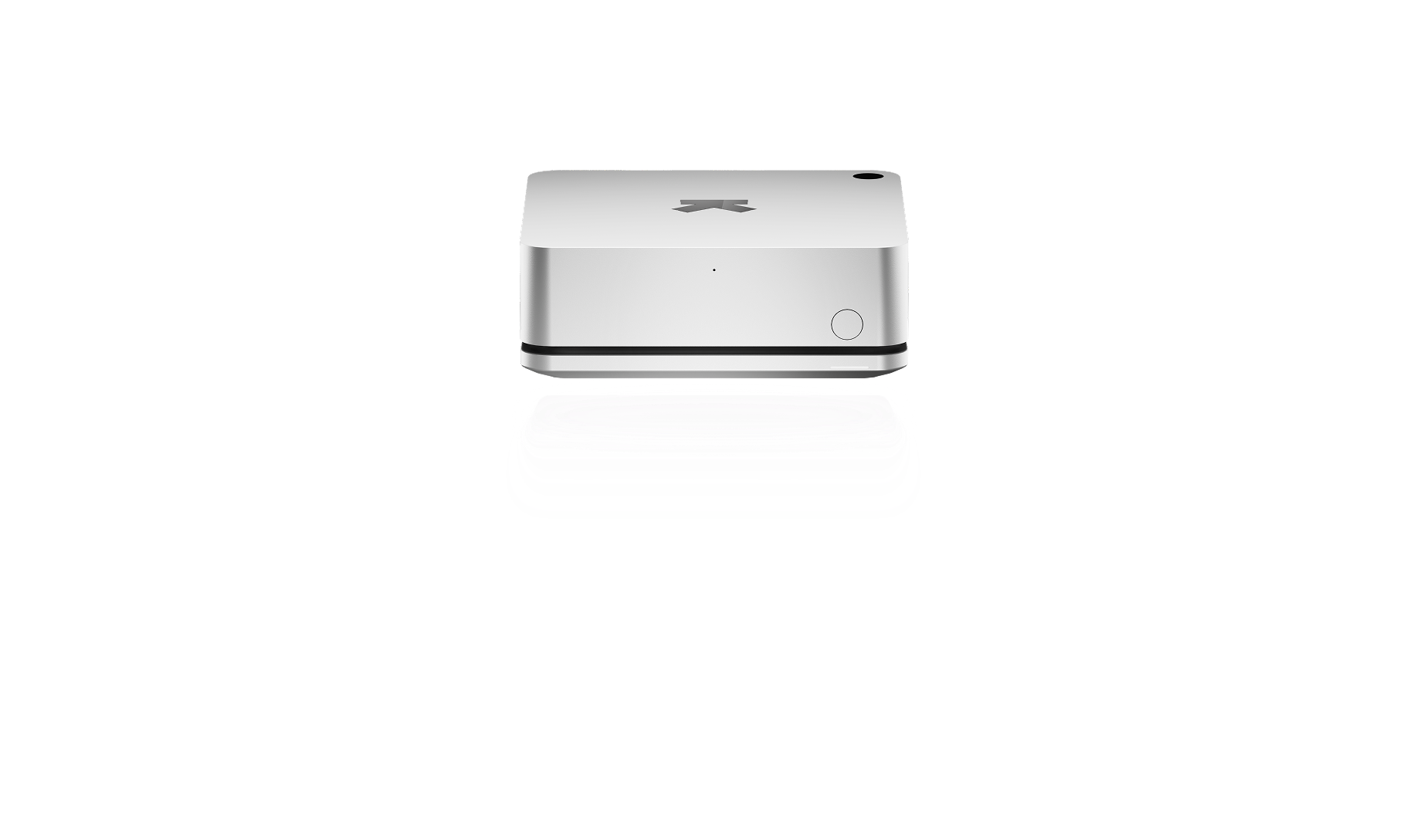
Answered on this page — nothing you type leaves itThe Ultrahuman Home shows both readings for a night.
1,242 members · 121,598 nights · the Ultrahuman Home and the Ultrahuman Ring
Bar chart comparing the change in estimated deep sleep across a member's own bedroom-air quarters. On the highest carbon-dioxide nights deep sleep sits 0.37 percentage points below the lowest, and on the most humid nights it sits 0.32 percentage points below the least humid, each drop set against that member's own baseline.
Does an unsteady bedroom temperature drag your night down?
A room that keeps changing goes with a slightly worse one. The sleep score moved with how far the room drifted from its own usual temperature rather than with how warm it was. On the nights a member's room wandered about 2.5 °C (4.5 °F) from its typical level, the sleep score sat 0.36 points lower than on their steadiest nights. That fits how the body handles heat overnight — it sheds heat as it sinks into the deeper stages, so a room that keeps moving the target makes the work harder. In real bedrooms, heat that builds through the night runs alongside shorter deep and dreaming stages and more time awake [3], and a controlled humid and warm night raised wakefulness in its later hours [4]. The effect is small, about a third of a sleep-score point, so read it as a nudge.
Is a noisy bedroom the thing keeping you up?
Ordinary bedroom noise barely registered. Between members' quietest and loudest nights the sound level moved from about 35 to 41 decibels, and deep sleep barely shifted — about 0.13 percentage points, on a range from 0.30 percentage points lower to 0.03 higher. That is a gap the numbers cannot settle. The link between noise and broken sleep is real, but it lives at higher volumes. A World Health Organization (WHO)-commissioned review of transportation noise found the odds of waking climbed step by step as the sound rose, on road, rail and aircraft noise far louder than a bedroom [5]. Noise sits alongside broken sleep and daytime sleepiness in the literature, but the studies behind that finding run well above the quiet most members sleep in [6].
What this analysis can't tell you
The design here is a within-member comparison, not a controlled trial. Each member is set against their own other nights, which clears away steady differences like age and fitness. But a stuffy or humid night travels with other things too — a shut window, a heavier meal — and any of them can carry part of what shows up here. The Ultrahuman Home device reads the whole day, not just the sleep window, so the air numbers only approximate the bedside. On the stuffiest nights the sleep score looked higher only because those nights ran about 13.9 minutes longer, and the score rewards time asleep — deep sleep, which does not ride on length, is the honest read. And members here choose to wear an Ultrahuman Ring and watch their numbers, so they are likely more attentive than most. Sleep stages here are estimated by the ring, partly from heart rate, so anything that moves heart rate — a warm, stuffy room included — can shift them without changing EEG-defined sleep.
What this means for you
Air the room out before bed — a few minutes of open window or door clears the stale air a closed room builds up overnight. Watch humidity in warm weather, and pick a bedroom temperature you can hold steady rather than a perfect number. Ordinary noise, at the levels most bedrooms run, barely moved sleep here. The four readings in this analysis come from Ultrahuman Home, which measures the room you sleep in night by night.
Frequently asked questions
Will opening a window before bed change how I sleep?
Opening a window or door clears the carbon dioxide a closed room builds up overnight. On our members' clearer-air nights, deep sleep made up a slightly larger share of the night. The change is small — a fraction of a percentage point — so expect a steadier night rather than a dramatic one. Airing the room out costs nothing.
Why would stuffy or humid air reach deep sleep at all?
Deep sleep is the body's heaviest cooling window. The body sheds heat as it sinks into the slow stages, and humid air slows that cooling because sweat evaporates less when the air is already damp. Staler air marks a shut, still room that tends to travel with warmth. Both push the same way, towards a little less deep sleep.
Whose sleep is this least likely to describe?
Anyone whose bedroom already sits in a narrow, steady range — the comparison sets each member's worst nights against their own best, so a room that never drifts has little to show. Anyone without an Ultrahuman Home device, since the air readings come from it. And anyone hoping for a single fix: these are small nightly patterns across more than a thousand members, and one rough night of your own can dwarf them.
References
- Strøm-Tejsen P, et al. Indoor Air 2016. PMID: 26452168.
- Fan X, et al. Science of the Total Environment 2023. PMID: 37142023.
- Okamoto-Mizuno K, Mizuno K. Journal of Physiological Anthropology 2012. PMID: 22738673.
- Okamoto-Mizuno K, et al. International Journal of Biometeorology 2005. PMID: 15578234.
- Basner M, McGuire S. International Journal of Environmental Research and Public Health 2018. PMID: 29538344.
- Basner M, et al. The Lancet 2014. PMID: 24183105.
This is an observational analysis of Ultrahuman member data. It describes associations, not causation, and it is not a diagnosis or a substitute for medical advice.