


Women's health19,910 members
Why does your recovery dip before your period?
Around a logged cramps day, overnight HRV climbs 3 ms and resting heart rate falls 2.7 bpm — and the cramp itself is worth less than 1 bpm of it.
Medically reviewed by Kate Davies, RN, BSc (Hons)
Between December 2024 and April 2026, Ultrahuman lined up roughly 440,000 overnight records from 19,910 women against every cramps episode they logged in the app. From five nights before the log to one night after, overnight heart rate variability climbs 3 ms while resting heart rate falls 2.7 bpm and skin temperature eases down 0.2 °C. The single-night disruption that small sleep-lab studies predict barely surfaces at this scale.
The figure in this piece answers to a number of your own — type yours where the plate says Ask our data.
The dip before your period tracks the cycle itself. Sleep-lab studies predicted this pattern on ten to thirty women at a time; lining up each member's Ring sleep summaries by their distance from a logged cramps day shows it in one cohort of 19,910 women, night by night, in their own beds. Figure 1 draws the whole window.
The numbers
Around a logged cramps episode the Ring's overnight signals follow the cycle itself.
- Overnight heart rate variability climbs from 44.2 ms five nights before a cramps log to 47.2 ms one night after — a rise of about 3 ms.
- Overnight resting heart rate falls from 70.0 bpm to 67.3 bpm over the same window, about 2.7 bpm lower, across roughly 440,000 nights.
- Peripheral skin temperature drifts down about 0.2 °C across the window, tracking the shift from the late luteal into the early follicular phase.
- Set against her own matched night, each member's cramps night barely differs — about 0.33 ms higher in variability and 0.88 bpm lower in resting heart rate.
What is your Ring tracking when you log cramps?
It is tracking the cycle. The nights on either side of a cramps log sit on the crossing from the late luteal phase into the early follicular phase, when the body's overnight recovery rebounds. A meta-analysis of 1,004 cycling women found vagal heart rate variability falling from the follicular into the luteal phase, then lifting again as bleeding begins.1 When 237 women wore a bracelet nightly through their cycles, resting pulse, breathing rate and skin temperature rose in the luteal phase and eased afterwards, and their heart rate variability shifted too.2 Skin temperature runs a matching pattern: in 7 normally cycling women, core temperature sat higher and flatter through the luteal phase.3 Figure 1 shows both curves crossing the window around a cramps log.
Figure 1 · Interactive
Overnight HRV rises and resting heart rate falls across the cramps-day window
From five nights before a logged cramps episode to the night after — the two moving in mirror image.
Ask Our Data
Answered on this page — nothing you type leaves it19,910 women · the Ultrahuman Ring
A two-line chart across the nights on either side of a logged cramps episode. The indigo overnight heart rate variability line rises from 44.2 to 47.2 milliseconds while the coral overnight resting heart rate line falls from 70.0 to 67.3 beats per minute, the two moving in opposite directions in mirror image.
Why does the cramps night itself look so ordinary?
The comparison hides the arc. Set each member's cramps night against one of her own nights within five days and the difference nearly vanishes: overnight heart rate variability sits about 0.33 ms higher and resting heart rate about 0.88 bpm lower. But the matched night is itself part of the same stretch of the cycle — one falls before the recovery dip, the other after the rebound, so averaging them cancels the very movement the pooled view makes plain. A study tracking 26 women across a single cycle with a sensor ring saw the same thing: the luteal rise in overnight heart rate showed up while sleep continuity barely shifted.4 The information is in where the night sits within the cycle.
Does logging more often change what the Ring sees?
The more often you log, the smaller the gap looks. Members who logged a single cramps episode show the widest split, their overnight heart rate about 1.0 bpm lower on the logged night; members who logged seven times or more show the narrowest, about 0.43 bpm lower. Frequent loggers spread their tags across the whole perimenstrual stretch, so their comparison nights average out almost completely. Women who carry heavier menstrual pain may also carry a different baseline: in 103 women with menstrual pain, the autonomic shift was still measurable in the luteal phase, about two weeks after menses.5 One acute signal does survive the matched comparison — wake after sleep onset, the minutes spent awake after first falling asleep, sits about 1.7 minutes higher on the cramps night itself. Something similar shows up in a very different setting: in 29 young women given a drug that mimics menopause, each extra hot flush reported overnight went with a 62% rise in wake after sleep onset.6
What this analysis can't tell you
This analysis compares each member against her own other nights around a logged cramps episode, so it cannot separate the cramp from the cycle phase it marks. A tag records only what a member noticed and chose to log; a night without a tag may still hold pain she slept through, which pulls every gap towards zero. Members here chose to wear a Ring and to log their symptoms, so this group is likely more attentive than most. The overnight numbers here are within-person comparisons rather than clinical measurements.
What this means for you
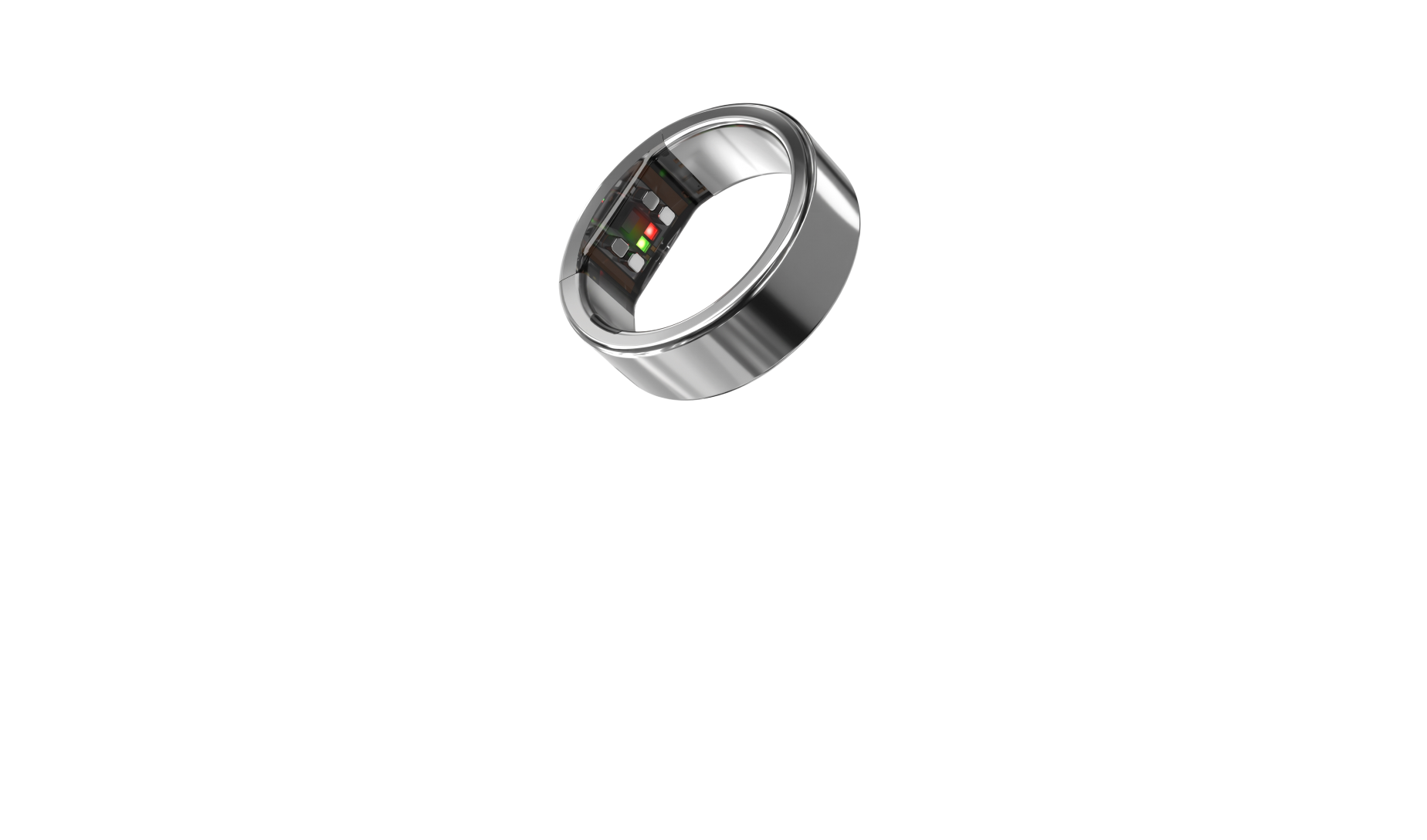
Your cramp marks where in the cycle the night falls. In the days around your period your overnight recovery shifts with the cycle: heart rate variability lifts, resting heart rate settles, and skin temperature eases down as you cross from the luteal into the follicular phase. Read those signals across the whole week rather than the one night you felt the worst. The Ultrahuman Ring reads overnight HRV, resting heart rate and skin temperature while you sleep, so you can watch your own cycle's rise and fall night by night.
Frequently asked questions
My cramps were rough but my Ring recovery looks fine. Why is that?
Because the Ring is reading the phase of your cycle. In the days around your period your overnight recovery is already rebounding as you cross from the luteal into the follicular phase, so heart rate variability tends to rise and resting heart rate to fall. A single painful night barely moves a whole-night average, which is why the screen can look calm even when the day felt anything but.
What is my Ring measuring around my period?
Overnight heart rate variability, resting heart rate and skin temperature, all read while you sleep. Across the cycle these track the swing in your nervous system: the luteal phase tends to run warmer with a higher resting heart rate, and the follicular phase brings it back down. The cramp itself is a marker for where in that swing a given night falls, rather than something the Ring feels directly.
Who does this not apply to?
Anyone who is not naturally cycling — which includes pregnancy, hormonal contraception and the years past menopause — since the pattern described here goes with an ovulatory cycle. It also does not cleanly apply to anyone on medication that changes heart rate, temperature or sleep, because the comparison cannot pull that apart from the cycle. And it is a population average, not a diagnosis for any single person.
References
- Schmalenberger KM et al. Journal of Clinical Medicine 2019. PMID: 31726666.
- Goodale BM et al. Journal of Medical Internet Research 2019. PMID: 30998226.
- Cagnacci A et al. Journal of Applied Physiology 1996. PMID: 8847311.
- Alzueta E et al. International Journal of Women's Health 2022. PMID: 35422659.
- Oladosu FA et al. Scientific Reports 2019. PMID: 30778114.
- Joffe H et al. Sleep 2013. PMID: 24293774.
This is an observational analysis of Ultrahuman member data. It describes associations, not causation, and it is not a diagnosis or a substitute for medical advice.