




Active vs inactive hours explained
Getting up and moving through the day is one of the foundations of good health, but for desk workers especially, it's harder than it sounds.
What’s more, hitting your step goal and sitting down for the next nine hours isn’t good for your health either.
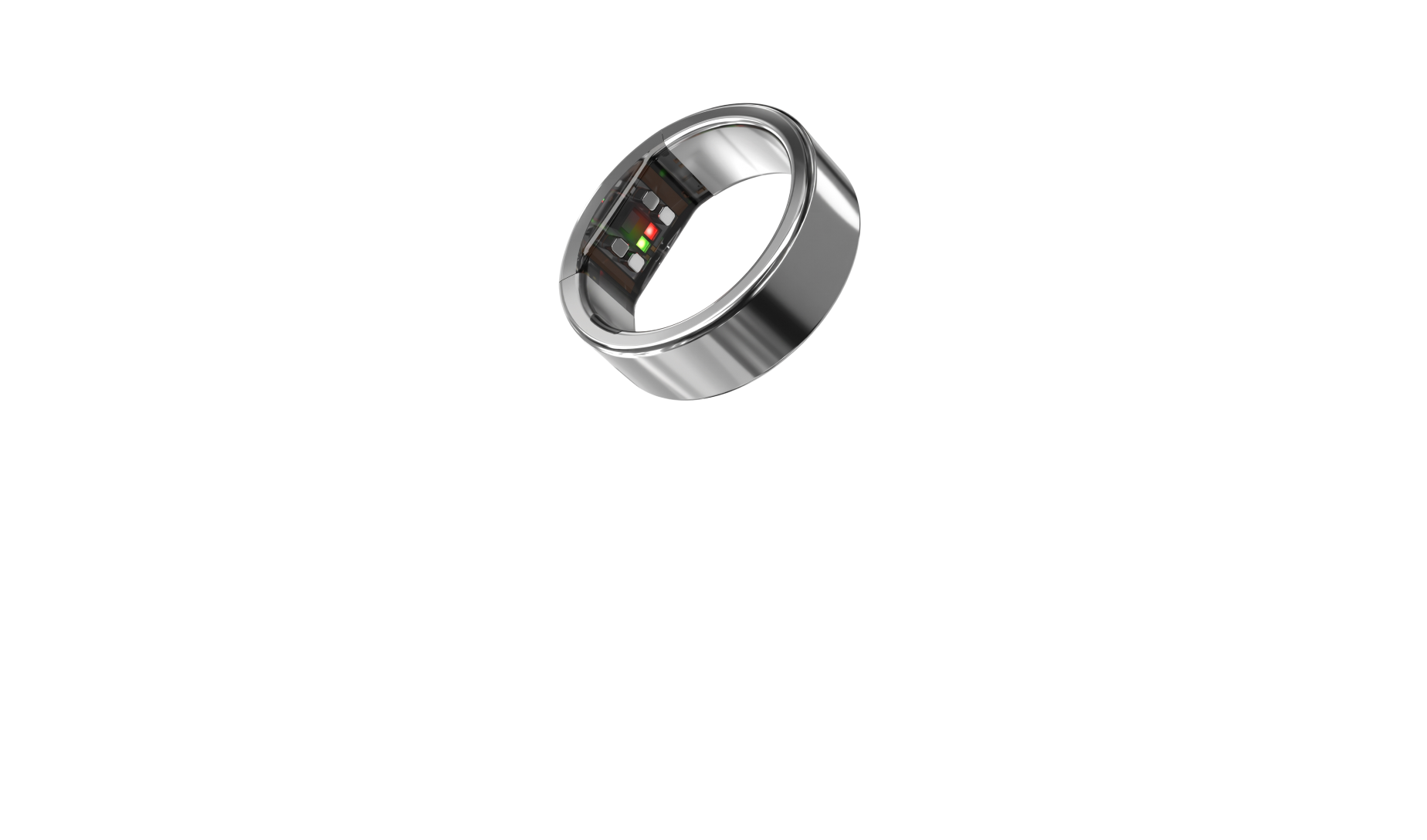
Active hours and inactive time are how the Ultrahuman Ring shows not just how much you moved, but when.
In this guide, we explain how each hour gets classified, what the research says about breaking up sedentary time, and how members' days actually look.
Key takeaways
The Ring tags each waking hour as active, inactive, or unknown, which exposes sedentary streaks a step total would hide.
Across 338,006 members, the median day contains 7 active hours, with half of all days falling between 4 and 10.
About a quarter of all days recorded contain 3 or fewer active hours, and around 10% contain none at all.
Research shows breaking sedentary time into shorter stretches matters as much as total movement, which is why the Ring surfaces the hourly pattern rather than a single step count.
What are active and inactive hours?
An active hour is any 60-minute window in which the Ring detected enough sustained movement to cross its activity threshold. An inactive hour is one where it didn't.
A third state, unknown, covers any hour where the motion signal was too ambiguous to call or the Ring wasn't worn. Forcing those hours into one bucket or the other would inflate a count at the expense of accuracy, so they're labeled honestly instead. The three states together account for the full waking day.
The point of splitting the day this way is that a step total hides its shape. You can take 8,000 steps before 9 am, sit for the next ten hours, and still post a respectable number. Active hours make the sitting visible.
How to read active hours in the app
The Movement card shows Active Hours and Inactive Time alongside your Calorie Burn and total Daily Steps. Tapping through opens the hourly breakdown, where each hour appears as active, inactive or unknown.
Ten active hours spread across the day will usually score differently from ten concentrated in a single morning session, because the Movement Index reflects distribution as well as volume.
One practical way to break up a long sedentary stretch is a short post-meal walk, which adds an active hour without a formal workout.
How the Ring measures them
A motion sensor in the Ring reads movement continuously through the day. Each waking hour, that data is sorted into one of the three states.
Ultrahuman sets the activity threshold, calibrated to separate genuine sustained movement from the incidental hand motion of sitting still, so an hour spent typing or fidgeting at a desk doesn't register as active.
At the end of the day, Active Hours is the count of hours tagged active, and Inactive Time is the total minutes in inactive stretches.
Both feed the daily Movement Index alongside your step count and workout frequency. That's a standalone 0-100 score and isn't an input to your Recovery Score.
What the research says about sedentary time
How many hours you spend inactive, and whether you break them up, is a health signal in its own right, separate from how much structured exercise you do.
A meta-analysis pooling 36,383 adults across eight studies found the most sedentary quarter faced more than two and a half times the mortality risk of the least sedentary quarter.
In 4,757 US adults, more frequent breaks in sedentary time went with a smaller waist and lower C-reactive protein, a marker of inflammation.
Among UK Biobank adults who did no leisure exercise at all, brief bursts of everyday moderate activity lasting one to three minutes came with about a third lower mortality risk than bursts under a minute. Bursts of five to ten minutes roughly halved it.
What Ultrahuman's data shows
Across 338,006 members, the median day contains 7 active hours, and half of all days fall between 4 and 10.
The spread is wide. About 10% of days recorded contain no active hours at all, and roughly 24% contain three or fewer. At the other end, fewer than 2% reach 16 or more. The most common single value is 8.
Figure 1
Active hours spread widely, with a low-activity tail and a long upper band
Share of member-days by daily active-hours bracket, 338,006 Ring members
Active hours spread widely, with a low-activity tail and a long upper band
Source: Ultrahuman Ring data, n=338,006, Mar 2026 onward (21.2M member-days)
Read the original research
All Studies →This explainer is based on original research by the Ultrahuman Science team. Read the source studies:
Frequently asked questions
What counts as an active hour?
Any 60-minute window where the movement the Ring detects crosses its activity threshold. Hours where the signal is weak or ambiguous are labeled unknown rather than forced into active or inactive.
What's a typical number of active hours?
The median is 7 a day, with half of all days falling between 4 and 10. Around 24% of days contain three or fewer, so a quiet day is common. Your own trend across days tells you more than any single day.
Does active hours measure exercise?
No. It counts any hour with enough sustained movement, whether that came from a workout, a busy walking day, or frequent short bursts. Workout frequency is tracked separately and feeds the Movement Index in its own right.
Does it matter how my movement is spread across the day?
Yes. Two people with the same step total can have very different days, and the research on breaking up sedentary time suggests the spread matters independently of the total.
How does inactive time affect my Movement Index?
More inactive minutes weigh on the score, particularly in long unbroken stretches. The effect depends on both the total and whether those stretches were interrupted.
Does the Ring count active hours during sleep?
No. The classifier runs on your waking day, and hours identified as sleep are excluded.
References
- Levine JA, Vander Weg MW, Hill JO, Klesges RC. Non-exercise activity thermogenesis: the crouching tiger hidden dragon of societal weight gain. Arteriosclerosis, Thrombosis, and Vascular Biology 2006. PMID 16439708
- Ekelund U, Tarp J, Steene-Johannessen J, et al. Dose-response associations between accelerometry measured physical activity and sedentary time and all cause mortality: systematic review and harmonised meta-analysis. BMJ 2019. PMID 31434697
- Healy GN, Matthews CE, Dunstan DW, Winkler EAH, Owen N. Sedentary time and cardio-metabolic biomarkers in US adults: NHANES 2003-06. European Heart Journal 2011. PMID 21224291
- Ahmadi MN, Hamer M, Gill JMR, et al. Brief bouts of device-measured intermittent lifestyle physical activity and its association with major adverse cardiovascular events and mortality in people who do not exercise: a prospective cohort study. Lancet Public Health 2023. PMID 37777289
This article is for education only. The patterns described reflect population associations, not cause and effect, and active hours is a wellness signal rather than a clinical measure. Bring any surprises in your data to a physician.
