




TDEE and calorie tracking explained: How Ultrahuman calculates the burn
Total Calories is the energy your body burns in a day. That covers breathing, digesting, walking, typing, and working out. It's also called total daily energy expenditure, or TDEE.
Most of it isn't exercise. For anyone who doesn't train heavily, 60 to 75% of calories burned are spent simply keeping you alive.
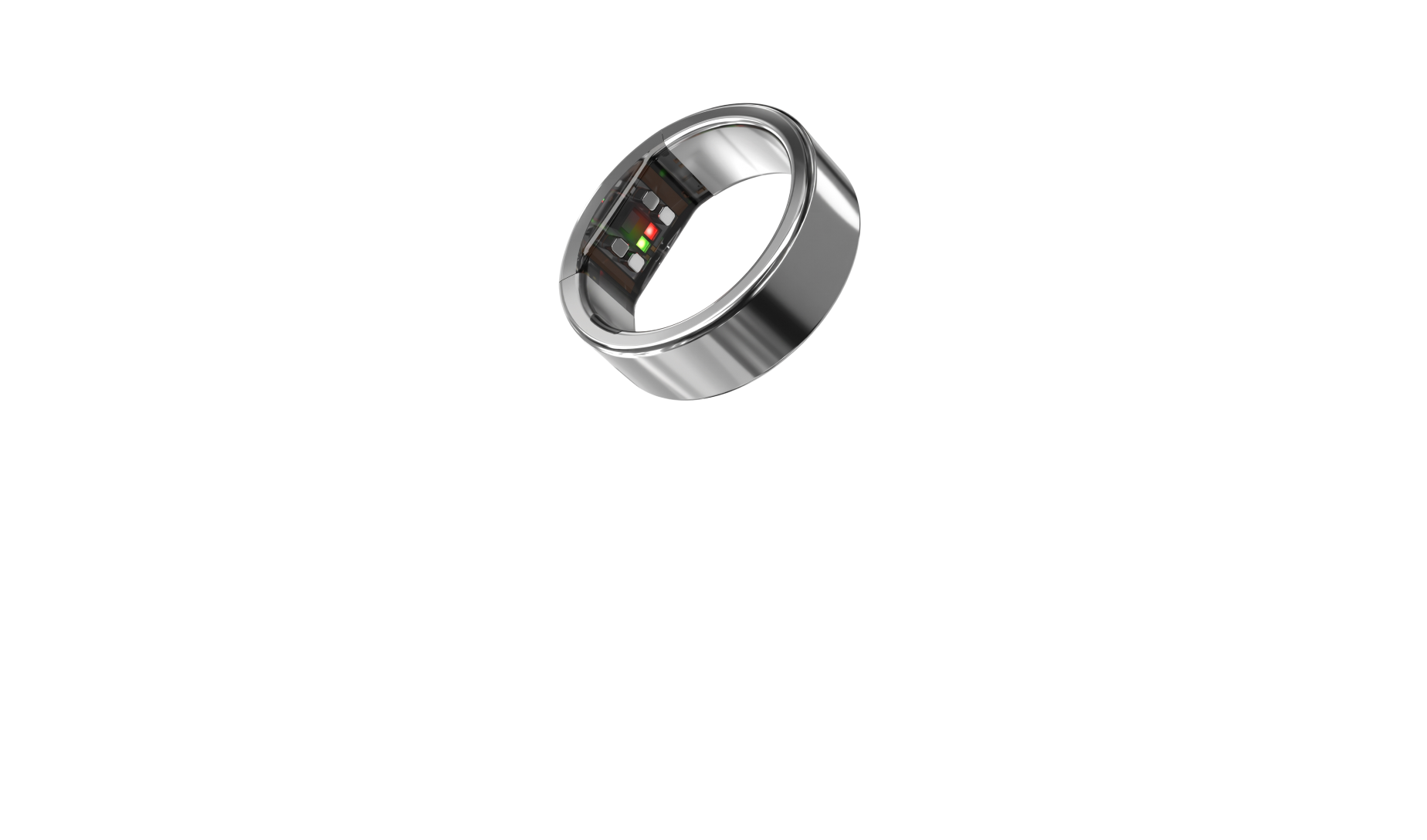
The Ultrahuman Ring estimates Total Calories burned in two parts: a resting baseline calculated from your profile, and active calories tracked by the Ring's motion and heart rate sensors through the day.
In this guide, we explain what goes into each part, how accurate the estimate is, and why your total swings so much day to day.
Key takeaways
Total Calories combines a resting baseline with the calories you burn while moving.
For most people who don't train heavily, the resting baseline is the larger part.
The resting baseline comes from your profile – age, sex, height and weight – so keeping it current is the single biggest thing you can do for accuracy.
Across 438,309 members, daily totals varied roughly threefold between the quietest and most active days.
What are Total Calories and TDEE?
Total daily energy expenditure is the sum of every calorie your body burns in a day. Physiologists split it three ways.
- Resting metabolic rate: What your body spends staying alive: breathing, circulation, temperature regulation, cellular repair.
- The thermic effect of food: The energy cost of digestion, roughly 10% of what you eat.
- Activity: Every way you move.
Activity splits again, into structured exercise and everything else: walking to the kitchen, fidgeting, gardening, standing at a desk. That second category has a name in the research: non-exercise activity thermogenesis, or NEAT.
For most people who don't exercise heavily, resting metabolism accounts for roughly 60 to 75% of the total, NEAT for 20 to 30%, and structured exercise for under 10%. The ratio shifts for people who train daily, but resting metabolism stays the largest single line item even for athletes.
How the Ring estimates your Total Calories
When you set up the app, you enter age, sex, height, and weight, and the Ring uses those to estimate your resting metabolic rate with a validated prediction equation.
Those are the calories your body spends even through completely sedentary hours. Ensure these details are correct and up to date to get the most accurate data.
Tracking of active calories comes from the Ultrahuman Ring's sensors.
A motion sensor runs 24/7, counting steps and reading movement intensity. During workouts, the Ring adds heart rate to the picture from the PPG sensor, weighting harder efforts more heavily, because heart rate tracks the cost of vigorous activity more closely than movement alone does.
Total Calories is the two added together, updating daily on the Movement card.
What the research says about estimating calories
Researchers have tested prediction equations against directly measured resting metabolic rate in adults from sedentary to ultra-endurance-trained. The equations tracked the real number well. They're least accurate for people whose build is unusual, because they were drawn from average bodies.
Another study found that people with obesity sat about 2.5 hours a day more than lean sedentary counterparts, worth roughly 350 calories a day. Levine's research found that non-exercise movement was the largest variable part of daily burn, differing by hundreds to thousands of calories between people of the same weight.
What Ultrahuman's data shows
Across days where members wore the Ring for at least 16 hours, the median daily total is about 2,144 kcal. That wear gate matters. A day the Ring covered only in part counts fewer calories than the member actually burned.
Figure 1
Most days land between 1,200 and 2,800 kcal
Share of days in each 400 kcal bracket, days with at least 16 hours of ring wear
Most days land between 1,200 and 2,800 kcal
Source: Ultrahuman Ring data, 10,526,693 days from 438,309 members, days with at least 16 hours of ring wear
That threefold spread isn't about age or body size. Two members with identical profiles can land hundreds of calories apart depending on how much they move outside exercise: someone who walks their commute and stands through the afternoon, against someone who drives and sits.
How to read Total Calories in the app
Total Calories appears on the Movement card alongside your steps, active hours and Movement Index.
Read it as a trend rather than a daily target. The number that moves most is your non-exercise movement, which is also the part you have most control over.
For how the underlying inputs work, see the step count explainer and the workout mode explainer.
Read the original research
All Studies →This explainer is based on original research by the Ultrahuman Science team. Explore the full Studies repository.
Frequently asked questions
What is the difference between BMR and TDEE?
Basal metabolic rate is the energy your body burns at complete rest. TDEE is that plus all movement and food digestion across the day. For most people who aren't highly active, BMR is 60 to 75% of TDEE, the dominant component even on days that feel busy.
How accurate is the Ring's calorie estimate?
It's a model rather than a measurement, so read it as a trend. The resting portion relies on a prediction equation, and the most accurate of these, Mifflin-St Jeor, comes closest to measured values for the largest share of people, though it's less reliable for some ethnic groups and for anyone whose body composition differs from the population it was built on. Active calorie accuracy depends on the activity: walking and running track reliably from the motion sensor, while cycling and swimming are estimated mainly from heart rate.
Why do my total calories change so much day to day?
Because the day did. A desk-heavy day with few steps will total lower than a day with long walks, even with the same workout in both. Non-exercise movement alone can vary by hundreds of kilocalories between a quiet day and an active one.
Does weight loss or gain affect my calorie estimate?
Yes. Resting metabolic rate scales with body weight, so the resting floor shifts with it. Update your profile weight when it changes by more than a few kilograms.
Why does my calorie count look lower than I expect?
Usually an out-of-date profile weight or height, a day with low step counts, or the natural variation in non-exercise movement. If it consistently reads low, check your profile fields first.
Can I use this number to plan my diet?
It's a useful reference for the general scale of your daily output and for tracking change over time, but it isn't a clinical measurement and shouldn't be the sole basis for a precise dietary plan. Calorie tracking with any wearable carries meaningful individual uncertainty. For specific nutrition goals, a registered dietitian can interpret it alongside everything else.
References
- Levine JA. Non-exercise activity thermogenesis (NEAT). Nutrition Reviews 2004. PMID 15387473
- Levine JA, Vander Weg MW, Hill JO, Klesges RC. Non-exercise activity thermogenesis: the crouching tiger hidden dragon of societal weight gain. Arteriosclerosis, Thrombosis, and Vascular Biology 2006. PMID 16439708
- Prado-Novoa O, Howard KR, Laskaridou E, et al. Validation of predictive equations to estimate resting metabolic rate of females and males across different activity levels. American Journal of Human Biology 2023. PMID 37843050
- Frankenfield D, Roth-Yousey L, Compher C. Comparison of predictive equations for resting metabolic rate in healthy nonobese and obese adults: a systematic review. Journal of the American Dietetic Association 2005. PMID 15883556
The associations described in this article are observational. Ultrahuman calorie estimates are models derived from motion and profile data, not direct metabolic measurements. If you have specific concerns about your energy intake or weight management, consult a qualified health professional.


