


Cardio Adaptability explained
Medically reviewed by Mukul Mittal, MD
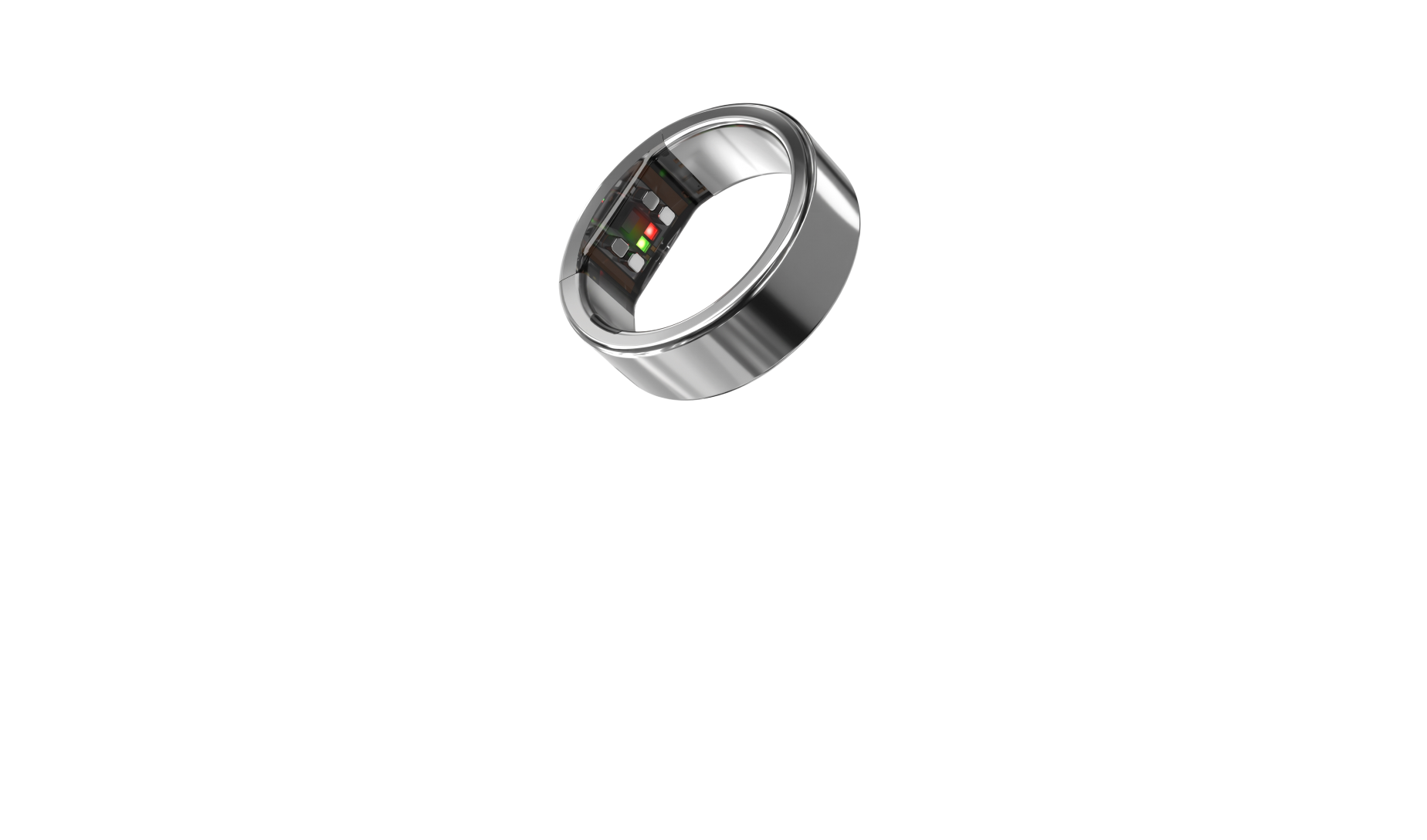
The Cardio Adaptability PowerPlug for Ultrahuman Ring measures how readily your heart adjusts its pace to meet what your body needs.
A heart that changes gear smoothly handles demand well and recovers from it quickly. One that holds a single pace, or shifts erratically, is working under more strain.
The Ultrahuman Ring assesses this overnight, timing the gaps between your heartbeats and returning a result each morning.
In this guide, we explain what cardio adaptability measures, how the Ring reads it, how it differs from your HRV reading, and what your nightly result means.
Key takeaways
Cardio Adaptability measures how freely your heart changes pace to meet what your body needs.
The Ultrahuman Ring times the gaps between your heartbeats overnight and gives you a result each morning.
Results come back as ‘good cardio adaptability’, ‘mild cardio stress’ or ‘high cardio stress’.
Movement in your beat timing is healthy. What matters is whether it changes smoothly or lurches.
How the Cardio Adaptability PowerPlug works
A heart with good adaptability raises its output quickly when you climb a flight of stairs, then returns to rest soon after you stop. That flexibility keeps long-term strain lower and makes recovery easier.
Cardio Adaptability PowerPlug looks at the quality of the movement, and whether your heart changes gear smoothly or in lurches.
The Ring times the gap between one heartbeat and the next. Those gaps are measured in milliseconds, and a single night produces thousands of them.
Measurement begins once you're fully at rest, and pauses when you move too much, because a moving hand makes beat timing unreliable. Two practical conditions apply: the Ring needs charge above 5%, and it should stay within about 1.5 meters of your phone overnight.
The night's gaps are then drawn two ways, and your morning report includes both.
- The tachogram lays the gaps out in the order they happened. It answers when something changed, so a disturbance at 3am sits at 3am.
- The Lorenz plot, also known as a Poincaré plot, pairs each gap with the one before it and plots that pair as a dot. A whole night of dots ignores the clock and shows the character of the change instead.
How to use Cardio Adaptability in the app
Cardio Adaptability is a PowerPlug, which you enable from the PowerPlugs tab in the Ultrahuman app. It asks you to complete a short profile first, then runs on its own each night.
Each morning you get one of four results:
- Good cardio adaptability. Your heart trends suggest a high level of stress resilience and balance.
- Mild cardio stress. Mild signs of cardiovascular stress. The app suggests moderating activity and resting well.
- High cardio stress. Significant signs of cardiovascular stress. If this is new, the app points you to your healthcare provider.
- Measurement quality too low. The night's signal wasn't clean enough for a reliable analysis.
Tapping the result opens a fuller explanation. A history page keeps your past results, so you can read the run of them rather than one night. A mild or high result also triggers a notification that opens your history.
One unusual night after a late meal or a glass of wine tells you almost nothing, so read the results across weeks rather than mornings.
Cardio Adaptability doesn't estimate fitness. That's the job of Cardio Age, a separate reading built from different inputs.
This feature doesn't detect heart attacks or ischemic heart conditions. If you have chest pain, pressure or tightness, contact emergency services rather than checking your Ring.
HRV vs. Cardio Adaptability: What's the difference?
Your Ultrahuman Ring already gives you a nightly HRV reading, so what’s the difference between that marker and Cardio Adaptability?
Both are built from the same raw measurement: the gaps between your heartbeats. The difference is what they do with it.
HRV summarizes the night as a single number: how much your beat timing varied overall. Cardio Adaptability looks at the structure behind that number, meaning the order the gaps arrived in and the shape they form when each is plotted against the one before it.
| HRV | Cardio Adaptability | |
|---|---|---|
| What it reports | One number for the night | A pattern across the night |
| What it answers | How much did beat timing vary? | Did it vary smoothly or erratically? |
| How you see it | A value in milliseconds | A tachogram and a Lorenz plot |
The distinction matters because the two can point in opposite directions.
Erratic beat timing widens the spread just as deep rest does, so it can lift an HRV number that looks reassuring on its own. The shape is what separates those two nights.
What the research says about cardio adaptability
A healthy heart doesn't tick like a clock. A review of heart rate variability research describes the healthy pattern as one that's constantly changing, so your body can respond quickly when demand shifts.
Most of that change comes from your breathing. Your heart speeds up slightly as you breathe in, and slows as you breathe out. It's why the gaps between your beats rise and fall in a wave while you're resting.
But more variation isn't automatically better. Researchers studied 290 older adults with normal heart rhythms, comparing the plots of their beat timing against their variability scores. About one in five plots looked abnormal, and those were the ones with the higher scores. The number looked healthy while the pattern didn't. Over the following seven years, those patterns were linked to a higher risk of death.
That's why the shape matters. In another study, all 24 healthy participants produced the same comet shape on the Lorenz plot, while none of the 24 patients with advanced heart failure did. You couldn't tell the two groups apart from the variability number alone, only from the shape.
Those were patients with serious heart disease rather than people having one rough night. But it's the clearest evidence that the shape carries information a single number leaves out.
Ultrahuman looked at 2,645 members who switched Cardio Adaptability on and used it consistently across four months in 2024.
Read the original research
All Studies →This explainer is based on original research by the Ultrahuman Science team. Read the source studies:
Frequently asked questions
Is more movement in my beat timing better?
Not on its own. The spread widens both when you're deeply rested and breathing slowly, and when the timing is lurching between beats. The pattern separates those two cases, which is why the report shows you a shape rather than only a number.
What does "measurement quality too low" mean?
The night's signal wasn't clean enough to analyze. Wear the Ring snug with the sensor bumps facing the palm side of your finger, and keep it charged and close to your phone overnight.
Is this the same as Cardio Age?
No. Cardio Age estimates cardiovascular fitness. Cardio Adaptability is about how flexibly your heart adjusts overnight, so the two answer different questions.
What should I do about a high cardio stress result?
If it's a new observation, the app suggests speaking to your healthcare provider so you can understand it properly. One night is not a diagnosis. Note it, and watch the following weeks.
Can Cardio Adaptability diagnose a heart condition?
No. Its interpretations are not definitive diagnoses of cardiac conditions, and results should be evaluated by a healthcare professional before any clinical decision. It is intended for adults aged 18 and over, and you shouldn't change prescribed medication on the strength of a reading.
References
- Shaffer F, Ginsberg JP. An overview of heart rate variability metrics and norms. Front Public Health 2017. PMID 29034226
- Yasuma F, Hayano J. Respiratory sinus arrhythmia: why does the heartbeat synchronize with respiratory rhythm? Chest 2004. PMID 14769752
- Stein PK et al. Sometimes higher heart rate variability is not better heart rate variability. J Cardiovasc Electrophysiol 2005. PMID 16174015
- Woo MA et al. Patterns of beat-to-beat heart rate variability in advanced heart failure. Am Heart J 1992. PMID 1539521
- Tsuji H et al. Impact of reduced heart rate variability on risk for cardiac events. The Framingham Heart Study. Circulation 1996. PMID 8941112
Cardio Adaptability describes associations in physiological data, not cause and effect. It is not a medical diagnosis. If a result concerns you, speak to your physician.

