




Resting heart rate explained
Medically reviewed by Mukul Mittal, MD
Resting heart rate is how many times your heart beats per minute when your body is idling: awake but still, or asleep. It's one of the clearest markers of your fitness and how well you're recovering.
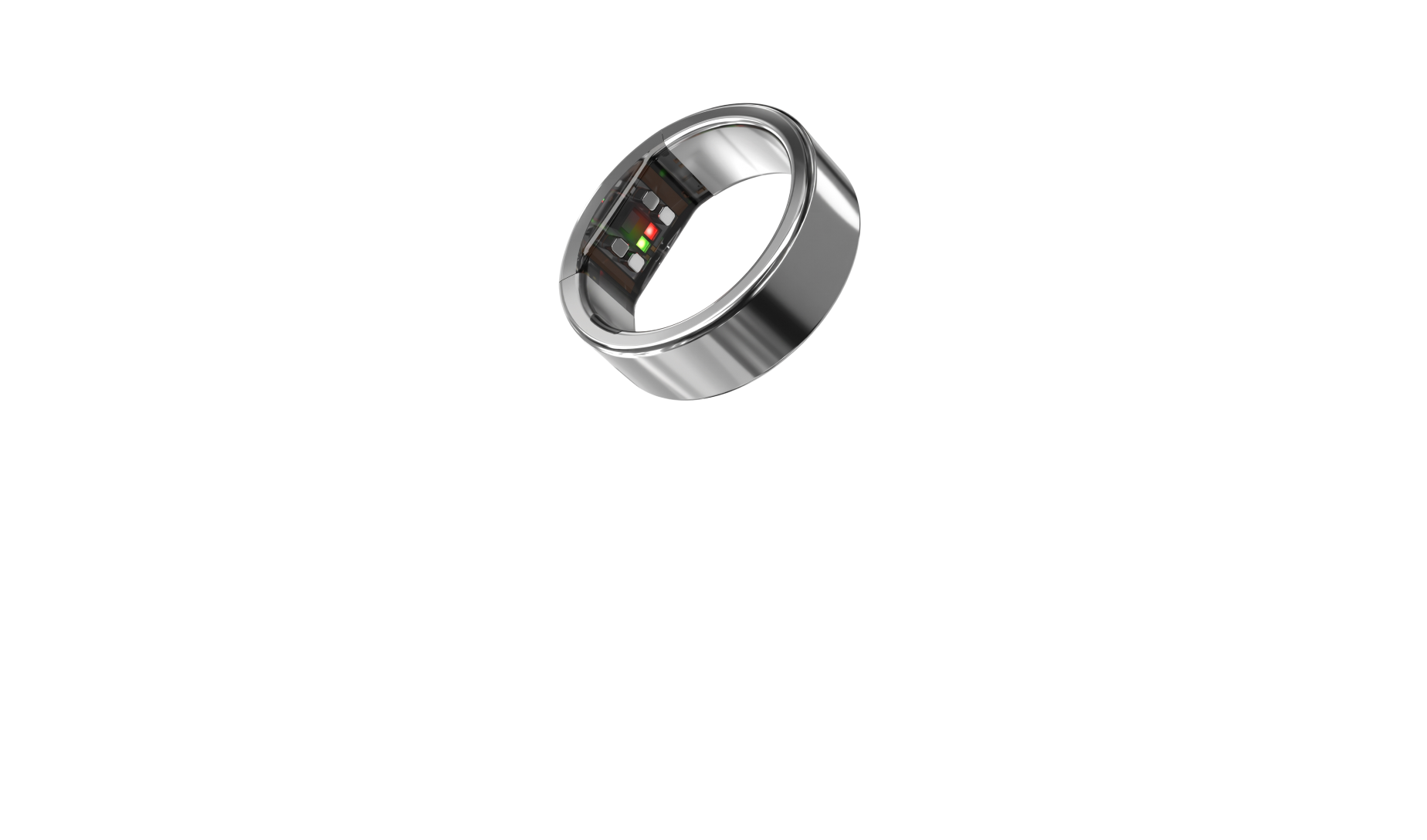
The Ultrahuman Ring reads it from your finger overnight and scores each night against your own recent nights.
In this guide, we explain why resting heart rate is so important, what it means, and what to look for.
Key takeaways
The Ring reads your resting heart rate overnight from your finger, then compares the night to your own baseline.
Baselines differ enormously between people. Healthy adults range from roughly 40 to over 100.
The trend is what matters. Several nights a few beats above your normal say more than one overnight score.
Endurance training pulls the number down over weeks. A late night, alcohol, illness, or a hard day pushes it up briefly.
A lower number usually reflects better fitness.
What is resting heart rate?
Resting heart rate is your pulse rate at its lowest: no walking, no caffeine, no stress.
It's a direct read on how hard your heart works when your body is completely idle.
Most adults are somewhere in the 50s, 60s or 70s. Trained endurance athletes are often well below that.
A fitter heart pumps more blood with every beat, so it needs fewer beats to do the same job. That's why the number falls as your fitness improves, and why it's one of the few markers you can watch change over a training block.
But it’s also an important metric for understanding your health.
Illness, a bad night’s sleep, alcohol, or a hard training week all pull your resting heart rate up. That’s why the Ultrahuman Ring AIR and PRO keep tabs on your heart rate every night, and show you trends over time.
An Ultrahuman case report shows how RHR can be an important marker when read over time.
One member's resting heart rate ran about 5 bpm higher at night and 8 bpm higher during the day than her normal. A blood test discovered iron deficiency anemia. Both readings returned to her baseline once the iron was corrected.
How the Ring measures resting heart rate
Without a wearable, there are two ways to measure resting HR: a clinic reading or counting your own pulse for a minute before you get out of bed. Neither is exactly convenient.
The Ultrahuman Ring reads resting heart rate while you sleep every night.
And accuracy checked out. In a validation study against an FDA-cleared sleep sensor worn on the finger, the Ultrahuman Ring achieved a mean absolute error of 2.4 bpm relative to the reference device.
How resting heart rate shows up in the app
Your resting heart rate appears each morning with the night's other readings, plotted against your own recent range. Tap through for the trend rather than the single figure.
It feeds your Dynamic Recovery Score, so a night several beats above your normal usually pulls that score down. The same number also feeds your VO2 max estimate and Cardio Age.
What the research says about resting heart rate
Studies back up Ultrahuman’s process for accurately reading resting heart rate.
Across 433 healthy adults wearing wrist sensors for up to three months, resting heart rate ran about 4 bpm lower at night than during the day. The authors concluded the true 24-hour resting rate is best measured between 3am and 7am.
And research also backs up that resting heart rate is a truly personal marker.
Across 92,457 adults tracked for at least 35 weeks, the average daily resting heart rate was 65 bpm, but individual baselines ranged from 40 to 109. One person's perfectly normal can be 30 beats above another's.
A review pooling 191 studies found resting heart rate fell about 6% across the 121 groups doing endurance training, while control groups barely moved.
What Ultrahuman's data shows
Across 532,149 members with at least seven valid nights, overnight resting heart rate breaks down like this.
| bpm | |
|---|---|
| Lowest 5% of members | Below 46.2 |
| Lower quarter | Below 52.2 |
| Median | 56.9 |
| Upper quarter | Above 62.0 |
| Highest 5% of members | Above 69.9 |
About 15% of members average below 50 bpm, 3% below 45, and 0.4% below 40: largely trained endurance athletes.
The whole distribution sits below the textbook daytime range of 60 to 100, because these are readings from the quietest hours of sleep rather than from a seated clinic measurement.
Sex separates the data more than age does. Women average 58.5 bpm and men 55.2, a gap that appears at every age band. The rise with age is gentle by comparison: about 57 in the early twenties to about 59 in the mid-forties, then flat.
Within any one age band, the spread between individuals is far wider than the gap between bands.
Read the original research
All Studies →This explainer is based on original research by the Ultrahuman Science team. Read the source studies:
Frequently asked questions
What is a good resting heart rate?
There's no single good number, because baselines range from roughly 40 to over 100 in healthy adults. What matters is your own steady figure, staying level or slowly falling over months.
Why is my resting heart rate higher on some nights?
Alcohol, a late heavy meal, a hard training session, a warm room, illness and a stressful day all lift it for a night or two. A single high night is ordinary. Several in a row are the pattern worth noticing.
Does resting heart rate change with age?
It does, though less than most people expect. Across our members the rise from the early twenties to the mid-forties is about two beats per minute, while the spread inside any one age band is far wider.
How long does training take to lower it?
Weeks to months, not days. The people who start with the highest rates see the biggest falls. If your number hasn't moved after two weeks, that's expected.
Why is the number on my Ring lower than the one at my doctor's office?
Because they're taken in different states. A clinic reading is seated and awake. The Ring's comes from the quietest part of your sleep, when your heart rate is at its lowest. Both are accurate measurements of different things.
Can I lower my resting heart rate quickly?
Not meaningfully. What you can change quickly is whatever is inflating it tonight: alcohol, a late workout, a short night, an irregular bedtime. Removing those returns you to your baseline. Moving the baseline itself takes training.
References
- Speed C, Arneil T, Harle R, et al. Measure by measure: resting heart rate across the 24-hour cycle. PLOS Digital Health 2023. PMID 37115739
- Gonzales TI, Jeon JY, Lindsay T, et al. Resting heart rate is a population-level biomarker of cardiorespiratory fitness: the Fenland Study. PLoS One 2023. PMID 37167327
- Quer G, Gouda P, Galarnyk M, Topol EJ, Steinhubl SR. Inter- and intraindividual variability in daily resting heart rate and its associations with age, sex, sleep, BMI, and time of year: retrospective, longitudinal cohort study of 92,457 adults. PLoS One 2020. PMID 32023264
- Reimers AK, Knapp G, Reimers CD. Effects of exercise on the resting heart rate: a systematic review and meta-analysis of interventional studies. Journal of Clinical Medicine 2018. PMID 30513777
Resting heart rate describes associations in physiological data, not cause and effect. It is not a medical diagnosis. If your number changes in a way that concerns you, bring it to your physician.
Related explainers


Your cart is empty
Looks like you haven't added anything yet. Explore our products to get started.