




Heart rate zones: how the Ultrahuman Ring measures training intensity
Heart rate zones are percentage bands of your estimated maximum heart rate.
A light aerobic session, such as a brisk walk workout, may enter Zone 1, while all-out sprint interval sessions should be in Zone 5.
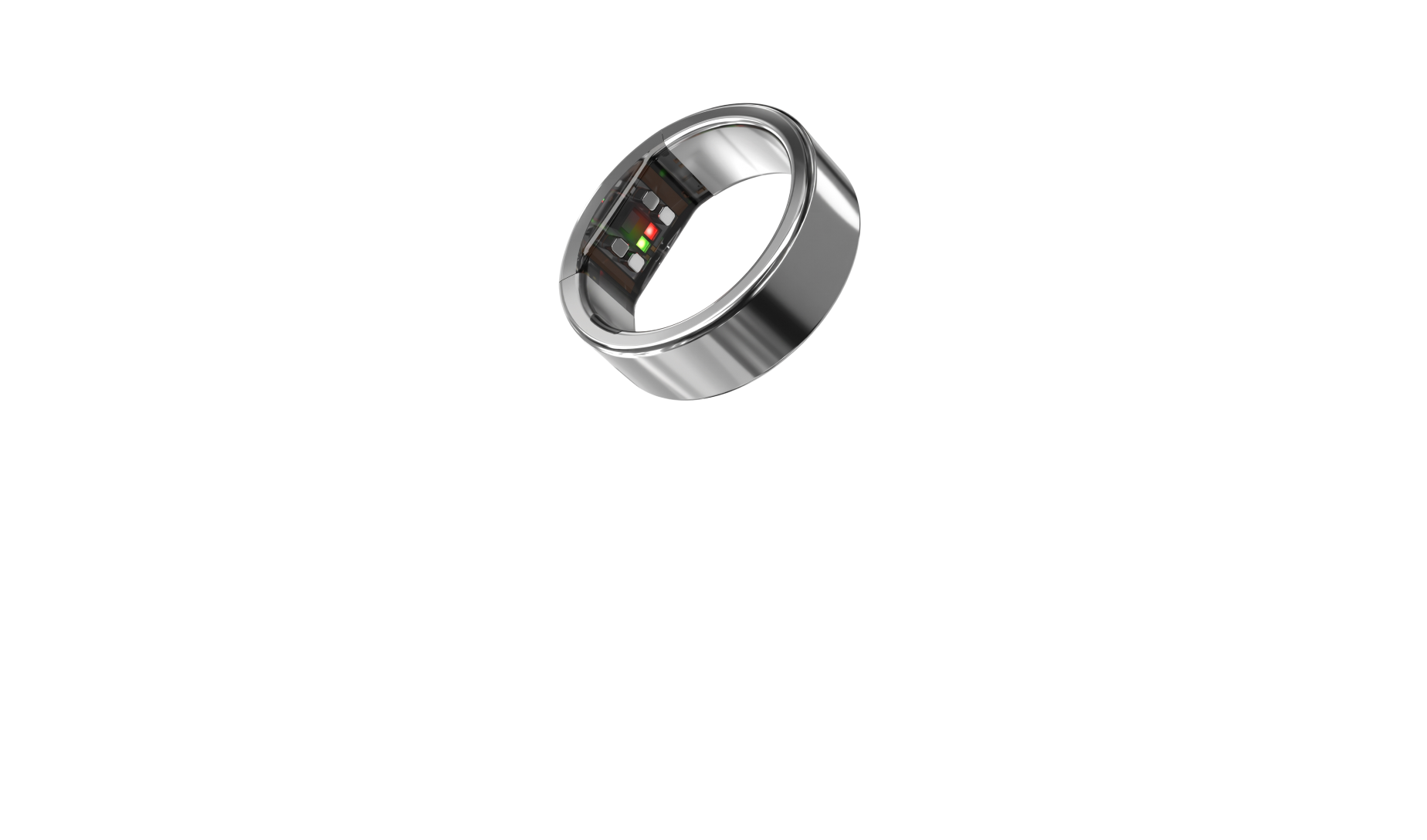
The Ultrahuman Ring AIR and Ring PRO measure your heart rate continuously during exercise using green-LED photoplethysmography (PPG), and map each reading to one of five zones built from a personalized maximum heart rate estimate.
They’re designed to help members understand the intensity of their workouts and ensure they’re getting a good mix of challenging sessions and easy recovery.
Key takeaways
The Ring reads your pulse from your finger and maps each reading to five training zones.
Zone 2 (60 to 70% of maximum heart rate) and Zone 3 (70 to 80%) sit in the aerobic base region where most endurance training literature recommends accumulating the majority of weekly volume.
The weekly cumulative zones view in the Ultrahuman app sums zone-time across every logged workout session in a rolling seven-day window, giving you a training distribution snapshot rather than a single-session number.
What are heart rate zones?
Heart rate zones are five intensity bands that divide the range between rest and maximum effort.
Zone 1 covers 50 to 60% of your maximum heart rate, Zone 2 covers 60 to 70%, Zone 3 covers 70 to 80%, Zone 4 covers 80 to 90%, and Zone 5 covers 90 to 100%.
Zone 1 and Zone 2 primarily stress the aerobic system and fat metabolism; Zone 3 approaches the lactate threshold; Zone 4 and Zone 5 push into anaerobic contributions and place the greatest demand on VO2max.
Sports scientists use five-zone thresholds derived from graded exercise tests with blood lactate and ventilatory measurements as the reference standard for precision training prescriptions.
How does the Ultrahuman Ring measure heart rate zones?
The Ring AIR measures heart rate by shining green light from an LED array on the ring's inner surface into the tissue of your finger.
That per-minute heart rate reading is then placed onto a five-zone ladder. The ladder is built from your personalized maximum heart rate, computed from your age using the Tanaka formula.
For a 35-year-old, the estimated maximum would be 208 minus (0.7 times 35), which is approximately 184 beats per minute.
Zone 2 for that member would run from about 110 to 129 bpm and Zone 4 would run from about 147 to 166 bpm.
During a recorded workout, the app tracks how many minutes you spend in each zone in real time.
When the session ends, it stores the zone-time breakdown. The weekly cumulative view sums zone-time from every session in the current seven-day window, so you can see whether your week has been weighted toward aerobic base work, threshold effort, or high-intensity intervals.
Why did Ultrahuman build it this way?
The most widely cited maximum heart rate rule, 220 minus age, was never derived from a controlled study.
Tanaka and colleagues established that their age-based formula fits the data significantly better, particularly for adults over 40, where the older rule systematically underestimates maximum heart rate. Using it means zone boundaries shift appropriately with age rather than applying a one-size-fits-all correction.
Five zones, not three. A three-zone model (easy, moderate, hard) is simpler but collapses information. The five-zone model separates the aerobic base (Zones 1 to 2), the threshold region (Zone 3), and the high-intensity domain (Zones 4 to 5) into distinct bands.
Elite cross-country skiers, for example, have their five-zone thresholds defined in graded exercise testing by both ventilatory threshold and blood lactate, allowing precise prescription of which zone a session targets. That same specificity is what makes a five-zone view useful for a Ring member tracking whether a week's training leaned toward base or intensity.
Weekly cumulative, not only per-session. Training adaptation depends on accumulated stress over days, not a single session. A study following 41,930 US adults for nearly ten years found that meeting more movement guidelines over time was linked to progressively lower cardiovascular death risk, with those meeting all three guidelines showing a 47% lower CVD mortality risk than those meeting none. Weekly zone accumulation reflects this principle: what matters is the pattern over the week, not any individual session.
What does the research say about training intensity distribution?
The five-zone model has practical value because different zones produce different physiological adaptations, and the balance between them shapes training outcomes.
A meta-analysis comparing training intensity distribution models found that lactate-threshold training came out on top for improving VO2max, while high-intensity interval training came out on top for time-trial performance. Importantly, no single model showed a clear advantage over polarized training for VO2max.
In a randomized controlled trial of 120 recreational marathon runners, a polarized training approach produced 30% greater marathon time improvement than a pyramidal approach (11.3 versus 8.7 minutes, a statistically reliable difference). Looking at how individuals responded, training experience was the strongest predictor of which approach worked better: novice athletes tended to benefit more from pyramidal loading, while experienced athletes responded better to polarized training. The authors concluded that person-to-person variation is too large for universal prescriptions.
Wearable PPG sensors show strong accuracy during steady-state aerobic exercise. A validation study comparing PPG-derived heart rate against ECG during endurance and resistance exercise found strong agreement during endurance exercise, with most readings within roughly plus or minus 10 bpm of the ECG reference. Accuracy declined during resistance exercise due to increased movement artifact, a finding consistent across PPG wearable research.
For zone-specific measurement during maximal exercise, a validation study of PPG-based heart rate across five predefined intensity zones during a maximal treadmill test found that the typical error declined from 2.9% at 50 to 60% of maximum heart rate to 0.6 to 0.75% at zones above 70% of maximum heart rate. Note that this study used a wrist-worn smartwatch; a finger-worn ring occupies a different anatomical position with different motion-artifact dynamics, so these figures characterize general PPG zone-tracking behavior rather than Ring-specific performance. The better-than-expected performance at higher absolute heart rates reflects that motion artifact at high intensity is less disruptive when the heart rate itself is high enough that small absolute errors represent a smaller percentage of the true value.
How do heart rate zones show up in the Ultrahuman app?
During a workout that members start in the Ultrahuman app, the training zones card appears in real time, showing which zone the current heart rate falls into and how long has been spent in each zone so far in the session.
The zones are color-coded and labeled with their percentage of HRmax, so members can see immediately whether they are in the aerobic base range or approaching threshold.
When the session ends, the workout summary card includes a zone-time bar chart alongside the other session metrics (steps, active calories, duration).
Tapping into the movement section of the Ultrahuman app shows the weekly aggregated view, where zone-time from every session in the rolling seven-day window is combined into a single stacked view. This lets members track whether their training week is balanced toward endurance, threshold, or intensity work.
The zone feature connects directly to the workout mode that detects and records your sessions and contributes to the overall Movement Index that the app calculates daily. Heart rate data captured during workouts also feeds the resting heart rate trend, which reflects cardiovascular adaptation over weeks of consistent training.
If you want to act on what the zone chart shows, the Ultrahuman blog covers the practical training side this page deliberately leaves out: a guide to how to train in each zone using the 80/20 approach, a companion piece on how to structure aerobic base and threshold work across a training week, and guidance on choosing cardio vs strength for your goal.
The zone chart is a practical training guide, not a lab-calibrated measurement.
Read the original research
All Studies →This explainer is based on original research by the Ultrahuman Science team. Read the source studies:
Frequently asked questions
What is Zone 2 heart rate, and why do people train in it?
Zone 2 is the range between 60% and 70% of your estimated maximum heart rate. Training in this range primarily stimulates the aerobic energy system, supporting mitochondrial adaptations and fat oxidation capacity. Most endurance training literature recommends that the majority of weekly aerobic volume be accumulated in this zone because it builds the aerobic base that supports harder sessions without requiring excessive recovery. For a 40-year-old using the Tanaka formula (HRmax approximately 180 bpm), Zone 2 runs from about 108 to 126 bpm.
How does the Ring know my maximum heart rate?
The Ring estimates your maximum heart rate using the Tanaka formula: 208 minus 0.7 times your age. This estimate is derived from your date of birth as entered in the Ultrahuman app. Tanaka and colleagues validated this formula in a meta-analysis of 18,712 subjects and confirmed it is independent of sex and habitual activity level. Your individual measured maximum heart rate may differ from the estimate; if you have a measured value from a supervised exercise test, many members use their known HRmax for zone calibration.
Is Zone 5 dangerous to train in?
Zone 5 (90 to 100% of maximum heart rate) represents near-maximal effort. Healthy adults without known cardiovascular conditions can train in Zone 5 in supervised interval sessions; the intensity is physiologically demanding and recovery takes longer. Zone 5 is not categorically dangerous, but it is also not appropriate as a primary training zone for most recreational members. Before establishing a training program that regularly includes Zone 4 or Zone 5 sessions, consulting a physician or qualified exercise professional is a reasonable step if you have any cardiovascular history or concerns.
How accurate are heart rate zone readings during high-intensity exercise?
PPG-based heart rate tracking performs well during steady-state aerobic exercise and acceptably during higher-intensity steady-state work. At very high intensities involving rapid arm movements, motion artifact can temporarily increase measurement error. A validation study of PPG wearables during a maximal treadmill test found median absolute errors of 1 to 3 bpm across intensity zones, with accuracy holding up well during sustained high-intensity effort. Brief transitions, such as jumping or explosive movements, tend to produce larger transient errors.
How many zones does the Ultrahuman Ring support?
The Ring uses a five-zone model. Zone 1 (50 to 60% HRmax) is very light; Zone 2 (60 to 70%) is light aerobic; Zone 3 (70 to 80%) is moderate or threshold; Zone 4 (80 to 90%) is hard; Zone 5 (90 to 100%) is maximal. This five-zone structure aligns with the standard used in sports science research to distinguish physiologically meaningful training domains.
What does the weekly zone view tell me that the per-session view does not?
A single session shows your intensity distribution for that workout. The weekly cumulative view reveals your training mix across the full week. A member who runs five sessions a week might have three Zone 2 sessions, one Zone 3 session, and one Zone 4 session; each session looks different in isolation, but the weekly chart makes the distribution visible as a whole. Research on training intensity distribution shows that most aerobic adaptation comes from accumulated low-to-moderate zone volume, with high-intensity sessions providing the stimulus for performance improvements at the top end.
Can I change the heart rate zone boundaries in the Ultrahuman app?
The Ultrahuman app computes zone boundaries from the age entered in your profile using the Tanaka formula. The boundaries update automatically if you update your date of birth. The Ultrahuman app does not currently support manually overriding the HRmax value for zone computation. Members with a measured HRmax from a lab or field test can calculate what percentage of their measured HRmax each session's average or peak heart rate represents and compare that to the five-zone thresholds independently.
Does the zone feature work for all types of exercise?
The five-zone model is most meaningful for rhythmic, continuous aerobic activities where heart rate stabilizes over the session: running, cycling, rowing, brisk walking, and similar modalities. For resistance training or activities with frequent starts and stops, heart rate can vary quickly between efforts and rest periods, making time-in-zone less interpretable as a training load summary. The Ring tracks heart rate continuously during any logged workout, but the zone distribution is most useful as a training guide for steady-state cardiovascular work.
References
- Tanaka H, Monahan KD, Seals DR. Age-predicted maximal heart rate revisited. J Am Coll Cardiol 2001;37(1):153 to 156. PMID: 11153730
- Qin G, Lee S, Kim S. Machine learning-based personalized training models for optimizing marathon performance through pyramidal and polarized training intensity distributions. Sci Rep 2025;15:41516. PMID: 41286008
- Li H, Yang Q, Wang B. Effects of different training-intensity distribution models on maximal oxygen uptake and time-trial performance in endurance athletes: a Bayesian network meta-analysis. J Strength Cond Res 2026. PMID: 42171506
- Lee TH, Jun DU, Bae JY, Roh HT, Cho SY. Comparative validity of smartwatch-derived heart rate and energy expenditure during endurance and resistance exercise. Sensors 2026;26(8). PMID: 42076635
- Inoue A, Soares JPF, Antunes-Santos F, et al. Heart rate estimation using a smartwatch during maximal cardiopulmonary exercise testing: cross-sectional validation study. JMIR Cardio 2026;10:e81917. PMID: 41990212
- Boudreaux BD, Xu C, Serafini MA, et al. Achieving guidelines within a 24-hour movement paradigm and risk of mortality in US adults. Mayo Clin Proc 2026;101(5):754 to 766. PMID: 41563159
- Xiao X, Moon S, Kim Y, Choi Y. Quantitative analysis of annual training volume and periodization patterns in elite female cross-country skiers using GPS monitoring: a three-athlete case study. Bioengineering 2026;13(4):429. PMID: 42072223
- Krishnan N, Nagesh R, Singh P, et al. Sleep heart rate sensing by Ultrahuman Ring AIR demonstrates high overlap with FDA approved device and consumer grade wearable. Ultrahuman Science Portal, 2026. URL: https://www.ultrahuman.com/science/studies/sleep-heart-rate-sensing
These findings describe associations between heart rate zone training and physiological responses observed in the published literature and the Ultrahuman member base; they do not constitute personalized medical or exercise advice. Bring any unexpected changes in your heart rate or exercise capacity to a physician.

