




Ultrahuman Dynamic Recovery Score explained
Medically reviewed by Mukul Mittal, MD
The Dynamic Recovery Score summarizes how close your body sits to its baseline rested state on a scale of 0-100.
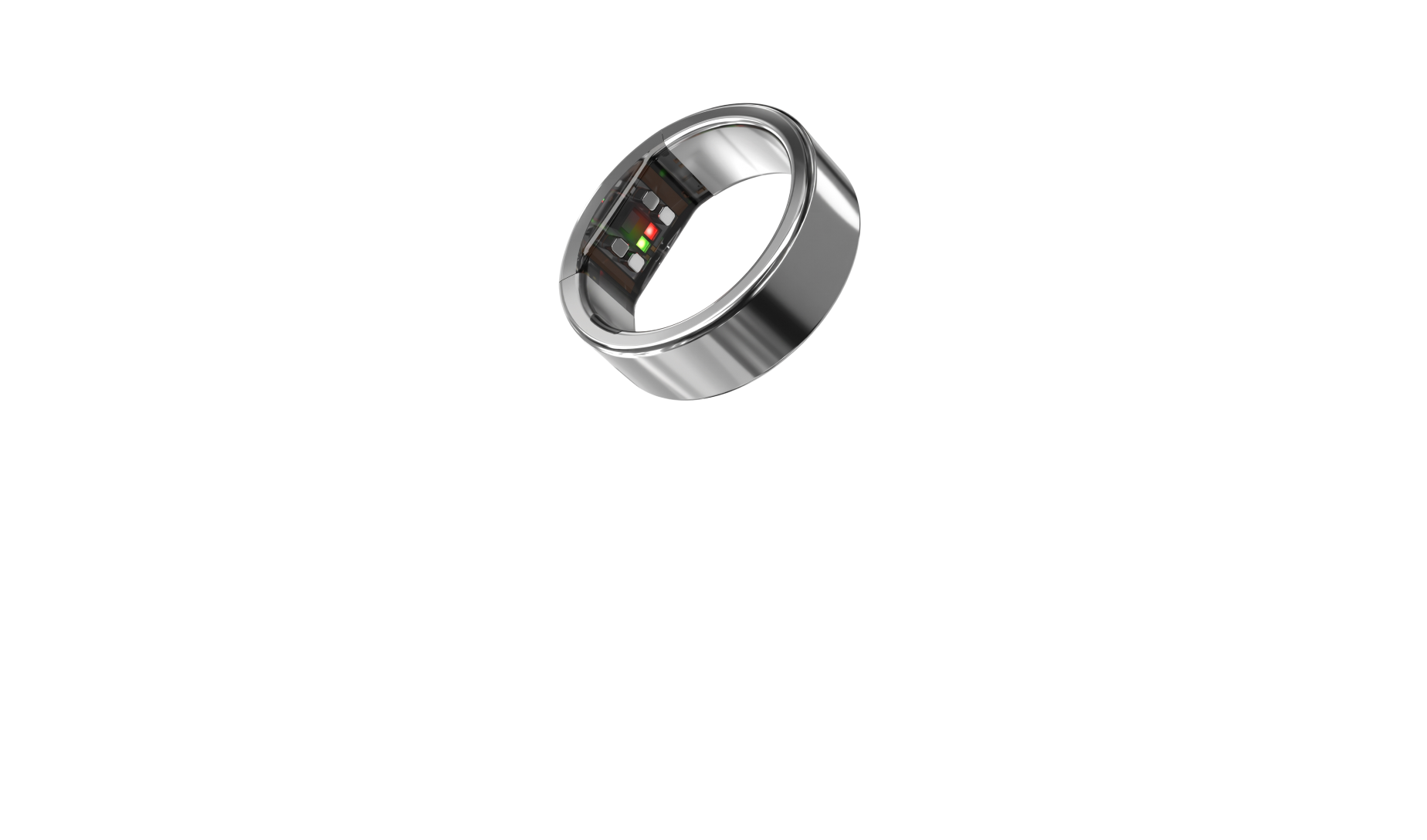
The Ultrahuman Ring builds the score from five readings: sleep, resting heart rate, heart rate variability, skin temperature and your stress rhythm.
But unlike other wearables, Dynamic Recovery adjusts through the day as new readings arrive.
In this guide, we explain what feeds the score, why it's measured against your own baseline, and how to boost your numbers.
Key takeaways
Ultrahuman’s Dynamic Recovery score is built from five contributors: sleep, resting heart rate, heart rate variability, skin temperature, and your stress rhythm.
Each contributor is measured against your own baseline.
The number updates through the day rather than freezing when you wake. It can be boosted by naps, rest, breathwork and movement.
What is a Dynamic Recovery score?
A recovery score is a composite of several biomarkers blended into one number. Higher means your readings sit closer to your own rested pattern.
Training load, disrupted or short sleep, or an infection will make your heart beat faster at rest, and its beat-to-beat timing can become affected.
When under stress, your skin runs warmer. Your sleep gets shorter or more broken. The Ultrahuman Dynamic Recovery Score takes all that into account.
How the Ring calculates your recovery score
The Ring takes its readings at your finger. An optical sensor reads your pulse with light, and a skin temperature sensor keeps track of whether your body is running hot or cool.
Five contributors feed the Dynamic Recovery Score:
| Contributor | What it reads |
|---|---|
| Sleep Index | How long you slept, how efficiently, the stage split, and your sleep timing |
| Resting heart rate | Your overnight resting heart rate against your own baseline |
| HRV Form | Your heart rate variability baseline, and how far last night departs from it |
| Skin temperature | How far your skin temperature sits from your usual overnight level |
| Stress Rhythm Score | How heart rate and heart rate variability move across your day |
Each is graded on its own; then the five combine into the 0 to 100 score.
The first four are settled by the time you wake. The fifth isn't, and that's what makes the score dynamic.
Your stress rhythm picks up a few hours after you wake and can move the number by up to ten points either way. Naps, breathwork and other forms of non-sleep deep rest can lift it too.
What the research says about overnight recovery signals
The relationship between strain and biomarkers is well studied.
Recreational runners were measured after easy sessions and an all-out 3,000m effort.
Markers after easy sessions matched each other closely. However, after the hard test, heart rate rose, and heart rate variability fell, most clearly in the first four hours of sleep.
The same is true of poor sleep.
Twenty men were monitored in a lab and cut to five hours of sleep. Against their own undisturbed baseline night, heart rate ran higher, and heart rate variability ran lower during light sleep. That’s why sleep quality is part of the recovery matrix.
And illness can also show up. Researchers followed the first 50 people in a cohort who reported a COVID-19 infection, reading skin temperature at the finger. 38 of the 50 had fever-like days in their data before they reported any symptom.
Training load, illness and just poor sleep all affect recovery; that’s why Dynamic Recovery studies them all.
How to read your recovery score in the app
The score appears as Dynamic Recovery, a number from 0 to 100. The card shows how many of your contributors are sitting in range, along with the ones that aren’t.
Tap in for the full list, where the app names the single contributor driving your score and explains it in a line.
Each contributor has its own explainer: your heart rate variability, your resting heart rate, your skin temperature and the Sleep Index.
Read the original research
All Studies →This explainer is based on original research by the Ultrahuman Science team. Explore the full Studies repository.
Frequently asked questions
What is a good recovery score?
Ultrahuman counts above 85 as optimal, and 67 to 85 as high. The more useful comparison is your own range. A 78 is a poor day for someone who usually sits at 90, and a good one for someone who usually sits at 70.
Why does my recovery score change during the day?
Your stress rhythm keeps reading after you wake, so the number moves with it by up to ten points either way. The four overnight contributors are already set. That still leaves room to lift it: naps, breathwork and non-sleep deep rest all help, as does settling your stress, eating and drinking on time, and training sensibly.
Is a low recovery score a reason to skip training?
It's a reason to look, not an instruction. The score summarizes load and can't tell you why the load is there. Read it alongside how you feel, and take a persistent low run with symptoms to a doctor.
Is the recovery score the same as Cardio Recovery?
No. Cardio Recovery measures how fast your heart rate falls in the minutes after exercise. The recovery score is an overnight and all-day summary of readiness. They answer different questions.
Can my recovery score tell me I'm getting sick?
It can move before you feel anything, mostly through skin temperature and resting heart rate. That's a pattern worth noticing rather than a diagnosis. Plenty of other things move the same readings, including alcohol or a warm room.
References
- Nuuttila OP, Seipäjärvi S, Kyröläinen H, Nummela A. Reliability and sensitivity of nocturnal heart rate and heart-rate variability in monitoring individual responses to training load. International Journal of Sports Physiology and Performance 2022. PMID 35894977
- Schlagintweit J et al. Effects of sleep fragmentation and partial sleep restriction on heart rate variability during night. Scientific Reports 2023. PMID 37069226
- Smarr BL et al. Feasibility of continuous fever monitoring using wearable devices. Scientific Reports 2020. PMID 33318528
Dynamic Recovery describes associations in physiological data, not cause and effect. It is not a medical diagnosis. If your score stays low and you feel unwell, bring the pattern to your physician.


