

Sleep stages: How the Ultrahuman Ring estimates Light, Deep, REM, and Awake
Sleep stages are the distinct phases your brain cycles through during a night of sleep.
As you sleep, your brain switches through these stages, cycling between them automatically.
Spending enough time in each stage is crucial to feeling rested, repairing your body, and protecting your long-term cognitive health.
The main stages of sleep are: Light sleep (known as NREM stages N1 and N2), Deep sleep (NREM stage N3, or slow-wave sleep), and REM (rapid eye movement) sleep. You will also experience brief awake periods.
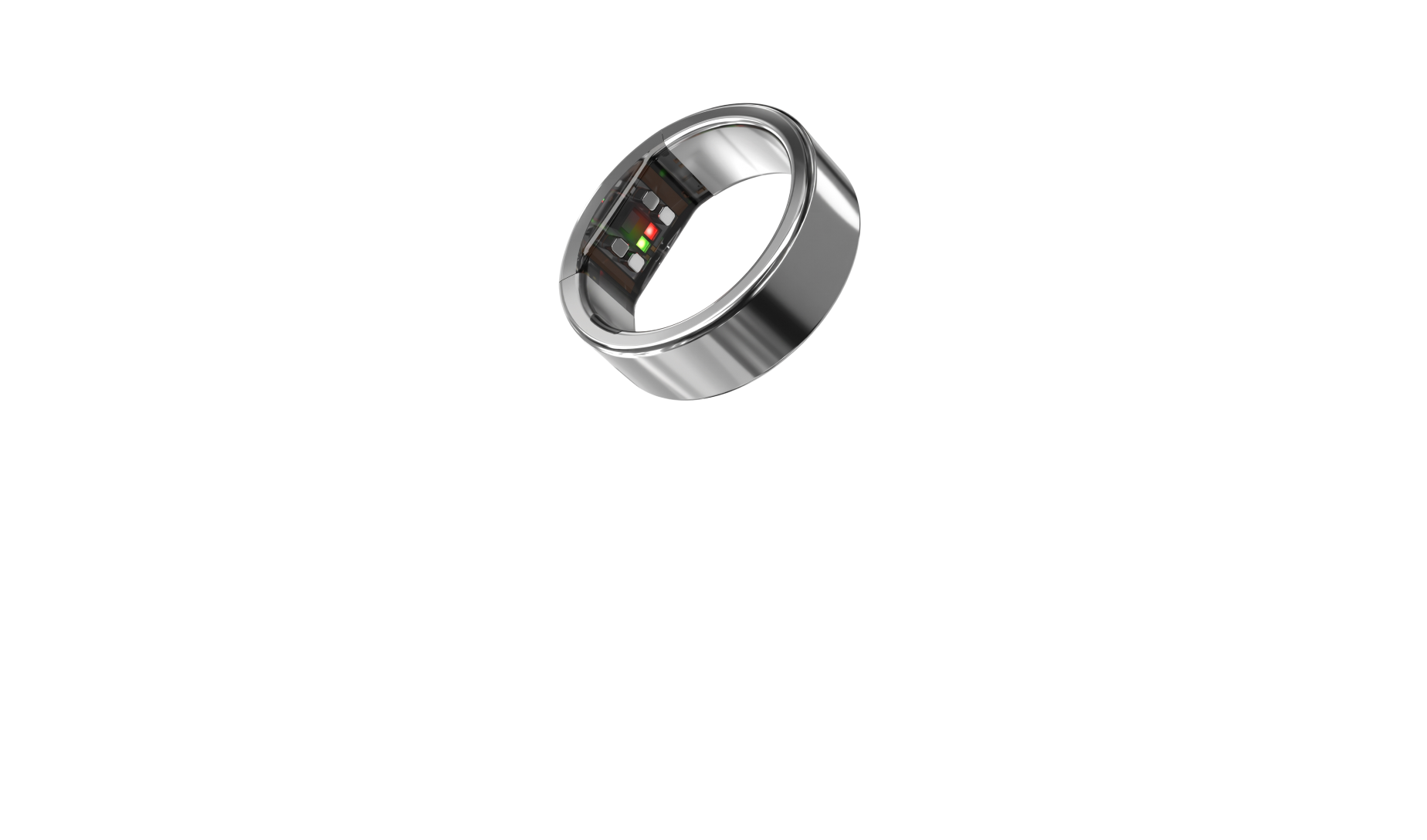
The Ultrahuman Ring estimates which stage you are in by reading your heart rate, heart rate variability, movement, and skin temperature throughout the night. Here's how it works:
Key takeaways
The Ring reads heart rate, heart rate variability, body movement, and skin temperature to estimate whether you are in Light, Deep, REM, or Awake at each moment of the night.
Each stage has a distinct autonomic signature: Deep sleep is dominated by parasympathetic activity (low heart rate, higher HRV, near-zero movement); REM combines low movement with more variable autonomic activity; Awake brings movement bursts and elevated heart rate.
Across 351,106 Ultrahuman Ring members, deep sleep and REM sleep both decline gradually with age. Deep sleep averages 77.8 min (16.8% of total) in members aged 20-29 and 67.6 min (14.8%) in members aged 50 and above.
The Ring's 4-stage read is an estimate, not an EEG measurement. Published 4-stage accuracy for peripheral-signal wearables sits at roughly 70-80% against lab PSG, and matching lab scoring moment by moment is harder still, so a single night's stage breakdown carries more uncertainty than the trend across nights. Deep and REM are the hardest pair to tell apart from peripheral signals, so the app also shows a combined restorative (deep + REM) view alongside the individual stages.
What are sleep stages?
Sleep stages are repeating cycles of brain and body states that structure every night.
A healthy adult's night moves through four to six 90-minute cycles, each containing NREM (non-rapid eye movement) and REM phases. Clinicians identify them via polysomnography (PSG), which records brain-wave activity with scalp electrodes alongside eye movements, muscle tone, and other signals.
Light sleep covers entry stages N1 and N2, when you are easily roused, and brain activity begins to slow.
Deep sleep (N3, also called slow-wave sleep) is when the brain generates slow, high-amplitude delta waves, heart rate and blood pressure fall to their daily minimum, and the body carries out physical repair.
REM sleep, which concentrates in the second half of the night, is when dreaming is most vivid and when the brain consolidates procedural and emotional memories.
Brief Awake periods interrupt this pattern, becoming longer and more frequent with age.
How does Ultrahuman estimate sleep stages?
The Ring reads three streams of physiological data from the finger throughout the night and uses a machine learning model to infer which sleep stage best matches each successive window.
The Ring's green-LED and infrared photoplethysmography (PPG) sensor tracks your heart rate and the beat-to-beat intervals that define heart rate variability (HRV) while you sleep.
Autonomic nervous system activity shifts markedly across sleep stages: parasympathetic (rest-and-digest) activity rises during Deep sleep, suppressing heart rate and widening beat intervals; REM brings a more variable pattern with episodic sympathetic bursts; and Awake periods show elevated heart rate and irregular variability as the body responds to activity.
A 6-axis motion sensor (3-axis accelerometer plus 3-axis gyroscope) tracks body movement: Deep and REM sleep are both low-movement states, while Awake moments produce characteristic motion bursts.
An NTC thermistor at the skin surface tracks relative skin temperature. At the finger, distal skin temperature shows a momentary rise at sleep onset as blood vessels in the extremities dilate to offload heat, which is part of what drives the core-body-temperature fall that accompanies falling asleep; across the rest of the night, the overall trend is a gradual decline.
These three streams feed a per-epoch classifier that assigns one of four labels (Awake, Light, Deep, REM) to each successive window. The classifier is an on-device machine-learning model that processes sequences of epochs together rather than each epoch in isolation, allowing it to pick up on gradual stage transitions and the 90-minute cycle structure of normal sleep. Each epoch's label then feeds the stage-duration totals and contributors that appear in the Ultrahuman app.
Heart rate, movement, and relative skin temperature are direct measurements.
Sleep stage is a statistical inference from those measurements, not a direct observation of brain activity.
A finger ring cannot carry scalp electrodes, which is the trade that lets it monitor sleep continuously every night in a device members already wear.
However, research using raw accelerometry and PPG heart rate from a consumer wearable has shown that combining these signals classifies wake, NREM, and REM sleep at about 72% accuracy against PSG, well enough to confirm that the heart-rate signal adds real information on top of movement alone, which is why the Ring samples all three streams together.
Why did Ultrahuman build it this way?
The core design decision is the sensor set: PPG plus accelerometer plus temperature, rather than EEG. This is a physical constraint, not a preference. A finger ring cannot carry scalp electrodes. The consequence is a 4-stage estimate from peripheral signals rather than the direct measurement of cortical activity that a PSG lab provides.
That tradeoff has a documented benefit. Published work on ring-form-factor staging shows that 4-stage accuracy lifts substantially when you add autonomic-nervous-system signals (derived from PPG) to accelerometry: movement alone reached 57% in that study, and adding ANS and circadian features raised it to 79%.
Each sensor stream adds independent information. Heart rate and HRV distinguish Deep from Light in a way that motion alone cannot, because both stages look similar on an accelerometer (both are low-movement). Temperature provides a slower-changing signal that helps anchor stage transitions to the night's thermal arc.
The on-device model processes sleep as a sequence, which lets it capture that deep sleep tends to concentrate in the first third of the night and REM in the last third, and that transitions between stages follow patterns rather than occurring randomly. Reading the night as a sequence classifies each window more accurately than treating it in isolation.
What does the research say?
The physiological signals the Ring reads are well-established markers of sleep stages. Overnight HRV analysis during PSG-scored sleep shows that high-frequency HRV, a measure of parasympathetic activity, differs measurably across the N1, N2, N3, and REM stages in an older-adult cohort. The autonomic signatures the Ring's classifier reads are grounded in physiology.
On staging accuracy, the published literature is consistent for 4-class classification. A study using PPG from a wrist-worn device with a deep learning model reached 78.7% overall 4-class accuracy (Cohen's kappa 0.68) against PSG-scored labels. Sequence-to-sequence modeling over actigraphy and coarse heart rate, tested across the MESA (n=808) and MrOS (n=817) epidemiological cohorts, reached 70-72%, and showed that deep sleep duration can be estimated reliably even though it is the least represented stage in a typical overnight recording.
Core body temperature drops in the hour before sleep onset, and the rate of that drop correlates with how well nocturnal parasympathetic activity (measured via HRV) develops across the night. That study measured core temperature; the Ring measures relative skin temperature at the finger, which is a peripheral proxy for the same thermoregulatory process, since the distal vasodilation that warms the extremities is what drives the core-temperature fall. That is why the temperature sensor earns its place in staging: the skin temperature arc across the night reflects the same thermoregulatory processes that accompany the autonomic changes between stages.
Across the literature, the consistent picture is that 4-stage classification from wearable peripheral sensors is a meaningful estimate of sleep architecture, particularly for tracking direction and magnitude of change across nights, while carrying more uncertainty on any single epoch than a PSG recording would.
What does this look like across Ultrahuman Ring members?
Across 351,106 Ultrahuman Ring members aged 20 to 69 (last six months of data, valid sleep sessions only, internal team members excluded), both deep sleep and REM sleep decline gradually with age, while time spent awake at night rises.
Figure 1
Deep sleep and REM sleep both decline as members get older
Average minutes per night by age band, Ultrahuman Ring members
Deep sleep and REM sleep both decline as members get older
Source: Ultrahuman Ring data, n=351,106, Dec 2025 - Jun 2026
In the 20-29 age band (n=137,581 members), deep sleep averaged 77.8 minutes per night (16.8% of total sleep time) and REM averaged 112.4 minutes (23.7%).
In the 50 and above band (n=47,608 members), deep sleep averaged 67.6 minutes (14.8%) and REM averaged 97.0 minutes (20.9%). Awake time rose from 39.3 minutes per night in the youngest band to 54.2 minutes in the oldest. Total sleep duration was broadly stable across age bands, ranging from 465 to 482 minutes, suggesting the shift is in composition rather than in overall time in bed.
These numbers come from the on-device classifier's stage assignments. They track how stage distribution changes across nights and across the membership, and they read as physiological estimates rather than lab-scored measurements. That is what the Ring's sensors deliver: a nightly estimate of how your sleep divides between stages, in a device worn at home.
How does it show up in the Ultrahuman app?
Sleep stage data appears in the Sleep tab of the Ultrahuman app each morning after a Ring sync. The main view shows a hypnogram: a timeline graphic that plots Awake, Light, Deep, and REM across the night, so you can see when each stage occurred, how long it lasted, and how it fits into the overall sleep cycle structure. Above the hypnogram, the app shows duration totals for each stage.
Deep sleep and REM sleep each contribute to the Sleep Index through their own contributor inputs alongside sleep efficiency, timing, and total duration. Unusually short deep or REM windows typically shift the Sleep Index lower; unusually long stretches of either tend to lift it. Awake time contributes through the awake-time contributor and restfulness factor. For the full picture of how these stage inputs roll up, see how the Ring builds your Sleep Index and how the same stage totals feed how deep sleep drives restorative sleep.
Stage distribution sits alongside how total sleep duration is measured across the night, so a short night and a stage-poor night are tracked as separate signals. Members who want to understand how sleep stages connect to recovery can cross-reference nightly stage data with their Recovery Score, which draws on how overnight HRV is measured from the Ring separately from the staging algorithm. A night that shows low deep sleep in the Sleep tab will often correspond to a muted overnight HRV rise in the Recovery view.
For members interested in how specific lifestyle choices affect stage distribution, the Ultrahuman app's smart-tags feature lets you tag events (alcohol, caffeine, exercise, stress) against your nightly data, so you can observe how your own stage pattern shifts on nights when you logged those events. If you want to act on what the stages show, there are practical ways to increase your deep sleep, and you can read about how to time naps around your sleep stages without disrupting your overnight architecture, drawing on Ultrahuman's own research on naps and non-sleep deep rest. The night-to-night consistency of your sleep timing is itself a tracked signal, building on the sleep-regularity research in the literature; you can browse the Ultrahuman Studies hub.
Read the original research
All Studies →This explainer is based on original research by the Ultrahuman Science team. Read the source studies:
Frequently asked questions
Is the Ultrahuman Ring's sleep staging the same as a sleep lab?
No. A sleep lab uses polysomnography, which includes scalp electrodes that measure brain waves directly. The Ring cannot carry scalp electrodes; instead, it infers sleep stages from heart rate, HRV, movement, and skin temperature. These peripheral signals correlate with sleep stage but are not equivalent to EEG. The Ring's staging is a physiological estimate designed for consistent, every-night home monitoring, not clinical diagnosis.
How often does the Ring update my sleep stage during the night?
The classifier assigns a stage label to successive epochs through the night. The full night's staging is computed after the Ring syncs to the Ultrahuman app in the morning, rather than streaming in real time.
Why do I sometimes see a lot of Light sleep and little Deep sleep?
Light sleep (N1 and N2) normally makes up the largest share of a night for most adults, commonly 50-60% of total sleep time in standard adult sleep-architecture references. Shortened deep sleep can reflect many factors including sleep timing, prior sleep history, alcohol, or temperature. The app shows trend information across nights, which is more informative than any single night's reading.
Can the Ring detect when I am dreaming?
REM sleep is when most vivid dreaming occurs. The Ring labels epochs as REM based on the low-movement, more variable autonomic pattern that characterizes this stage. It does not detect dreaming directly; the REM label identifies the physiological state during which dreams are most likely.
Does deep sleep percentage change with age?
Across 351,106 Ultrahuman Ring members, deep sleep as a percentage of total sleep was 16.8% in the 20-29 age band and 14.8% in the 50+ band. This is consistent with the broader sleep literature, which reports that slow-wave sleep tends to diminish gradually across the adult lifespan.
What is a good amount of deep sleep per night?
The Ring tracks your personal distribution of stage time, not a fixed clinical target. Deep sleep proportion varies substantially across individuals and changes with age. Rather than chasing a number, the most useful signal is how your stage distribution relates to your own baseline across consecutive nights.
Can the sleep stage data identify a sleep disorder?
No. The Ring's sleep stages are a wellness estimate, not a clinical measurement. Persistent unusual stage patterns, excessive awake time, or chronic short sleep should be discussed with a physician, not interpreted from a consumer wearable alone.
What happens to my sleep stages if I drink alcohol?
Alcohol shifts sleep architecture toward lighter stages and reduces total-night REM sleep while fragmenting the second half of the night; a 2013 review in Alcoholism: Clinical and Experimental Research (Ebrahim et al.) documents these effects across controlled studies. The Ring may reflect this as reduced REM time in your morning readout. If you use the smart-tags feature to log alcohol intake, you can observe how your own stage pattern shifts on tagged nights versus your personal baseline.
References
- Walch O, Huang Y, Forger D, Goldstein C. Sleep stage prediction with raw acceleration and photoplethysmography heart rate data derived from a consumer wearable device. Sleep. 2019;42(12). PMID: 31579900
- Altini M, Kinnunen H. The Promise of Sleep: A Multi-Sensor Approach for Accurate Sleep Stage Detection Using a Smart Ring. Sensors (Basel). 2021;21(13):4302. PMID: 34201861
- Song TA, Chowdhury SR, Malekzadeh M, et al. AI-Driven sleep staging from actigraphy and heart rate. PLOS ONE. 2023;18(5):e0285703. PMID: 37195925
- Bigalke JA, Cleveland EL, Barkstrom E, Gonzalez JE, Carter JR. Core body temperature changes before sleep are associated with nocturnal heart rate variability. J Appl Physiol. 2023;135(1):136-145. PMID: 37262106
- Constantin L, Horvath CM, Baty F, et al. Towards long-term sleep staging via wearable reflective photoplethysmography. Sleep. 2026;49(3). PMID: 40838743
- Kong SDX, Hoyos CM, Phillips CL, et al. Altered heart rate variability during sleep in mild cognitive impairment. Sleep. 2021;44(4). PMID: 33306103
This article describes associations observed in the Ultrahuman member cohort and summarizes published research on wearable sleep staging. It does not establish cause-and-effect relationships and is not a substitute for professional medical advice. Sleep stages are estimated from your heart rate, movement and skin temperature. They are not a clinical sleep study and can't diagnose sleep disorders. If you have concerns about your sleep, bring them to a qualified physician.


