
Social jetlag explained
Social jetlag is the difference between when you sleep on work days and when you sleep on your days off.
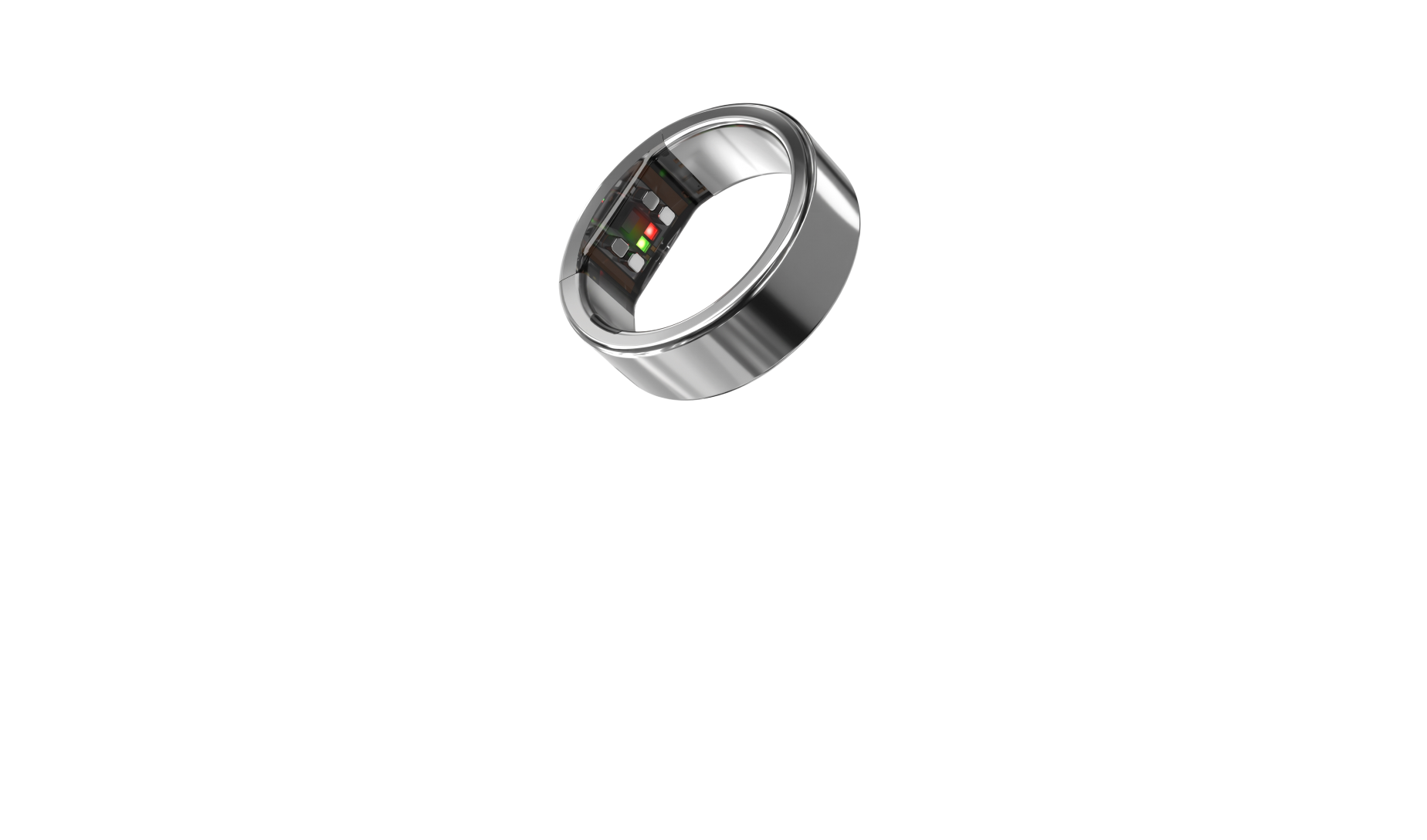
Social Jetlag is a free PowerPlug for the Ultrahuman Ring.
In this guide, we explain what social jetlag is, how the Ring tracks it, and what the research says about the cost of a drifting weekend.
Key takeaways
Social Jetlag is a free PowerPlug for the Ultrahuman Ring. It reads your social jetlag from when you sleep, not from how long you sleep.
Your sleep midpoint is the clock time halfway between falling asleep and waking. Social jetlag is how far it moves between work nights and free nights.
Across 187,796 Ring members, free nights landed about half an hour later than work nights.
Those later nights carried a slightly higher resting heart rate and slightly lower heart rate variability, with the widest gap in the youngest members.
How the Ultrahuman Ring calculates social jetlag
Early alarms during the week and late nights and lie-ins on the weekend mean your body ends up living on two schedules.
The measure ignores how long you slept and looks at where sleep sat on the clock. The anchor is your sleep midpoint, the clock time halfway between falling asleep and waking up.
If you sleep from 11 pm to 7 am during the week, your midpoint is 3 am. If, on the weekend, you sleep 1 am until 9 am, your midpoint slides to 5 am.
That's two hours of social jetlag, on the same eight hours of sleep. The effect on your body is just like jumping on a plane, but without the fun of a new city.
What the research says about social jetlag
The term "social jetlag" came from a 2006 questionnaire study. Researchers surveying 501 volunteers, from teenagers to retirees, found night owls showed the largest gap between work-day and free-day sleep timing.
Heart rate shows it directly. In 145 healthy adults aged 18 to 55, those with two or more hours of social jetlag had a higher resting heart rate than those with an hour or less, along with higher cortisol.
Researchers tracked 447 midlife day-shift workers with an activity monitor. The gap between their work-day and free-day sleep midpoints tracked with lower HDL cholesterol, higher triglycerides, and a higher chance of pre-diabetes.
A citywide COVID-19 lockdown took the commute away from 1,824 working adults. Their social jetlag shrank by 15 minutes, and their resting heart rate fell about 2 bpm.
What Ultrahuman's data shows about social jetlag
Ultrahuman looked at 187,796 Ring members aged 18 to 75. Free-night sleep midpoints landed 24 to 34 minutes later than work-night midpoints, and those nights carried a higher resting heart rate and lower heart rate variability.
What's more, the youngest members drifted furthest, and their readings moved most.
| Group | Free-night midpoint delay | Resting heart rate |
|---|---|---|
| Women 18 to 29 | 34.3 min later | +0.66 bpm |
| Men 18 to 29 | 30.5 min later | +0.61 bpm |
| Women 50 to 75 | 25.1 min later | +0.28 bpm |
| Men 50 to 75 | 24.4 min later | +0.33 bpm |
Read the original research
All Studies →This explainer is based on original research by the Ultrahuman Science team. Explore the full Studies repository.
Frequently asked questions
How much social jetlag is normal?
Almost everyone has some. Across Ring members the average free-night shift ran under an hour. Only one of the studies above drew a line, and it sat higher: two or more hours against an hour or less.
Is social jetlag the same as jet lag?
No. Jet lag comes from moving your body across time zones. Social jetlag comes from your schedule moving under a body clock that stayed put. The mismatch is similar, so the feeling is too.
Do night shift workers get social jetlag?
The measure still applies, and the shift can run the other way, with free nights earlier than work nights. Ultrahuman's numbers come from a general ring-wearing population rather than a shift-work cohort.
Can I see my own sleep midpoint in the app?
Not as a labeled number. The app shows when you fell asleep and when you woke on each night, and the midpoint is the clock time halfway between them.
Does an early alarm on work days count?
That's usually where it starts. An alarm that cuts the night short pulls your work-day midpoint earlier, and the free-day lie-in pushes the other later. Social jetlag is those two ends pulling apart.
References
- Wittmann M, Dinich J, Merrow M, Roenneberg T. Social jetlag: misalignment of biological and social time. Chronobiology International 2006. PMID 16687322
- Rutters F et al. Is social jetlag associated with an adverse endocrine, behavioral, and cardiovascular risk profile? Journal of Biological Rhythms 2014. PMID 25252710
- Wong PM, Hasler BP, Kamarck TW, Muldoon MF, Manuck SB. Social jetlag, chronotype, and cardiometabolic risk. The Journal of Clinical Endocrinology and Metabolism 2015. PMID 26580236
- Ong JL et al. COVID-19-related mobility reduction: heterogenous effects on sleep and physical activity rhythms. Sleep 2021. PMID 32918076
This article describes associations in physiological data, not cause and effect, and it is not a medical diagnosis. If your sleep changes in a way that concerns you, bring it to your physician.