


Fall after Ovulation™ Cycle Flag™ explained
Medically reviewed by Kate Davies, RN, BSc (Hons)
After ovulation, progesterone keeps your overnight temperature elevated until your period arrives.
Fall after Ovulation is the Cycle Flag the Ring shows when your temperature, and therefore your progesterone levels, fall early in the phase after ovulation.
Key takeaways
Fall after Ovulation marks a cycle where skin temperature stepped up at ovulation, then dropped back down early instead of holding
The flag points at progesterone easing off sooner than usual: progesterone, and therefore your temperature, generally stays elevated in the second half of your cycle
The occasional Fall after Ovulation flag is nothing to be concerned about. A flag that returns cycle after cycle is worth a conversation with your clinician
Ovulation still happened in these cycles: the flag is about how long progesterone stays elevated, not whether an egg was released
What Fall after Ovulation looks like
Your skin temperature sits low and steady from your period up to ovulation. After ovulation, it steps up as progesterone rises and stays elevated for around 10-16 days.
Your temperature then drops back to baseline as your next period begins. Fall after Ovulation is an earlier-than-normal drop to baseline.
| Where you are in the cycle | A typical cycle | Fall after Ovulation |
|---|---|---|
| First half, before ovulation | Low and steady | Low and steady |
| Just after ovulation | Steps up | Steps up |
| Middle of the second half | Stays elevated | Drops back toward baseline |
| Just before your period | Drops back | Already low |
For the hormones behind the cycle and how the Ring reads them, the Cycle & Ovulation overview covers the ground this flag sits on.
How the Ring identifies the Fall after Ovulation cycle flag
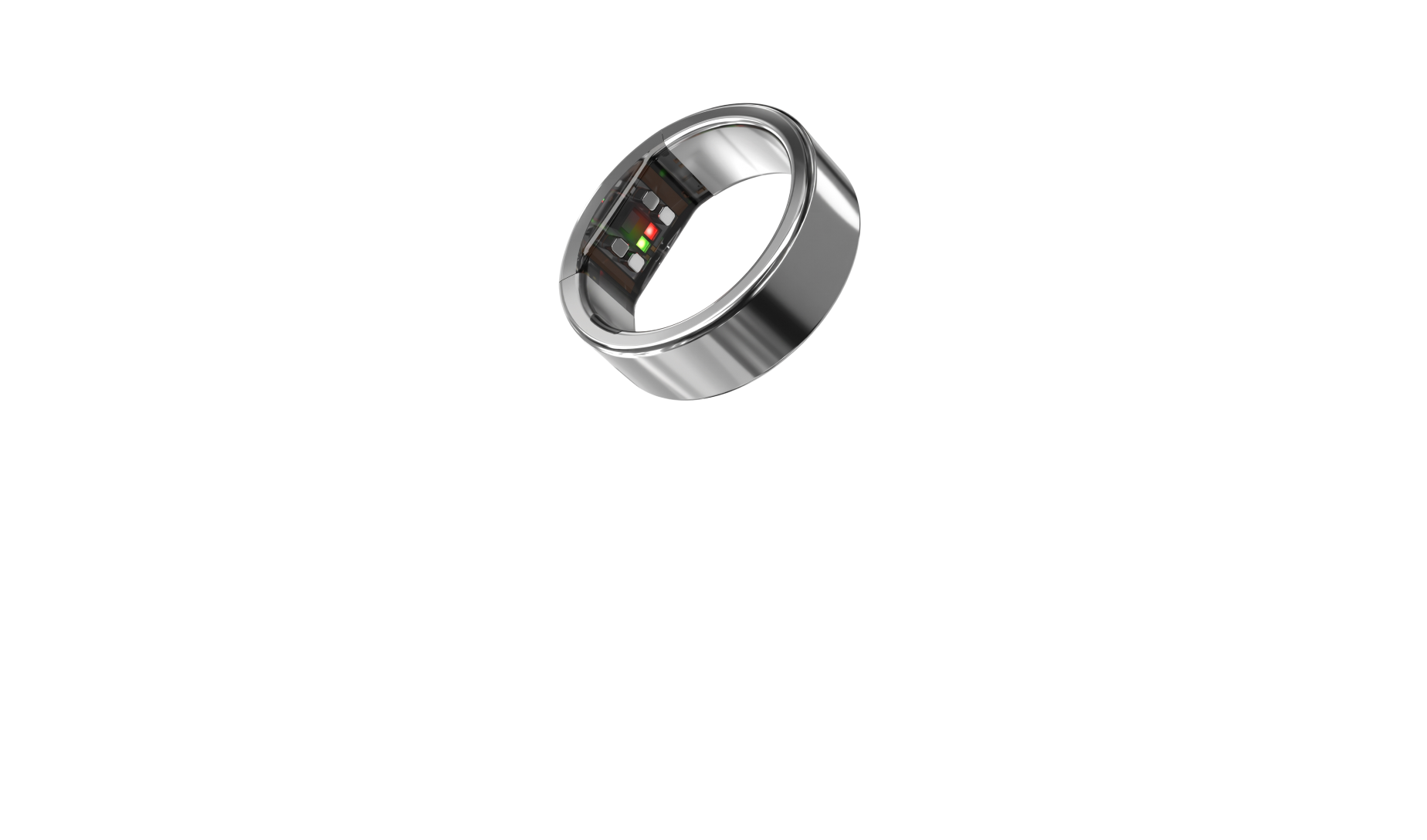
The Ring reads skin temperature from your finger throughout the night. Night is the useful window: during the day, movement, meals and stress all swing your temperature far more than your cycle does, and the cycle's smaller signal gets lost. Multiple readings overnight provide accurate data, collected without you doing anything.
A single morning temperature is a thin read of a slow signal. It has to be measured at the same time every day before you move, get out of bed, or even talk.
The detection behind Cycle & Ovulation is powered by OvuSense™ technology, which Ultrahuman acquired with viO HealthTech and adapted to the Ring's overnight skin signal. It was built to read pattern shapes across a whole cycle, not just individual data points.
What the research says
The temperature rise after ovulation is driven by progesterone, so an early fall tracks progesterone easing off early.
A review of temperature regulation across the menstrual cycle reports that core body temperature runs 0.3 °C to 0.7 °C higher after ovulation, when progesterone is high, than before it. Skin temperature follows the same arc at a smaller scale: across 136 women and 437 cycles, nightly skin temperature ran about 0.3 °C higher after ovulation than before it.
How frequently can short luteal phases occur? Across 259 regularly cycling women and 463 ovulatory cycles, a luteal phase shorter than 10 days showed up in 8.9% of cycles but recurred in only 3.4% of the women.
A study following 284 women aged 30 to 44 trying to conceive across 1,635 cycles reassuringly found that over 12 months, the chance of conceiving was no different for women with a short luteal phase than for those without.
What Ultrahuman's data shows
Ultrahuman characterized six Cycle Flags in 1,297 cycles from 1,163 women aged 20 to 50 wearing the Ring. Fall after Ovulation was the flag most common in younger and mid-aged women.
Among women aged 20 to 30, it showed the strongest association of any flag with polyendocrine metabolic ovarian syndrome (PMOS, until recently called PCOS), though that association didn't reach statistical significance and didn't hold in older age groups.
How it appears in the app
Fall after Ovulation appears in the Cycle Flags section of your Cycle & Ovulation page. Tap the flag for an illustration of the pattern; your own nightly readings are on the Cycle Tracking page.
Read one flag as information about one month, not a verdict on your health. If it returns cycle after cycle, or you're trying to conceive and notice the pattern, bring the trend to your clinician. Read about a related flag, Short Luteal Phase, to understand more about this important phase of the menstrual cycle.
Read the original research
All Studies →This explainer is based on original research by the Ultrahuman Science team. Explore the full Studies repository.
Frequently asked questions
Is a Fall after Ovulation normal?
An occasional one is. Cycles vary from month to month, and a single early drop isn't a sign that something is wrong. The pattern is important when it keeps returning.
Does the flag mean I didn't ovulate?
No. Ovulation still happened as the temperature and therefore your progesterone levels rose. The flag is about how long the progesterone level held afterwards, not whether an egg was released.
What makes the temperature fall early?
Progesterone is what keeps your temperature elevated after ovulation. When it eases off sooner than usual, your temperature falls and the curve slides back toward baseline.
Does this flag mean I have PMOS?
Not necessarily, there can be other reasons why a fall after ovulation occurs. Ultrahuman research found the flag more common in younger women reporting PMOS, but for a definitive diagnosis you need to see your doctor for further investigations.
Can illness or travel cause it?
Yes. A fever, a hard training block or a long flight can all move skin temperature for reasons unrelated to your cycle.
References
- Baker FC, Siboza F, Fuller A. Temperature regulation in women: effects of the menstrual cycle. Temperature (Austin) 2020. PMID 33123618
- Shilaih M et al. Modern fertility awareness methods: wrist wearables capture the changes in temperature associated with the menstrual cycle. Bioscience Reports 2018. PMID 29175999
- Schliep KC et al. Luteal phase deficiency in regularly menstruating women: prevalence and overlap in identification based on clinical and biochemical diagnostic criteria. Journal of Clinical Endocrinology & Metabolism 2014. PMID 24606080
- Crawford NM et al. Prospective evaluation of luteal phase length and natural fertility. Fertility and Sterility 2017. PMID 28065408
Cycle Flags describe associations in physiological data. They are not a medical diagnosis, a fertility guarantee, or a contraceptive method. If a flag keeps returning, or your cycle changes in a way that concerns you, speak to your physician.
