


False Start™ Cycle Flag™ explained
Medically reviewed by Kate Davies, RN, BSc (Hons)
A False Start is a Cycle Flag that occurs when your skin temperature rises mid-cycle mimicking ovulation, then drops before rising again when ovulation actually occurs.
Cycle Flags add context to your cycle on the Ultrahuman Ring. Which flags you see depends on your plan and region.
An occasional False Start is normal. What matters is if you see this pattern frequently.
In this guide, we explain what causes a False Start, how the Ring identifies it, and when a repeating pattern is worth raising with your clinician.
Key takeaways
A False Start is an early temperature rise that doesn't hold, followed later by the real, sustained rise at ovulation.
It reflects a brief early bump in progesterone that fades before it carries through to ovulation.
An egg still typically releases later in the cycle, at the actual ovulation.
An occasional False Start is normal. A pattern that repeats cycle after cycle is worth discussing with a clinician, especially if you're trying to conceive.
What is a False Start Cycle Flag?
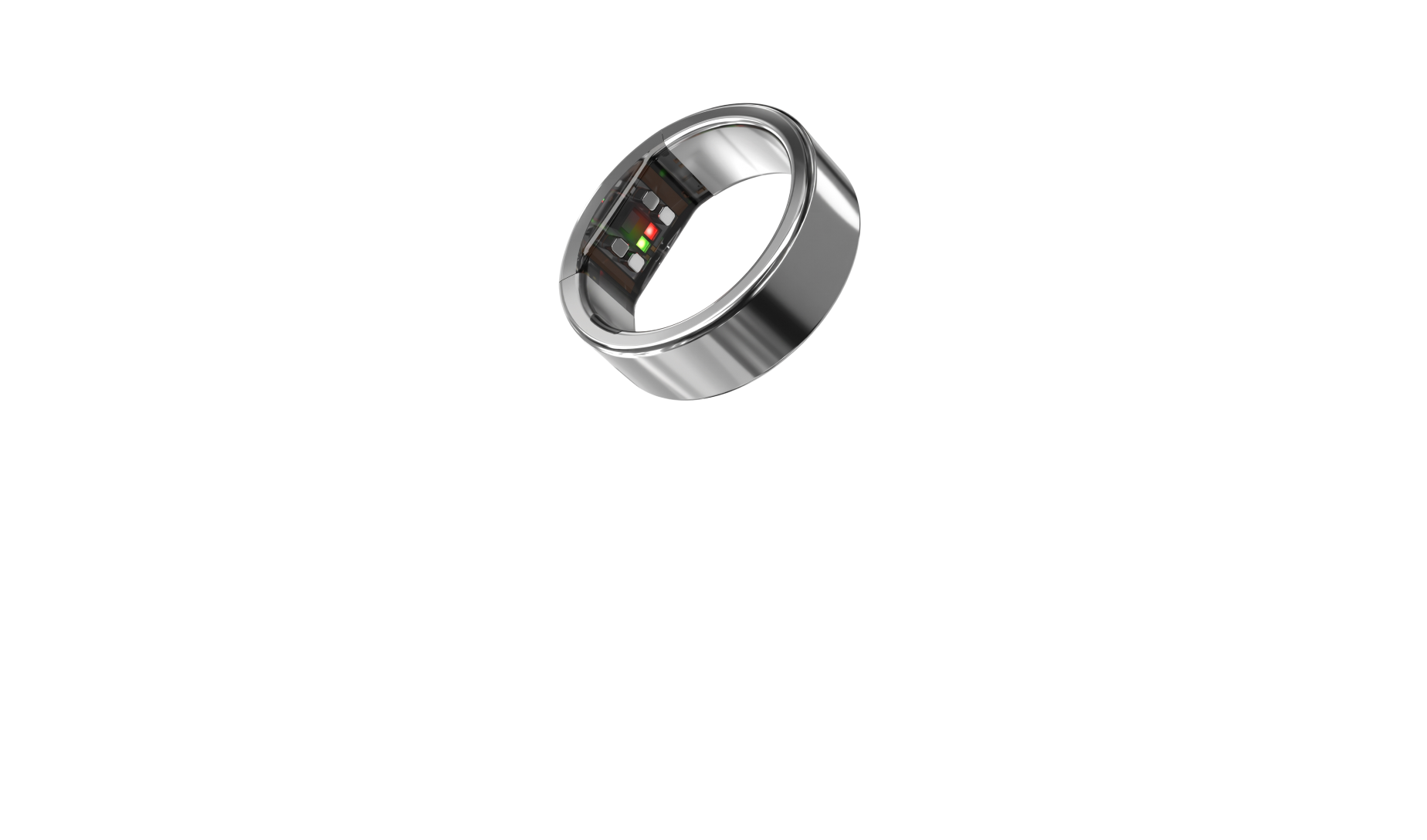
The Cycle and Ovulation PowerPlug tracks skin temperature from your finger overnight, where the signal is steadier than a daytime reading, alongside resting heart rate and heart rate variability. Over time it learns your individual pattern.
Your skin temperature isn't flat across the month. It sits at a lower baseline in the first half of your cycle, steps up after ovulation as progesterone climbs, then settles back as your period begins.
A False Start is an early version of that step that doesn't result in ovulation. Your temperature climbs as though the post-ovulation rise is beginning, but no egg is released at that point, so it falls back to baseline. The real, sustained rise follows later when ovulation actually happens.
As temperature tracks progesterone, that short temperature rise shows up as a small early step that reverses.
Figure 1
Skin temperature across the cycle
False Start: an early rise that falls back before the real, sustained rise at ovulation
Skin temperature across the cycle
Ultrahuman · idealized schematic, not measured data
For the wider picture of the cycle and the hormones behind it, see the Cycle and ovulation overview.
When a False Start is worth a closer look
A False Start that repeats cycle after cycle is worth raising with a clinician, especially if you're trying to conceive. A clinician can look at the fuller picture, including your cycle and symptom history and, where useful, hormone testing.
A recurring pattern is more common in women with polyendocrine metabolic ovarian syndrome (PMOS), until recently called PCOS, a common hormonal condition in which ovulation is often irregular.
How the flag appears in the app
A False Start appears as a Cycle Flag on the cycle it was detected in, alongside your temperature, resting heart rate and HRV trends, so you can see the early rise and the later real one on the same view.
Seeing it once is information rather than a concern. If the flag returns cycle after cycle and you're trying to conceive, that trend is important to share with your clinician.
Read the original research
All Studies →This explainer is based on original research by the Ultrahuman Science team. Explore the full Studies repository.
Frequently asked questions
Is a False Start normal?
Yes, an occasional one is normal. Cycles vary from month to month, and a single early temperature rise that doesn't hold isn't a sign that anything is wrong. It becomes important if it repeats consistently.
Does a False Start mean I didn't ovulate at all?
Not usually. The cycle typically goes on to ovulate at the later, sustained rise. The flag points at the false early rise, not at the whole cycle.
What causes a False Start?
A brief early bump in progesterone that fades before it carries through to ovulation. Skin temperature tracks progesterone, so that short bump shows up as a small early rise that reverses.
Can a False Start affect trying to conceive?
A one-off is unlikely to matter. A pattern that recurs may be associated with ovulatory disorders such as PMOS and is worth discussing with a clinician who can look at your full history.
Does a False Start mean I have PMOS?
No. A False Start is a wellness pattern, not a diagnosis, and the Ring doesn't test hormones. If you are concerned that you may have PMOS, discuss this with your doctor.
References
- Shilaih M et al. Modern fertility awareness methods: wrist wearables capture the changes in temperature associated with the menstrual cycle. Bioscience Reports 2018. PMID 29175999
- Gombert-Labedens M et al. Using wearable skin temperature data to advance tracking and characterization of the menstrual cycle. Journal of Biological Rhythms 2024. PMID 38767963
Cycle Flags describe associations in physiological data. They are not a medical diagnosis, a fertility test, or a contraceptive method. If a pattern in your cycle keeps repeating or something feels off, speak to your physician.
