




Ultrahuman Pregnancy PowerPlug explained
Medically reviewed by Kate Davies, RN, BSc (Hons)
During pregnancy, your body changes, and so do your biomarkers.
But that can impact scores from wearables such as the Ultrahuman Ring AIR and Ring PRO, which look for deviations in metrics such as resting heart rate, temperature, and heart rate variability from your baseline. All of these are affected throughout pregnancy.
In this guide, we explain how the Pregnancy PowerPlug recalibrates your Ultrahuman Ring to support and understand the changes in your body during pregnancy.
Key takeaways
During pregnancy, resting heart rate (RHR) climbs significantly. Research shows that RHR averaged about 8 beats per minute higher at 40 weeks than at 10 weeks
Skin temperature rises in the earliest weeks of pregnancy and stays elevated
Heart rate variability tends to fall as pregnancy advances
Pregnancy PowerPlug adjusts the way the Ultrahuman Ring calculates sleep and recovery to account for these changes, to support your health
How your body changes during pregnancy
Blood volume expands through pregnancy, which shows up as a resting heart rate above normal.
A meta-analysis pooling 39 studies of normal pregnancies across 8,317 women found average heart rate rose from 79.3 beats per minute at 10 weeks to 86.9 at 40 weeks, a mean change of 7.6 beats.
Progesterone levels stay high too, which holds temperature above your old baseline instead of falling with a period. Clinicians recognized that sustained warmth is an early sign of pregnancy long before wearables existed.
What's more, HRV also drops. Researchers measuring 66 women at three points across pregnancy – at 11 to 13 weeks, 20 to 22 weeks, and 30 to 32 weeks – found overall heart rate variability fell as gestation advanced.
None of that is a problem for you, but it is a problem for wearables that look for changes in biomarkers away from your established baseline.
Your finely tuned Recovery score is built on your pre-pregnancy normal. It reads a higher heart rate and a lower heart rate variability as strain, so you would get poor sleep and recovery scores every morning, for months.
How the Ring reads pregnancy signals overnight
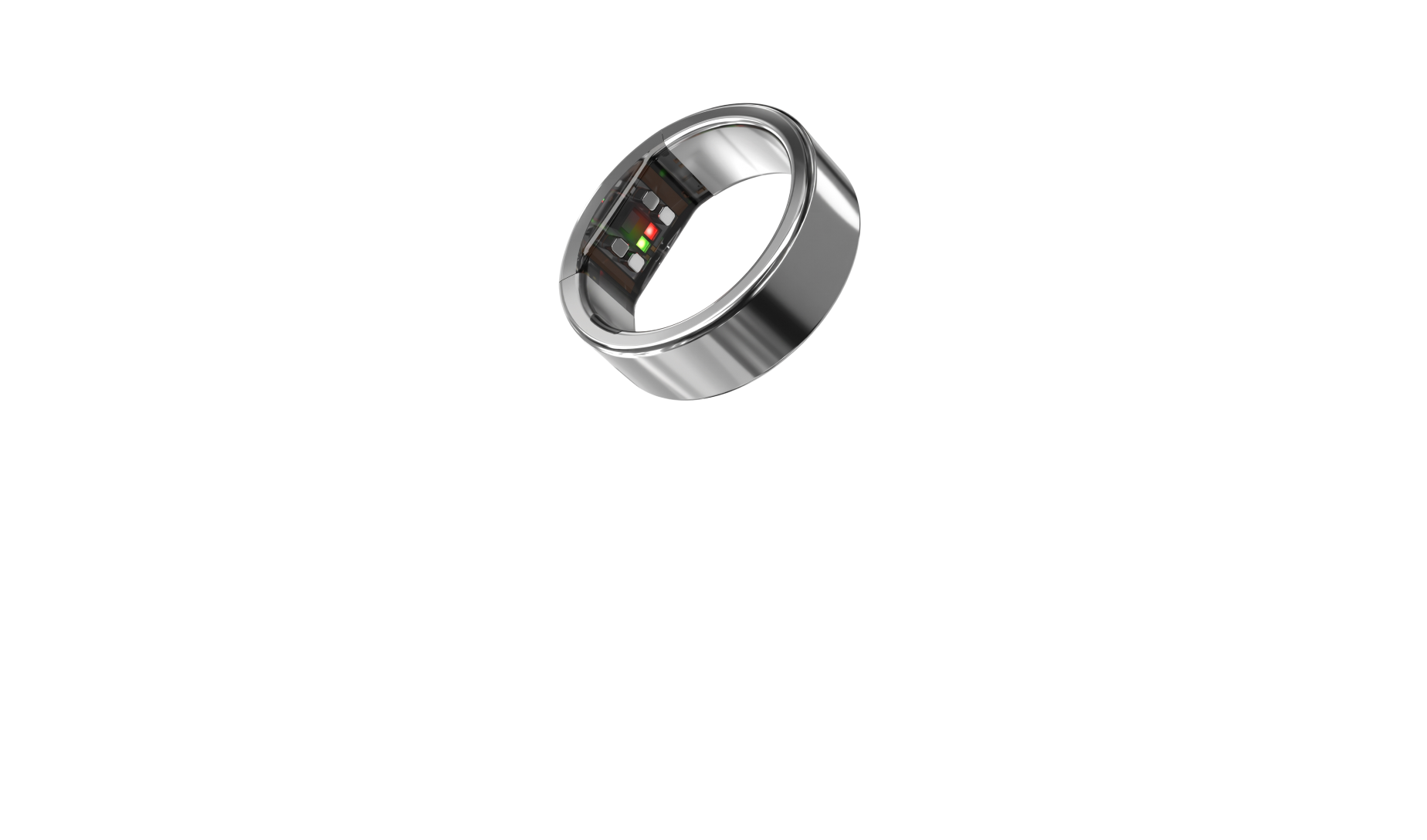
The Ring measures everything from your finger while you sleep. An optical sensor reads your pulse with light, giving heart rate and heart rate variability. A thermistor reads skin temperature from the same spot. An accelerometer tells the algorithm when you're still enough for a reading to count.
Night is the useful window. During the day, movement, meals and stress all swing heart rate and temperature far harder than pregnancy does. Asleep, most of that stops, and the slower underlying change is what's left.
How to use Pregnancy PowerPlug
Pregnancy Insights is a free PowerPlug for the Ultrahuman Ring. Add it from your Ultrahuman app homepage by tapping the PowerPlugs tab > Women’s Health and choosing Pregnancy Insights from the list.
When you activate it, the app asks for your expected delivery date and works out your current week and trimester from that.
Your sleep, movement, heart rate, resting heart rate, heart rate variability and temperature are all read against the trimester you are in, rather than against your pre-pregnancy baseline.
The nudges move with it, covering hydration, gentle exercise and a balanced diet.
Read the original research
All Studies →This explainer is based on original research by the Ultrahuman Science team. Explore the full Studies repository.
Frequently asked questions
Can the Ring tell me I'm pregnant?
No. Pregnancy Insights starts when you tell the app. Research has found temperature moves within days of conception, but a warm week has many ordinary causes. Only a test and a clinician can confirm a pregnancy.
Is a higher resting heart rate in pregnancy something to worry about?
A steady climb across the months is the expected pattern. What's worth a call is a change that comes with symptoms: breathlessness at rest, dizziness, fainting, chest discomfort, or a racing heart. Those belong with your midwife or doctor, not with a chart.
What happens to these numbers after birth?
They settle back, though not on a fixed timetable. One continuous-monitoring study tracked women for three months postpartum and found values moved back toward their earlier range. Sleep loss and feeding shape those months too, so expect a noisy read.
Will pregnancy drag my recovery score down every night?
That's what the PowerPlug is there to stop. The first trimester's heart rate variability swings and temperature rise are read as expected. Without it, the app compares you to a body that's no longer the one you have.
Can illness or a fever confuse the reading?
Yes. Infection moves skin temperature and resting heart rate through the same sensors, and the Ring can't separate cause from signal. A week when you are experiencing a fever is a time to interpret the signals loosely. A fever in pregnancy is important to discuss with your doctor.
Does Pregnancy Insights cost anything?
No. It's a free PowerPlug for the Ultrahuman Ring, in the same women's health set as Cycle & Ovulation. Switch it on in the Ultrahuman app.
References
- Loerup L et al. Trends of blood pressure and heart rate in normal pregnancies: a systematic review and meta-analysis. BMC Medicine 2019. PMID 31506067
- Sarhaddi F et al. Trends in Heart Rate and Heart Rate Variability During Pregnancy and the 3-Month Postpartum Period: Continuous Monitoring in a Free-living Context. JMIR mHealth and uHealth 2022. PMID 35657667
- Garg P et al. Sequential analysis of heart rate variability, blood pressure variability and baroreflex sensitivity in healthy pregnancy. Clinical Autonomic Research 2020. PMID 31981003
- Buxton CL, Atkinson WB. Hormonal factors involved in the regulation of basal body temperature during the menstrual cycle and pregnancy. Journal of Clinical Endocrinology & Metabolism 1948. PMID 18869601
- Hartgill TW, Bergersen TK, Pirhonen J. Core body temperature and the thermoneutral zone: a longitudinal study of normal human pregnancy. Acta Physiologica (Oxford) 2011. PMID 21087419
Pregnancy Insights describes associations in physiological data. It is not a pregnancy test, a medical diagnosis, or a substitute for prenatal care. Bring anything that concerns you to your physician or midwife.
