


Early and Late Ovulation Cycle Flags™ explained
Medically reviewed by Kate Davies, RN, BSc (Hons)
Ovulation doesn't always land perfectly on day 14 of your cycle, and fewer than half of women experience a textbook cycle.
In Cycle and Ovulation on Ultrahuman Ring, Cycle Flags offer information for women on their cycle pattern, such as flags for Early Ovulation, Late Ovulation, or Long Cycle.
In this guide, we explain what the timing Cycle Flags mean on your Ultrahuman Ring.
Key takeaways
Early Ovulation means ovulation landed in the first third of your cycle. Late Ovulation means it landed in the final third.
Long Cycle marks a cycle that ran past 45 days from one period to the next.
Late Ovulation and Long Cycle flags usually arrive together.
One flagged cycle is ordinary. The same flag across several cycles is worth a conversation with your doctor.
Timing Cycle Flags explained
Your temperature isn't flat across the month. It sits low through the first half, steps up after ovulation as progesterone rises, then falls back with your period.
That step is the anchor the Ring uses to place ovulation inside your cycle.
| Flag | What it marks |
|---|---|
| Early Ovulation | Ovulation confirmed in the first 35% of the cycle |
| Late Ovulation | Ovulation confirmed after 67% of the cycle has passed |
| Long Cycle | More than 45 days from the first day of one period to the next |
How the Ultrahuman Ring detects ovulation
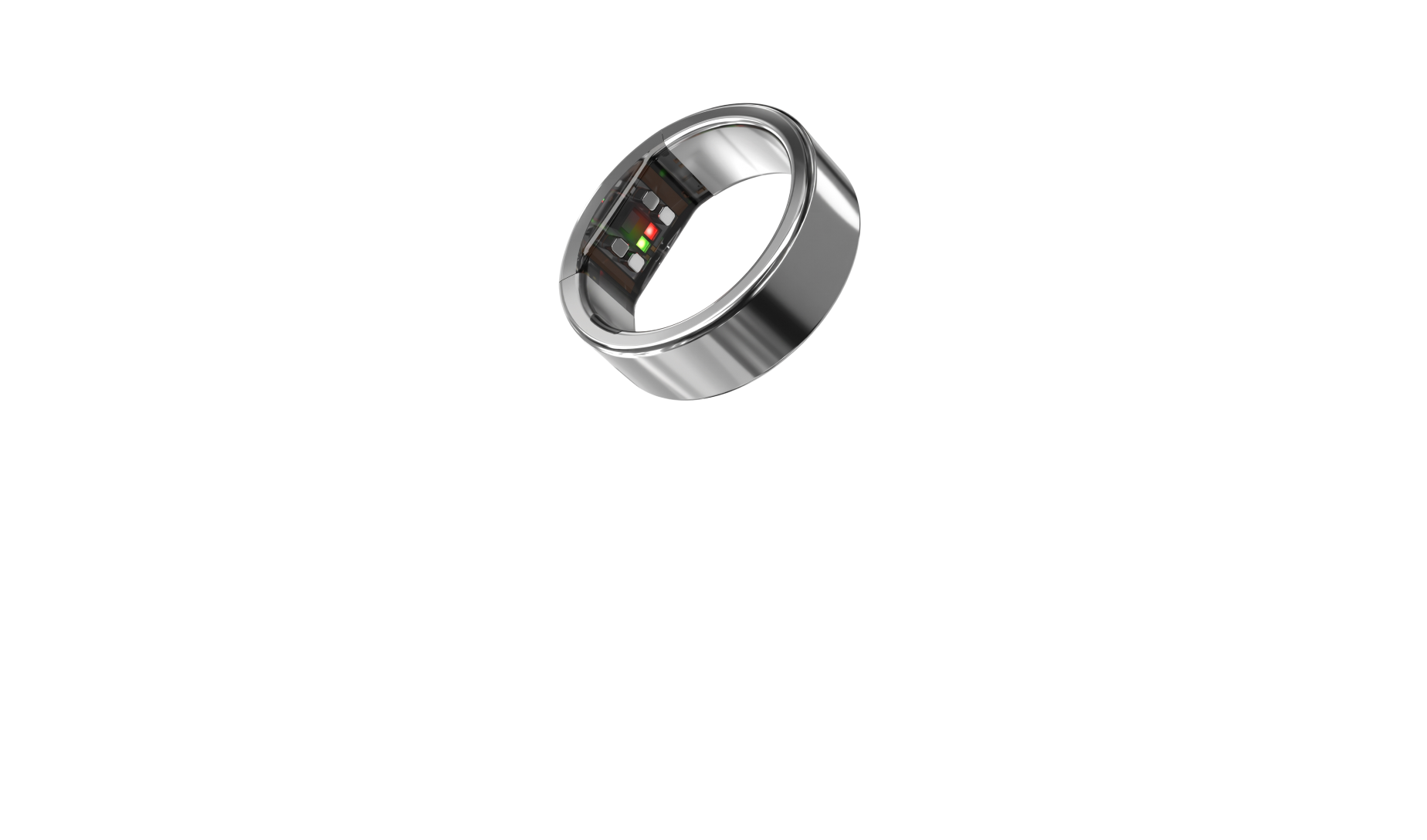
Cycle & Ovulation reads skin temperature from your finger every night with a thermistor, then looks for the step up that follows ovulation.
That confirmed day gets placed inside your cycle not as a date, but as a proportion, so a 24-day cycle and a 38-day cycle are each judged on their own terms. Long Cycle is the exception: a plain day count.
The method is built on OvuSense™ technology, acquired with viO HealthTech and adapted to the Ring's overnight skin signal, developed across more than 260,000 cycles. Checked against a home urine test reading four hormone metabolites, the Ring's ovulation call agreed with it 92.9% of the time, in 22 women.
Why timing matters more than cycle length alone
Timing matters because most of the variation in cycle length occurs in the first half of the cycle, termed the follicular phase, before ovulation occurs.
One analysis of 612,613 ovulatory cycles from 124,648 women tracking temperature at home found the days before ovulation averaged 16.9 days and spanned 10 to 30. The phase after ovulation, the luteal phase, averaged 12.4 days and spanned 7 to 17 days.
How common are Early, Late or Long Cycles?
The variation in cycle length is wider than most people expect, including in women whose cycles feel regular.
A study of 221 women using urinary hormone markers found that 2% were already in their fertile window by day four of their cycle, and 17% by day seven. Early ovulation is more common than most calendars account for.
A study of 80 women using a skin-worn sensor alongside a vaginal sensor, covering 205 cycles, found that 34% had late ovulation.
An analysis of 75,981 cycles from 32,595 women using a connected home ovulation test found only 12.4% had 28-day cycles. Even within cycles that did run 28 days, ovulation day spread across 10 days. Day 15 was the most common, not the textbook day 14.
Regular cycles are no guarantee of consistent timing. A study of 1,060 cycles from 141 healthy women with regular cycles found 42.5% had variation in ovulation timing greater than 7 days between cycles. A separate study following 221 women through 696 cycles found that sporadic late ovulation can't be predicted from prior cycles alone.
Long cycles aren't rare either. A study of Korean nurses aged 22 to 45 found that among 9,043 women with an estimable cycle of 50 days or fewer, 26% reported cycles of 32 to 50 days. A BMI over 25 raised the odds of a long cycle by about a third. Polyendocrine metabolic ovarian syndrome (PMOS, until recently called PCOS) and thyroid conditions can also delay ovulation.
How flags appear in the app
A cycle flag appears on the cycle you're viewing in Cycle & Ovulation, alongside the day the Ring confirmed ovulation. Tap the flag for an illustration of the pattern; your own nightly readings are on the Cycle Tracking page.
A cycle can carry more than one flag: late ovulation often appears alongside a short stretch between ovulation and the next period, and a long cycle often sits next to a cycle where no ovulation was detected at all.
Illness, a long flight, a heavy training block, or a stressful month can each shift ovulation by days. So one Cycle Flag shouldn't be cause for concern.
If the same Flag keeps returning across multiple cycles, take the pattern and the dates to a doctor.
Read the original research
All Studies →This explainer is based on original research by the Ultrahuman Science team. Read the source studies:
Frequently asked questions
Is early ovulation a problem?
Not on its own. Ovulation landing in the first third sits inside the ordinary spread the research reports in healthy women. The flag tells you the timing; it doesn't ask you to act on a single cycle.
Does late ovulation mean I have PMOS?
Not necessarily. Late ovulation can happen to most women at some point in their reproductive life. PMOS is one of several reasons that can push ovulation later, alongside illness and thyroid conditions. If you are noticing consistent late ovulation and long cycles, discuss this with your doctor for further investigations to get the right diagnosis for you.
Why did I get a Long Cycle flag when my period felt on time?
Check which cycle the flag is attached to. The count runs from the first day of one period to the first day of the next. A cycle that started before you began wearing the Ring can read longer than it felt.
Can I still use the fertile window if my timing is flagged?
Yes, with more caution than usual. The Ring confirms ovulation after the fact and predicts the window from your own history. When timing keeps moving, that prediction has less to lean on. Cycle & Ovulation is a wellness feature, not a contraceptive method and therefore should not be used to avoid pregnancy.
Do the timing flags work on hormonal birth control?
No. Hormonal contraception suppresses ovulation, so there's no temperature step for the algorithm to place. Cycle & Ovulation is built for naturally cycling women.
References
- Soumpasis I, Grace B, Johnson S. Real-life insights on menstrual cycles and ovulation using big data. Human Reproduction Open 2020. PMID 32328534
- Bull JR, Rowland SP, Berglund Scherwitzl E, et al. Real-world menstrual cycle characteristics of more than 600,000 menstrual cycles. NPJ Digital Medicine 2019. PMID 31482137
- Fehring RJ, Schneider M, Raviele K. Variability in the phases of the menstrual cycle. Journal of Obstetric, Gynecologic & Neonatal Nursing 2006. PMID 16700687
- Wilcox AJ, Dunson D, Baird DD. The timing of the "fertile window" in the menstrual cycle: day specific estimates from a prospective study. BMJ 2000. PMID 11082086
- Song S, Choi H, Pang Y, Kim O, Park HY. Factors associated with regularity and length of menstrual cycle: Korea Nurses' Health Study. BMC Women's Health 2022. PMID 36050702
Cycle Flags describe associations in physiological data. They are not a medical diagnosis, a fertility guarantee, or a contraceptive method. If your cycle changes in a way that concerns you, speak to your physician.