


Slow Rise Cycle Flag™ explained
Medically reviewed by Kate Davies, RN, BSc (Hons)
After you ovulate, progesterone usually pushes your overnight temperature up within a night or two.
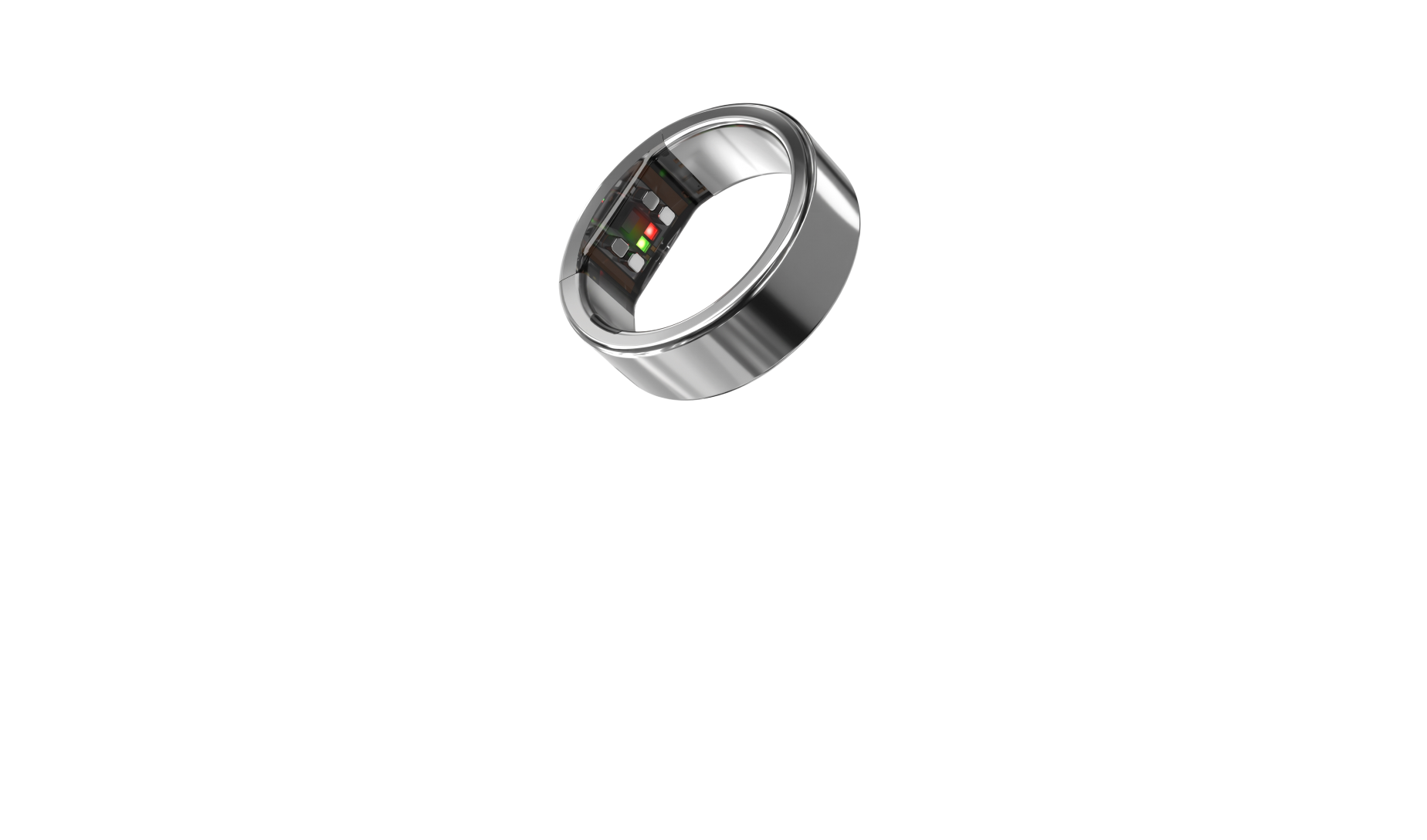
When that rise takes several days to arrive, the Ultrahuman Ring flags it as Slow Rise, and the shape of that climb is the closest read it has on how your progesterone is behaving.
In this guide, we explain what a slow temperature rise means, the two forms the flag takes, and when a pattern is worth discussing with your doctor.
Key takeaways
Slow Rise marks a cycle where the temperature climb after ovulation was gradual rather than sharp
Progesterone drives that climb, so a slow rise points to a softer progesterone response
The flag comes in two forms: one where ovulation was confirmed but the rise was gradual, and one where the temperature drifted without confirming ovulation
One flagged cycle is nothing to be concerned about. A consistent run of slow rises over several months is worth raising with your doctor
Slow Rise with ovulation confirmed trended more common in women in their forties, a pattern that fits perimenopause, though it wasn't statistically significant
The two forms of Slow Rise
The Ring samples skin temperature from your finger while you sleep. Each night is scored against your own baseline.
Your temperature sits low through the first half of your cycle, steps up once ovulation happens and progesterone starts to rise, then falls back with your period.
A Slow Rise flag marks a cycle where that step took days to arrive instead of a night or two.
| Flag | What the temperature did | What it suggests |
|---|---|---|
| Slow Rise, ovulation detected | Climbed gradually, then held higher until the period | Ovulation happened; progesterone rose slowly |
| Slow Rise, no ovulation detected | Drifted upward without settling into a clear higher level | The signal never confirmed ovulation in that cycle |
Figure 1
Skin temperature across the cycle
Slow Rise: the rise after ovulation climbs gradually over several days rather than stepping up
Skin temperature across the cycle
Ultrahuman · idealized schematic, not measured data
What the research says about a slow rise
The temperature rise after ovulation is driven by progesterone, and the research is fairly direct about that link.
A review of temperature regulation across the menstrual cycle reports that core body temperature runs 0.3 °C to 0.7 °C higher after ovulation, when progesterone is high, than before it. Skin temperature follows the same arc at a smaller scale: in a study of 136 women across 437 cycles using a wearable alongside urine hormone tests, nightly skin temperature ran about 0.3 °C higher after ovulation than before it.
A gradual rise is a long-recognized clinical pattern, not a wearable artifact. Basal body temperature research going back to the 1980s described a slow temperature increase, taking more than two days, as a marker of a weaker luteal phase, decades before wearables existed.
Softer progesterone responses are more common than most women expect. A year-long study of 53 women with cycles prescreened as normal, followed across 694 cycles, found that 17% had at least one cycle without confirmed ovulation, almost all while running a normal cycle length. A regular calendar doesn't guarantee a strong hormone response.
What Ultrahuman's own data shows
Ultrahuman characterized Slow Rise alongside five other flags in a dataset of 1,297 cycles from 1,163 women aged 20 to 50, including women with irregular cycles and self-reported polyendocrine metabolic ovarian syndrome (PMOS, until recently called PCOS).
Slow Rise with confirmed ovulation trended more common in the 40 to 50 age group, though the association didn't reach statistical significance. That pattern fits what the fertility literature associates with the hormonal shifts of perimenopause.
How it appears in the app
Slow Rise appears in the Cycle Flags section of your Cycle & Ovulation page. Tap the flag for an illustration of the pattern; your own nightly temperature readings are on the Cycle Tracking page.
A single flag is noise. Three or four in a row, or a flag that arrives alongside cycles that feel different to you, is worth a conversation with your doctor.
Read the original research
All Studies →This explainer is based on original research by the Ultrahuman Science team. Explore the full Studies repository.
Frequently asked questions
Does a Slow Rise flag mean I didn't ovulate?
Not on its own. Only one of the two forms means ovulation was never confirmed. The other means ovulation happened and the temperature took longer than usual to climb.
Can illness or alcohol cause the flag?
Yes. A fever, a heavy night, or a bad cold can all move skin temperature for reasons unrelated to your cycle. A cycle with illness in it is one to read lightly.
Does a slow rise mean I'll find it harder to conceive?
The flag can't answer that. Cycle & Ovulation is a wellness feature, not a fertility assessment, and no wearable can predict conception for an individual. If something feels off, bring it to a clinician.
Is Slow Rise the same as a short second half of the cycle?
No. Slow Rise describes how the temperature climbed. A short second half describes how long it stayed up. The Ring tracks those as separate flags.
Does PMOS cause a Slow Rise flag?
Not directly. A slow temperature rise can appear in women with PMOS or other ovulatory disorders, but a flag doesn't point to any specific condition. The Ring is not providing a diagnosis.
Why did the flag take a while to appear?
Temperature confirms ovulation after the fact. The shape of a rise only becomes readable once enough nights sit on the other side of it, so the flag can arrive days after the rise, and sometimes only once the cycle closes.
References
- Baker FC et al. Temperature regulation in women: effects of the menstrual cycle. Temperature (Austin) 2020. PMID 33123618
- Shilaih M et al. Modern fertility awareness methods: wrist wearables capture the changes in temperature associated with the menstrual cycle. Bioscience Reports 2018. PMID 29175999
- Gautray JP et al. Clinical investigation of the menstrual cycle. III. Clinical, endometrial, and endocrine aspects of luteal defect. Fertility and Sterility 1981. PMID 7202753
- Henry S et al. Prospective 1-year assessment of within-woman variability of follicular and luteal phase lengths in healthy women. Human Reproduction 2024. PMID 39320898
Cycle Flags describe associations in physiological data. They are not a medical diagnosis, a fertility guarantee, or a contraceptive method. If your cycle changes in a way that concerns you, speak to your physician.
