


Ultrahuman menstrual cycle report explained
Medically reviewed by Kate Davies, RN, BSc (Hons)
Every completed cycle tracked with Cycle and Ovulation on the Ultrahuman Ring ends with a report.
It’s built from biomarkers including skin temperature, resting heart rate, and HRV, night after night, throughout your cycle.
In this guide, we explain what the report shows, and when patterns in your history are worth paying attention to.
Key takeaways
The Ultrahuman Ring closes a cycle report when your next period starts, then adds it to your cycle history
Regularity is judged against your own recent cycles, not a 28-day textbook figure
Cycle Flags™ mark where your pattern departed from its usual arc
Across 4,055 cycles from women wearing the Ring, the widest swings in cycle length showed up in women reporting consistently high stress
What the report shows
A menstrual cycle report is a record of one completed cycle and how it sits against the ones before it. The Ring builds it from physiology rather than dates, so it holds information a calendar never could.
| What the report shows | What it means |
|---|---|
| Cycle length | Days from the first day of one period to the day before the next |
| Period length | Days of menstrual bleeding in that cycle |
| Ovulation | Whether the Ring confirmed ovulation, and on which day |
| Regularity | How much your recent cycle lengths differ from each other |
| Cycle Flags™ | Where the cycle's pattern departed from your usual arc |
How the Ring builds it
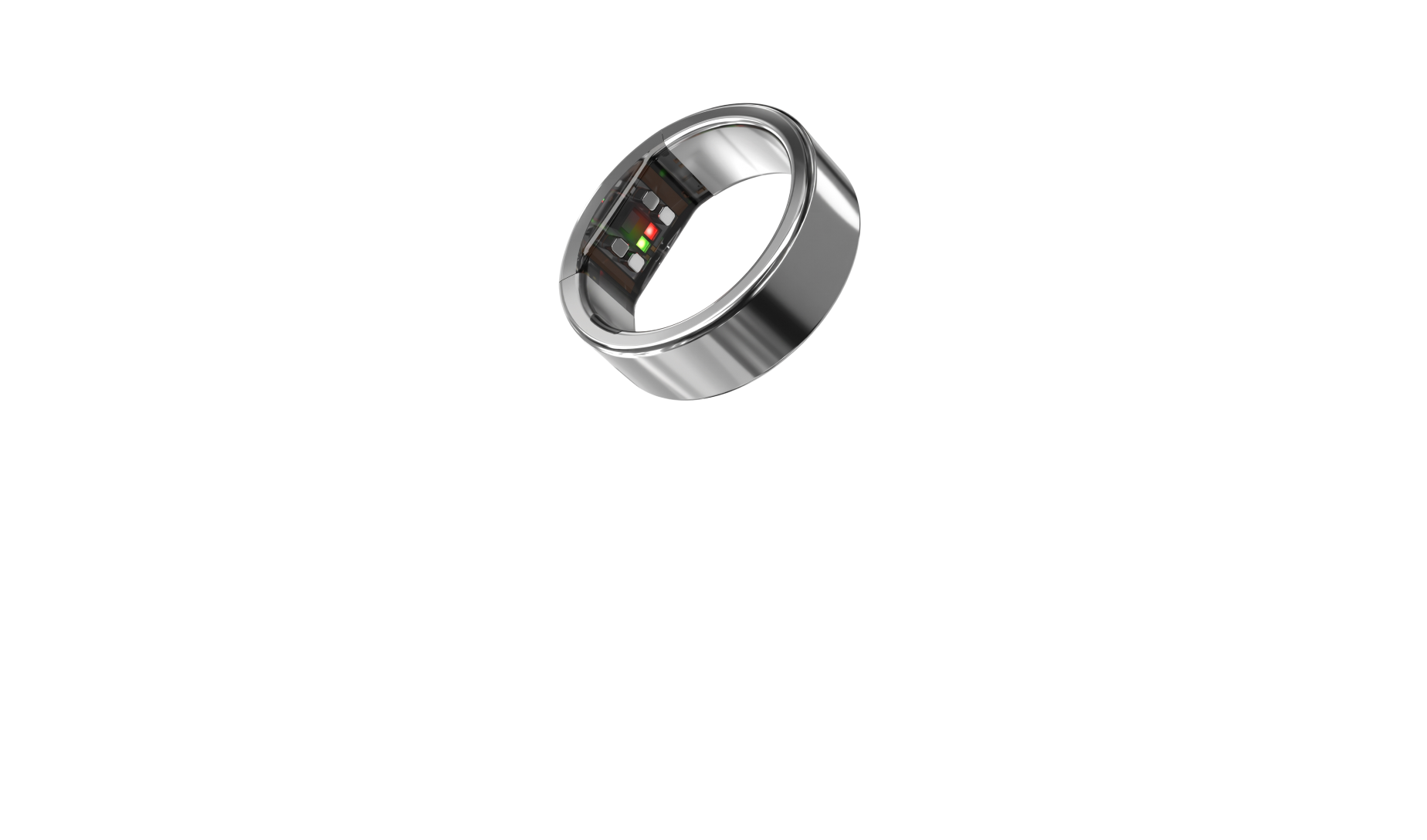
The Ring reads three signals overnight: skin temperature, resting heart rate and heart rate variability, each scored against your own baseline rather than a population average. The Cycle & Ovulation overview covers how that read works and what drives it hormonally.
The report is the layer on top. When your next period starts, the cycle closes. The app fixes its length, period length and ovulation day, then files it in your cycle history alongside the rest. Reports get sharper as your history grows: the first one leans on your logged dates because the Ring hasn't yet seen enough of your cycles to judge regularity on its own.
Why your own history is the benchmark
There's no single normal cycle to compare you to. Regularity only means something relative to your own recent months.
Research shows the spread is genuinely wide. An analysis of 612,613 cycles from 124,648 women found a mean cycle length of 29.3 days, shortening by 0.18 days for each year of age from 25 to 45. Among 1.58 million women logging cycles, only 16.3% had a median cycle length of 28 days.
Your own cycles vary too. In 141 healthy women tracked across 1,060 cycles with a urine hormone monitor, 95% of cycles ran between 22 and 36 days. Variability greater than seven days showed up in 42.5% of them. These were women considered regular.
Period length is the steadier number. Among 201 regularly menstruating women followed across two consecutive cycles, bleeding lasted a median of five days, heaviest in the first three.
What Ultrahuman's own data shows
We looked at 4,055 cycles from 2,745 women wearing the Ring to understand what actually moves cycle length. Stress is near the front: women reporting consistently high stress showed the widest swings, with cycles moving by two to eight days. Higher BMI lined up with longer cycles, though that held clearly only in women aged 40 to 45. Activity showed no link at all: daily step counts moved cycle length no more than chance did.
Flags carry their own signal. In 1,297 cycles from 1,163 women, the Possible Anovulation flag was the strongest single marker of an irregular cycle across every age group from 20 to 50. But irregular cycles aren't always anovulatory: many are simply shorter, longer, or more variable than usual, with ovulation confirmed but shifted in timing. A repeated pattern is worth raising with a clinician.
How to read your cycle report in the app
The Cycle Report is generated at the end of each cycle and spans your last six cycles. Availability varies by plan and region. It covers your cycle trends (median length, variability, shortest and longest), then ovulation history, Cycle Flags, and luteal phase length, each broken down per cycle. Charts below trace skin temperature, HRV, resting heart rate and Sleep Index over the past 90 days, with follicular and luteal phases marked. Symptom tags appear plotted against the day you logged them.
Read the original research
All Studies →This explainer is based on original research by the Ultrahuman Science team. Explore the full Studies repository.
Frequently asked questions
How many cycles before the report is useful?
About 30 days to learn your baselines, which is also when your first report arrives. A cycle or two after that, the report leans on physiology rather than your logged dates. Regularity is the slowest field to settle: it needs several cycles to compare.
What counts as an irregular cycle report?
There's no single cut-off. What the app watches is how far your recent cycles sit from each other, not how far they sit from 28 days. A run of cycles that swing widely, or a sudden change from your own pattern, is what's worth paying attention to.
Why is my cycle length different from what the app predicted?
A prediction is a forecast from your history, and cycles move. Illness, travel or a stressful stretch can all shift the timing. The report records what actually happened. The gap between the two is normal, not an error.
Will illness or travel affect that cycle's report?
It can blur it. Fever and disrupted sleep move skin temperature and resting heart rate for reasons unrelated to your cycle, and the report is built from those same signals. A cycle with a week of illness in it is one to read loosely.
My cycles are irregular. Is the report still worth reading?
Yes. Calendar tracking drifts furthest when cycles are irregular: that's where a physiological read is most useful. Ultrahuman's cycle research includes women with irregular cycles and self-reported polyendocrine metabolic ovarian syndrome (PMOS, until recently called PCOS).
Can I use the report to avoid pregnancy?
No. Cycle & Ovulation Pro is not intended to be used as a method of contraception or to achieve a medical diagnosis.
References
- Bull JR et al. Real-world menstrual cycle characteristics of more than 600,000 menstrual cycles. NPJ Digital Medicine 2019. PMID 31482137
- Grieger JA, Norman RJ. Menstrual Cycle Length and Patterns in a Global Cohort of Women Using a Mobile Phone App. Journal of Medical Internet Research 2020. PMID 32442161
- Fehring RJ, Schneider M, Raviele K. Variability in the phases of the menstrual cycle. Journal of Obstetric, Gynecologic & Neonatal Nursing 2006. PMID 16700687
- Dasharathy SS et al. Menstrual bleeding patterns among regularly menstruating women. American Journal of Epidemiology 2012. PMID 22350580
Cycle reports describe associations in physiological data. They are not a medical diagnosis, a fertility guarantee, or a contraceptive method. If your cycle changes in a way that concerns you, speak to your physician.
