




Blood Vision Hormone Health Panel explained
Medically reviewed by Mukul Mittal, MD
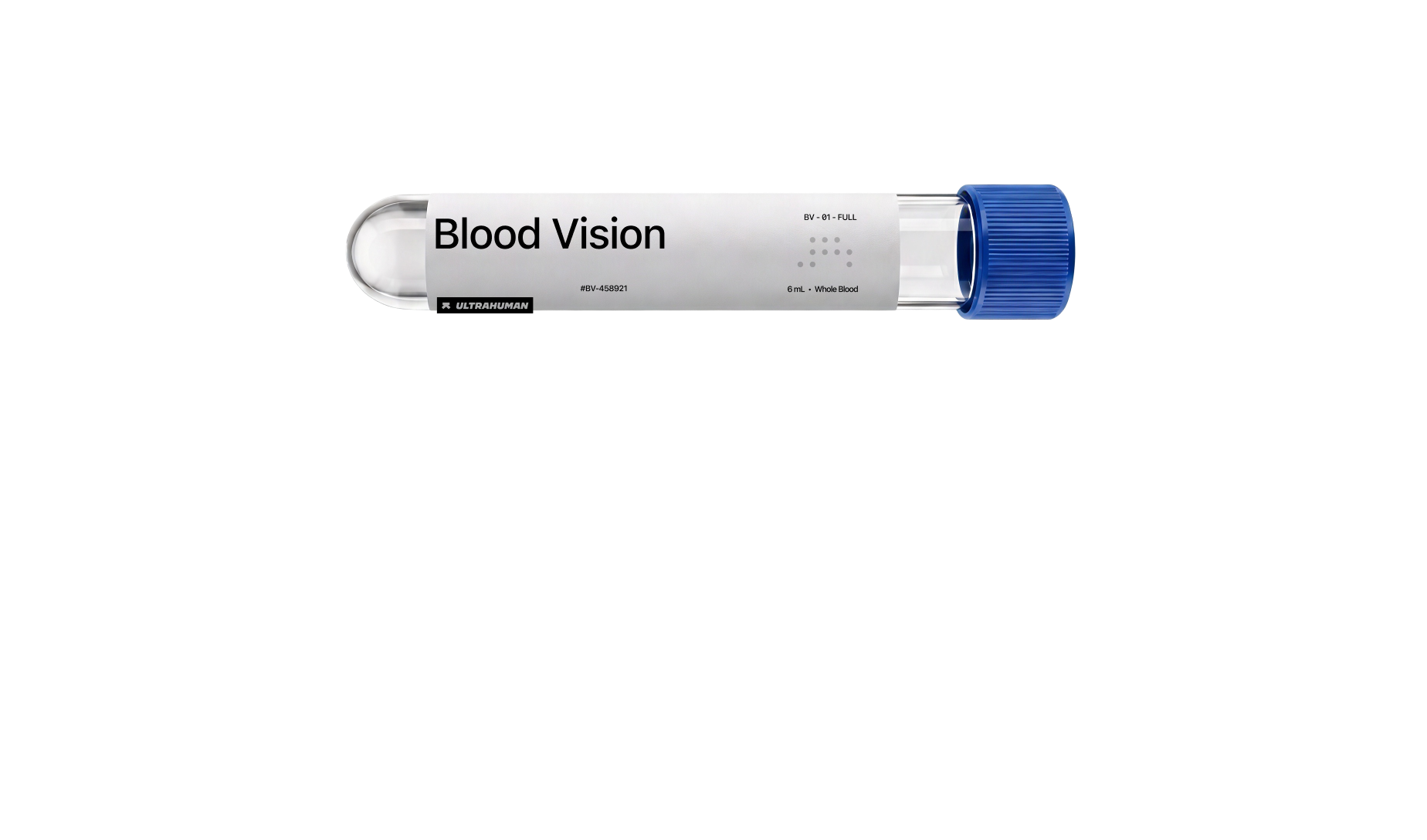
The Blood Vision Hormone Health Panel measures the hormones behind your energy, drive, muscle, mood and reproductive health, from a single morning blood draw.
It reads seven markers as one set. Each only makes sense next to the others, which is why they're drawn together rather than ordered one at a time.
In this guide, we explain what each marker measures, why the timing of the draw changes the result, and how to read the panel as one picture.
Key takeaways
The panel groups seven markers into one story, rather than seven separate verdicts.
Total testosterone alone can mislead. SHBG holds most of it out of circulation, so the panel measures the carrier too.
Cortisol runs on a daily rhythm. It should be high shortly after you wake and low at night, so the hour of the draw matters as much as the number.
Timing decides the reading. The same man can look normal at 8am and low at 4pm, which is why the draw is a morning one.
FSH, LH and estradiol describe where a woman is in her reproductive life. They don't rank it.
The Hormone Health Panel markers
Hormones work in loops. One gland signals another, the second answers back, and a carrier protein decides how much of that answer reaches your tissue. Reading one number out of that loop tells you very little.
Testosterone markers
Total testosterone: The whole supply in your blood, counting both the portion bound to carrier proteins and the small share circulating free.
SHBG: Sex hormone binding globulin, the carrier protein that grips testosterone and holds it out of use. It decides how much of your total supply your tissue can actually reach.
Free testosterone: The share available to your tissue. Labs calculate it from total testosterone, SHBG and albumin rather than measuring it directly.
Stress and adrenal markers
Cortisol: Your stress and wake hormone. It runs on a daily rhythm, climbing steeply around waking and bottoming out late at night, so the time of the draw matters as much as the level.
DHEA-S: An adrenal androgen that peaks in your twenties and declines steadily with age. It's the one marker here that barely moves across the day.
Reproductive markers
FSH and LH: The instructions your brain sends to the ovaries or testes.
Estradiol: The main estrogen, and the response coming back from the ovaries.
Why SHBG is measured alongside testosterone
Most of your testosterone is already spoken for. SHBG grips it tightly and holds it out of use, leaving only a small share free for your tissue to take up.
That means SHBG moves the answer without moving the supply. High SHBG can pull free testosterone down while total testosterone still reads mid-range. Low SHBG does the reverse. Total testosterone on its own can't tell you which of those you're looking at.
Free testosterone is rarely measured directly, because the reference method is slow and expensive. Labs calculate it instead, from three inputs: total testosterone, SHBG and albumin. Albumin is the second carrier, and it holds roughly half your total testosterone in a much looser grip than SHBG. That calculation has been validated against the reference method across samples spanning a wide range of SHBG levels, matching almost exactly except during pregnancy. Without both carriers, the free number can't be built at all.
Why the draw is timed to the morning
Several of these hormones run on a clock, and the clock is stronger than most of what you do about it. Testosterone peaks in the early morning and drifts down through the day.
That drift decides whether a panel is worth reading. A Boston community study sampled men aged 30 to 80 across the day, with 66 completing at least five visits. In the youngest men, testosterone ran 20% to 25% lower at 4pm than at 8am, narrowing to roughly 10% by age 70.
The practical finding is starker. In the same group, seventeen men read below the usual threshold on at least one afternoon, and most of them read normal at every morning visit.
A panel drawn at a random hour is effectively a different test, against a normal range nobody has written down. Blood Vision schedules the Hormone Health Panel as an early morning fasted draw for that reason, and comparing two panels only works when both sit at the same point on the clock.
Does the day of your cycle change the result?
For women, cycle day moves FSH, LH and estradiol far more than the hour of the draw does. The three markers rise and fall across the month. The same woman can read very differently in week one and week three. The standard draw is day 2 to 5, counting the first day of full flow as day 1. If you are cycling, book the panel in that window. Note the date your last period started, so the result can be read against it. If your cycles are irregular or have stopped, any morning draw works, and your cycle tracking in the app supplies the context.
Do birth control pills change these results?
Yes, for two of the seven markers. Combined contraceptive pills, patches and estrogen therapy all raise SHBG, often a long way. More SHBG means more testosterone held out of use, so calculated free testosterone reads low even when your body makes a perfectly normal amount. The same hormones raise the carrier protein for cortisol. That lifts total cortisol without any extra cortisol reaching your tissue. If you take any of these, say so when you book the draw and when you discuss the results. Your free testosterone and total cortisol are not comparable to the ranges for a woman taking none.
What the research says about hormone testing
Each of these markers sits on a curve, and reading the curve is what stops a normal result looking abnormal.
Cortisol responds to sleep, which is the input you can watch move. Healthy young men were tracked through a normal night, a short night and a night without sleep. Evening cortisol ran 37% higher after partial sleep loss and 45% higher after total sleep loss. The rise showed up in the evening rather than the morning after. A single high evening cortisol often says more about last night than about your endocrine health.
DHEA-S runs on a much longer curve. One study measured 981 men and 481 women aged 11 to 89. DHEA-S peaked in men at ages 20 to 24, around 3,470 ng/ml, then fell steadily to about 670 ng/ml after age 70. Women peaked earlier and lower. A DHEA-S below where it sat in your twenties reflects your age, and the reference range should account for that.
FSH, LH and estradiol are the markers most often over-read. The workshop that set the standard for staging reproductive aging kept the bleeding pattern as the principal criterion, with endocrine markers including FSH treated as supportive and not required for staging. It also noted that in the late transition, FSH is sometimes in the menopausal range and sometimes back in the range of earlier reproductive years. A single FSH reading can't place a woman on that map; her cycles do.
How to read your results in the app
Your results land in Blood Vision in the Ultrahuman app, marker by marker, each with the reference range for your age and sex. Markers are graded against wellness ranges rather than shown as a raw lab printout.
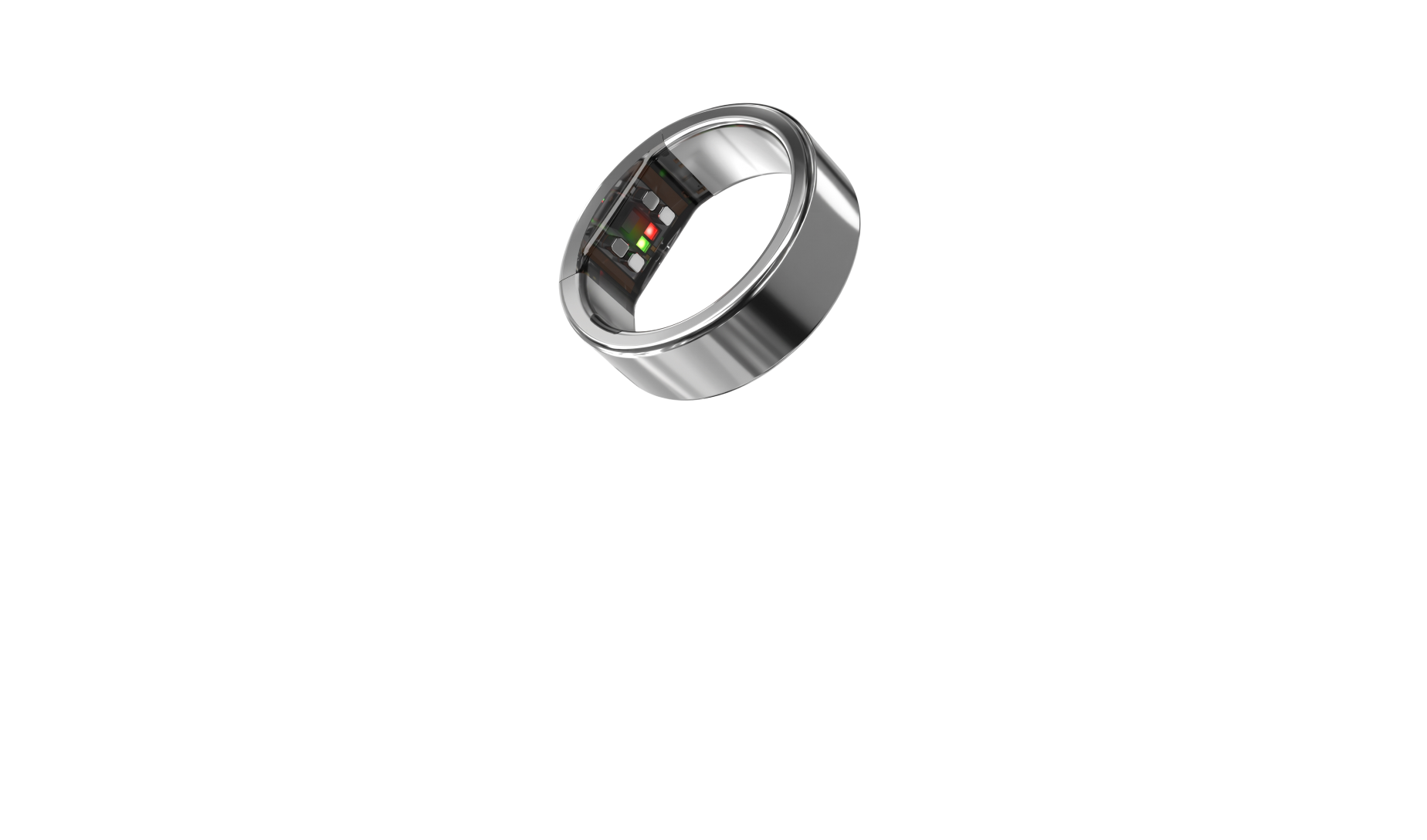
Your Ring trends run alongside them. Overnight resting heart rate, heart rate variability and skin temperature supply the weeks around a blood number that a single draw can't show. For cortisol especially, your sleep history from that week is the first place to look if a result surprises you.
Women can read the reproductive markers next to their cycle tracking in the app, which supplies the bleeding pattern FSH and estradiol need in order to mean anything.
Retest before drawing conclusions. Two panels, drawn at the same hour under the same conditions, tell you a direction that one panel can't.
Read the original research
All Studies →This explainer is based on original research by the Ultrahuman Science team. Explore the full Studies repository.
Frequently asked questions
Do I need to fast for a hormone panel?
Blood Vision schedules the Hormone Health Panel as an early morning fasted draw. Fasting matters less for the sex hormones than the hour does, but it keeps the rest of the sample comparable. Follow the app's instructions rather than improvising the timing.
Can a hormone panel tell me if I have low testosterone?
No. It gives your doctor the numbers that conversation needs. Confirming a low reading takes repeat morning samples plus your symptoms, because one afternoon value can read low in a man whose morning value is ordinary.
Is a higher testosterone number always better?
No, and this is where the panel gets over-read. Both ends of the range carry consequences, and a number pushed high by something you're taking isn't a healthy one. What matters is where you sit in your own range, with your symptoms next to it.
Can this panel diagnose PMOS?
No. Polyendocrine metabolic ovarian syndrome (PMOS), until recently called PCOS, is identified by a clinician using symptoms, imaging and blood work together. A wellness panel can't settle that question on its own.
Why did my hormone numbers change between two panels?
Often because something about the draw changed. The hour, a short night, an illness or a hard training block all move these markers. Compare panels taken at the same time of day, six to eight weeks apart.
What if a number sits well outside the range?
Take it to a physician, with the report and your symptoms. Blood Vision is built for wellness awareness, and interpreting an unusual result is clinical work.
References
- Vermeulen A, Verdonck L, Kaufman JM. A critical evaluation of simple methods for the estimation of free testosterone in serum. J Clin Endocrinol Metab 1999. PMID 10523012
- Brambilla DJ et al. The effect of diurnal variation on clinical measurement of serum testosterone and other sex hormone levels in men. J Clin Endocrinol Metab 2009. PMID 19088162
- Leproult R et al. Sleep loss results in an elevation of cortisol levels the next evening. Sleep 1997. PMID 9415946
- Orentreich N et al. Age changes and sex differences in serum dehydroepiandrosterone sulfate concentrations throughout adulthood. J Clin Endocrinol Metab 1984. PMID 6235241
- Harlow SD et al. Executive summary of the Stages of Reproductive Aging Workshop + 10: addressing the unfinished agenda of staging reproductive aging. J Clin Endocrinol Metab 2012. PMID 22344196
The Blood Vision Hormone Health Panel describes associations in blood and wellness data, not cause and effect. It is not a medical diagnosis. If a number sits well outside the usual range, or something feels off, interpret it with your physician.