





Blood Vision Inflammation Panel explained
Medically reviewed by Mukul Mittal, MD
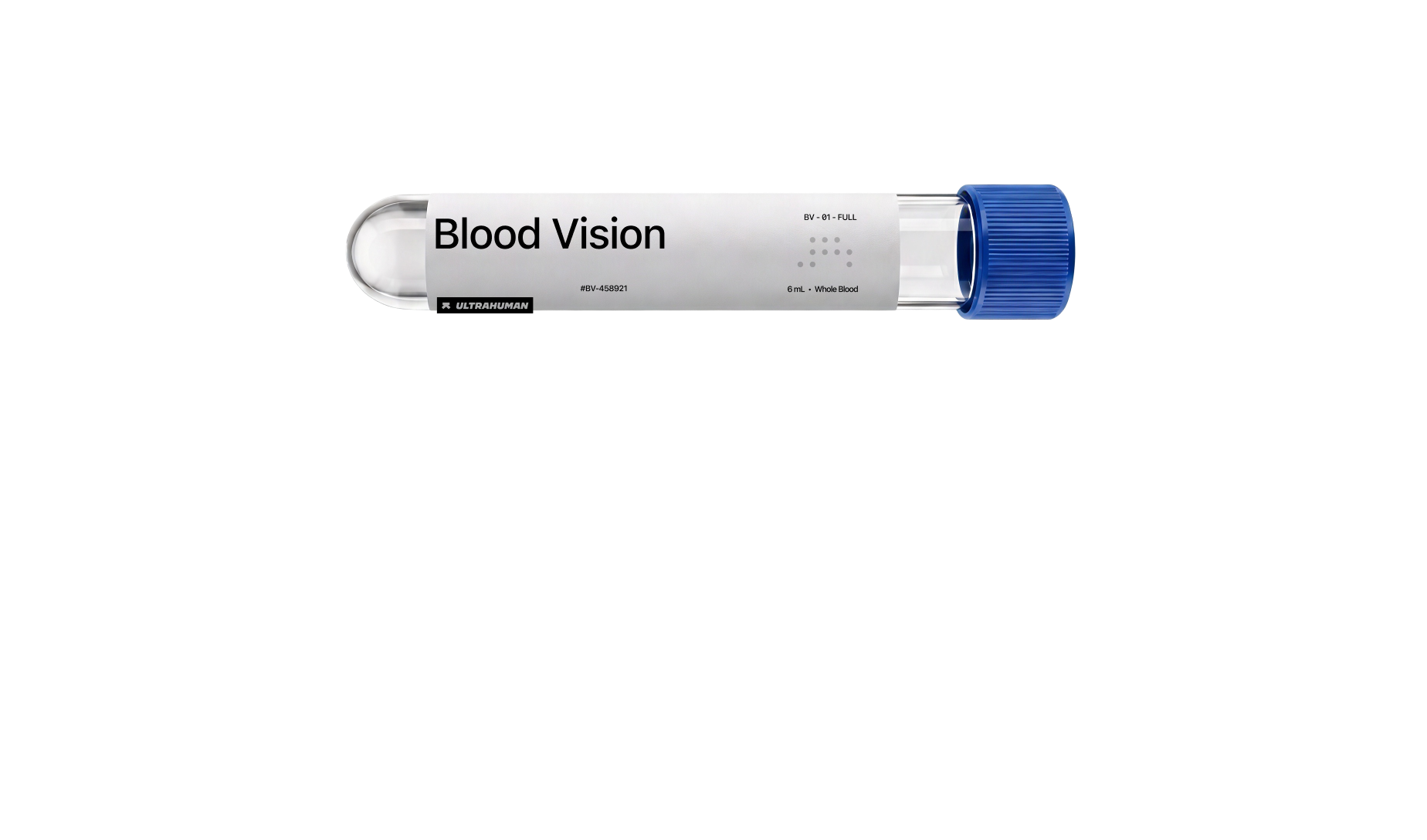
The Blood Vision Inflammation Panel reads two blood markers linked to low-grade inflammation (a raised background level that produces no symptoms at all) and vascular risk. Research links that raised level to higher long-term risk of heart disease and type 2 diabetes.
The two markers are hs-CRP and homocysteine. Both can change with habits over weeks to months, so a raised result is often something you can act on.
In this guide, we explain what each marker measures, what the research says about them, and what brings them down.
Key takeaways
The panel reads two markers: hs-CRP for general inflammation, homocysteine for a vitamin-sensitive marker linked to blood vessel risk.
Low-grade inflammation is a steady background level with no fever and no swelling, different from the sharp response to a cold or a cut.
A level that stays raised tracks with higher long-term heart and metabolic risk.
Both markers respond to exercise, body fat, sleep and diet, so the panel is an early warning you can act on rather than a fixed verdict.
The Inflammation Panel markers
Inflammation isn't one thing. When you catch an infection or cut yourself, your body mounts a sharp, short-lived response (swelling, heat, sometimes a fever) that switches off once you heal.
Low-grade inflammation is the opposite. It's a low, steady background level that never fully clears, and it produces nothing you'd notice day to day.
- hs-CRP: A protein your liver releases whenever there's inflammation anywhere in the body. A standard CRP test is built to catch the large rises of an active infection. The high-sensitivity version reads much further down, into the low range where background inflammation sits.
- Homocysteine: An amino acid your body makes as it processes protein. Folate and vitamins B12 and B6 clear it. When those run short, homocysteine builds up, and a high level is associated with disease of the blood vessels.
The two cover different ground. hs-CRP reports the general inflammatory tone of your body. Homocysteine is associated with risk to your blood vessels, and its level depends on folate and B vitamin status among other things.
What the research says about inflammation markers
Across 160,309 adults with no history of vascular disease, a three-fold higher hs-CRP was associated with roughly 37% higher risk of coronary heart disease. The same three-fold difference was associated with roughly 27% higher risk of ischemic stroke. Both figures are adjusted for conventional risk factors.
Across 30 studies covering 5,073 heart-disease events, a 25% lower homocysteine level was associated with 11% lower risk of ischemic heart disease and 19% lower risk of stroke.
Inflammation tracks blood sugar too. In a meta-analysis of 16 prospective studies, people in the top third for CRP were about 1.7 times as likely to develop type 2 diabetes as those in the bottom third. Because this link partly reflects body fat and other metabolic factors rather than CRP alone, hs-CRP is read next to your other metabolic results.
What brings these markers down
These are among the most movable numbers on a blood panel.
Across 83 controlled trials in 3,769 people, exercise training lowered CRP, with larger reductions where BMI and body fat also fell.
Losing body fat is part of that effect. A systematic review found CRP fell by about 0.13 mg/L for every kilogram of weight lost, a figure that pools surgical weight loss with diet and exercise. In the diet and exercise studies alone, the link was weaker.
Homocysteine tracks your folate and B vitamin status, so intake moves the number. Whether moving it changes heart risk is not settled by this evidence. Do not start supplements to chase a marker without speaking to a physician first.
Sleep, consistent activity and not smoking feed into both.
How to read your results in the app
hs-CRP and homocysteine each appear on your Blood Vision Inflammation Panel with their value and their trend across repeat panels.
The trend is what matters. A recent cold, a hard workout or any active flare can lift these markers for several days, so the level worth reading is the one that stays up when nothing acute is going on.
The habits that move these markers are the ones your Ring already tracks: sleep most directly, and over time in the resting heart rate and heart rate variability behind your Dynamic Recovery Score. Because inflammation sits close to how your body handles blood sugar, the panel reads best next to the Blood Vision Metabolic Panel.
Read the original research
All Studies →This explainer is based on original research by the Ultrahuman Science team. Explore the full Studies repository.
Frequently asked questions
What is the difference between CRP and hs-CRP?
They measure the same protein. A standard CRP test is designed to catch the large rises of an active infection, while the high-sensitivity assay reads the low background range that reflects long-term inflammation.
Why is homocysteine on an inflammation panel?
A high homocysteine level is associated with disease of the blood vessels, so it's read as a marker of vascular risk. It reflects a different pathway from hs-CRP, which means it adds information rather than repeating it.
Can a cold or injury affect these readings?
Yes. An infection, a recent injury, a hard workout or any acute flare can lift these markers for several days. Confirm a single raised value on a repeat panel once you're back to normal.
How quickly can these numbers change?
Over weeks to months rather than overnight. hs-CRP drifts down as activity holds and body fat falls. Homocysteine responds to folate and B vitamins. Checking a few times a year is more useful than testing often.
What besides lifestyle can raise these markers?
Ongoing infections, autoimmune and inflammatory conditions, low folate or B12, and some medications. Kidney problems, pregnancy, hormone therapy and birth control pills also move these markers. During an active infection or flare, an hs-CRP result says nothing about your background level. Because so many things feed in, a persistently raised value is a prompt to look closer with a physician rather than a conclusion on its own.
References
- Emerging Risk Factors Collaboration. C-reactive protein concentration and risk of coronary heart disease, stroke, and mortality: an individual participant meta-analysis. Lancet 2010. PMID 20031199
- Homocysteine Studies Collaboration. Homocysteine and risk of ischemic heart disease and stroke: a meta-analysis. JAMA 2002. PMID 12387654
- Lee CC et al. Association of C-reactive protein with type 2 diabetes: prospective analysis and meta-analysis. Diabetologia 2009. PMID 19326095
- Fedewa MV, Hathaway ED, Ward-Ritacco CL. Effect of exercise training on C reactive protein: a systematic review and meta-analysis of randomised and non-randomised controlled trials. British Journal of Sports Medicine 2017. PMID 27445361
- Selvin E, Paynter NP, Erlinger TP. The effect of weight loss on C-reactive protein: a systematic review. Archives of Internal Medicine 2007. PMID 17210875
Blood Vision is a wellness tool, not a diagnostic test. This article describes associations seen in research, not cause and effect, and these markers can be affected by many things at once. If a value sits well outside the usual range or something feels off, interpret your results with a physician.

