


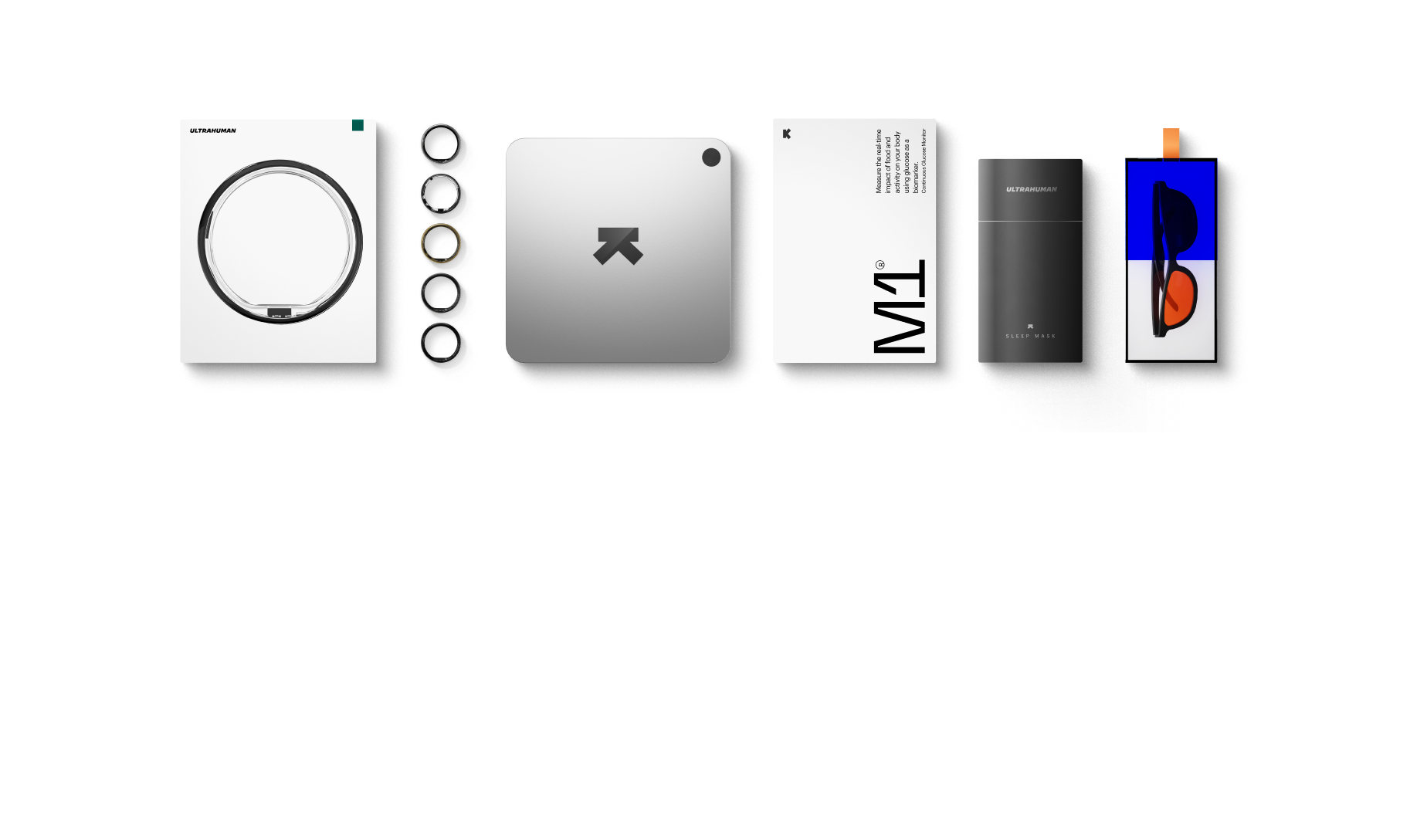

Ultrahuman M1/M2 Live real-time glucose tracking explained
Medically reviewed by Mukul Mittal, MD
M1 Live and M2 Live are Ultrahuman's real-time glucose tracking platforms.
Each is a continuous glucose monitor (CGM) that pairs with the Ultrahuman app to track glucose and turn readings into something you can act on.
In this guide, we explain how a CGM sensor works and the insights Ultrahuman offers within the app.
Key takeaways
M1 Live and M2 Live are continuous glucose monitoring platforms. The sensor is worn on the upper arm and reads glucose and sends it to the Ultrahuman app.
The sensor itself is made by Abbott. M1 Live runs on FreeStyle Libre, M2 Live on Abbott Lingo in the US.
The sensor doesn't sample blood. It reads the fluid between your cells, which trails blood by a few minutes.
What is real-time glucose tracking?
A continuous glucose monitor tracks glucose in the fluid under your skin 24/7.
It enables you to track time in range, the share of the day your glucose sits inside a target window.
The clinical convention comes from a 2019 international consensus panel, which set that window at 70 to 180 mg/dL for people living with diabetes.
Ultrahuman scores you against a tighter window of 70 to 110 mg/dL.
What is a CGM?
M1 Live runs on the FreeStyle Libre CGM, while M2 Live, the US version, runs on Abbott Lingo, which is an over-the-counter sensor that doesn’t require a prescription.
A hair-thin filament sits just under the skin of your upper arm, held by an adhesive patch. It goes in through a hollow needle that's immediately withdrawn, leaving only the filament.
One sensor runs for 14 days and isn't reusable. It's water-resistant to 1 meter for up to 30 minutes, so showering and swimming are fine.
The filament never touches a blood vessel. It sits in the fluid around your cells, where glucose arrives shortly after it reaches your blood.
Measured directly in eight healthy adults, that transfer took 5 to 6 minutes, which is why a fast spike reaches your phone slightly after your blood has done it.
Ultrahuman M1/M2 Live features
The CGM supplies a glucose reading every few minutes, which shows rises, falls, spikes, and crashes.
On its own, this data is hard to interpret, so Ultrahuman builds a number of metrics on top:
- Metabolic Score: A daily 0 to 100 score that weighs your glucose variability, your average level, and how much of the day you spent in the optimal range. It resets to 100 each midnight and moves with what you eat, how you train, how you sleep and how stressed you are. In Ultrahuman's published study of 105 adults, a higher score went with lower insulin resistance on a blood test. That link was moderate, so the score points in the right direction rather than standing in for one.
- Food Score: A 1 to 10 rating for individual foods, built from the glucose peak in the two hours after eating, the size of the change, and how long you spent above target. It shows how your own glucose responded to that food on that occasion. The same meal can move different people differently.
- Metabolic nudges: Prompts through the day based on what your glucose is doing at that moment.
- Open Glucose Database (OGDb): A public database built from 1.18 billion data points, showing how people responded to particular foods. Useful before you eat something rather than after.
- Community insights and trend correlations: How your response to a food compares with other members, and which of your own metrics move together over time.
The app also syncs with Apple Health, Google Fit, Strava, MyFitnessPal and Clue, and subscriptions include access to ACSM-certified performance coaches.
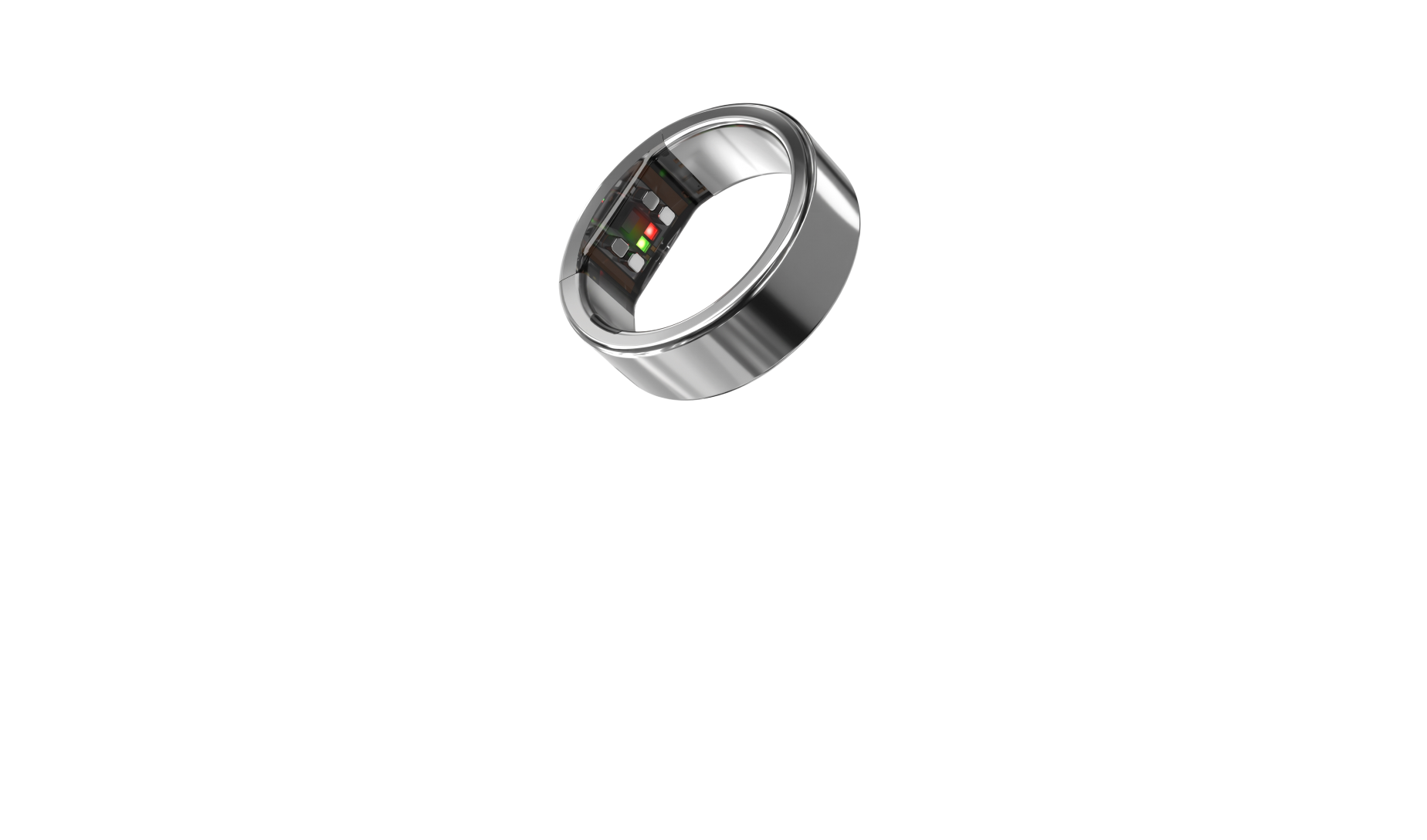
Glucose is impacted by sleep and stress, so the data is presented alongside the Ultrahuman Ring, which tracks both of these metrics to offer a fuller view of your health.
What’s a normal glucose reading?
One study tracked 153 participants without diabetes and found they typically spent 96% of the time between 70 and 140 mg/dL, sitting near 98 mg/dL. In participants over 60, it ran a little higher, near 104 mg/dL.
Another study put sensors on 57 people for two to four weeks. Among those counted as normal by standard tests, about a quarter showed a volatile glucose pattern, reaching pre-diabetic levels up to 15% of the time.
The effect of sleep is also highlighted in an Ultrahuman study. We looked at 227,860 nights from 5,859 adults wearing both the Ring and the CGM. Nights following an irregular sleep pattern ran 6.4 mg/dL higher in overnight glucose, and time in a healthy glucose range was 13.9% lower.
What Ultrahuman's data shows
Ultrahuman's published study followed 53 members without diabetes and 52 with prediabetes for 14 days.
| Group | Average glucose | Daily swing |
|---|---|---|
| Non-diabetic (53 members) | 102.4 mg/dL | 15.8% |
| Prediabetic (52 members) | 112.2 mg/dL | 17.3% |
The two groups sit about 10 mg/dL apart. Their swings are closer together, and a fasting test doesn't see those at all.
Read the original research
All Studies →This explainer is based on original research by the Ultrahuman Science team. Explore the full Studies repository.
Frequently asked questions
Do I need diabetes to use a CGM?
No. M1 Live and M2 Live are wellness products for people who want to see how food, exercise and sleep move their glucose. They don't replace care from a doctor.
Does Ultrahuman make its own sensors?
No. Both platforms use third-party Abbott sensors: FreeStyle Libre for M1 Live, and Abbott Lingo for M2 Live in the US. What Ultrahuman builds is the software layer on top.
Why does my reading differ from a finger prick?
The two measure different fluids. A prick reads blood, while the sensor reads the fluid around your cells, which glucose reaches a few minutes later. When glucose is moving fast, that gap is widest.
Is a glucose spike after eating bad?
No, it's normal. Every meal raises glucose. Watch instead for a peak that goes very high, a level that stays up for hours, or one food doing that to you every time.
What is a normal glucose range without diabetes?
In studies of people without diabetes, average glucose sits near 98 mg/dL, with most of the day between 70 and 140 mg/dL. These are reference figures from research, not a target to score yourself against. Your own baseline is the more useful comparison.
Why does my glucose rise when I haven't eaten?
Stress, poor sleep, illness and hard exercise all lift glucose without food. Your body releases stored sugar when it expects to need fuel, and the sensor records that like any meal.
How long does one sensor last?
14 days, and it isn't reusable.
References
- Battelino T et al. Clinical targets for continuous glucose monitoring data interpretation: recommendations from the International Consensus on Time in Range. Diabetes Care 2019. PMID 31177185
- Shah VN et al. Continuous glucose monitoring profiles in healthy nondiabetic participants: a multicenter prospective study. Journal of Clinical Endocrinology and Metabolism 2019. PMID 31127824
- Hall H et al. Glucotypes reveal new patterns of glucose dysregulation. PLoS Biology 2018. PMID 30040822
- Basu A et al. Time lag of glucose from intravascular to interstitial compartment in humans. Diabetes 2013. PMID 24009261
- Chaudhry M et al. Metabolic health tracking using Ultrahuman M1 continuous glucose monitoring platform in non- and pre-diabetic Indians: a multi-armed observational study. Scientific Reports 2024. PMID 38499685
- Dhawale N et al. Sleep consistency is a low-cost reliable indicator of nocturnal glycemic control: observations from 227,860 nights of real world, free-living smart ring and continuous glucose monitoring data. medRxiv 2026. DOI 10.64898/2026.03.04.26347496
Real-time glucose tracking describes associations in physiological data, not cause and effect. It is not a medical diagnosis or a substitute for clinical care. If a pattern in your glucose concerns you, bring it to your physician.