




Blood Vision Organ Health Panel explained
Medically reviewed by Mukul Mittal, MD
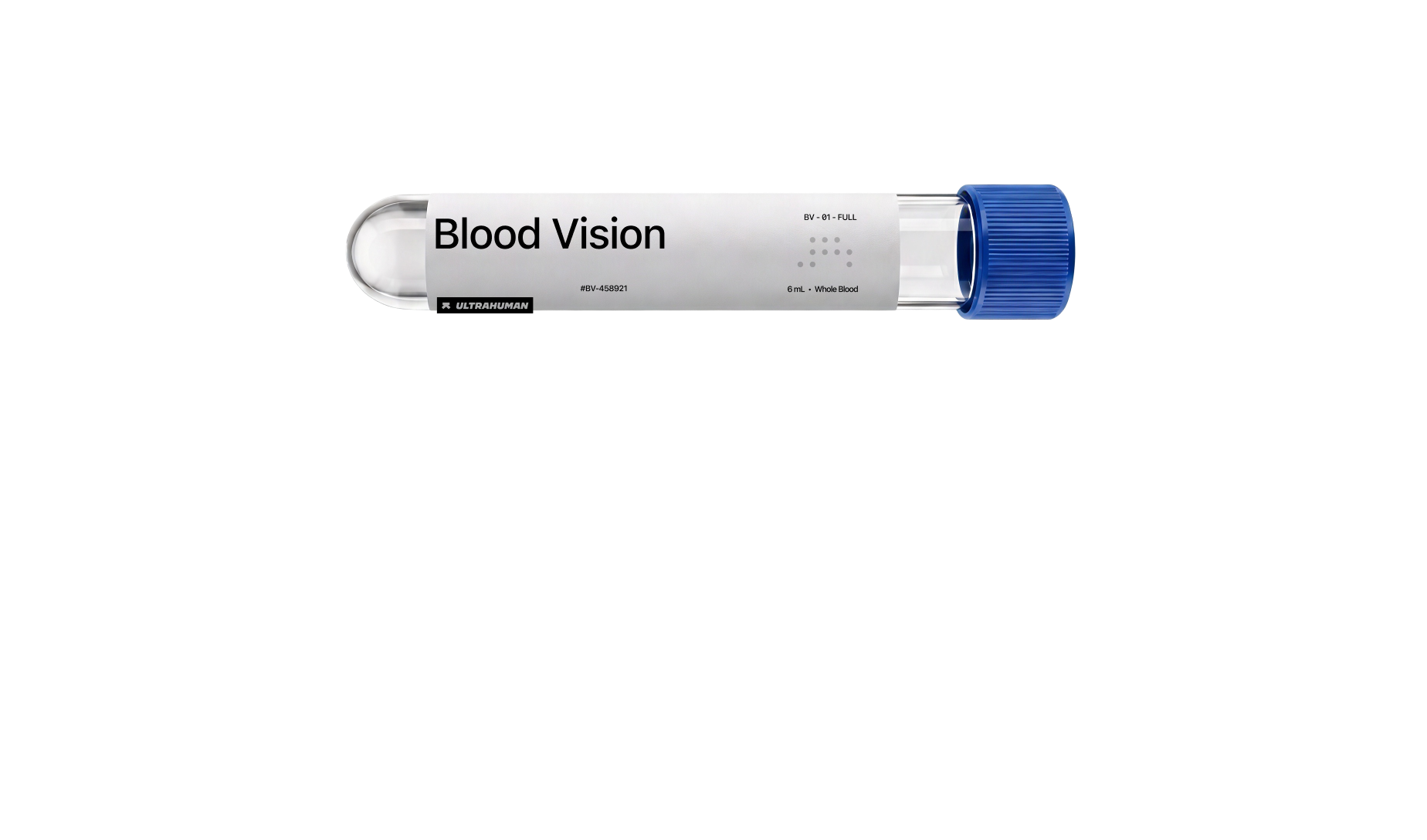
The Blood Vision Organ Health Panel from Ultrahuman measures your liver and kidney function from a single blood draw.
Your liver processes what you eat, drink, and absorb. Your kidneys clear what's left.
Neither organ tends to produce symptoms until a problem is well advanced, which is why proactively checking blood markers is the practical way to check on them.
In this guide, we explain which liver and kidney markers are measured, why they're read together, and how to analyze your results.
Key takeaways
The Organ Health Panel reads your liver and kidneys together.
Understanding how markers interact can offer more information than single numbers.
Training, alcohol, a high-protein week, and a recent infection all move these numbers, so trends can be more revealing than single numbers.
What the markers measure
The Organ Health Panel measures two different things. Liver markers are mostly enzymes that sit inside liver cells: when those cells are strained, the enzymes leak into the blood, and the level rises.
Kidney markers are mostly waste products the kidneys remove, so they rise when filtering slows. A raised liver marker and a raised kidney marker mean very different things.
Liver markers
Your liver builds proteins, handles fats and sugars, and processes alcohol and medicines.
ALT: an enzyme that sits almost entirely inside liver cells. Blood ALT is low when those cells are intact, so a raised level means cells are leaking. It doesn't mean the liver has stopped doing its job.
AST tells a similar story to ALT, but less specifically, because muscle carries AST too. A raised AST with a normal ALT often points at muscle rather than liver. An AST sitting above ALT, especially alongside a raised GGT, is the pattern alcohol tends to leave.
ALP: an enzyme linked to the bile ducts. It also comes from bone, so it can rise for skeletal reasons.
GGT: the other bile duct enzyme, and the marker most sensitive to alcohol.
Bilirubin, the pigment left over when red blood cells are recycled. The liver clears it, so bilirubin reflects clearance rather than enzyme leak. A mildly raised level in a well person usually reflects fasting or a common inherited variant rather than a liver problem.
Albumin and total protein, two proteins reported together. Albumin is made by the liver. Total protein also includes immune proteins, so it is not a pure liver marker. Albumin and bilirubin come closest to showing whether the liver is working, rather than whether it is irritated.
Kidney markers
Your kidneys are the filter, pulling waste and surplus water out of the blood.
Creatinine: waste your muscles produce at a steady rate, which the kidneys almost entirely remove. It rises when filtering slows, but also when you simply have more muscle making it, which is why an athlete's creatinine can sit above the range with nothing wrong. Low isn't automatically better either: a creatinine near the floor can reflect low muscle mass.
eGFR: an estimate of how fast your kidneys filter. It isn't measured directly. It's calculated from creatinine, age and sex, so it inherits every quirk creatinine has.
Urea: waste left after your body breaks down protein. Unlike creatinine, it's partly reabsorbed along with water, so it climbs when you're dehydrated. When urea rises and creatinine holds steady, the likely explanation is fluid balance rather than filtering.
Uric acid: waste from purines, found in food and in your own cells. The kidneys clear it, but it tracks diet and metabolism as closely as it tracks filtering.
Electrolytes: sodium, potassium and chloride, which the kidneys balance alongside fluid.
What can elevate liver and kidney markers
If Blood Vision flags an elevated marker, these are the factors that could be behind it. Always discuss results with your doctor:
| Marker | What can lift it |
|---|---|
| ALT | Extra liver fat, alcohol, some medicines |
| AST | Hard or unfamiliar training |
| ALP | Bone growth or healing, pregnancy |
| GGT | Alcohol, some medicines |
| Bilirubin | Fasting, a common inherited variant |
| Creatinine | More muscle, creatine supplements, a big meat meal |
| Urea | Dehydration, a high-protein diet |
| Uric acid | Alcohol, rich food, weight gain |
Why liver and kidney markers are read together
One elevated marker on its own can be ambiguous, which is why a full panel can be more revealing.
Take a raised creatinine, for example. It could mean your kidneys are filtering more slowly. It could equally mean you've gained muscle, started a creatine supplement, or eaten a lot of red meat before the draw. If urea has risen alongside it, dehydration or filtering is the likelier story. If urea hasn't moved and you've been training hard, muscle is.
The liver works the same way. A slightly raised ALT with normal albumin, bilirubin and GGT points to short-term irritation: a heavy weekend, or a new medicine. That same ALT with GGT and bilirubin also raised is a different picture, and one to take to a doctor.
So getting a full panel of kidney and liver markers offers more information about your health.
How to read your results in the app
Your results arrive in the Ultrahuman app grouped as panels rather than one long list.
Each marker carries its value, its reference range, and a short explanation of what it does. Liver and kidney markers sit together, so related markers are in view when one is flagged. Draw the panel again, and the app plots the trend.
The Blood Vision metabolic panel covers how your body handles blood sugar, the inflammation panel covers low-grade inflammation, and the thyroid panel covers the hormones setting your metabolic pace.
Read the original research
All Studies →This explainer is based on original research by the Ultrahuman Science team. Explore the full Studies repository.
Frequently asked questions
What counts as a normal ALT range?
Most labs print an upper limit near 40 U/L for men and 30 U/L for women. Research on healthy blood donors puts the limit lower, at 30 U/L and 19 U/L. Ranges differ by lab and assay, so read your result against the range on your own report.
Does a high-protein diet or a creatine supplement raise creatinine?
Both can. Creatine converts to creatinine, and a large meat meal adds some. In a 12-week trial, creatine didn't change directly measured filtration in trained men eating a high-protein diet. If you supplement, mention it before anyone reads your eGFR.
What does the urea-to-creatinine ratio mean?
It compares two waste products that behave differently. Urea is partly reabsorbed with water; creatinine mostly isn't. A ratio that rises while creatinine stays put often points to fluid balance or protein intake rather than the kidneys.
Why might my eGFR read low when I feel completely fine?
eGFR is calculated from creatinine, so anything that lifts creatinine drags the estimate down. More muscle, creatine and a heavy training block all qualify. A cystatin C measurement sidesteps the muscle problem.
What moves uric acid levels?
Alcohol, purine-rich food such as red meat and shellfish, sugary drinks and weight gain all push it up. Hydration and dietary change pull it back. It's one of the more responsive markers here, so one high reading after a heavy weekend isn't a pattern.
How often is it useful to repeat the panel?
Once or twice a year suits most people, sooner if you've changed something and want to see whether it landed. A repeat draw a few weeks after a surprising result tells you whether the surprise was real.
References
- Prati D et al. Updated definitions of healthy ranges for serum alanine aminotransferase levels. Ann Intern Med 2002. PMID 12093239
- Lugaresi R et al. Does long-term creatine supplementation impair kidney function in resistance-trained individuals consuming a high-protein diet? J Int Soc Sports Nutr 2013. PMID 23680457
- Inker LA et al. New creatinine- and cystatin C-based equations to estimate GFR without race. N Engl J Med 2021. PMID 34554658
The Blood Vision Organ Health Panel describes associations in lab data, not cause and effect. It is not a medical diagnosis. If a marker sits well outside the usual range or keeps drifting, bring the panel to your physician.
