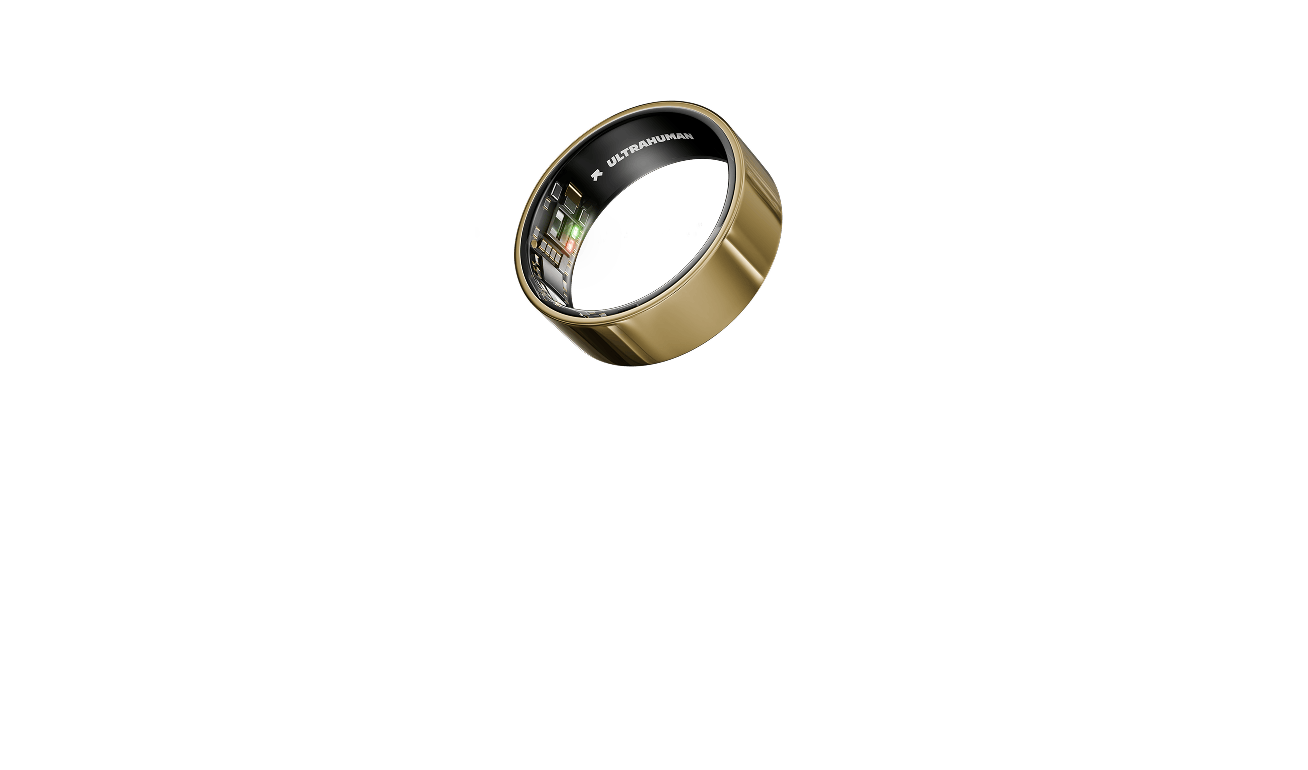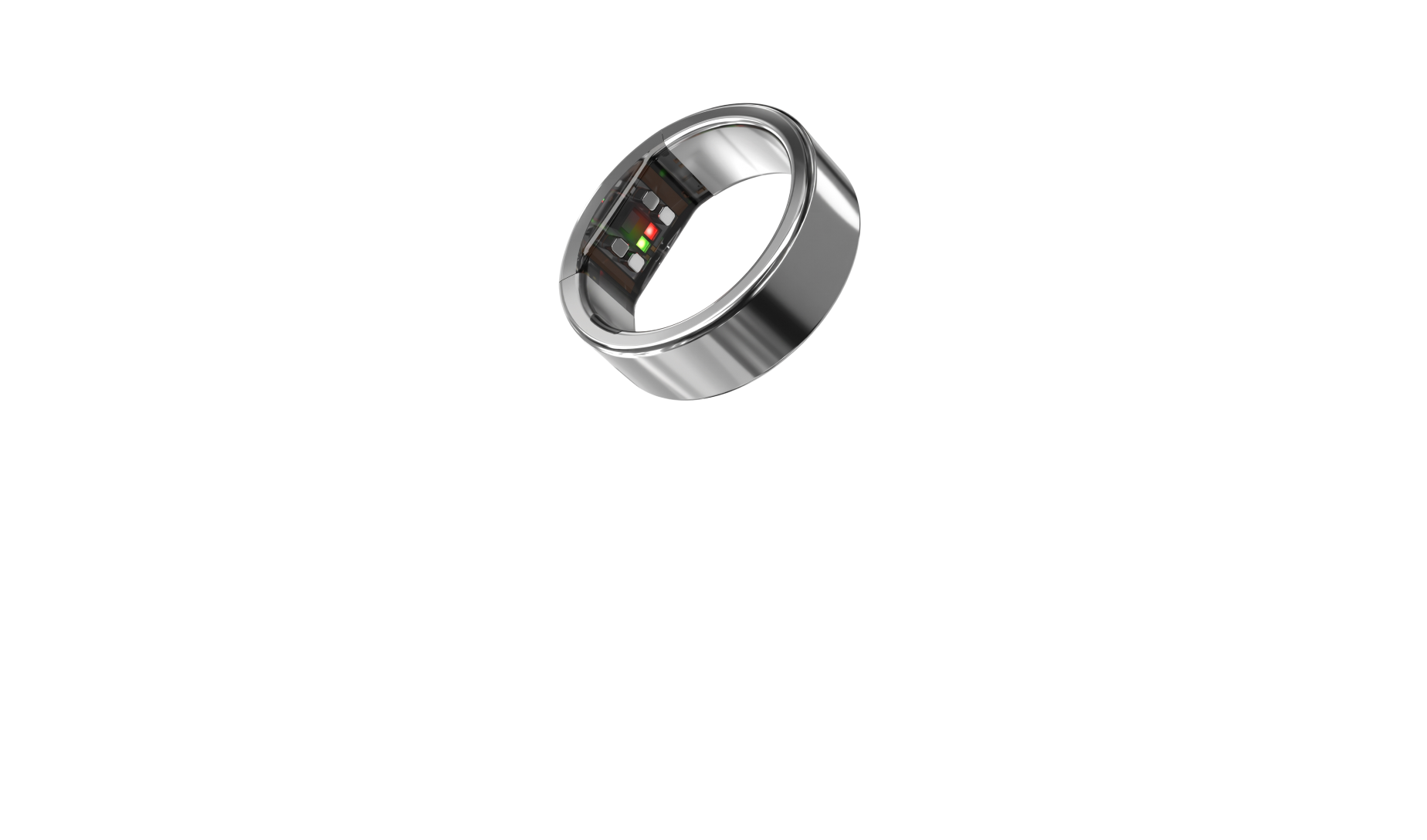
Ring PROEntwickelt für mehr Intelligenz und Leistung bei jedem Abenteuer.
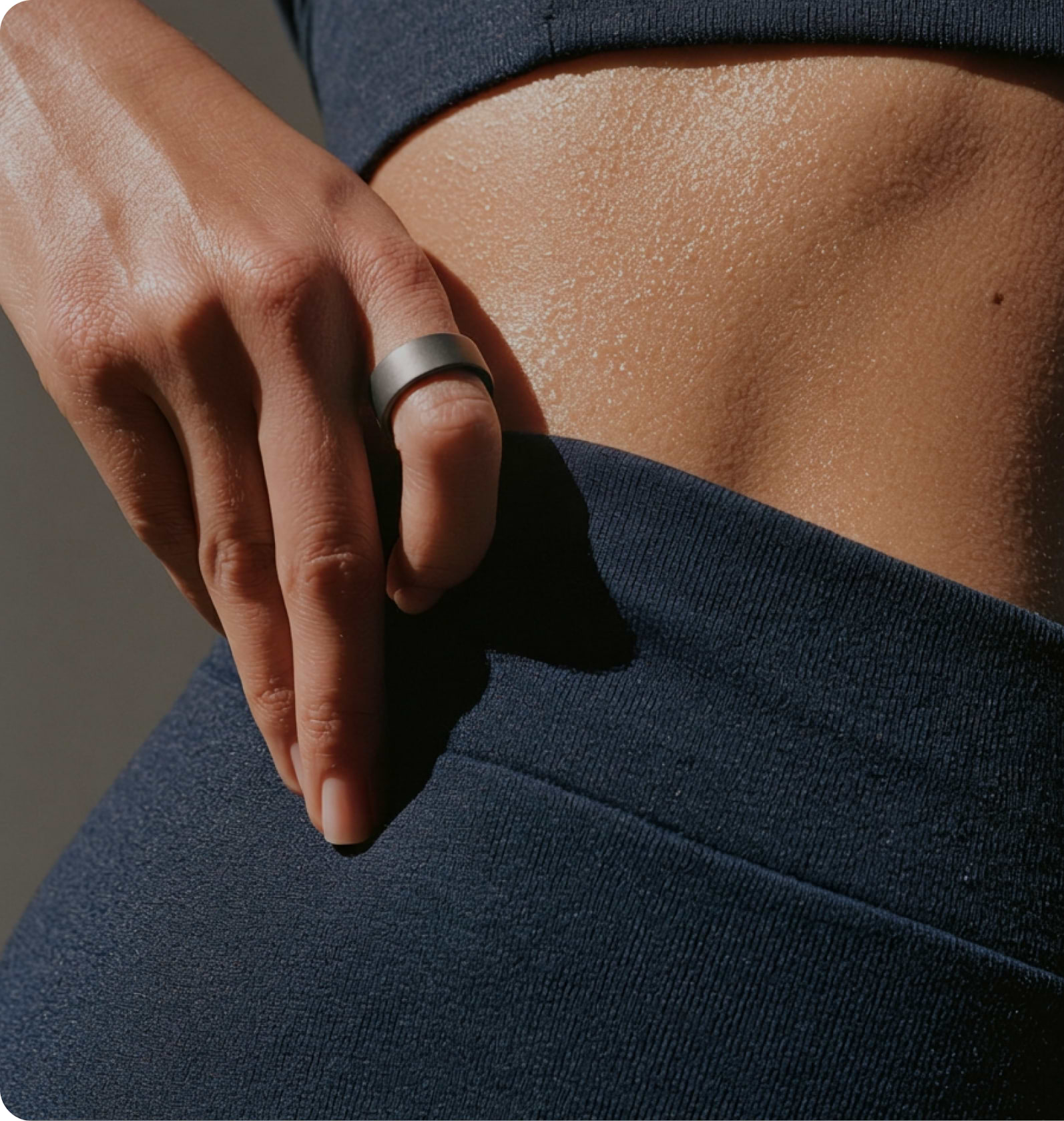
One ring reads your heart rate, HRV, movement and skin temperature around the clock, and explains what they mean for your sleep, fitness, recovery, women’s health and longevity. No screen, no subscription.
How it works
The Ring reads your body day and night, compares every reading with your own baseline, and tells you what changed and why.
The Ring continuously reads your body day and night. Every reading is held against your own baseline, so you see what changed, and why.

No screen. No buzzing. Light enough to sleep in, which is the point: sleep is when the Ring reads you best. Every night it gets the same conditions – you’re still, at rest, and asleep at roughly the same time, making the only variable your body itself.

Every score opens into the signals behind it. Recovery dips and you see exactly which one moved: heart rate, HRV, temperature or last night’s sleep. Each one is measured against your own baseline, not a population average.

Every score comes with timing you can use. When to have your last coffee. When to get morning light. When to push and when to ease off. None of it is a big shift – small changes that compound, week by week.
Sleep, fitness, heart and recovery, women’s health and longevity, and PowerPlugs that go deeper. All read from the same few signals, explained down to the science.
Sleep, fitness, heart and recovery, women’s health and longevity, and PowerPlugs that go deeper. All read from the same few signals, explained down to the science.
Through the night, the Ring reads your heart rate, beat-to-beat variation, movement and finger temperature. From those signals it maps your sleep stages and scores the night on duration, efficiency, restorative sleep, timing and overnight vitals.
Through the night, the Ring reads your heart rate, beat-to-beat variation, movement and finger temperature. From those signals it maps your sleep stages and scores the night on duration, efficiency, restorative sleep, timing, and overnight vitals.
Sleep has several parts, and each one affects how you feel the next day: how long you slept, how unbroken it was, how much was Deep and REM, whether bedtime held steady, and how calm your heart and temperature stayed. The Sleep Index weighs them together, so you can see which one is holding you back.
You cycle through light, deep and REM roughly every 90 minutes. Deep sleep lands early, when your body does most of its physical repair. REM builds toward morning and locks in memory. The Ring estimates each stage from shifts in your pulse, movement and temperature, so you can see whether you got enough of the sleep that matters most.
Within the first hour of sleep, your body sheds heat through your hands and your finger warms by about 3°C. After that, a fraction of a degree off your usual night is enough to point to illness, alcohol, hard training or where you are in your cycle.
Caffeine keeps you alert by blocking adenosine, the chemical that builds your urge to sleep across the day. Its half-life is about five hours, so an afternoon coffee is still working at bedtime. The Caffeine Window PowerPlug uses your sleep timing to estimate how late you can drink and still clear it before bed with optimal consumption windows.
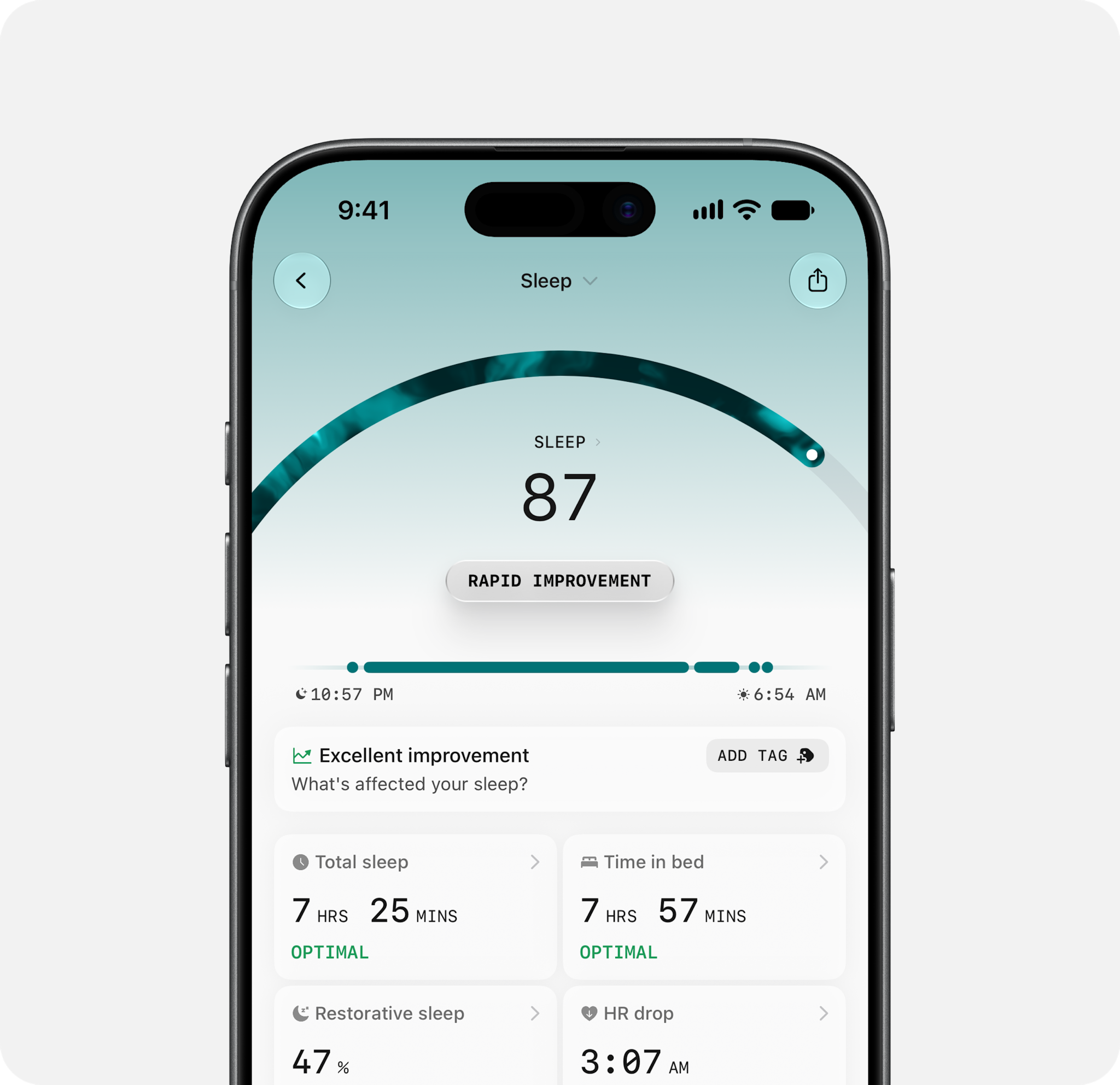
Five things decide how a night lands the next day, and they rarely move together – how long, how well, how much was REM and Deep. The Sleep Index weighs them as one score, so you can see which is holding you back.
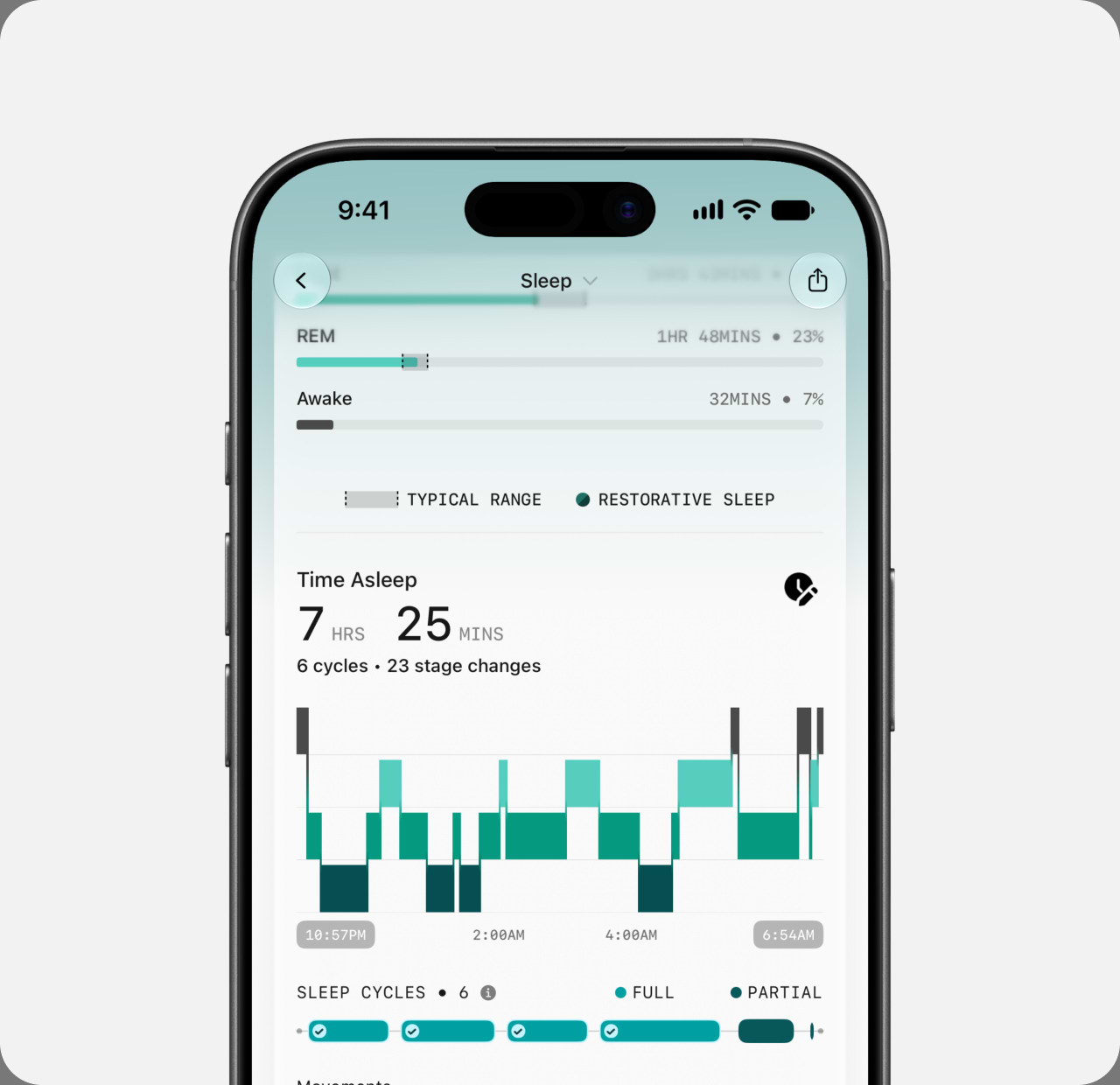
You cycle through light, deep and REM roughly every 90 minutes: deep early for physical repair, REM toward morning to lock in memory. The Ring estimates each from your pulse, movement and temperature.
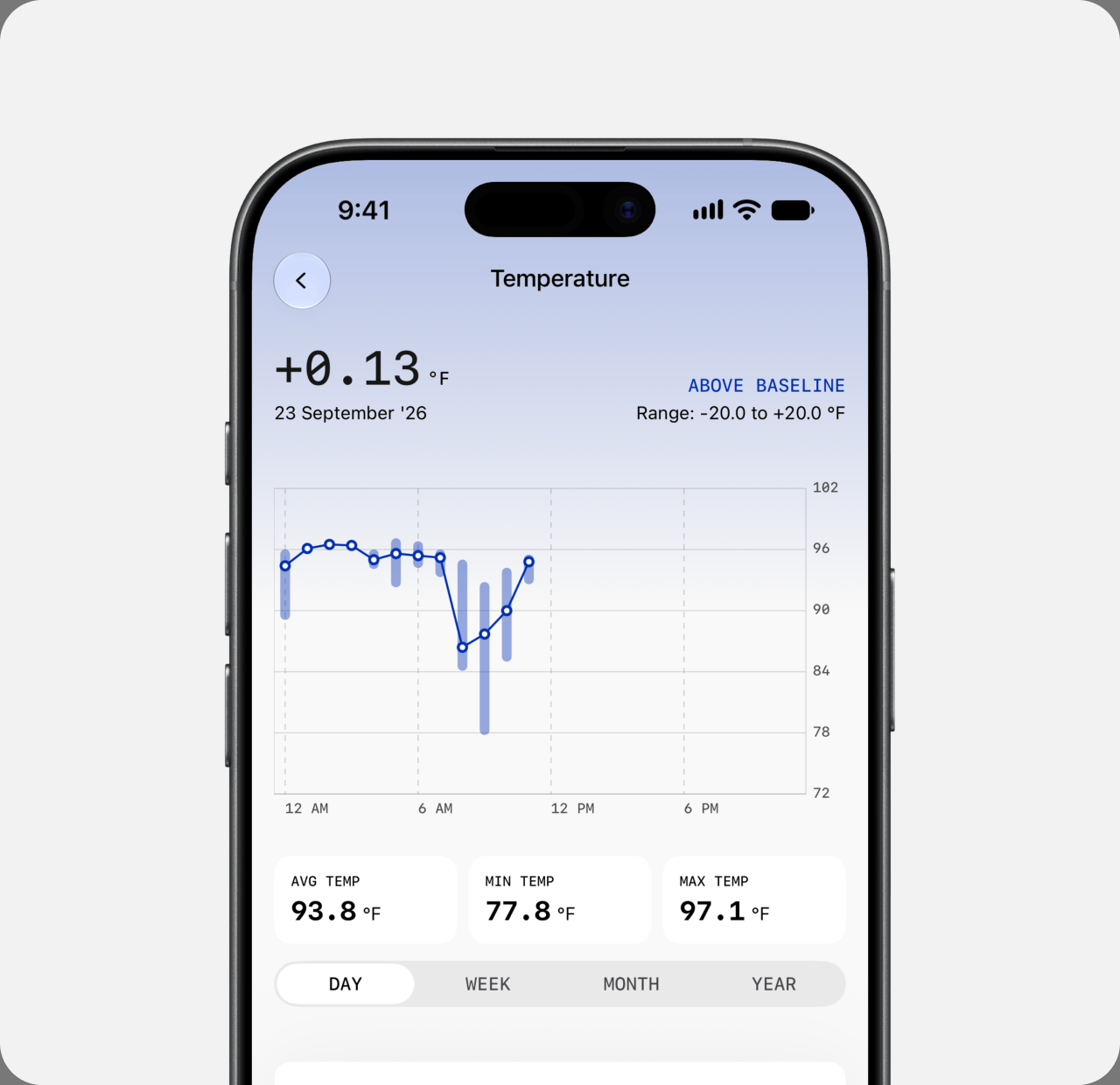
Within the first hour of sleep, your body sheds heat through your hands and your finger warms by about 3°C. After that, a fraction of a degree off your usual night is enough to point to illness, alcohol, hard training or where you are in your cycle.
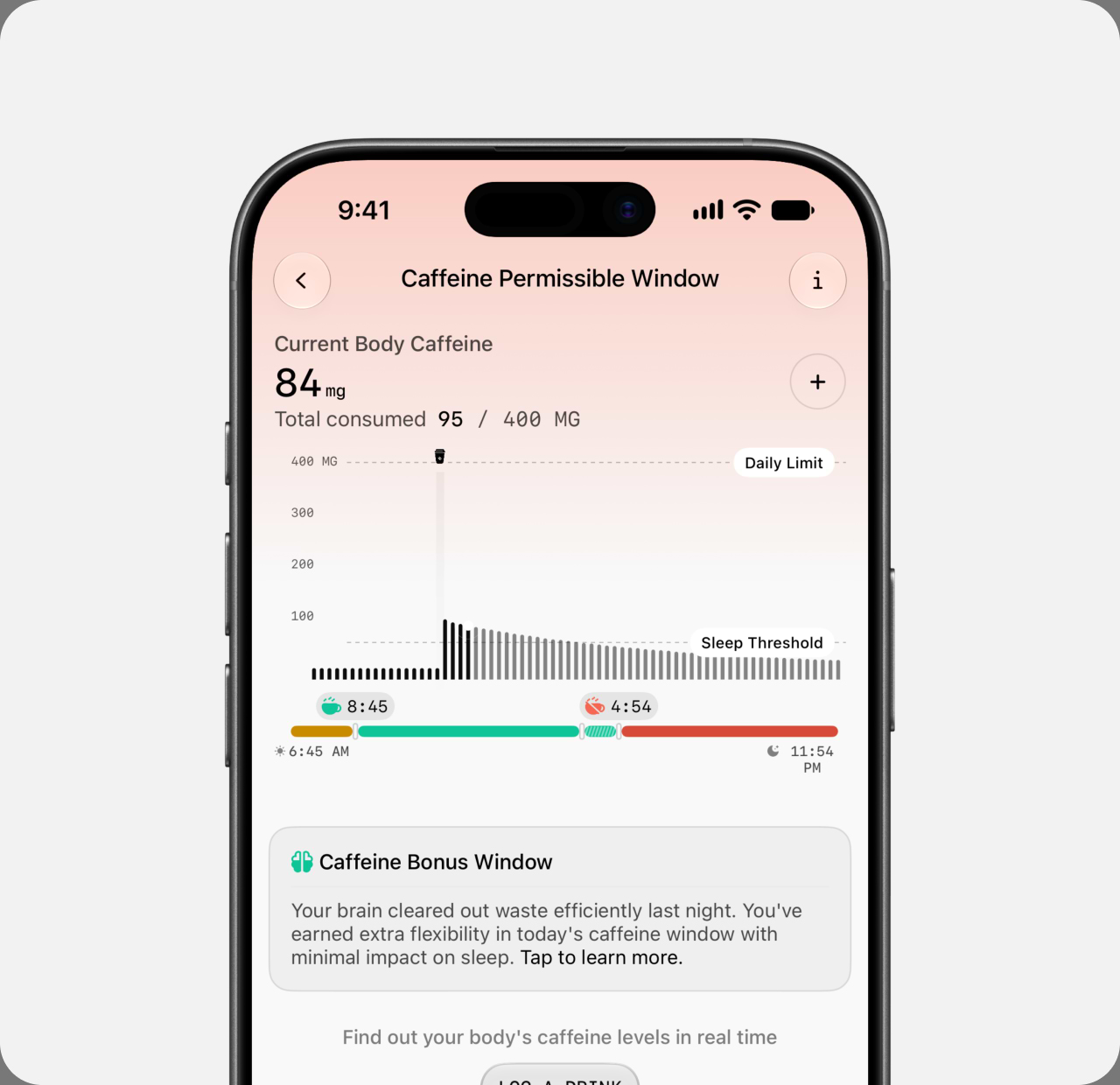
Caffeine blocks adenosine, the chemical building your urge to sleep, and its half-life is about five hours. The Caffeine Window PowerPlug uses your sleep timing to set your optimal consumption windows for better quality of sleep.
Steps are only part of the picture. The Ring reads how much you move, how evenly you spread it across the day, and how often you train – scoring all three together for a complete picture.
Steps are only part of the picture. The Ring reads how much you move, how evenly you spread it across the day, and how often you train – scoring all three together for a complete picture.
A morning run doesn’t cancel eight hours in a chair. A long bike ride barely registers as steps. Each of these counts for something different, and a single number can hide the gap between them. The Movement Index scores them separately and together, so a strong habit can’t cover for a weak one.
People who walk 7,000 steps or more a day have about a 31% lower risk of depression. The hours between those steps matter too. Long stretches of sitting slow how well your muscles clear sugar from your blood after a meal and short walks spread through the day can flatten that spike.
Different intensities train different things. Easy, conversational effort builds your aerobic base. Brief, near-maximal work raises your ceiling. Most sessions end up somewhere in between: too hard to recover from quickly, too easy to build much. Zones show you exactly where your time actually went, so you can build a routine that yields results.
Most of the energy you burn has nothing to do with your workout. The biggest share goes to keeping you alive at rest. Then everyday movement like walking and standing, then exercise, then digesting food. Total Daily Energy Expenditure (TDEE) adds all of it up, so the number you see reflects your whole day, not just the hours you trained.
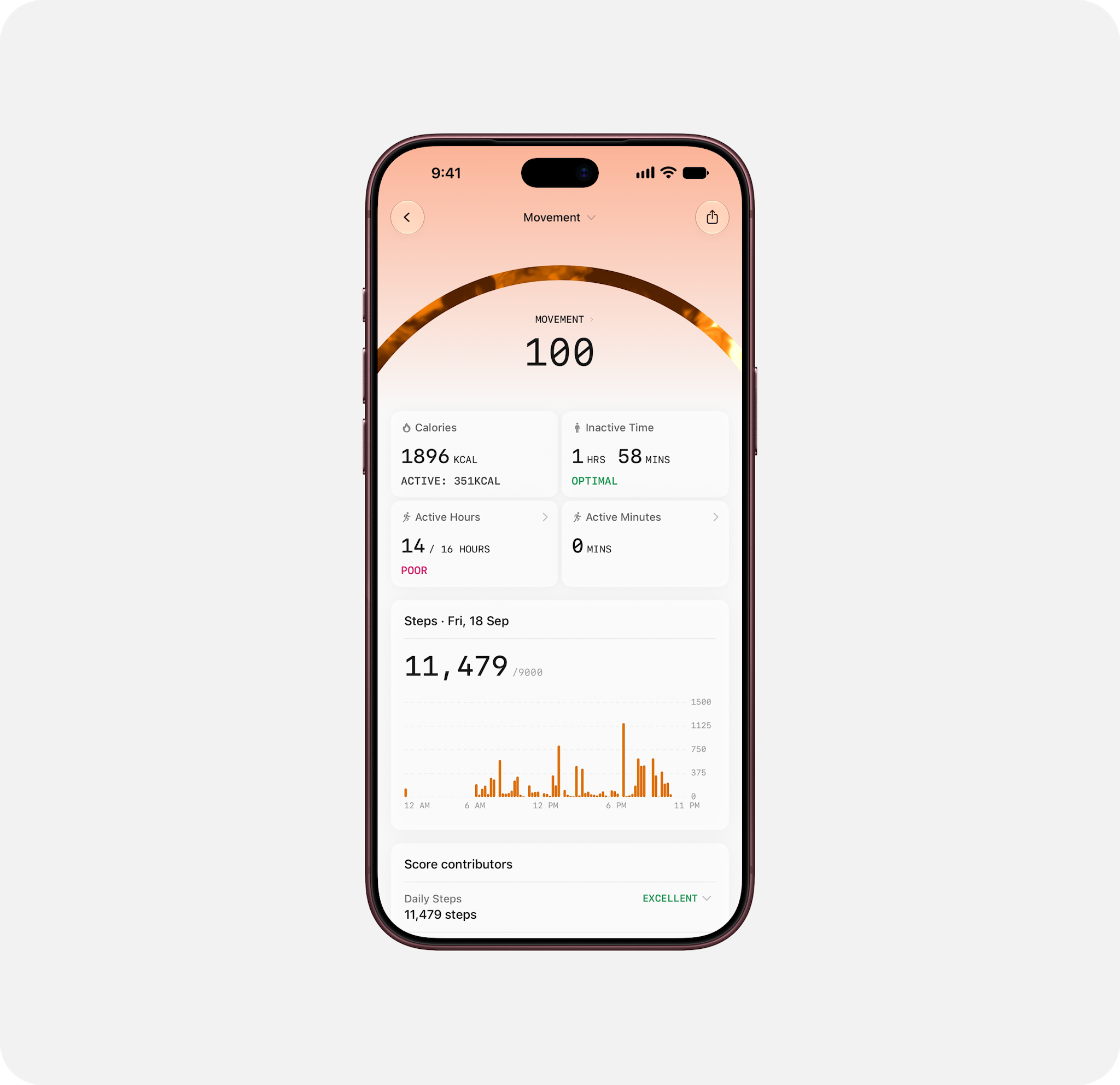
A morning run doesn’t cancel eight hours in a chair, and a long bike ride barely registers as steps. The Movement Index scores them separately and together, so a strong habit can’t cover for a weak one.
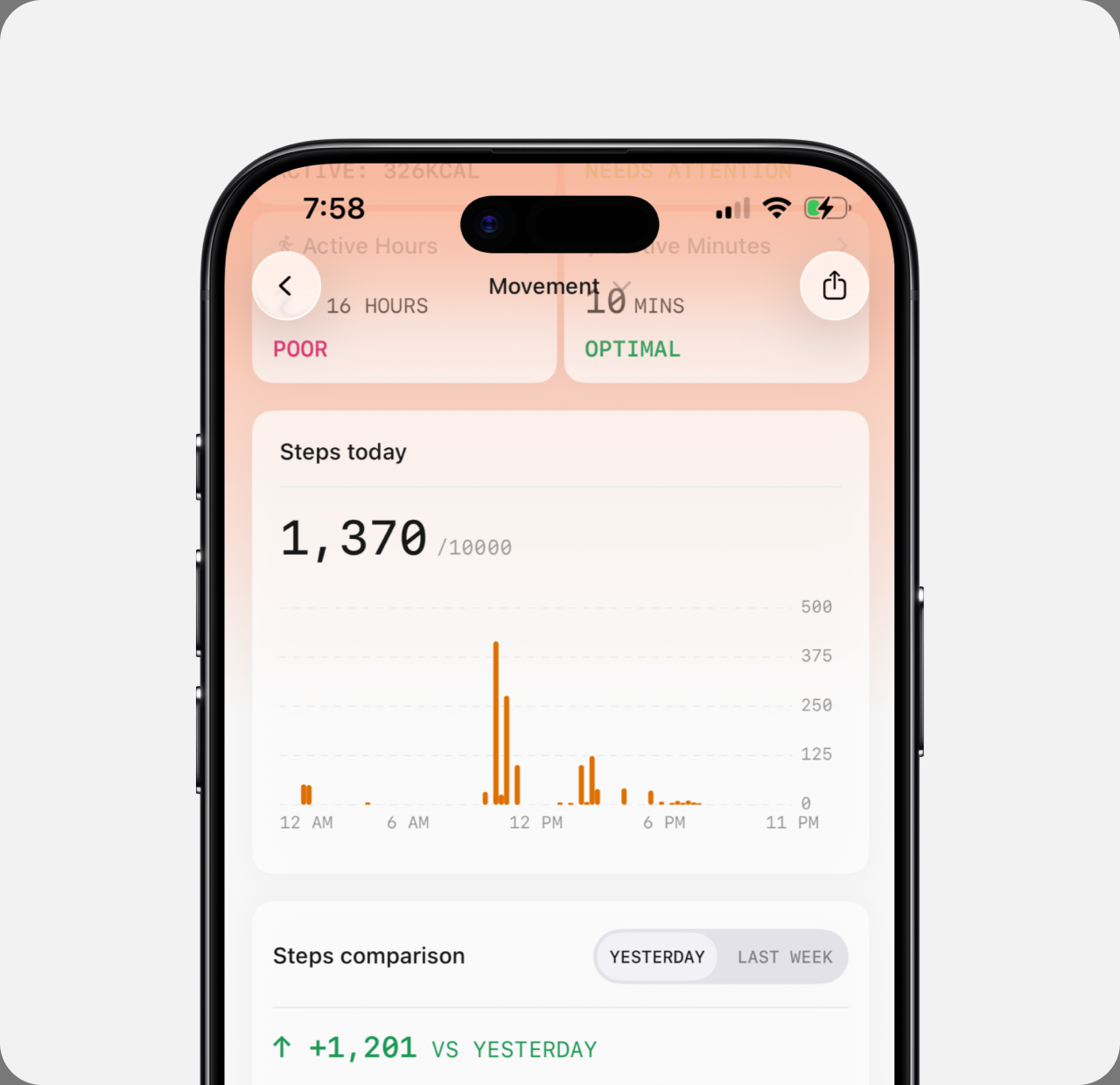
Walk 7,000 steps or more a day and your risk of depression is about 31% lower. The hours between matter too: long stretches of sitting slow how your muscles clear sugar, and short walks flatten the spike.
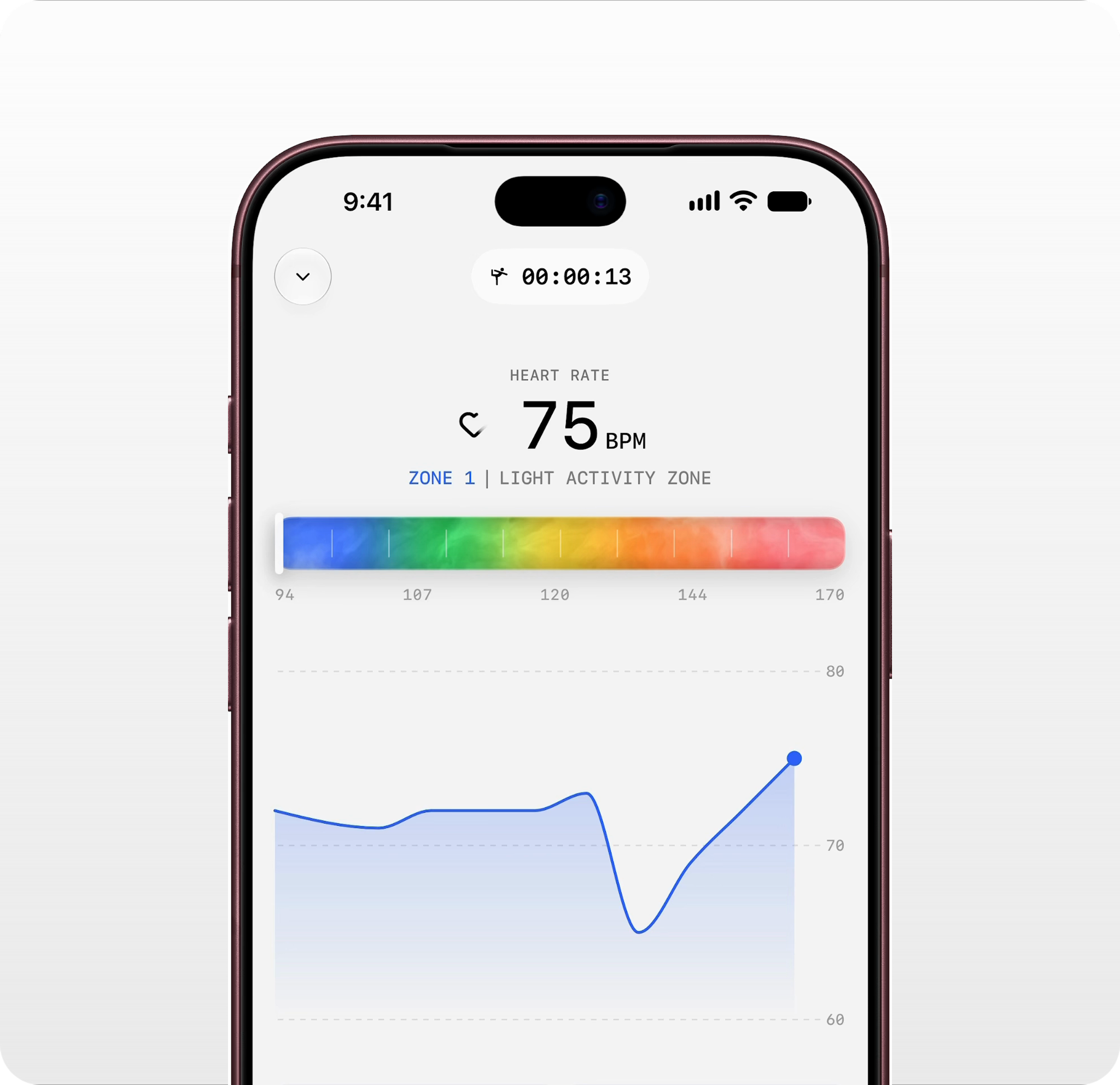
Easy effort builds your aerobic base, near-maximal work raises your ceiling, and most sessions land in between – too hard to recover from quickly, too easy to build much. Zones show exactly where your time actually went.
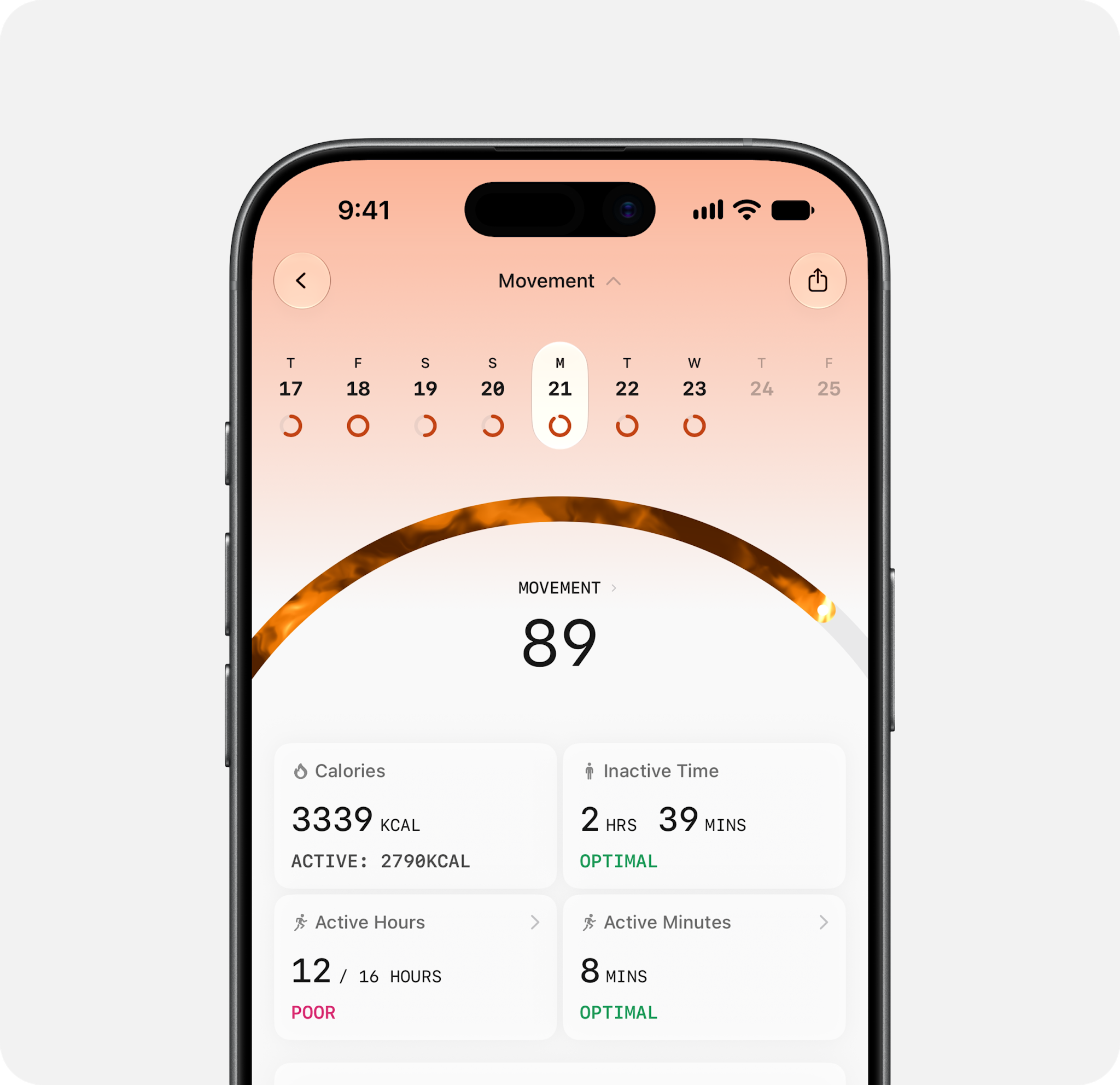
Most of what you burn has nothing to do with your workout: rest first, then everyday movement, then exercise, then digestion. Total Daily Energy Expenditure (TDEE) adds it all up, so the number reflects your whole day.
Your heart tells you how rested you are. The Ring reads it overnight, when conditions are most repeatable, and compares each night against the range it has learned from your own.
Your heart tells you how rested you are. The Ring reads it overnight, when conditions are most repeatable, and compares each night against the range it has learned from your own.
Hard training, short sleep, alcohol, illness all add load, and your nervous system registers it before you feel it. Rises in RHR, dips in HRV, and temperature drifts – recovery reads these three against your normal and tells you whether today is a day to push or to pause.
The tiny changes in timing between heartbeats come from your nervous system constantly adjusting. More variation usually means you’re in rest-and-recover mode. Healthy ranges differ widely from person to person, which makes the comparison worth having against your own trend and baseline.
Resting Heart Rate (RHR) is what your heart costs you at rest. As you get fitter, it moves more blood with every beat, so it can do the same job on fewer beats – which is why a falling resting heart rate over weeks is one of the clearest signs that training is working. Avoid alcohol, late meals, heat, and stress as these can push it up for a night or two.
Fighting an infection raises your body temperature and makes your heart work harder. These shifts often show up overnight, before you feel unwell. If your resting heart rate goes up, your HRV comes down and your temperature sits above your baseline, all on the same night, that’s your cue to rest.
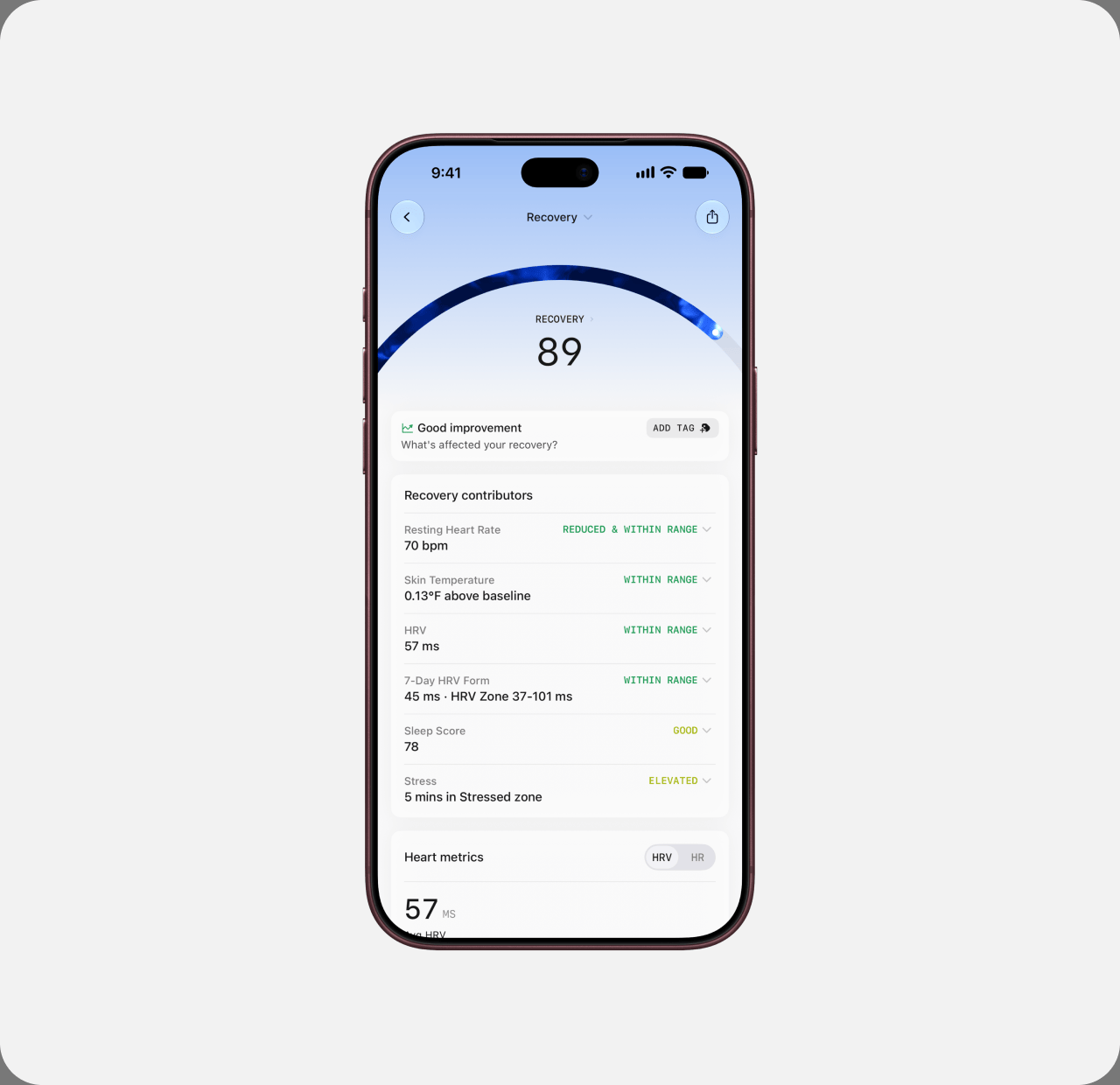
Hard training, short sleep, alcohol, illness all add load, and your nervous system registers it before you feel it. Rises in RHR, dips in HRV, and temperature drifts – recovery reads these three against your normal and tells you whether today is a day to push or to pause.
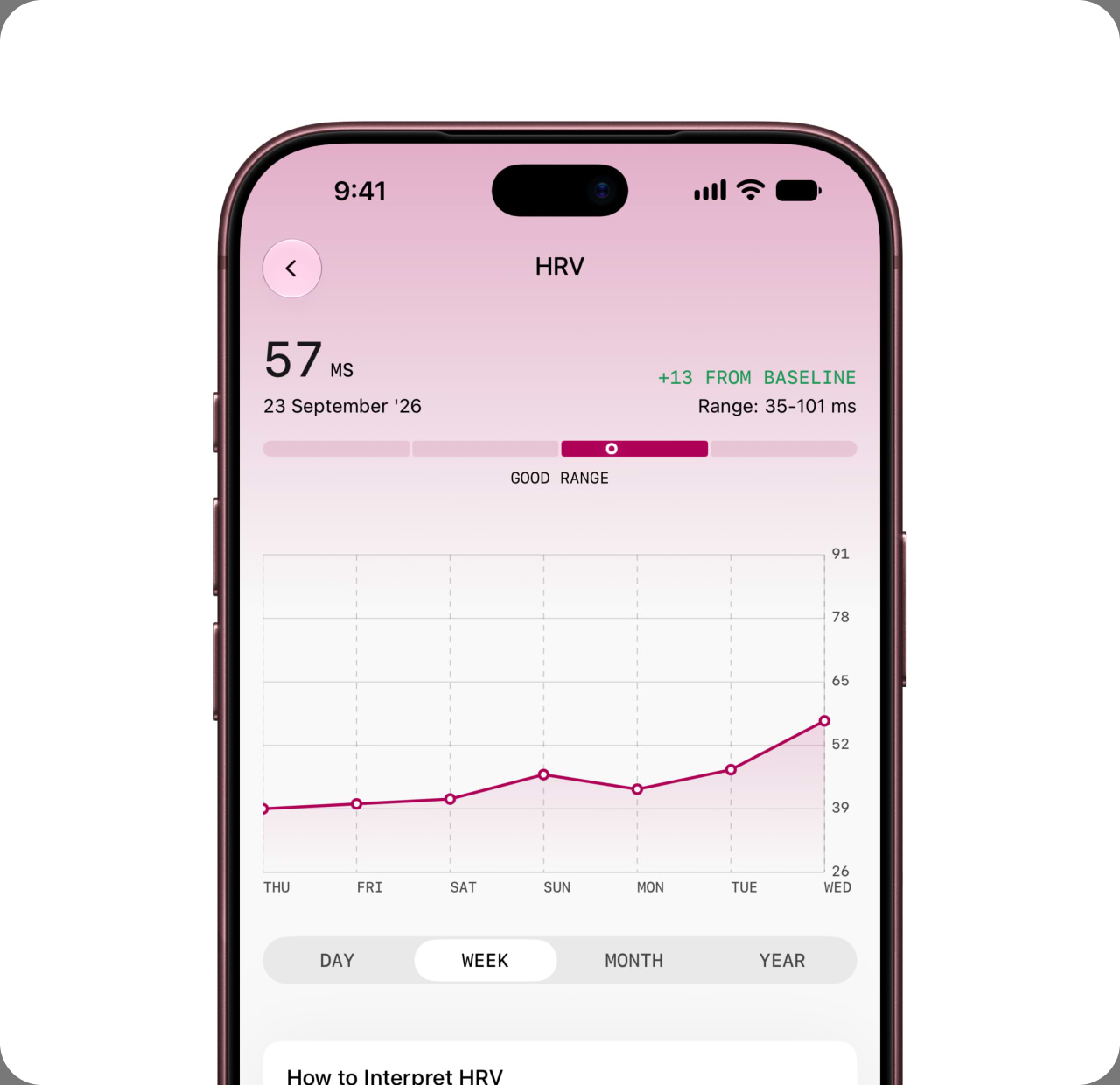
The tiny shifts in timing between beats come from your nervous system adjusting, and more variation usually means rest-and-recover mode. Ranges differ widely between people, so what matters is your own trend.
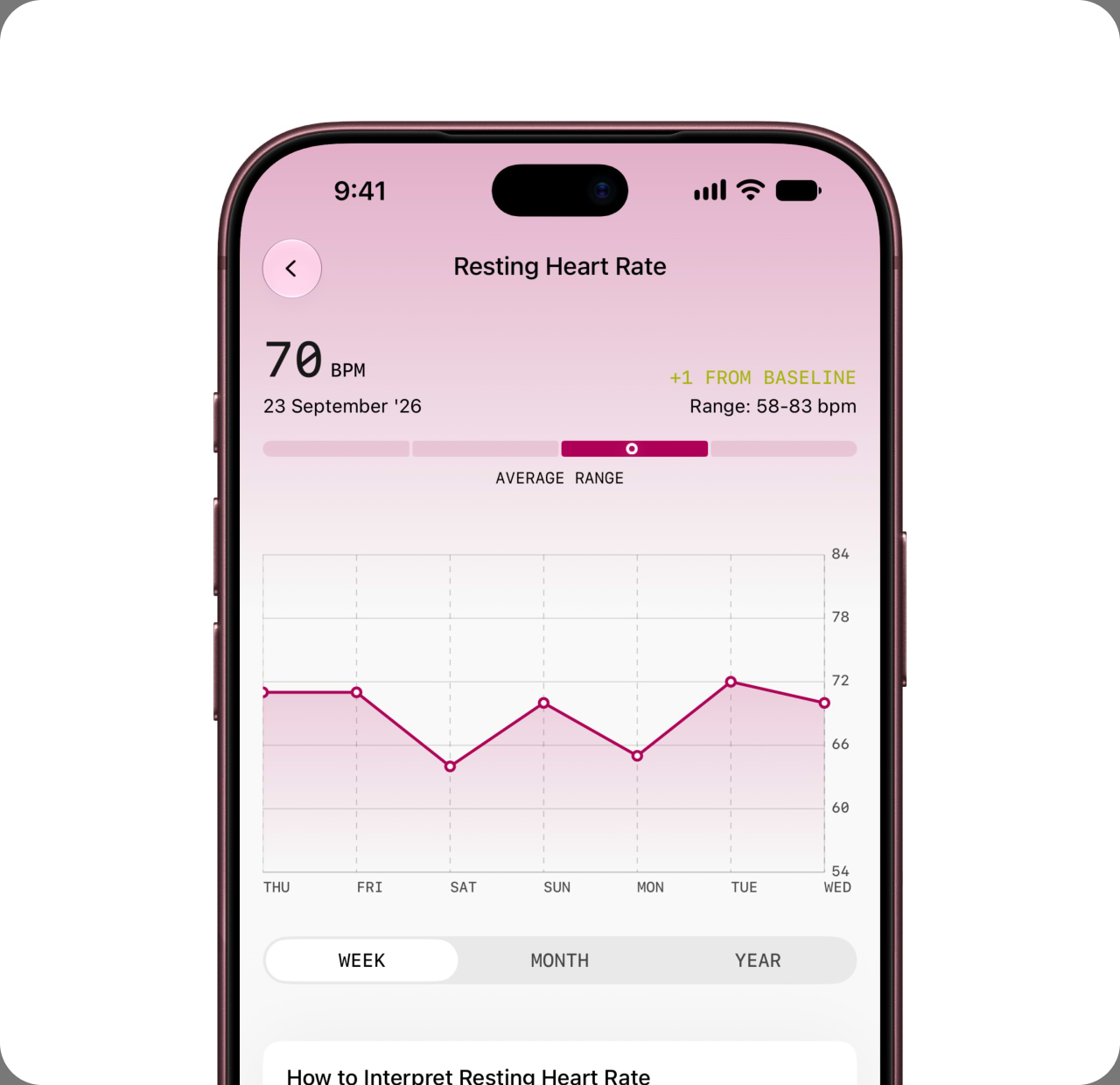
RHR is what your heart costs you at rest. Get fitter and it needs fewer beats, which is why a fall over weeks is one of the clearest signs training is working. Alcohol, late meals, heat and stress push it up for a night or two.
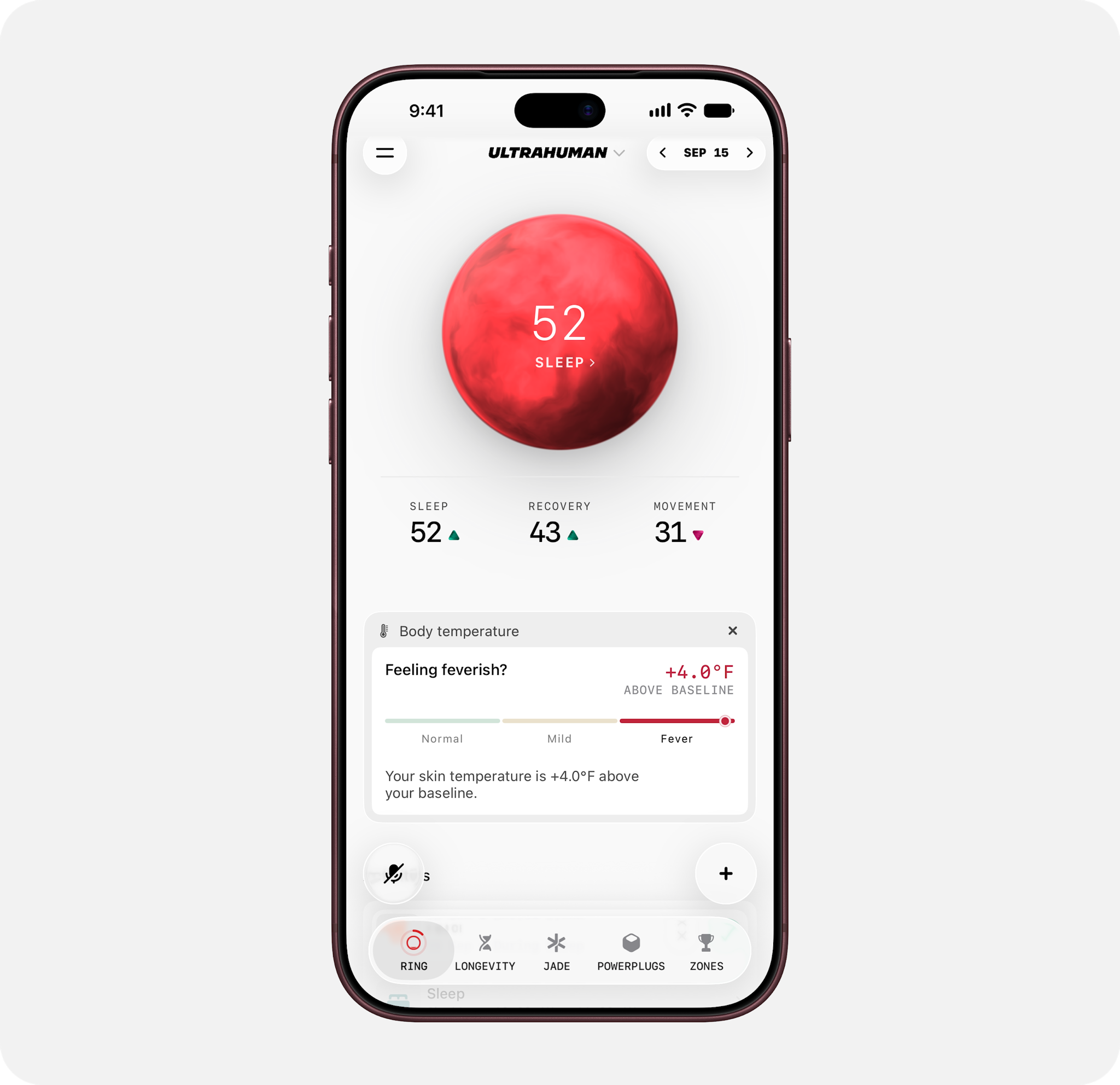
Infection raises your temperature and makes your heart work harder, often overnight before you feel unwell. RHR up, HRV down, and temperature above baseline, all in one night? That’s your cue to rest it out.
Across your cycle, temperature, resting heart rate and HRV all shift. The Ring reads all three overnight against your own 30-day baseline, so it follows your cycle rather than a textbook one, including irregular cycles.
Across your cycle, temperature, resting heart rate and HRV all shift. The Ring reads all three overnight against your own 30-day baseline, so it follows your cycle rather than a textbook one, including irregular cycles.
Not intended for contraception, conception planning or medical diagnosis.
Your hormones move more than your period. They move your body’s baseline too. After ovulation, progesterone raises temperature and resting heart rate, and lowers HRV. Those shifts are why your sleep, recovery and training can feel different from one week to the next, even when nothing else has changed.
Ovulation leaves a clear sign: progesterone lifts your temperature, and it stays up until your next period. A calendar app predicting from dates can’t see that. The Ring watches for the sustained rise and confirms ovulation once it has happened.
Not every cycle follows the textbook. Cycle Flags™ name the unique patterns in yours – a short luteal phase, a slow temperature rise, a rise that never comes, or a false start. Each says something about how your hormones are behaving, and each is worth tracking over time and taking to your doctor for further action.
Pregnancy changes your body week by week. Blood volume rises by up to half. Resting heart rate climbs, HRV falls, and sleep gets harder to hold on to. The Pregnancy PowerPlug shows how these shifts unfold across each trimester, measured against where you started.

After ovulation, progesterone raises temperature and resting heart rate and lowers HRV. Those shifts are why sleep, recovery, and training can feel different from one week to the next even when nothing else has changed.
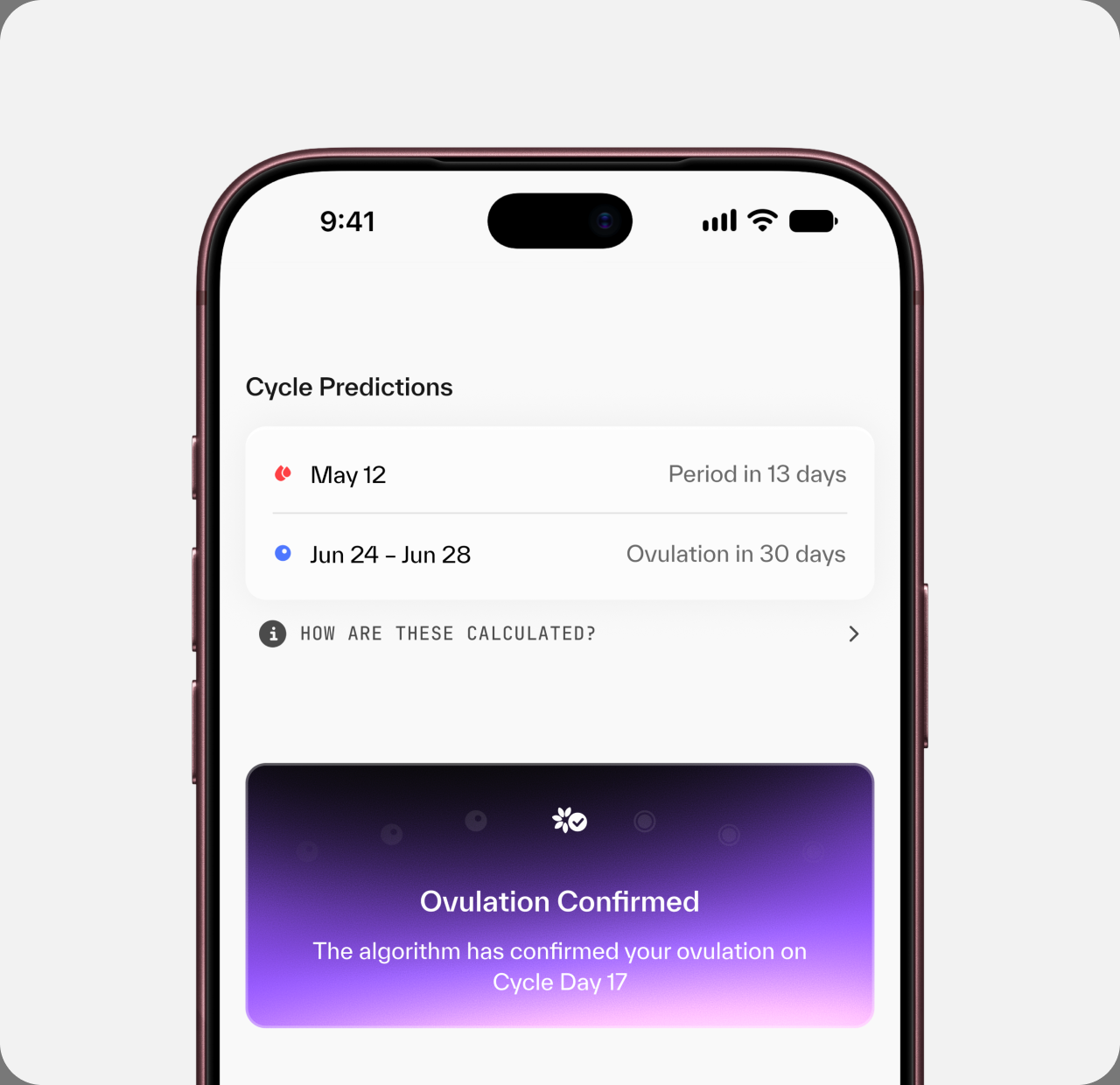
Ovulation leaves a clear sign: progesterone lifts your temperature, and it stays up until your next period. A calendar app predicting from dates can’t see that. The Ring watches for the sustained rise and confirms ovulation once it has happened.
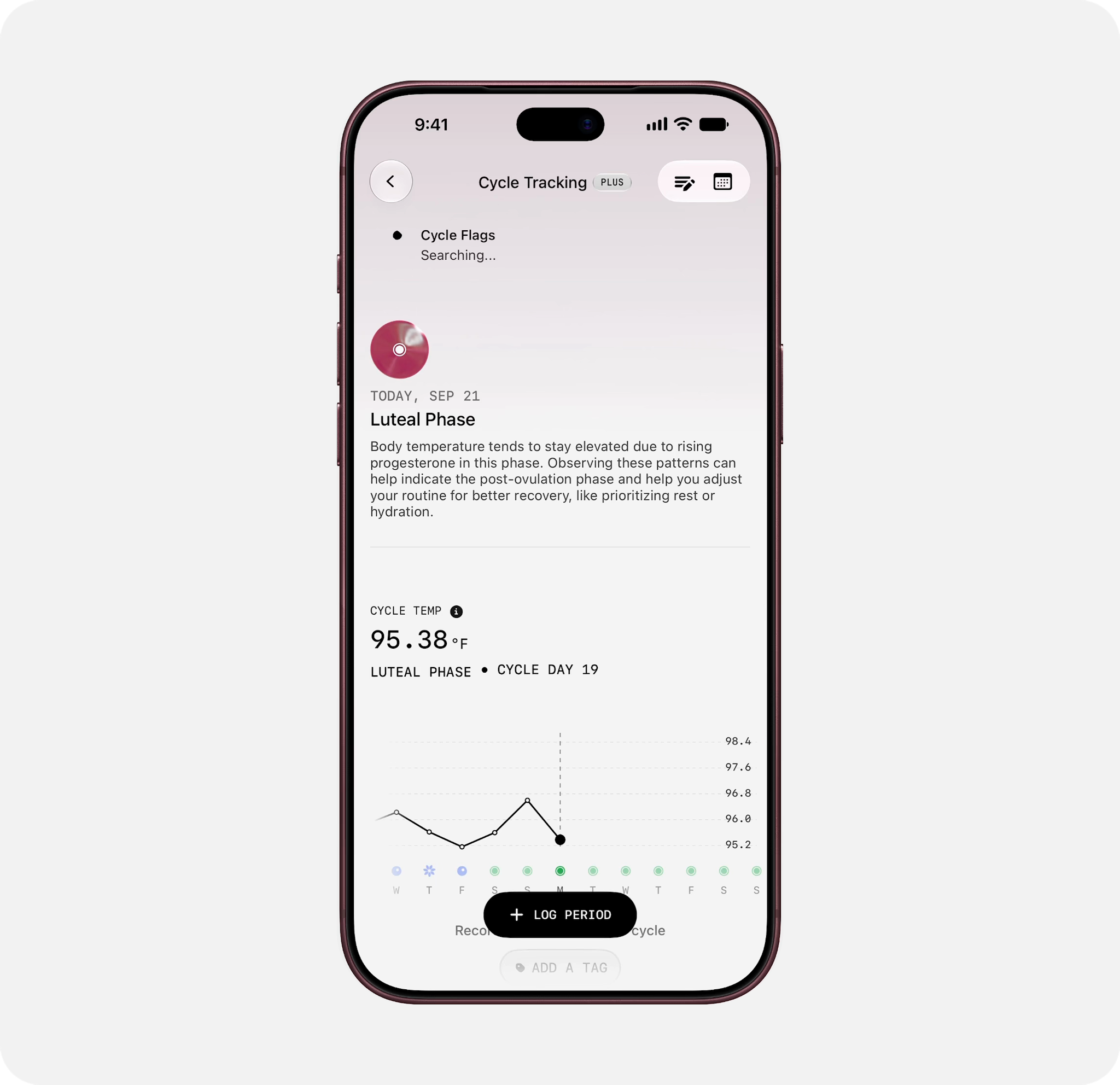
Cycle Flags™ name the unique patterns in your cycle: a short luteal phase, a slow temperature rise, a rise that never comes, a false start. Each is worth tracking over time and taking to your doctor.
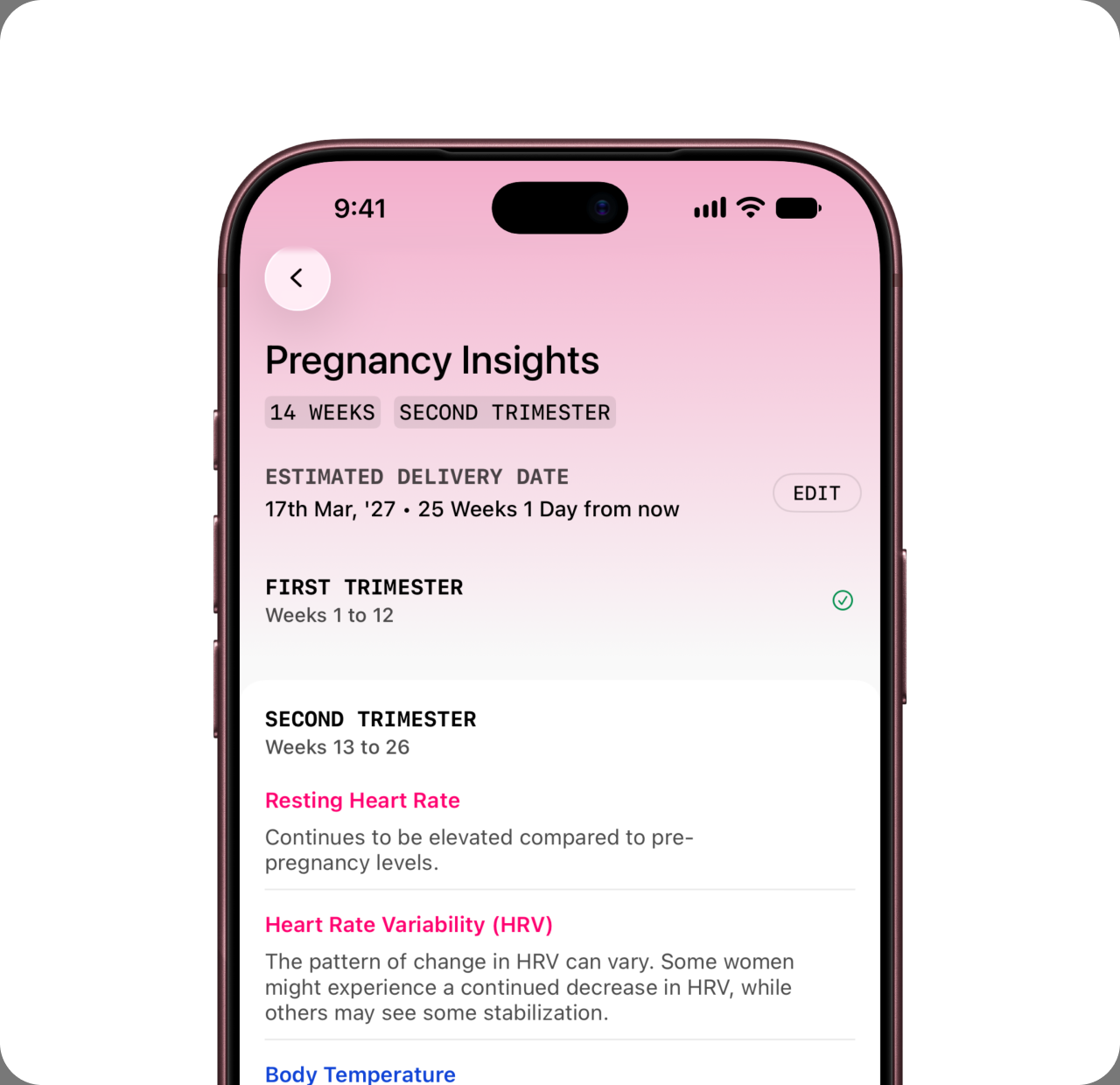
Pregnancy changes your body week by week. Blood volume rises by up to half. Resting heart rate climbs, HRV falls, and sleep gets harder to hold on to. The Pregnancy PowerPlug shows how these shifts unfold across each trimester, measured against where you started.
Longevity is built from habits held for years. The Ring tracks the ones with the strongest evidence behind them: cardiovascular fitness, a steady rhythm, and consistent sleep for a real look into how you’re aging.
Longevity is built from habits held for years. The Ring tracks the ones with the strongest evidence behind them: cardiovascular fitness, a steady rhythm, and consistent sleep for a real look into how you’re aging.
Cardiorespiratory fitness (VO2 max) is one of the strongest predictors of a long life. The American Heart Association ranks it above smoking, high blood pressure and high cholesterol. Cardio Age turns your estimated VO2 max into an age you can hold against your real one – and unlike your real age, it moves in both directions, coming down as you train.
How much your heart rate varies is only half the story – how it varies matters too. A heart that speeds up and slows down smoothly, with each breath for instance, is adapting well, while erratic patterns can signal strain. Cardio Adaptability reads the pattern rather than the amount, giving you an earlier read on how well your body is coping.
Nearly every organ runs on a roughly 24-hour clock, and light is what sets it. Morning light pulls your rhythm earlier; evening light pushes it later. The Ring finds your body’s lowest temperature each night and uses it to show when light and activity will help your clock, and when they’ll work against it. Get the timing right and sleep comes easier, and deeper.
Your body clock expects sleep at a steady hour. Shift bedtime by hours between weekdays and weekends and the effect is mild jet lag. In a study of 103,490 Ring users, the least regular sleepers ran an overnight resting heart rate up to 3.6 bpm higher than the most regular. Holding a steady bedtime is one of the smallest changes you can make and one of the few that shows up in your numbers within a week.
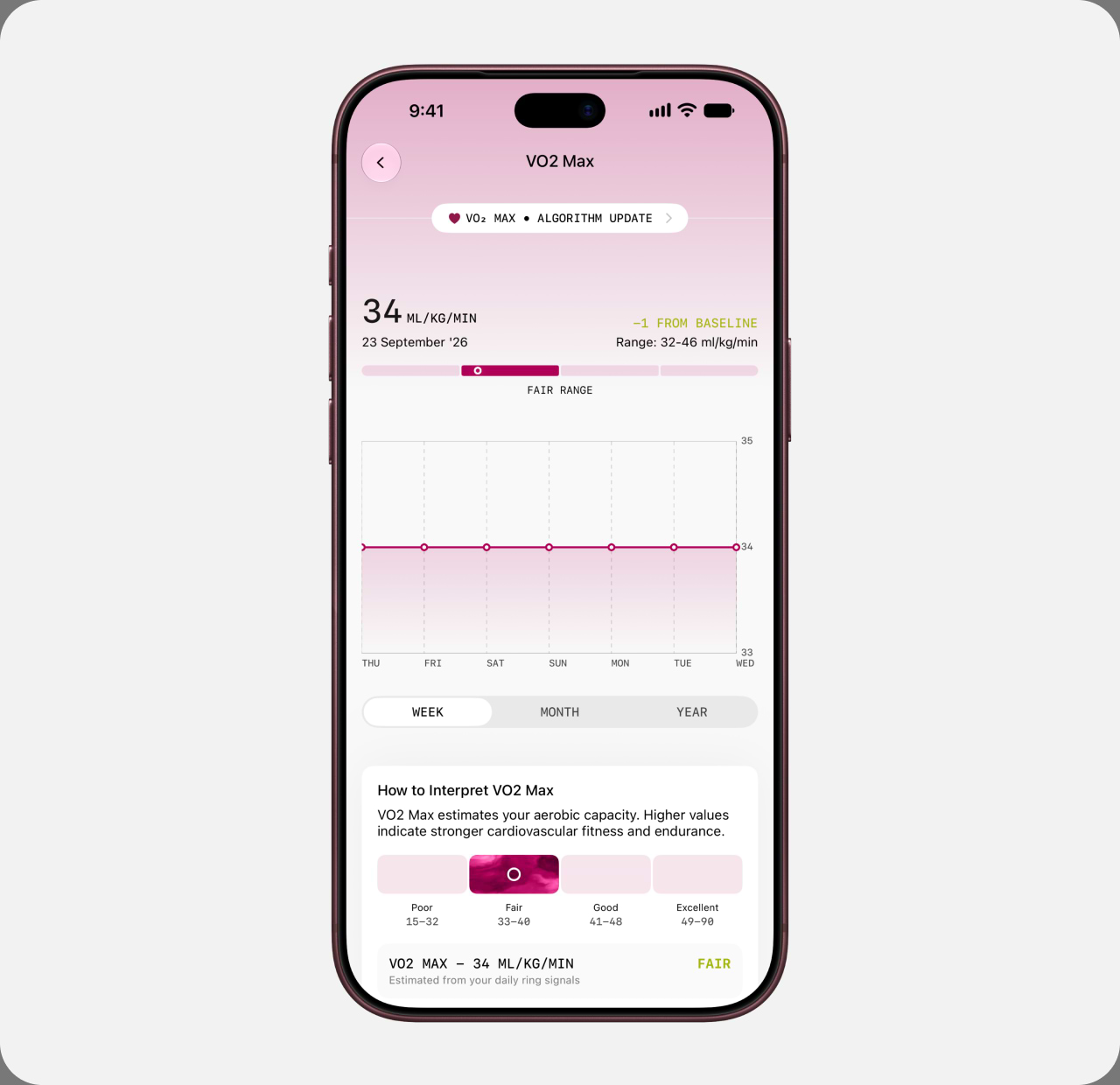
VO2 max is one of the strongest predictors of a long life, ranked by the American Heart Association above smoking, high blood pressure, and high cholesterol. Cardio Age turns yours into an age you can hold against your real one, coming down as you train.
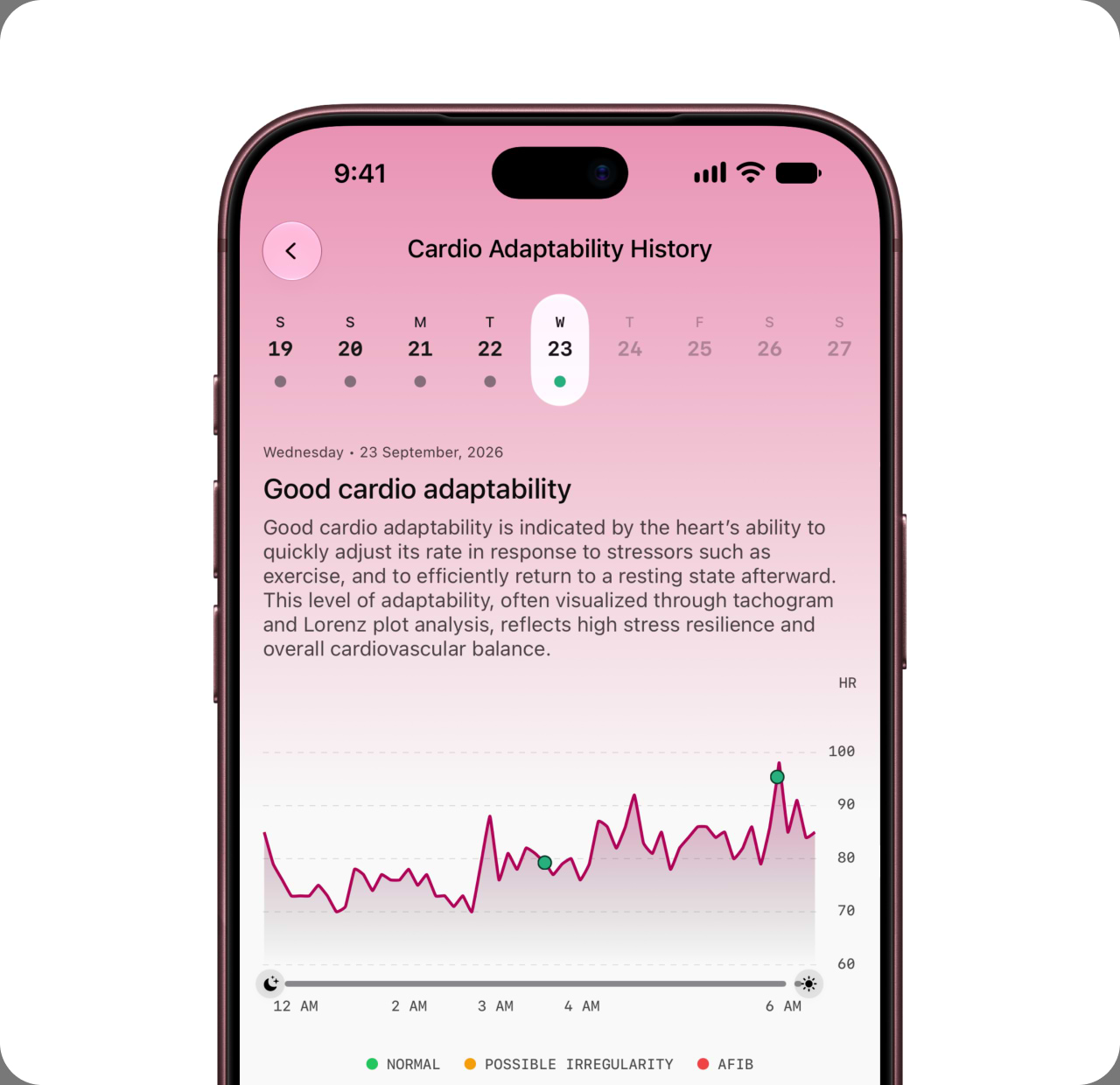
How your heart rate varies matters as much as how much. Smooth rises and falls mean you’re adapting well; erratic ones can signal strain. Cardio Adaptability reads the pattern, not the amount, for an earlier read on how well your body is coping.
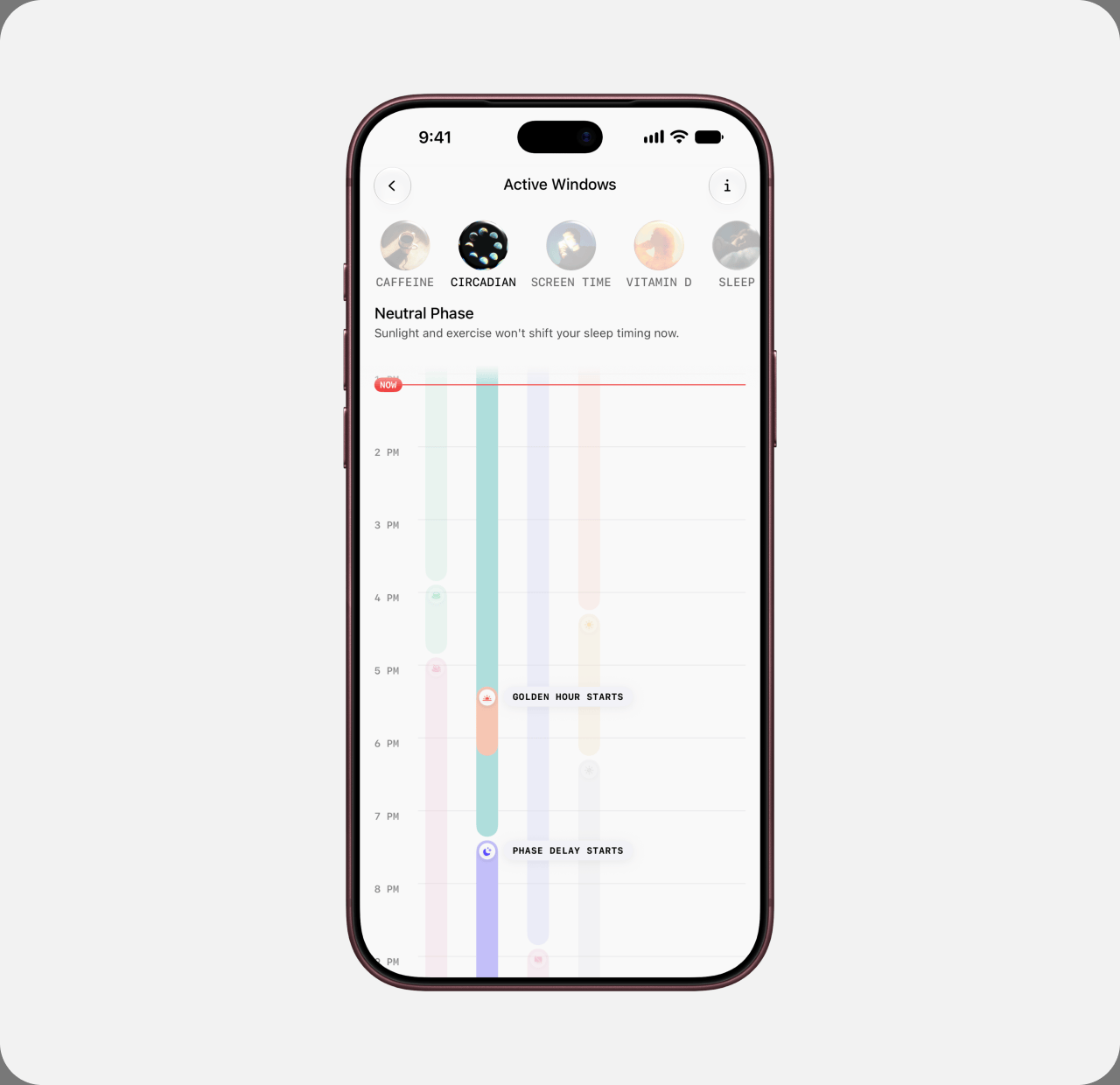
Nearly every organ runs on a 24-hour clock that light sets: morning light earlier, evening light later. The Ring uses your nightly temperature low to time both, so sleep comes easier and deeper.
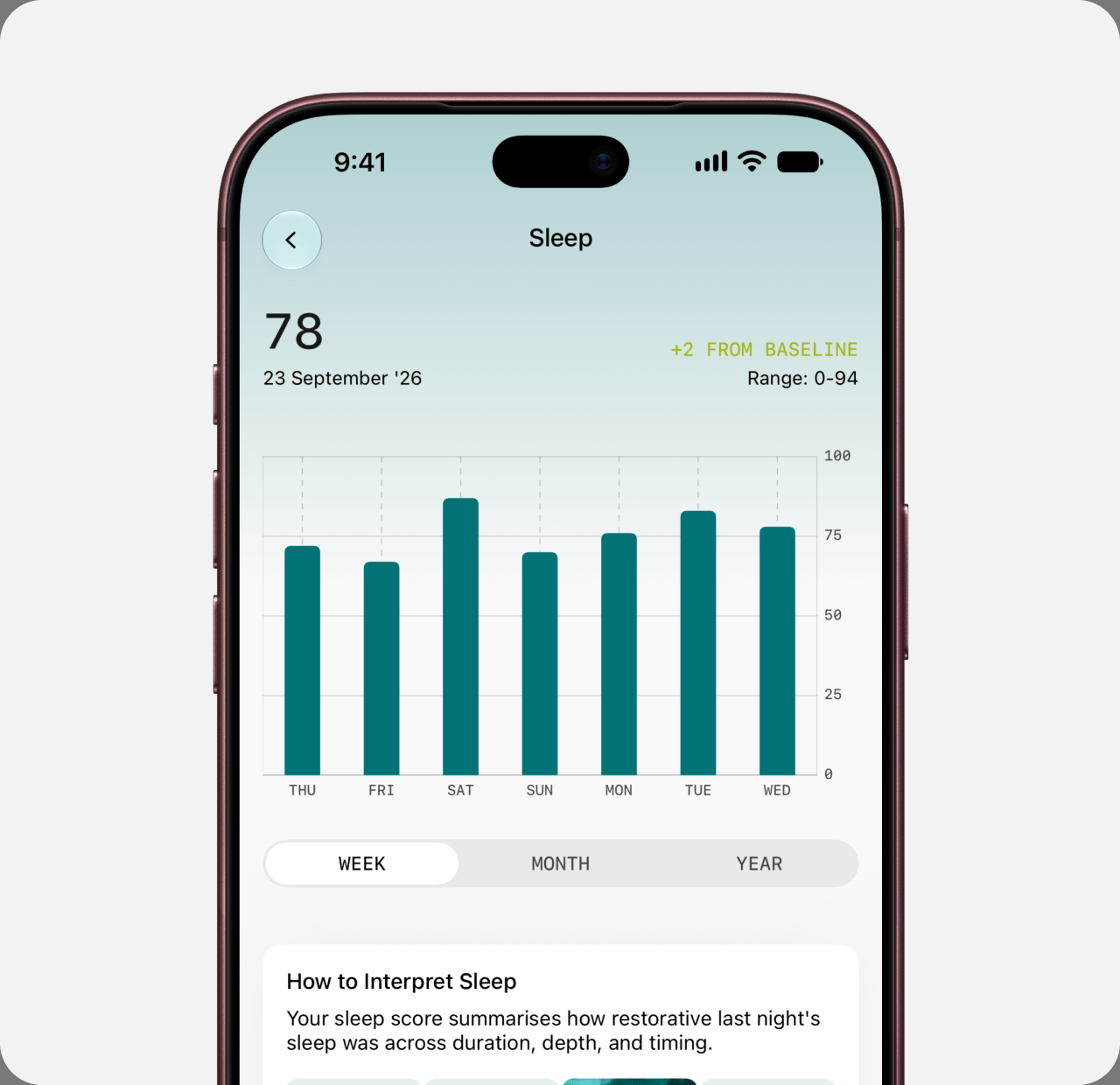
Shifting bedtime between weekdays and weekends works like mild jet lag. Across 103,490 Ring users, the least regular sleepers ran an overnight RHR up to 3.6 bpm higher than the most regular. A steady bedtime is one of the smallest changes that comes with a big reward.
No two people need the same thing. PowerPlugs are micro-tools you switch on within the app, each going deeper into a single area, each running on signals the Ring already collects. Add the ones you need and the app becomes yours, built to track what matters most to you. Most are included; a few built with partners carry a fee.
No two people need the same thing. PowerPlugs are micro-tools you switch on within the app, each going deeper into a single area, each running on signals the Ring already collects. Add the ones you need and the app becomes yours, built to track what matters most to you. Most are included; a few built with partners carry a fee.
Atrial fibrillation is an irregular heartbeat that often causes no symptoms, and it raises stroke risk significantly. Because it can come and go, a single ECG at the doctor’s can miss it. The Ring checks your rhythm overnight, night after night, and tells you when it sees signs worth following up.
Your breathing changes during sleep: it slows in deep sleep, becomes irregular in REM, and can be disturbed by congestion, alcohol, or sleeping position. The Respiratory Health PowerPlug tracks how steady your breathing and blood oxygen stay overnight, and how that changes over weeks.
Waking from deep sleep leaves you groggy, inducing a state called sleep inertia that can last up to an hour. Waking from light sleep feels easier. Smart Alarm watches your sleep stages and wakes you at a lighter moment within the window you set.
Your skin makes vitamin D from the sun’s UVB rays, but how much depends on the time of day, the season and how much skin is exposed. The Vitamin D PowerPlug tracks your sun exposure, estimates what you’re making and warns you before you’ve had too much.
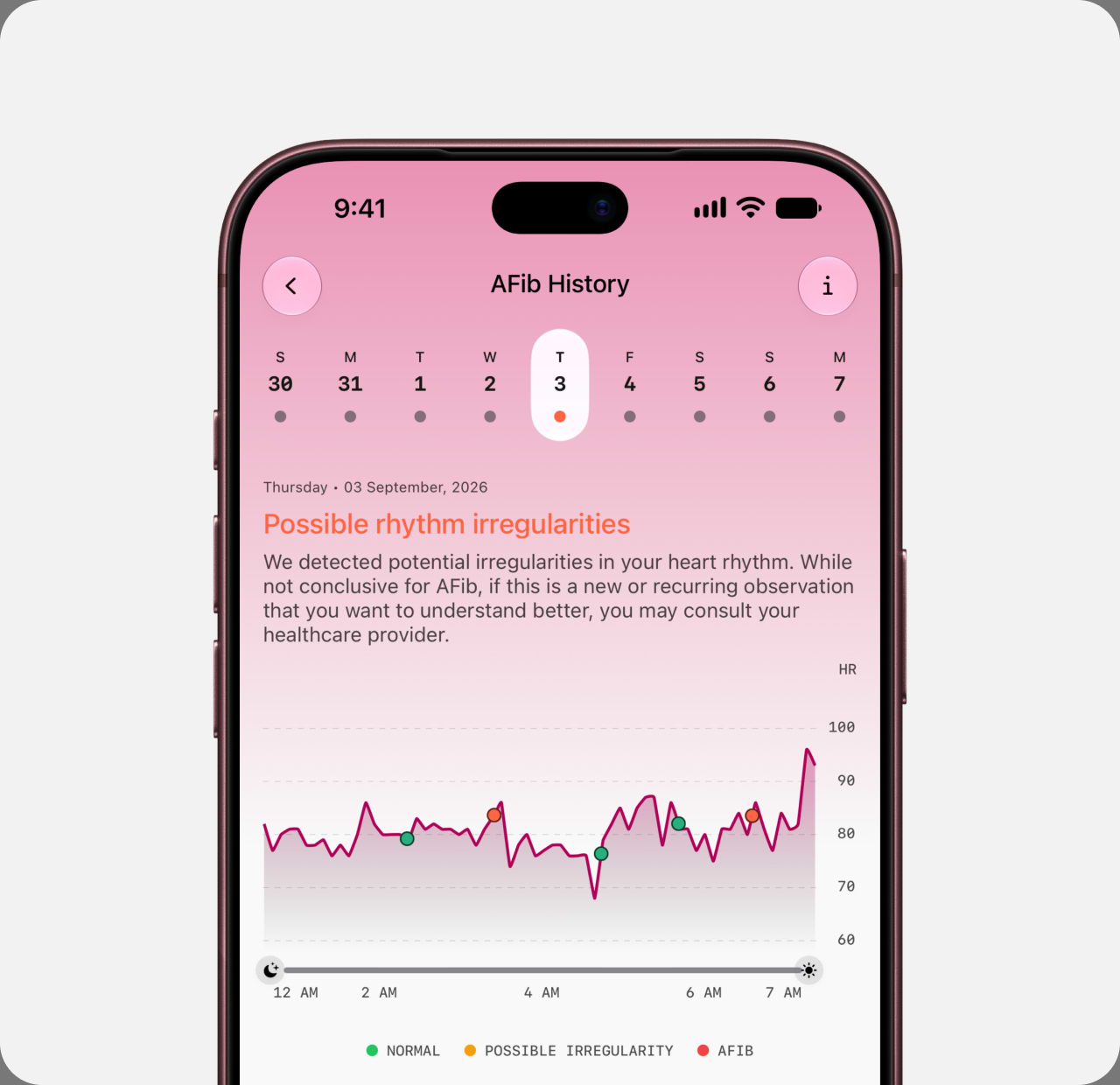
Atrial fibrillation often causes no symptoms and raises stroke risk significantly, and because it comes and goes a single ECG can miss it. The Ring checks your rhythm night after night and tells you when it sees signs worth following up.
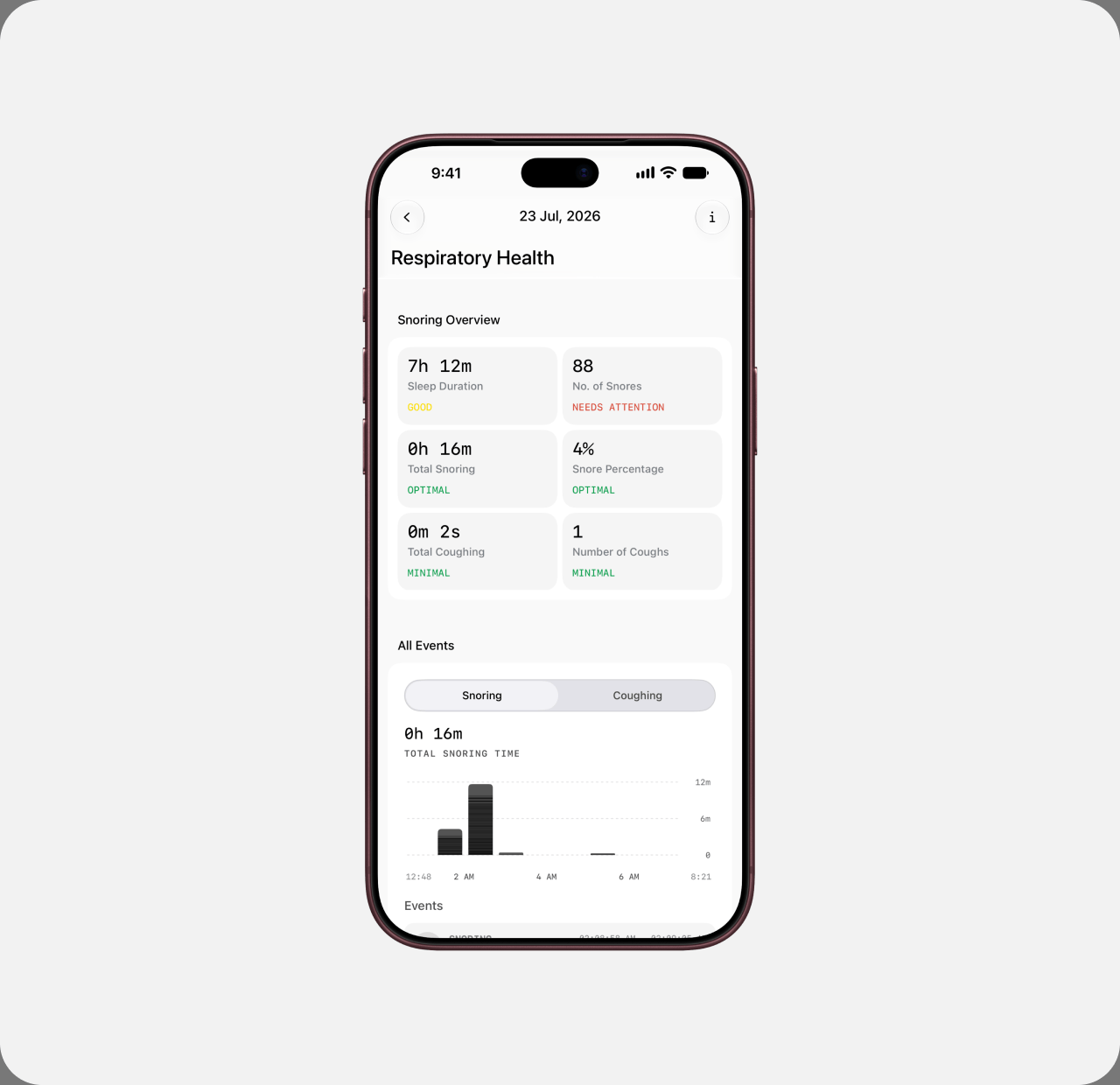
Breathing slows in deep sleep, turns irregular in REM, and can be disturbed by congestion, alcohol or sleeping position. The Respiratory Health PowerPlug tracks how steady your breathing and blood oxygen stay overnight and any changes over weeks.
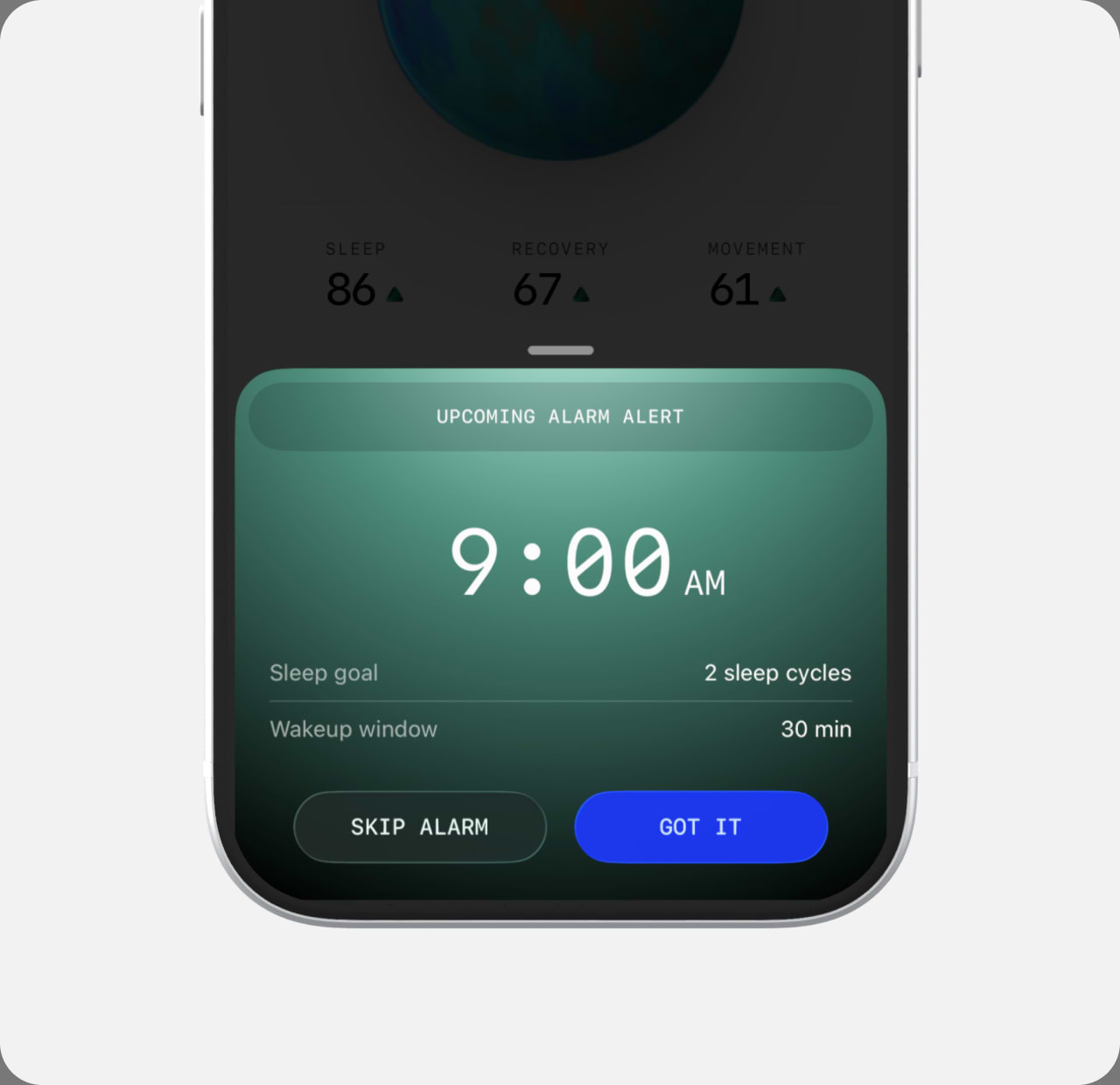
Waking from deep sleep leaves you groggy, inducing a state called sleep inertia that can last up to an hour. Waking from light sleep feels easier. Smart Alarm watches your sleep stages and wakes you at a lighter moment within the window you set.
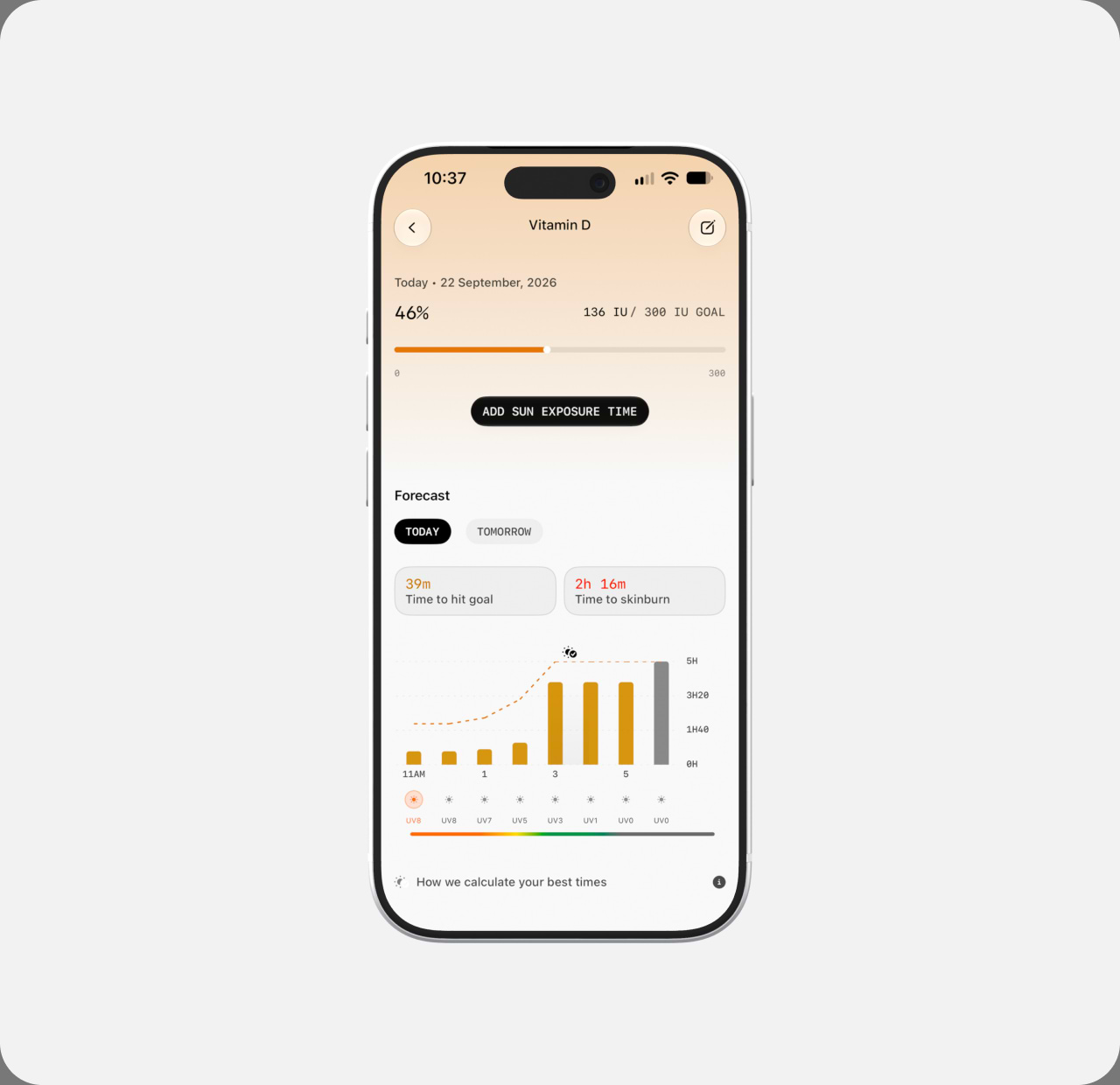
Your skin makes vitamin D from the sun’s UVB rays, but how much depends on the time of day, the season and how much skin is exposed. The Vitamin D PowerPlug tracks your sun exposure, estimates what you’re making and warns you before you’ve had too much.